Written by: Anand Sen; Reviewed by: Dr. Aaishwarya Javanjal (B.V.Sc & A.H, M.V.Sc)
What is separation anxiety in dogs?
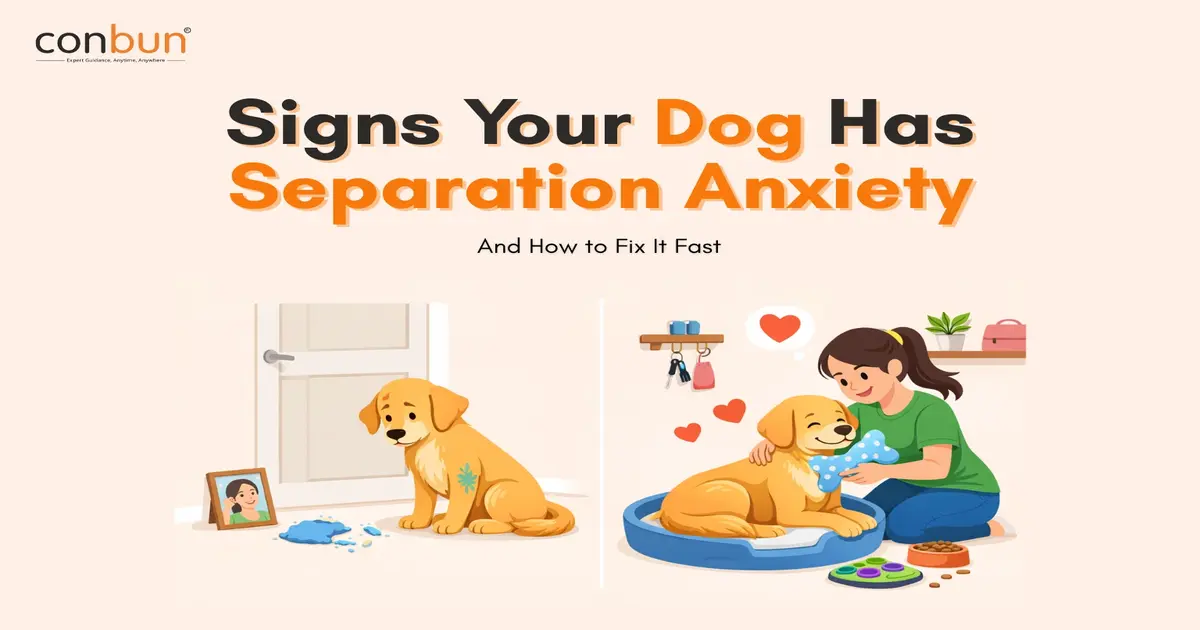
Separation anxiety in dogs is a behavioral condition in dogs where they experience intense stress and panic when they are left alone or separated from their primary caregiver.
People often consider it as disobedience or “drama”, but it is a clinically recognised anxiety disorder which leads to destructive behaviour, excessive barking, and even self-injury.
You come home after work. Your slippers are shredded. The sofa corner looks like it fought a tiger. And your neighbours are complaining about your dog in the building WhatsApp group.
And your dog?
He’s shaking… or has become wildly overexcited… or glued to your legs like “Fevicol ka jod hai, tootega nahi”.
That’s separation anxiety in dogs, and in India’s growing urban pet population, it’s becoming shockingly common.
Research in veterinary literature states that separation anxiety is a common in Canines affecting about 20% of the dog population.
According to veterinary behaviourists, dogs with separation-related behaviour problems often engage in unwanted behavior like destruction of property and excessive vocalisation when they are left alone, which causes distress for both the dog and the owner.
In the following guide, we’ll cover the 9 clear signs of separation anxiety in dogs, home remedies that actually work and Vet-approved treatments to deal with this problem.
Related Reading: Dog Disease & Symptoms Explained: Early Warning Signs Every Dog Owner Must Know
9 Signs of Separation Anxiety in Dogs
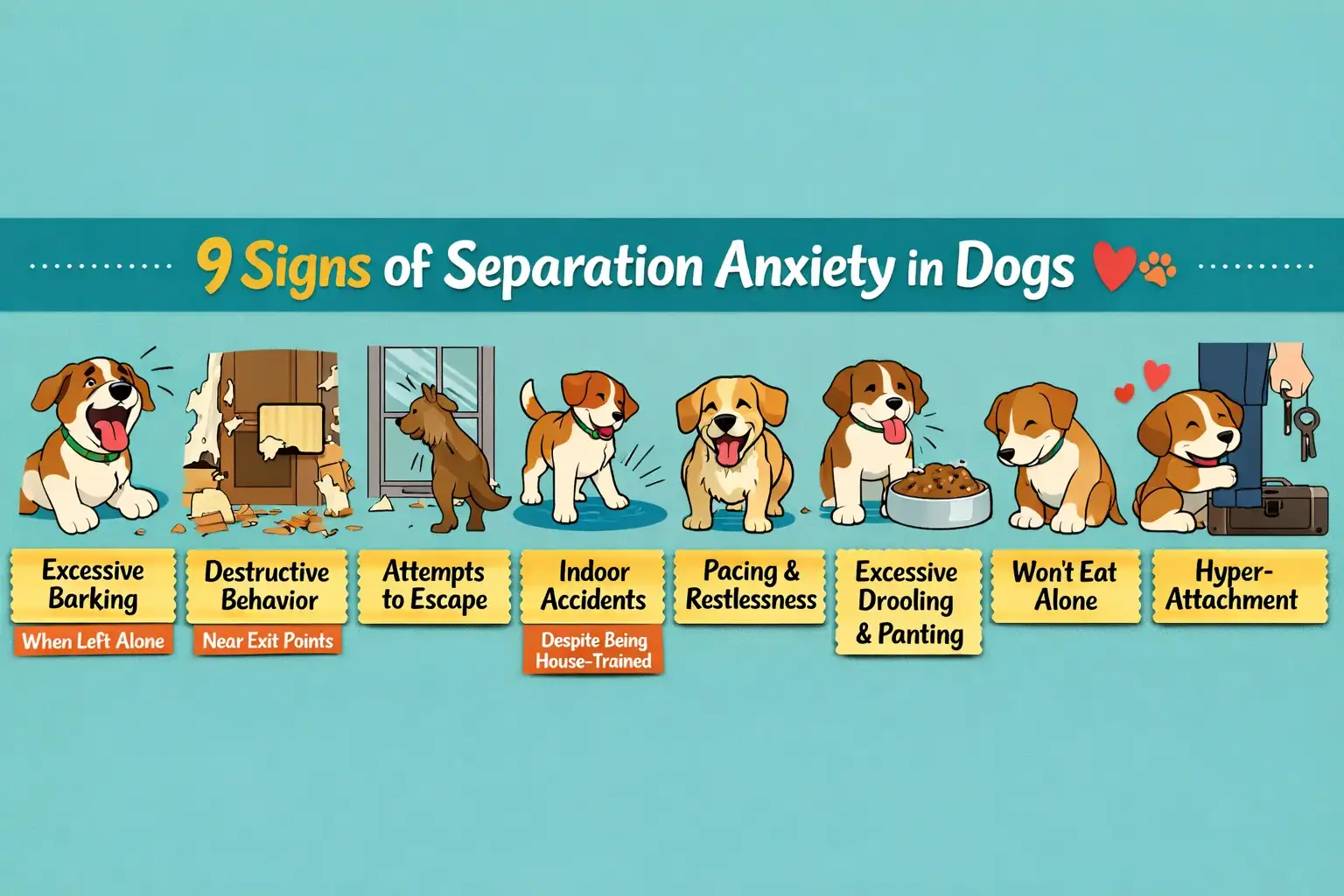
Separation anxiety isn't 'bad behavior'; it’s a heartbreak. It’s the frantic climax of a Bollywood movie where the hero realises the love of his life is slipping away and screams, “Main tumhare bina jee nahi paunga.”
To your dog, you aren't just leaving the house - you’re leaving their world."
The key detail you should observe. These behaviours happen only when you’re gone, not when you’re home.
The following are the most common signs of separation anxiety in dogs:
1. Excessive Barking or Howling When Left Alone
If your dog is quiet when you’re there but suddenly turns into a lead performer of a bhajan mandali the moment you are leaving, that’s a major sign. Your Neighbours often report continuous barking within minutes and hours after departure.
2. Destructive Behavior Near Exit Points
Chewed doors, scratched window grills, damaged shoes and shoe racks near the entrance are common acts of destruction your little Godzilla indulges in when you are leaving.
Dogs with separation anxiety often focus their destruction on areas where you exit. They’re not trying to redecorate things. It's their way to stop you and tell you that they don’t like it when you’re gone.
3. Attempts to Escape
According to the Journal of the American Veterinary Medical Association both dogs and cats show significantly higher injury risks during anxious escape attempts.
Many dogs will claw at gates, jump balconies (dangerous!), or even break through baby gates.
4. Indoor Accidents Despite Being House-Trained
If your dog, who is fully toilet-trained, suddenly defecates or urinates indoors only when alone, anxiety is the trigger, not disobedience.
These house accidents generally happen only when the owner is away, often within the first 15-30 minutes of departure.
UTI in dogs may also lead to inability to control urine, result in house accidents. Rule out medical conditions, before naming indoor accidents as a behavioural problem.
Related Readings: 7 Signs Your Pet Might Be Hiding a Health Problem (and What to Do Next)
5. Pacing or Repetitive Movements
You might see your dog pacing in circles or back-and-forth walking along a fixed path. This is classic stress displacement behavior in dogs suffering from separation anxiety.
Pacing generally begins the moment the owner is preparing to leave (like picking up keys, putting on shoes). However, pacing is not the only sign. It is accompanied by other signs like panting, drooling or shivering. On the other hand, if your dog is calm and composed when you leave, it is a sign that your dog trusts you.
6. Excessive Drooling or Panting
If you observe drool puddles or heavy panting without heat or exercise, separation anxiety may be the underlying cause. These signs occur because the dog has entered a “fight or flight state”.
7. Refusing to Eat When Alone
A bored dog may snack when you offer them food. An anxious dog, on the other hand, won’t touch even chicken. Anorexia in dogs is common in moderate-to-severe cases of separation anxiety.
8. Hyper-Attachment
Your dog has become your second shadow and follows you to the bathroom? The kitchen? The balcony? Constant following is a classic sign of hyper-attachment.
9. Visible Distress at Departure Cues
When you pick up your keys, wear shoes, and lock your laptop bag, your dog freezes, trembles and starts whining at these cues. This is anticipatory anxiety.
Important note: If you see just one sign of the above signs, it alone doesn’t confirm separation anxiety. However, if there are multiple signs together, that’s when it’s time to intervene.
Related Readings: Dog Has Diarrhea but Acting Normal - What Should You Do?
Signs of Separation Anxiety in Dogs at Night
Nighttime separation anxiety in dogs can look different from daytime distress.
Many dogs are perfectly fine when you leave for work during the day, but the moment you close your bedroom door at night? The Opera show begins.
Common signs of separation anxiety in dogs at night include:
Scratching or whining outside your bedroom door
Inability to settle or constant repositioning
Repeatedly waking you up
Pacing in dim light
Refusing to sleep unless physically near you
This usually happens after:
Moving to a new home
A recent schedule change
Boarding stays
Illness recovery
Interestingly, if you live in a one-person household, dogs may lose control, specifically if their primary attachment figure sleeps separately.
Your dog is calm during the day but feels distressed at night, especially when they are separated from one specific person. The next section will explain why.
Dog Separation Anxiety: When One Person Leaves
Sometimes separation anxiety in dogs isn’t about the fear of being alone. It’s about being separated from a specific human.
Similar to toddlers, dogs also form primary attachment bonds. A 2018 research article published in the journal Attachment & Human Development suggests that many dogs treat one specific caregiver as their secure base.
If that person leaves, you may notice:
Waiting at the door for only them
Ignoring other family members
Refusing food until they return
Increased pacing or whining
This can also be seen in multi-dog homes where one dog may nap peacefully while the other dog, attached to a specific caregiver, spirals.
This is not “spoiling.” It’s an anxiety response tied to attachment strength.
Scolding is not the solution. Gradually establishing positive routines with secondary caregivers is. The goal must be to teach the dog that safety doesn’t disappear when one person does.
Related Readings: How do online vet consultations work: A pet owner’s guide?
Quick Self-Assessment: Does My Dog Have Separation Anxiety?
Before you panic, let’s do a quick check.
Answer Yes or No to the following:
Do you see your dog barking, howling, or crying only when you are away (not when you’re home)?
Does your dog chew doors, shoes, or furniture near exit points?
Does your dog follow you from room to room constantly?
Does your fully house-trained dog have indoor accidents when they are left alone?
Does your dog become visibly anxious when you pick up keys or wear shoes?
Your Score:
0 -1 Yes: Likely boredom or lack of stimulation.
2 - 3 Yes: Possible mild separation anxiety, start home strategies now.
4 - 5 Yes: High likelihood of separation anxiety in dogs, consult a vet or behaviourist as soon as possible.
Let's now talk about what you should actually do at home.
Home Remedies for Separation Anxiety in Dogs
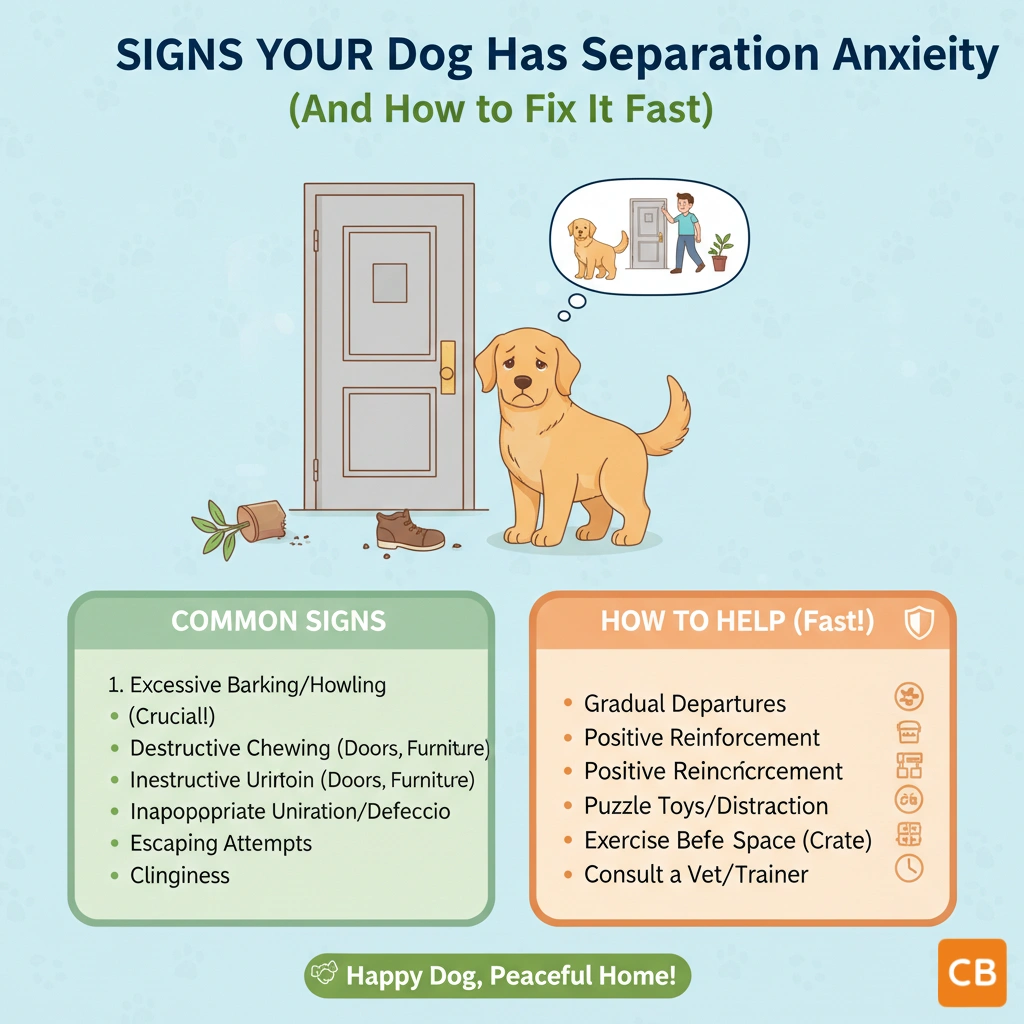
If you're wondering how to care for dogs with mild to moderate separation anxiety, you can start working on it at home. However, you should remember that anxiety is not solved by shouting “Stop crying!” from the lift lobby. You need to follow a proper desensitisation and calming routine. Even the most aggressive dog breeds can be trained for calmness if the training routine is structured.
Here are some vet-recommended home remedies for separation anxiety in dogs:
1. Desensitisation Training
Help your dog learn to live alone gradually. Practice leaving them for 30 seconds, then 1 minute, then 3. Gradually increase the duration over several weeks. The goal is to teach your dog that “You leave. You return, and Nothing scary happens.”
Perform actions that trigger your dog’s anxiety, like picking up the keys or putting on a coat, but don’t leave. Just step outside and return until the dog is calm.
2. Independence Training
Reward them for showing calm behavior. Reward them for NOT following you. If they relax on their bed while you’re in another room, praise softly and offer treats to encourage positive association.
3. Puzzle Toys During Departure
Use interactive pet toys to keep your dog busy and offer them both mental and physical enrichment. Frozen Kongs, lick mats, or stuffed treat toys will keep their brain busy. Research shows that chewing and licking naturally reduce cortisol levels in dogs.
4. Calming Audio
Playing soft classical music or dog-specific calming music can lower stress markers.
5. Scent Comfort
Leave your worn t-shirt near their resting area. For dogs familiar scent means security.
6. Exercise Before You Leave
A tired dog is calmer than a highly energetic one. Take them on a 20-minute brisk walk before you leave. This can help discharge anxious energy.
7. Pheromone Diffusers
Synthetic dog-appeasing pheromones (DAP) mimic the natural, calming signals released by mother dogs and can effectively reduce anxiety and restlessness in dogs of all ages. Beaphar and Adaptil are common examples.
Important:
If your dog is injuring themselves, destroying property, behaving dangerously, or showing severe panic, skip home remedies and talk to an online veterinarian or certified pet behaviourist through pet care apps like Conbun.
Dog Separation Anxiety Treatment: What Actually Works
Let’s be honest here. There is no overnight cure for separation anxiety in dogs.
If someone promises “fix it in 3 days,” run.
According to the American College of Veterinary Behaviorists (ACVB), effective dog separation anxiety treatment follows a tiered approach:
Tier 1 - Behavioral Modification (Foundation Level)
This includes:
Systematic desensitisation (gradual departures)
Counterconditioning (pairing your exit with positive events)
Structured independence training
Partnering with a certified pet behaviorist online can dramatically improve success rates.
Mild cases may improve in 2 - 4 weeks with consistency. But moderate-to-severe cases often require 3–6 months of structured work.
Tier 2 - Medication (For Moderate to Severe Cases)
Medication works for baseline anxiety, so training can actually work. Separation anxiety in dogs does not have a “sedation fix.” It has to be dealt through neurological support.
Tier 3 - Combined Approach (Most Effective)
You need to combine behavior modification, Medication and Consistency to achieve results. If you aim to “cure dog separation anxiety quickly,” understand this:
You may reduce symptoms quickly. But for full behavioural rewiring, you need to invest time. And patience.
Up next, let’s talk about medication properly, no myths, no fear.
Dog Separation Anxiety Medication: A Vet’s Guide
Medication can be a part of a dog's separation anxiety treatment plan when home strategies are not enough.
Two commonly prescribed, FDA-approved medications are:
Clomicalm (clomipramine) - a tricyclic antidepressant
Reconcile (fluoxetine) - an SSRI (selective serotonin reuptake inhibitor)
Both these medicines work by reducing baseline anxiety levels in a dog’s brain, thereby allowing behavior training to be more effective.
Important facts:
After starting, these medications usually take 4 - 6 weeks to show their full effect.
They are not “sedatives.” The goal is emotional regulation, not drowsiness.
Side effects may include mild sedation or appetite changes. Should be monitored by your vet.
It is essential to note that medication works best only if it is combined with behavioural modification. On its own, it is never a complete solution.
Also, note that you should never give human anxiety medication to your dog. Always consult a licensed veterinarian before starting treatment. An online vet consultation could be a good place to start.
You can get an effective dog separation anxiety treatment plan at your fingertips, along with medications. The doctor will review your dog's condition online to tell you if medicines are needed or not.
Consult a dog behaviour expert online
If you are having a hard time training your dog or managing their unpredictable behaviour, you can consider a dog behaviour expert consultation on pet health apps like Conbun. Talk to an expert dog behaviourist or a veterinarian to discuss behavioural symptoms and get expert insights that you can implement right away.
With proper dog behavioural insights and training guidance even the most aggressive dog breeds can be turned into good boys.
What NOT to Do with Dog Separation Anxiety
If you are dealing with separation anxiety in dogs, you may make mistakes, but they usually come from love, not cruelty. Anxiety needs structure, not emotional reactions.
Here’s what you should not do:
Punish destructive behavior.
Dogs don’t have the capacity to connect punishment to something that happened hours ago. It only increases fear and encourages destructive behaviour.
Get a second dog as a “solution.”
This, instead of fixing separation anxiety, may just end up in a situation where there are two anxious dogs.
Make dramatic goodbyes.
Long hugs, “Mumma will miss you!” speeches, and emotional exits amplify anxiety cues.
Ignore it hoping they’ll grow out of it.
Anxiety often worsens without intervention.
Crate without proper training.
An anxious dog may injure themselves trying to escape confinement.
Expect medication alone to fix everything.
Medication will only supplement behavioral training, but not replace it.
Conclusion
Separation anxiety in dogs is real. It’s painful. And most importantly it’s treatable.
With the right combination of behavioral training, consistency, and veterinary guidance, most dogs improve significantly. The key is early action and structured support.
If you scored 4-5 on the quiz above, don’t wait for the next chewed door frame. Book a professional consultation.
Platforms like Conbun offer dog behaviour expert consultation make this easier by connecting you with certified veterinarians and dog behaviour experts online, from the comfort of your home. Whether you need a quick anxiety assessment, medication guidance, or a long-term behavior plan, Conbun android and iOS helps you take the first step without confusion.
FAQs: (People Also Asked)
1. How do you help a dog with separation anxiety?
Answer. Focus on desensitisation and behavioral conditioning. Make sure that your dog has exciting things to do when you are not with them. Positive reinforcement for being calm alone can help in treating a dog with separation anxiety.
2. What is the root cause of separation anxiety in dogs?
Answer. Separation anxiety in dogs can have various causes like underlying fear, insecurity and intense emotional attachment to their owners, especially the primary caregivers.
3. What not to do with a dog with separation anxiety?
Answer. Do not leave your dog unprepared. Avoid leaving them for extended periods and do not get a second dog, as it will only worsen the situation.
4. How can I calm my dog's anxiety naturally?
Answer. Increase physical exercises, provide mental stimulation through puzzle toys and training. Offer herbal supplements like chamomile or valerian root.
5. What is the best medicine for dog separation anxiety?
Answer. Clomicalm (clomipramine) and Reconcile (fluoxetine) are currently the best FDA-approved medicines for dog anxiety.
6. What dog breeds are prone to anxiety?
Answer. High-energy and intensely loyal breeds like German Shepherds, Border Collies, Vizslas, Cocker Spaniels, and Toy Poodles are prone to separation anxiety.
7. What triggers anxiety in dogs?
Answer. Environmental changes, loud noises, separation from owners, past trauma etc can trigger anxiety in dogs.