Written by: Anand Sen; Reviewed by: Dr. Pratyush Singh ( B.V.Sc & A.H )
Here’s an interesting statistic that might surprise you. According to the BBC, India now has more than 32 million pets. This means that millions of households in the country wake up every morning to the sound of paws on the floor and a hopeful face asking the same eternal question:
“Breakfast yet?”
But here’s the truth most new pet parents experience quickly: loving a dog is easy, but knowing how to properly care for one is the tricky part.
New pet parents are often overwhelmed and wonder about these things:
Should I feed dry food or homemade?
How much exercise is enough for my pet dog?
Do dogs really need yearly vet visits?
And why is my puppy chewing my expensive headphones?
Consider this article a complete dog care survival guide, a practical checklist that will cover feeding, hydration, vet care, exercise, and grooming basics.
Bookmark it and share it with that friend who has just adopted a puppy and already looks sleep-deprived.
1. Feeding Your Dog the Right Way
Your dog’s health and nutrition have an innate relationship. Food is more than just fuel for dogs. It’s the foundation for good health.
According to the Journal of Veterinary Science, balanced diets can increase lifespan, support immunity, and reduce risks of various diseases in pets. On the other hand, poor nutrition contributes to various health issues like obesity, joint disease, and metabolic disorders.
In simple words, that small bowl that you fill twice a day has a stronger influence on your dog’s health than almost anything else.
How Much Should You Feed Your Dog?
The right portion depends on three factors:
Body weight
Activity level
Life stage
As a general rule, adult dogs should eat 2–3% of their body weight in food daily. Active dogs may require more.
For example:
5 kg dog → about 100-150 g per meal
20 kg dog → about 300-400 g per meal
However, always check feeding guidelines on the food label or consult your veterinarian.
Obesity is one of the most common pet health issues.
According to veterinary literature, more than 40% of dogs are overweight, which puts them at risk of diabetes, arthritis, and heart disease.
Your dog may act like they’re starving.
They’re not. They’re just very persuasive, and you’re just blinded by love.
Best Dog Food Types: Dry, Wet, Raw & Grain-Free
When you walk into a pet store, you’ll see entire aisles screaming "best dog food". Here’s a simplified breakdown.
Dry Food (Kibble)
Convenient and affordable
Good for dental health
Nutritionally balanced
Wet Food
Higher moisture content
More palatable for picky eaters
Raw Diets
Controversial in veterinary medicine
Increased risk of bacterial contamination if handled incorrectly
Grain-Free Diets
Popular but not necessary for most dogs
Some studies link grain-free diets with heart disease (DCM) in dogs
The safest option pet parents should choose is complete and balanced commercial dog food formulated according to AAFCO standards.
Foods That Are Toxic to Dogs (What to Avoid)
Some human foods can be dangerous, even life-threatening, for dogs.
According to an article published in the Frontiers in Veterinary Science, the following household food items are dangerous for dogs:
Chocolate
Grapes and raisins
Onions and garlic
Xylitol (artificial sweetener)
Alcohol
Macadamia nuts
These food items can cause poisoning even in small amounts. If your dog eats something suspicious, call your vet immediately.
Puppy vs Adult vs Senior Feeding Schedules
Ignoring life-stage and breed-specific needs is one of the most common mistakes in pet food choices that owners make. Dogs need different feeding schedules at different life stages.
Puppies (2–6 months): 3–4 meals per day; Smaller portion sizes
Adults (1–7 years): 2 meals per day
Senior dogs (7+ years): Smaller, easier-to-digest meals
Large breed puppies need carefully regulated calcium levels in their diets to prevent developmental joint disease.
Daily Feeding Routine Checklist
Measure food portions
Feed at consistent times
Provide fresh water with meals
Remove uneaten food after 20 minutes
Avoid table scraps
Dogs thrive on routine, and their routine revolves around food.
2. Fresh Water & Hydration Needs
Imagine yourself eating dry biscuits all day without water.
Not fun, right?
Daily Water Requirements by Dog Size
Dogs depend on consistent access to clean drinking water for digestion, regulating their body temperature and optimum kidney function just like humans.
Veterinary guidelines suggest dogs should drink roughly 50–60 ml of water per kilogram of body weight daily. So, a 20 kg Labrador should drink about 1 litre of water every day. In the hot Indian climate, this should be non-negotiable.
Exercise and illness can increase this need further.
Signs of Dehydration in Dogs
Watch for these warning signs:
Dry or sticky gums
Lethargy
Sunken eyes
Loss of skin elasticity
Dehydration escalates quickly, especially in puppies. When in doubt, encourage drinking or consult your veterinarian.
Best Water Bowl Types for Dogs
Not all bowls are equal.
Veterinarians often recommend:
Stainless steel bowls (most hygienic)
Ceramic bowls (heavy and stable)
Slow-drinking bowls for gulpers
Plastic bowls are less ideal because they can harbour bacteria and cause skin irritation around the mouth.
Clean bowls daily.
Your dog deserves fresh water, not yesterday’s mystery soup.
3. Routine Veterinary Care
If food is the foundation of your dog’s health, veterinarians are their safety net. Regular veterinary visits help in detecting health problems before they become emergencies.
Even if your dog is perfectly healthy, you should take them to the vet annually.
Core & Non-Core Vaccines: What Your Dog Needs
A typical vaccination schedule for Dogs in India includes core and non-core vaccines.
Core vaccines recommended by veterinary guidelines include:
Rabies
Distemper
Parvovirus
Adenovirus
Depending on your dog’s lifestyle, your vet may also recommend non-core vaccines like:
Kennel cough (bordetella)
Leptospirosis
Vaccination schedules vary region to region. So always consult your vet for vaccinations.
Annual Vet Visit Checklist
During annual visits, veterinarians typically:
Perform physical examinations
Check weight and body condition
Evaluate teeth and gums
Review vaccination status
Screen for parasites
These visits help you detect early issues like arthritis, dental disease, or metabolic disorders.
Think of them as preventive maintenance for your dog’s body.
Dental Care & Teeth Cleaning for Dogs
According to an article published in the Frontiers in Veterinary Science, Periodontal disease affects more than 89% of dogs over age three.
Signs include:
Bad breath
Yellow tartar buildup
Bleeding gums
Regular brushing and occasional professional cleaning can prevent painful infections.
Flea, Tick & Heartworm Prevention Schedule
Ticks, fleas and worms are silent parasitic infections that make Indian pets sick. Thus, their prevention is essential.
Monthly preventatives protect against:
Fleas
Ticks
Heartworms
Intestinal parasites
Skipping prevention can expose dogs to serious diseases such as ehrlichiosis or heartworm disease.
Monthly & Annual Vet Care Tracker
Monthly parasite prevention
Annual wellness exam
Vaccination boosters as needed
Dental checkups
Your veterinarian is your dog’s healthcare partner.
4. Exercise & Physical Activity
Your dog may be lazy and likes to spend their day lying on the sofa. But dogs are not designed for such a lifestyle.
Exercise helps keep your dog healthy physically and mentally.
Exercise Needs by Dog Breed & Age
General exercise guidelines:
Small breeds – 20–30 minutes daily
Medium breeds – 30–60 minutes
Large or working breeds – 60–120 minutes
Border Collies and Labradors are dog breeds that require high levels of activity. Lack of physical activity and mental stimulation can lead to various behaviour problems in dogs, like destructive chewing or excessive barking.
Fun Ways to Exercise Your Dog Indoors & Outdoors
Exercise doesn’t always mean long walks.
Try:
Fetch games
Tug-of-war
Hide-and-seek
Puzzle toys
Mental stimulation also burns energy. You can use interactive pet toys to offer both physical and mental enrichment.
Warning Signs Your Dog Is Over-Exercised
Too much activity can also be dangerous.
Watch for:
Excessive panting
Limping
Lagging on walks
If you have a puppy or a senior dog, focus on gentler exercise routines.
5. Dog Grooming Basics
Grooming your dog is not just about making him look Instagram-ready.
Regular grooming helps in detecting parasites, skin infections, and lumps early. Grooming is basically a weekly health inspection disguised as a spa day.
To groom your dog at home like a pro, follow these basic guidelines:
Brushing & Coat Care by Breed Type
Different dog coats demand different brushing schedules.
Short-haired breeds (Beagle, Labrador): Brush 1–2 times per week
Medium coats (Golden Retriever): Brush every 2–3 days
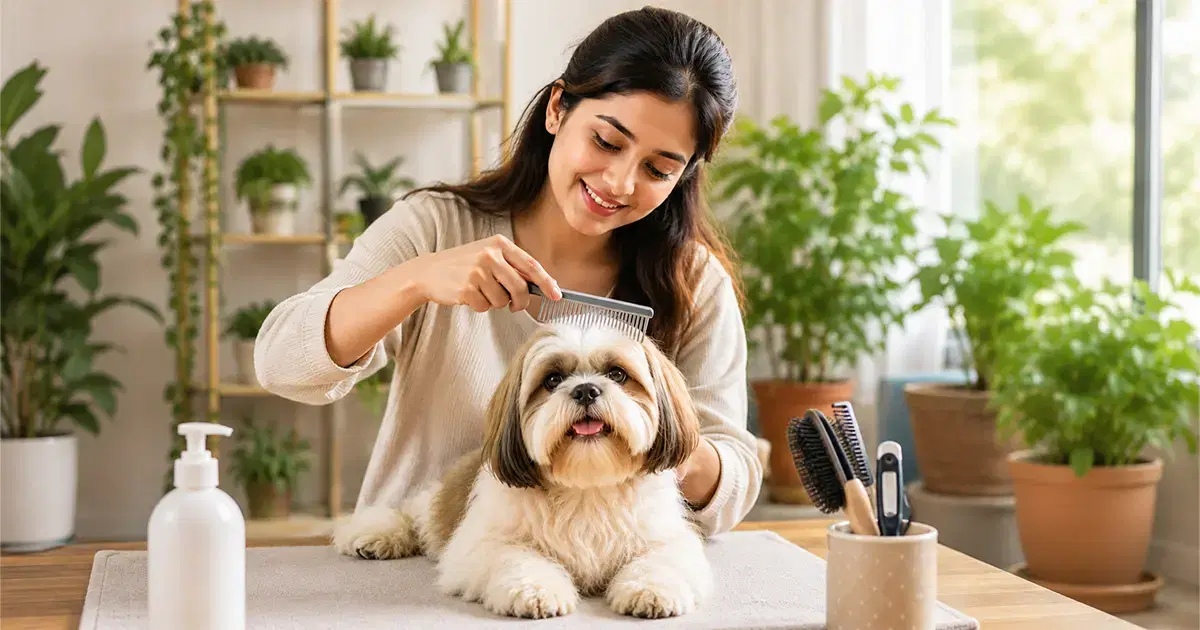
Long-haired breeds (Shih Tzu, Lhasa Apso): Practice daily brushing to prevent matting
Mats trap moisture against the skin and can cause painful infections.
How to Bathe Your Dog at Home
Dogs don’t need baths as frequently as humans.
Veterinary dermatologists generally recommend that bathing once every 3–4 weeks is enough for most dogs
Overbathing can be harmful as it strips off natural oils that protect the skin.
When bathing your dog:
Use lukewarm water
Use dog-specific shampoo (human or baby shampoos disrupt skin pH)
Rinse thoroughly to avoid residue irritation
Dry completely, check inside skin folds especially
Nail Trimming: How Often & How to Do It Safely
Overgrown nails in dogs cause more problems than owners realise.
Long nails can:
Impact walking posture due to pain
Cause joint strain and
Increase risk of injuries
For most dogs, nail trimming should be a part of the grooming schedule and should be done every 3–4 weeks.
Always trim small amounts gradually to avoid cutting the “quick,” the sensitive blood vessel inside a dog’s nail.
Ear Cleaning & Eye Care for Dogs
Ear infections are one of the most common causes of veterinary visits. Regular ear checks can help prevent these visits, especially for long, flappy-eared dogs.
Check for:
Redness
Odor
Excessive wax
Clean gently using a dog ear-cleaning solution; never use cotton swabs deep inside the ear canal.
Eye care is simpler; wipe discharge gently with a damp cloth if needed.
Weekly Grooming Routine Checklist
Brush coat
Check ears
Trim nails
Inspect skin for lumps or ticks
Wipe eyes and paws
Grooming is one of the easiest and most effective ways to catch health issues in dogs early.
6. Training & Socialization
Training your dog isn’t about control. It’s about fostering communication.
Dogs instinctively want to understand what their humans are expecting from them. Training simply offers them a vocabulary to do that.
Veterinary behaviourists recommend beginning basic training for your dog as early as 8 weeks of age.
Basic Commands Every Dog Should Know
Inconsistent training commands are one of the most common puppy training mistakes owners make. Every dog should learn these foundational commands:
Sit
Stay
Come
Down
Leave it
Heel
These commands improve safety in everyday situations.
For example, a reliable and consistent “come” command can literally save a dog’s life if they are running toward traffic.
Positive Reinforcement vs Punishment-Based Training
Modern veterinary behavior science strongly supports positive reinforcement training.
Positive reinforcement training focuses on rewarding desired behavior rather than punishing mistakes.
Positive reinforcement:
Strengthens the dog-owner bond
Reduces fear-based aggression
Improves learning speeds
Punishing a dog during training creates anxiety and behavioral problems in dogs. While training your dog, don’t think that they’re being stubborn; they’re just learning a new language.
Socializing Puppies vs Adult Dogs
Early socialization in puppies shapes their lifelong temperament. Puppies should be gradually but frequently introduced to:
New people
Other dogs
Sounds and environments
Proper socialization reduces the risk of fear and aggression later in life. Adult dogs can still learn social skills, it just requires patience.
Crate Training: Is It Necessary?
Crate training can be a useful management tool if it is used correctly.
A crate should function as:
A safe sleeping area
A travel space
A calm retreat
It should never be used for punishment. Think of it as your dog’s bedroom, not a prison cell.
7. Mental Stimulation & Enrichment
Dogs aren’t just athletes. They’re thinkers.
If a dog is not offered proper mental stimulation, even if they exercise well, they can develop behavioral issues.
Veterinary research shows boredom in dogs often leads to:
Destructive chewing
Excessive barking
Digging
Best Interactive Dog Toys for Mental Health
Some excellent enrichment options include:
Puzzle feeders
Snuffle mats
Treat-dispensing toys
These activities simulate natural foraging behavior, which, in doggo lingo, means: “I worked hard for this biscuit.”
Enrichment Activities for High-Energy Breeds
High-energy breeds, for example, Border Collies, need serious mental challenges.
Try:
Scent games
Obedience training drills
Agility courses
Therefore, both mental and physical stimulation are equally important for dogs.
Signs Your Dog Is Bored
Common boredom signals include:
Destructive chewing
Pacing
Excessive barking
When dogs act out, they’re often asking for more engagement.
8. Safe & Comfortable Living Environment
Your dog’s home should be both safe and relaxing.
Dog-Proofing Your Home Room by Room
Common household hazards include:
Electrical cords
Toxic plants
Cleaning chemicals
Store dangerous items out of reach.
Curious dogs explore the world with their mouth first.
Choosing the Right Dog Bed & Sleeping Area
A good dog bed supports:
Joint health
Temperature regulation
Sleep quality
Senior dogs benefit from orthopedic beds that reduce pressure on joints.
Outdoor Safety: Fencing, Leash Laws & Yard Hazards
If your dog spends time outdoors, ensure:
Secure fencing
Access to shade
Clean drinking water
Never leave dogs unsupervised in extreme heat.
Heatstroke can occur quickly, especially in humid climates.
9. Emotional Health & Bonding
Dogs are emotional creatures.
They experience joy, anxiety, excitement, and attachment.
Understanding Dog Body Language
Key signals include:
Wagging tail = excitement (not always friendliness)
Tucked tail = fear
Relaxed ears = comfort
Learning these cues helps strengthen communication.
Signs of Anxiety, Stress & Depression in Dogs
Watch for:
Excessive licking
Pacing
Destructive behavior
If these behaviors persist, consult an online veterinarian.
How to Strengthen Your Bond with Your Dog
Simple activities build connection:
Daily walks
Play sessions
Training games
For a dog, time spent with its favourite human is the ultimate reward.
10. Monthly Dog Care Checklist Summary
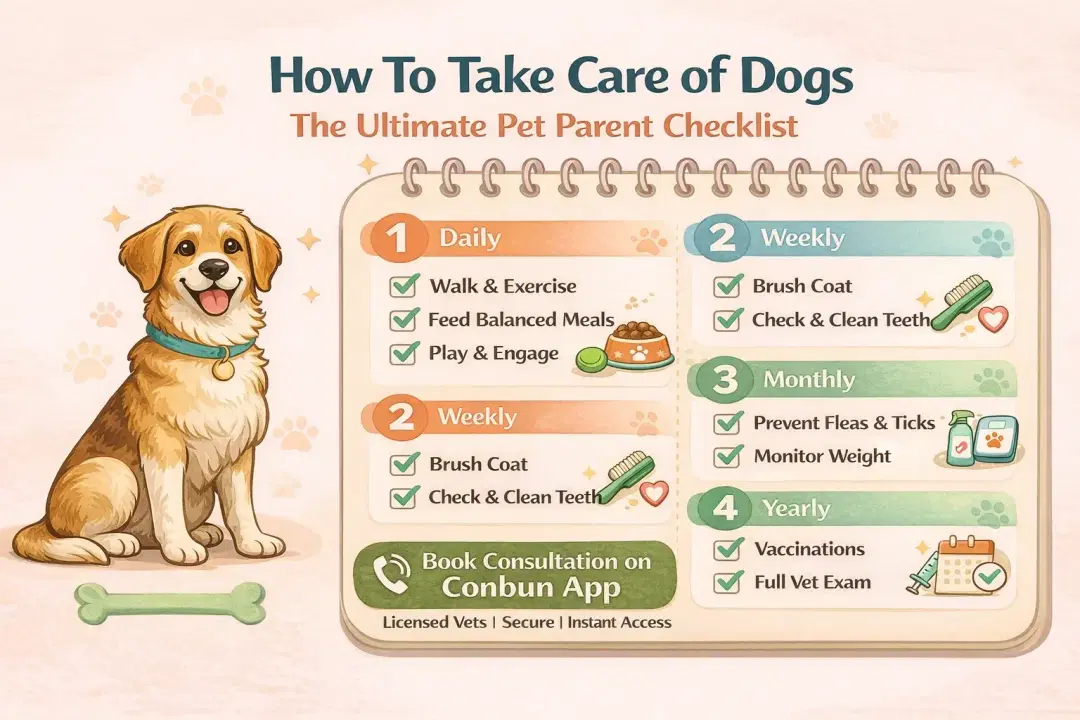
Daily Tasks
Feed balanced meals
Fresh water
Exercise and playtime
Weekly Tasks
Grooming check
Mental enrichment activities
Monthly Tasks
Parasite prevention
Weight monitoring
Annually Tasks
Veterinary wellness exam
Vaccinations
Final Thoughts
Taking care of a dog may feel overwhelming at first, but you don’t have to figure everything out alone. From choosing the right food to grooming, exercise, and routine health care, every small step contributes to a longer, healthier life for your pup.
When questions come up, and they always do, getting expert guidance can make all the difference. With best online vet consultation app on Conbun, android and iOS you can connect with experienced veterinarians anytime to get trusted advice for your dog’s health, behavior, nutrition, and care because great pet parenting becomes much easier when professional help is just a click away
FAQs (People Also Asked)
1. How do I take care of a dog for the first time?
Answer. Stick with the basics. Provide a balanced diet, fresh water, daily exercise, and routine vet check-ups. Establish a strong and predictable routine. Focus on early training and socialization.
2. What does a dog need every day?
Answer. A dog needs nutritious food, physical exercise, clean water, mental stimulation, affection, care and a safe environment.
3. How often should dogs go to the vet?
Answer. While once a year is enough for most healthy dogs, puppies and senior dogs need frequent vet check-ups.
4. How much does it cost to take care of a dog per year?
Answer. Dog care in India ranges from ₹30,000 to ₹80,000 yearly, depending on food quality, grooming, veterinary care and accessories.
5. What are the 5 basic needs of a dog?
Answer. Shelter, food, water, healthcare and companionship are the five basic needs that keep dogs healthy and fulfilled emotionally.
6. Is it OK to leave a dog alone all day?
Answer. While adult dogs can stay alone for 4-6 hours, leaving them alone all day on a regular basic may lead to boredom and anxiety.
7. How do I know if my dog is healthy?
Answer. Healthy dogs have a shiny coat, good appetite, bright eyes, normal bowel movements and steady energy levels.
8. How often should I bathe my dog?
Answer. As per veterinarians, dogs generally need a bath every 3-4 weeks which depends on coat type and lifestyle.
9. What vaccinations does my dog need?
Answer. Rabies, distemper, parvovirus, adenovirus are the core vaccines. Vets may also recommend optional non-core vaccines like kennel cough and leptospirosis.
10. How can I tell if my dog is happy?
Answer. Happy dogs generally show a relaxed body language, playful behavior, wagging tail, strong appetite and a willingness to interact with their owners.