Written by: Anand Sen; Reviewed by: Dr. Manshi (B.V.Sc & A.H, M.V.Sc)
Understanding What Diarrhea Means in Dogs
Dog Diarrhea is a medical condition in which the stool becomes unformed, loose, and watery due to a disruption in a dog's digestive process. According to the World Small Animal Veterinary Association GI guidelines, it is not a disease itself but a symptom of an underlying condition, which means it can range from a harmless condition to a sign of a serious digestive problem.
In a healthy dog, the stool should be well-formed, chocolate-brown, and easy to pick up. When their intestines speed up movement or cannot absorb enough water, stool becomes loose.
A dog may appear normal in the early stage, as mild irritation may not significantly affect energy levels. However, if Diarrhea is continuous, it may lead to nutrient loss, electrolyte imbalance, and severe dehydration.
Therefore, recognizing signs of diarrhea early is essential for preventing complications and ensuring timely care.
Related Reading: 7 Expert Tips to Protect Your Pets in Cold Weather
Different types of Dog Diarrhea You Might Notice
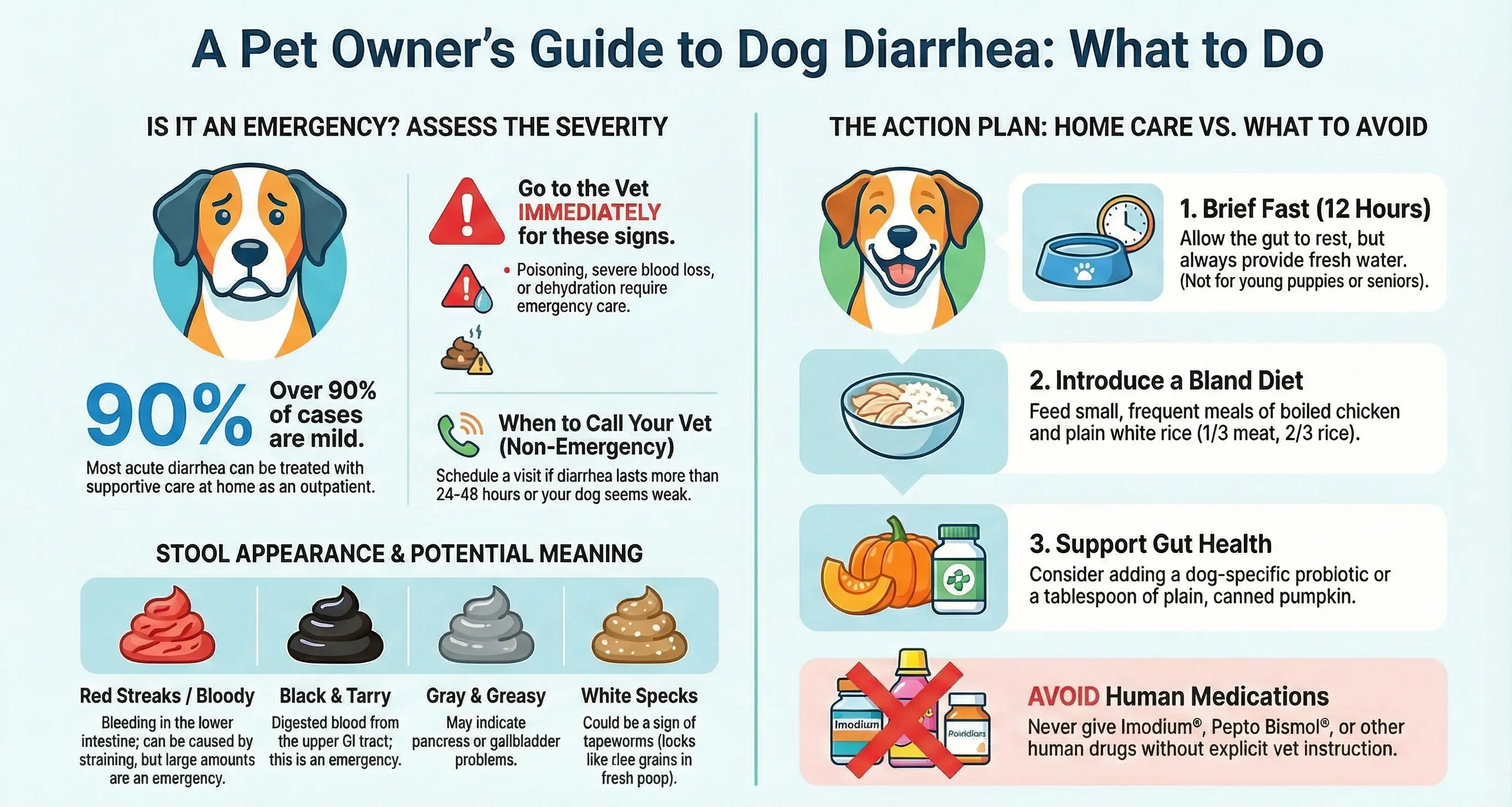
Dog diarrhea can take many forms, and identifying its type can help you understand the underlying cause.
Sudden vs. long-term Diarrhea
Acute Diarrhea may appear suddenly and is usually the result of dietary changes, increased stress levels, or dog stomach problems (from parasites, bacteria, or viruses).
If Diarrhea lasts for more than 2 weeks, it is chronic Diarrhea and indicates food intolerance, inflammatory bowel disease, or parasites.
Soft stool vs. watery stool
Soft stool suggests mild irritation or sensitivity, and there's nothing to worry about.
Watery stools that are too frequent increase the risk of dehydration and often require vet attention.
Mucus in stool
Indicates large-intestinal irritation or colitis. Stool in such conditions may also contain blood.
Other symptoms include straining to excrete and abdominal pain.
Blood in stool
Bright red blood indicates extensive intestinal inflammation.
Dark, tarry stool (melena) is a serious problem that indicates possible bleeding higher in the GI tract and requires urgent evaluation. It is the digested blood that creates the tarry appearance.
Identifying these stool patterns can help you decode what your Dog's poop is indicating, allowing you to take action before symptoms worsen.
Related Readings: 15 Common Pet Health Issues Every pet Owner Should Know
Should You Worry or Wait It Out?
If you're worried my Dog is not eating anything, is he gonna be alright? Then be assured that not every episode of dog diarrhea requires panic. Some cases resolve within 24 hours.
You should not panic for every Diarrheic episode, as some cases resolve within 24 hours.
When Diarrhea is harmless:
If the Dog is active and eating normally
No vomiting, and Diarrhea is less frequent
No blood in stool
No fever or abdominal pain
When monitoring at home is enough:
One-time loose stool
Mild dietary intolerance
No history of medical illness
When urgent veterinary care is needed:
Repeated Diarrhea lasting more than 24 hours
If you see both dog diarrhea and vomiting
Puppy diarrhea as they dehydrate faster
Blood, black stool, or jelly-like mucus (need immediate vet attention)
The Dog seems painful, lethargic, or weak
Foreign object ingestion risk
When is dog diarrhea an emergency?
Collapsing
Abdominal swelling
Pale gums
High fever
Rapid dehydration
If you notice any of the above key danger signs, seek veterinary help immediately or connect with a vet via online consultation if a physical visit is not possible at the moment.
Related Readings: 7 Signs Your Pet Might Be Hiding a Health Problem
Causes of Dog Diarrhea
Dog diarrhea is primarily manageable, but early identification helps with early treatment, preventing escalation.
Sudden food changes
A rapid dietary transition, or even feeding table scraps, can upset a dog's gut bacteria.
Allergies or intolerance
Chronic loose stools are a common sign of dietary intolerance or allergies, often triggered by wheat, beef, chicken, or dairy.
Parasites or infections
Studies published in veterinary literature show that coccidia, roundworms, Giardia, and hookworms may cause dog digestive problems, especially in young ones or outdoor dogs.
Stress and anxiety
Travelling to new environments, fireworks, and even separation anxiety can trigger diarrhea or stress colitis in dogs.
Underlying health issues
Pancreatitis
Liver or kidney disorders
endocrine diseases
Inflammatory bowel disease
If your Dog has Diarrhea for more than 48 hours, a structured veterinary approach is needed.
Related Readings: Is Online Pet Care Consultation Right for Your Pet?
What Happens at the Vet Clinic During a Check-Up?
A vet diagnosis for dog diarrhea involves a series of systematic steps to identify the cause.
Physical examination
Evaluates your Dog’s hydration, signs of abdominal pain, temperature, gum color, and gut sounds.
Stool testing
Fecal flotation, antigen tests for Giardia, or PCR panels can help in detecting parasites and infections.
Blood tests to check for
Electrolyte imbalance
Organ function
Infections
Systemic inflammation
X-rays or scans
It can be recommended if a foreign body or obstruction is suspected.
Diet history analysis
Often overlooked, but it is actually essential, as Diarrhea is commonly triggered due to dietary changes.
A professional work-up will ensure an accurate diagnosis rather than guesswork, making treatment much more effective and recovery faster.
How Diarrhea Is Treated in Dogs?
Treatment and recovery of dog diarrhea depend on its cause and severity.
Home care solutions
For mild cases, you can follow these steps:
Hydration with clean water
12–24 hours of gut rest
Bland diet: boiled chicken + rice
Medications and probiotics
Studies show that offering probiotics can help restore gut balance in dogs.
In addition, you can also provide anti-diarrheals depending on the severity of the case.
Dietary adjustments
For short-term management, low-fat, easily digestible diets are recommended.
Hydration therapy
For dogs with acute Diarrhea, hydration therapy is recommended and involves subcutaneous or IV fluids.
When antibiotics are or aren't required
According to an article in The Veterinary Journal, not every case of Diarrhea requires antibiotics. They are needed only when bacterial infections are confirmed. Overuse may disrupt gut microbiota.
What about dog diarrhea home remedies?
Safe home remedies include:
Pumpkin puree
Oral electrolytes (vet-approved) for hydration
Probiotics to support gut microbiome
Unsafe home cures like human meds should be strictly avoided.
Related Readings: 10 Benefits of booking vet consultation online vs. in-person visits?
Helping Your Dog Heal and Stay Stable
Manage recovery:
Focus on keeping your Dog’s meal small and bland. Don't offer heavy treats, and ensure they are in calm, comfortable environments.
Safely return to regular feeding:
After 4-6 days, gradually shift to regular food.
Track improvement:
Monitor stool consistency, frequency, hydration, and appetite.
Avoid repeat episodes:
Avoid sudden food changes
Keep garbage out of reach
Prevent overeating.
Simple Ways to Prevent Dog Diarrhea
Feeding habits
Always focus on gradual transitions to diets and offer measured portions. Follow a consistent diet pattern.
Cleanliness and hygiene
Wash bowls regularly, store food properly, and keep surroundings clean.
Deworming routines
A vet-guided deworming routine must be followed every 1-3 months, depending on your Dog’s lifestyle.
Vaccination role
Parvovirus vaccination is the deadliest cause of dog diarrhea in puppies.
Safe food choices
To ease their digestion and bowel movements, always avoid high-fat foods, raw meat, and table scraps.
Prevention is far better, cheaper, and easier than treatment.
Conclusion
Dog diarrhea may seem mild, especially if your Dog has been acting normal. However, with early guidance, you can identify symptoms and allow your dogs to recover quickly. A single loose stool is often harmless, but repeated Diarrhea, together with vomiting, blood in stool, are the warning signs you should never ignore.
Timely pet care consultation via online apps like Conbun can prevent complications and ensure accurate diagnosis and treatment of dog diarrhea. In addition, you can get deworming guidance and customer nutrition and lifestyle planning for your dogs.
With the Conbun's android and iOS app, pet parents can easily connect with certified vets within minutes. If your Dog has digestion concerns or Diarrhea, don't wait.
Open the Conbun app and talk to a certified vet immediately.
Quick Answers Pet Owners Always Ask
1. Can I give rice or curd?
Answer. Yes. Boiled rice and a spoonful of plain curd can be given to stabilize digestion temporarily.
2. How long is too long?
Answer. If your Dog has Diarrhea for more than 24 hours, it needs immediate vet attention.
3. Should I stop eating food?
Answer. A short fasting period may help adults but not puppies. Keep a significant focus on hydration.
4. Is this infectious?
Answer. Some causes, like parvovirus, Giardia, and bacterial infections, are contagious.
5. Can anxiety cause Diarrhea?
Answer. Yes. Stress colitis is a well-documented cause of acute Diarrhea in dogs.