Written by: Anand Sen; Reviewed by: Dr. Pratyush Singh (B.V.Sc & A.H)
Last night, a friend of mine asked me something that melted my heart.
“My dog sleeps with his back facing me. Does that mean he trusts me… or is he just tired?”
It’s a simple doubt for pet parents. But underneath it lies a very humane worry. Does my dog truly trust me?
Here’s the truth. Dogs don’t trust their owners blindly or out of the blue. Their trust is built gradually through safety, consistency and predictable care.
According to research published in the Psychology Research and Behaviour Management, dogs form bonds with humans similar to a “secure base effect”, which is seen in infants. It means that they use you as their emotional anchor when they feel safe. It means that they can stay curious and investigate novel objects in your presence.
And that’s powerful.
Trust isn’t about whether your dog obeys your commands. It’s about vulnerability. It’s about whether they feel relaxed enough to expose their belly in your presence (It’s a big deal gesture in canine body language)
In this guide, I’ll walk you through 15 scientifically backed signs your dog trusts you, explained through canine body language, behavioural psychology, and real-world clinical insight. Some signs are obvious. Others? Surprisingly subtle.
The following guide will walk you through 15 scientifically backed signs your dog trusts you, which will be explained through canine behavioural psychology, canine body language and real-world clinical insight.
Some signs are obvious, others? Surprisingly subtle.
After reading this, maybe, just maybe, you’ll see your dog differently tonight.
The 15 Signs Your Dog Trusts You
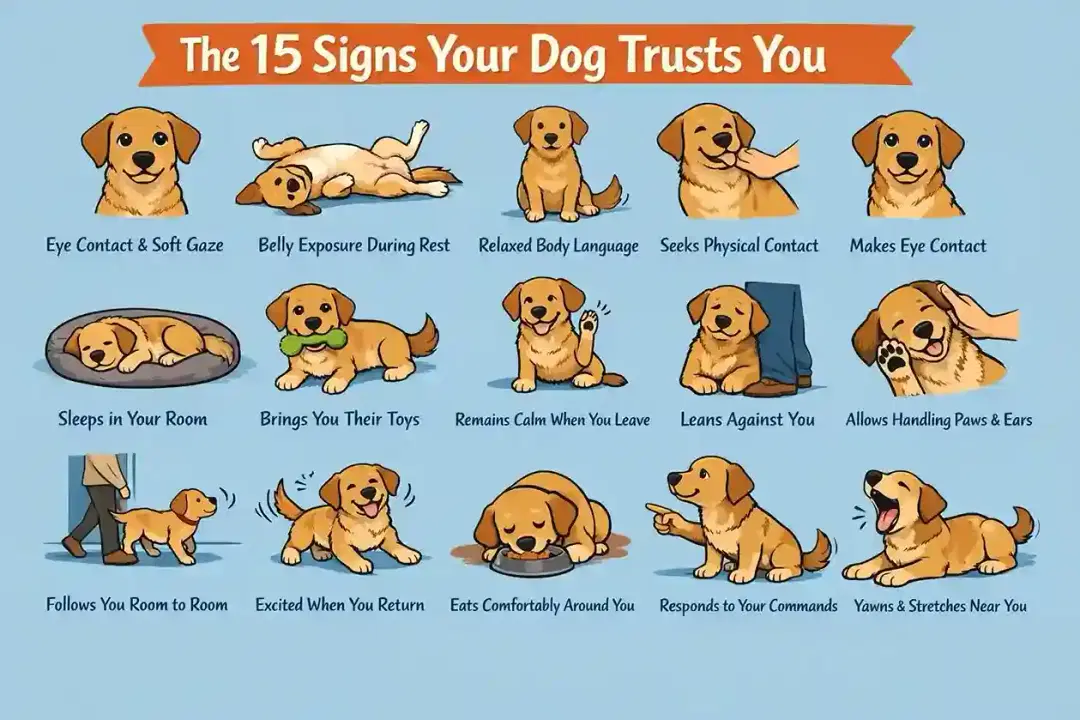
Before I begin, here’s something important you should know. Your dog’s demonstration of trust is not loud. It’s quiet. You have to observe it in their soft eyes, relaxed muscles, and subtle behaviors, which most people miss.
Let’s decode them.
1. Eye Contact & Soft Gaze
What it looks like:
Your dog, looking at you with relaxed eyes. No stiff posture or no hard stare. Just soft gazing and blinking eye contact.
Why it indicates trust:
A Research article by Nagasawa et al. published in the journal Science showed that mutual gazing between dogs and parents increases the release of oxytocin, the same bonding hormone involved in parent-infant attachment.
Expert insight:
Canine behaviorists note that relaxed eye contact signals emotional safety, not dominance.
What to watch for:
Soft eyes indicate trust. Wide eyes with a stiff body indicate tension.
2. Belly Exposure During Rest
What it looks like:
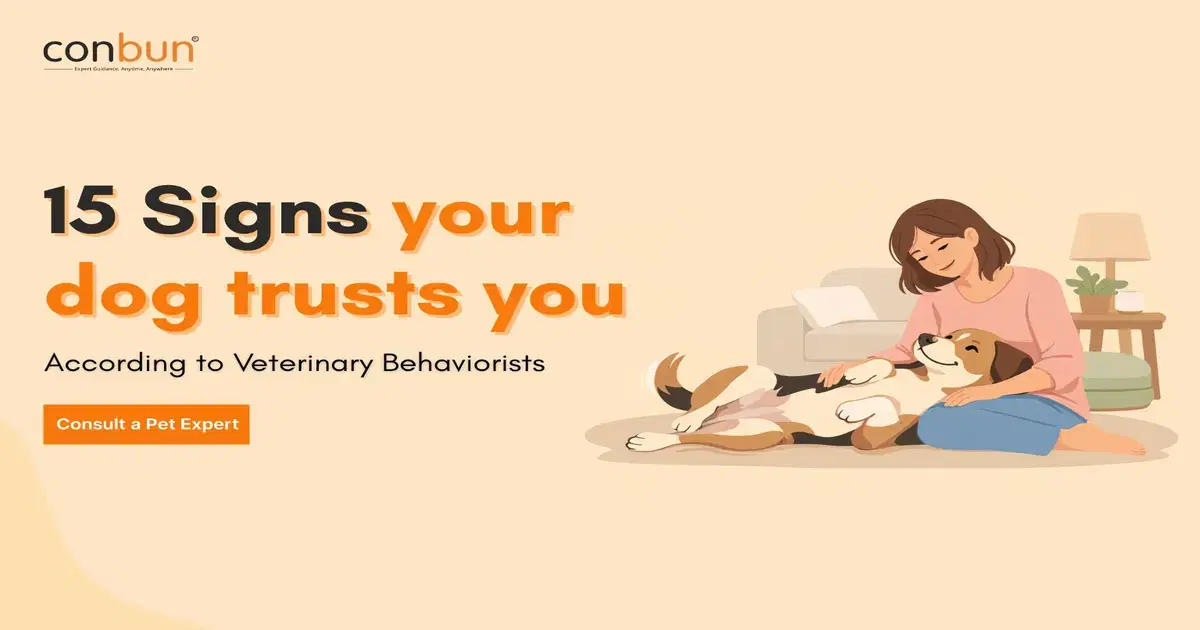
Your dog rolls onto their back while relaxing, not during hyper play, but calmly. It is often called the “belly-up” or the “starfish” pose, which generally indicates deep relaxation and extreme comfort.
Sleeping in a vulnerable position is a strong sign that your dog trusts you.
Why it indicates trust:
The abdomen houses the most vulnerable parts of a dog’s body. It’s a basic instinct to protect it while threatened. Exposing it voluntarily signals safety and thereby trust.
Expert insight:
Dr Karen Overall, a renowned veterinary behaviourist, says that voluntary vulnerability is a strong marker of secure attachment.
What to watch for:
Loose body, relaxed breathing indicates trust. On the other hand, frozen posture with whale eye equals appeasement or fear.
3. Relaxed Body Language Around You
What it looks like:
When a dog is around you with loose hips, a neutral tail and ears in a natural position with normal breathing, it has a relaxed body posture.
Why it indicates trust:
According to Kevin K. Haussler, DVM, DC, relaxed musculature reflects parasympathetic nervous system activation, the “rest and digest” state.
Expert insight:
Even the most aggressive dog breeds act relaxed when they are around their human, whom they trust.
What to watch for:
A stiff tail or rigid body cancels out the signal indicating that the dog is in alert mode.
4. Seeks Physical Contact Voluntarily
What it looks like:
Your dog leans their full weight in for petting. Nuzzling or nudging by pressing their head or nose against your hand or gently putting their paw on you, to get attention or initiate play. Seeking physical contact is also a strong sign your dog trusts you.
Why it indicates trust:
Dogs have a tendency to initiate touch, but they do this only when they feel safe. Physical closeness activates bonding hormones in both species.
Expert insight:
A 2019 study published in the Journal Animals revealed that affiliative contact strengthens attachment security in companion animals.
What to watch for:
Voluntary closeness indicates trust, while forced contact avoidance signals discomfort.
5. Makes Eye Contact Without Stiffening
This is different from Sign #1 we just went through.
What it looks like:
Your dog looks at you during training or routine moments, without tension.
Why it indicates trust:
Between unfamiliar dogs, direct gaze can signal conflict. With humans, a relaxed gaze indicates strong social bonding.
What to watch for:
Blinking, soft mouth, loose tail indicate trust, while stillness, tight mouth indicate stress.
Related Readings: Top Rated Pet Care Consultation App: Features, Benefits, How It Works (2026 Guide)
6. Sleeps in Your Presence or Room
What it looks like:
Your dog naps deeply near you. Maybe even snores in deep sleep.
Why it indicates trust:
Sleep equals vulnerability. In the wild, dogs sleep only when they feel safe. If they sleep around you or in your room, it indicates trust, a desire for security. If your dog likes to sleep around you, it means that they consider you as a part of their “pack”.
Expert insight:
Canine behavior studies describe this as the “secure base effect.” Dogs rest more easily near trusted humans.
What to watch for:
Deep sleep with twitching dreams indicates high trust.
7. Brings You Their Toys
What it looks like:
When you both are idle, your dog fetches a toy and drops it at your feet, not just to play but to share.
Why it indicates trust:
Possession sharing is a social bonding behavior. Dogs never offer valuable items to individuals they distrust. In Canine behavioral research, this behavior is seen as a “greeting ritual”, which is a way to share prized possessions. It is a sign of affection and trust.
Expert insight:
An invitation to play is considered a cooperative social signal.
What to watch for:
Loose body and play bow indicate bonding. Guarding or growling indicates resource anxiety.
8. Remains Calm When You Leave
What it looks like:
No frantic barking and no destruction. Just a mild “Okay, see you later.” As if he knows that you’ll come back. A calm composure when you leave is also a strong sign of your dog trusting you.
Why it indicates trust:
Secure attachment does not equal dependency. While it is normal if your dog cries when you leave, acting normally is also an indicator of trust, not a lack of love. Dogs who trust you believe you’ll return.
What to watch for:
Severe distress when you leave may signal separation anxiety, not lack of love, but insecurity.
9. Leans Against You
What it looks like:
A gentle full-body lean while standing or sitting.
Why it indicates trust:
Leaning transfers body weight, which is a subtle sign of reliance and comfort.
Expert insight:
Leaning is classified by behaviorists as affiliative body contact behavior that signals trust, affection and desire for social connection with their beloved hooman.
What to watch for:
While leaning signals trust, context always matters. During stressful events, leaning may seek reassurance.
10. Allows You to Handle Paws, Ears, Mouth
What it looks like:
Your dog is relaxed during nail trims, ear checks, and gentle mouth handling.
Why it indicates trust:
Dogs guard sensitive areas instinctively. If they are relaxed during a home grooming session, it suggests deep security. It signals that your dog trusts you and that you will do no harm.
Expert insight:
Veterinary literature supports that handling compliance correlates strongly with owner trust levels.
What to watch for:
Relaxed breathing indicates trust. Lip licking and freezing indicate stress.
Related Readings : Dog Nutrition Guide: Best Food, Puppy Feeding Chart & Foods to Avoid
11. Follows You Room to Room
What it looks like:
You go to the kitchen. They appear. Bathroom? They’re there.
Why it indicates trust:
Dogs cannot Skype you when you’re away. So, for them, being in proximity is social bonding.
Important note:
A dog following you is a normal attachment behaviour, unless it includes distress when separated.
What to watch for:
Relaxed following is bonding. Panic when doors close is anxiety.
12. Shows Excitement Upon Your Return (Without Anxiety)
What it looks like:
A genuine smile that wrinkles the corners of their eyes and shows teeth is a sign of excitement. IN addition, you may also see delighted tail wagging, brief zoomies, and dilation of pupils can also be observed.
Why it indicates trust:
Balanced excitement is a way of showing joy without emotional instability.
What to watch for:
Excessive jumping and frantic whining may signal that they are insecure.
13. Eats Comfortably Around You
What it looks like:
Your dog eats normally while you’re nearby. They will likely be standing, sitting or lying down with relaxed muscles in a natural, unforced position.
Why it indicates trust:
Eating requires lowering vigilance. Insecure dogs may guard food or avoid eating in stressful environments. A slight wag or wiggling of the butt signals joy or comfort.
Expert insight:
Behaviorists observe food relaxation as a reliable environmental safety marker.
What to watch for:
A rigid body posture, whale eyes (showing the white part of the eye) and body shielding.
14. Responds to Your Commands Willingly
What it looks like:
Your dog obeys everything you say with enthusiasm, not hesitation. It is a sign that your dog trusts you.
Why it indicates trust:
If they are demonstrating willing cooperation, it means that they have confidence in your guidance.
What to watch for:
Obedience from fear looks different: stiff posture, low tail, and avoidance of eye contact. Trust-based training feels light and enjoyable to both the parent and the dog.
15. Shows Vulnerability (Yawning, Sighing, Stretching Near You)
What it looks like:
Your dog sighs deeply. Yawns. Flops dramatically onto their side.
Why it indicates trust:
These behaviors occur when stress hormones drop. When dogs are happy and contented, they usually show such behaviours. It not only indicates trust, but also that you are their favourite hooman.
Expert insight:
Relaxed sighing signals parasympathetic dominance, the body’s calm mode.
What to watch for:
Repeated yawning during tension may signal stress. Context matters.
Related Readings: How to Groom Your Dog at Home Like a Pro
What Breaks Dog Trust (And How to Rebuild It)
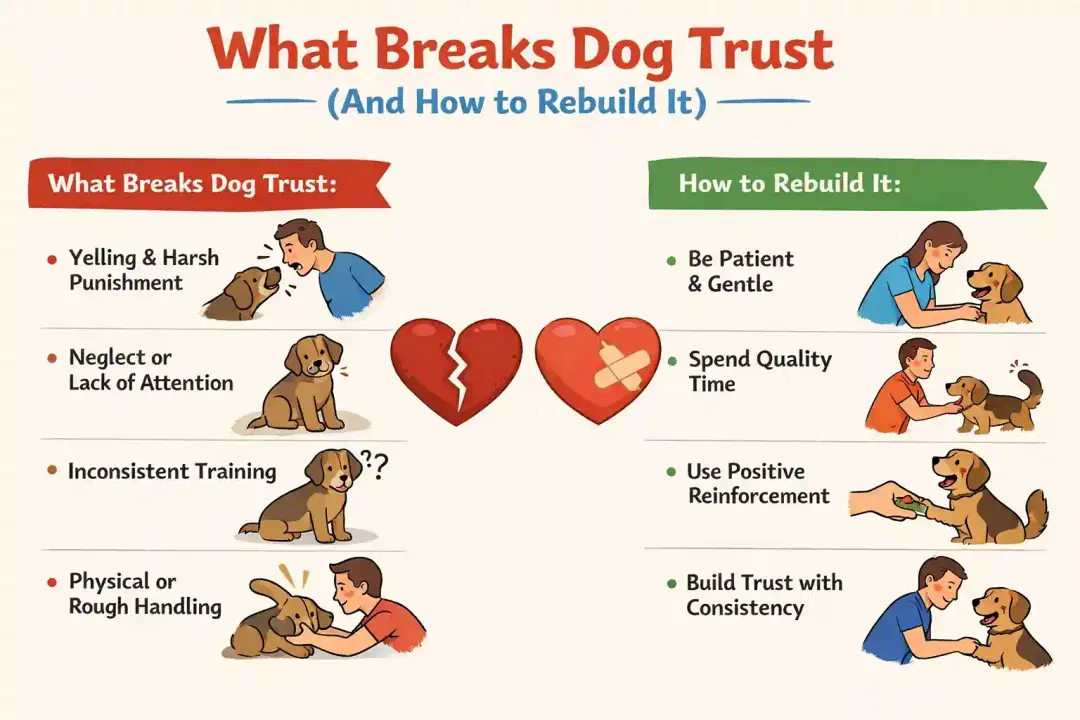
Trust is not only hard-earned but is also surprisingly fragile. As per veterinary behaviourists trust fractures after a few common mistakes:
1. Inconsistent Reactions
If one day you’re affectionate and yelling at the other, it makes your dog uncertain. Dogs thrive on predictability. Therefore, don’t be unpredictable.
2. Punishment-Based Training
According to an article in Applied Animal Behaviour Science, the use of aversive methods is correlated to the indicators of compromised welfare in dogs with stress-related behaviours during training, elevated cortisol levels and increased fear and aggression.
While a dog may obey such training, they will never trust you.
3. Ignoring Fear Signals
Lip licking, growling and turning aways etc are communication cues you should understand. Punishing them will lead to the suppression of these communication signals and increase anxiety.
4. Forced Handling
Dragging a dog into situations they’re clearly uncomfortable with erodes trust and security faster than anything else.
How to Rebuild Trust
The good news? Dogs are incredibly forgiving.
Use positive reinforcement
Maintain routine and predictability
Respect subtle stress signals
Create safe retreat spaces
Engage in cooperative activities (training, sniff walks, play). Trust rebuilds through consistency, not grand gestures.
If you’re still unsure, you can get canine behavioural advice from expert veterinarians on top pet care apps like Conbun. Just download the app and connect to pet behaviorists near you instantly.
Trust vs. Other Behaviors: Don’t Confuse the Signals
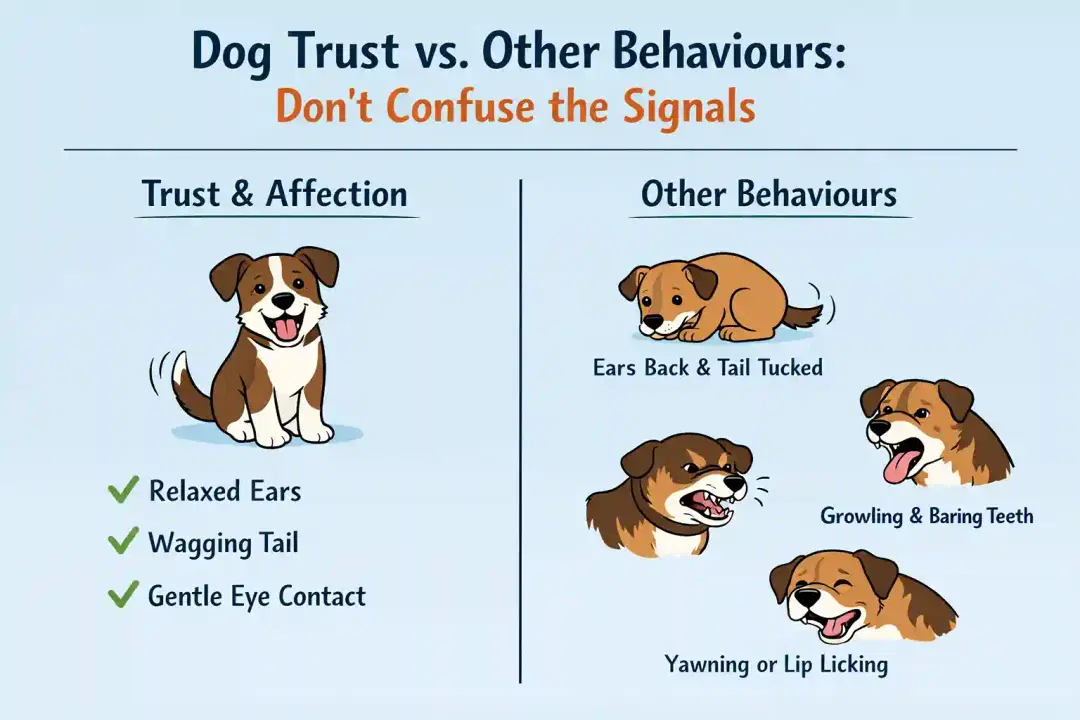
Not all compliance equals trust. Let’s clarify.
Behavior | Trust-Based | Fear-Based | Myth-Based (“Dominance”) |
Obedience | Willing, relaxed | Stiff, hesitant | Misinterpreted submission |
Eye Contact | Soft, blinking | Avoidant or frozen | Not dominance challenge |
Belly Exposure | Loose, calm | Frozen, tense | Not “submission” |
Following | Relaxed proximity | Anxiety-driven | Not “pack hierarchy” |
Leaning | Gentle contact | Clinging in fear | Not dominance |
Modern veterinary literature rejects the “alpha dominance” theory in human-dog relationships. Dogs aren’t plotting hierarchy takeovers. They long for trust, safety and clarity.
Related Readings: Dog Disease & Symptoms Explained
Conclusion: Trust Is Built in the Quiet Moments
Trust doesn’t have to be loud. A dog doesn’t always wag its tail wildly or jump into its owner’s arms. Sometimes, trust is quiet, a soft sigh at your feet, a relaxed belly-up nap, a toy gently dropped in your lap.
If you’ve seen even a few of these signs, your dog likely feels safe with you. And safety is the foundation of love. Building trust isn’t about being dominant or perfect. It’s about being consistent, patient, and kind with your four-legged friend. Watch your dog closely. Because when a dog truly trusts you, it’s one of the purest relationships you’ll ever experience.
If you’re unsure whether your dog’s behavior reflects trust, anxiety, or something else entirely, getting professional insight can make a world of difference. With pet care online consultation on Apps like Conbun Android or iOS you can connect with experienced veterinarians and canine behavior experts who can help you interpret body language, address trust issues, and strengthen your bond safely and ethically.
FAQs (People Also Asked)
1. How long does it take a dog to trust you?
Answer. In most cases, early signs appear within 2-3 weeks of consistent training and care. However, rescue dogs may take a little longer, around 2-6 months, depending on trauma history.
2. Can a dog trust one person more than another?
Answer. Yes. Dogs frequently bond with and trust one specific person in a household more than others. Dogs form primary attachments based on caregiving, consistency and positive interaction.
3. Do all dogs show trust the same way?
Answer. No. Personality, breed and life experience influence the expression of trust. A shy dog may show trust gradually and quietly. An outgoing dog, on the other hand, may be more demonstrative. A relaxed body language is a baseline marker.
4. What if my dog only shows some of these signs?
Answer. That’s perfectly normal. Trust exists on a spectrum. If your dog relaxes near you, seeks contact sometimes, and feels safe, you’re building a strong foundation.
That’s completely normal. Some dogs may show all, and some dogs may show few of these signs. If your dog is relaxed near you and seeks physical contact, you have built a strong foundation.
5. Does my dog trust me or just tolerate me?
Answer. Tolerance looks neutral but distant. Trust requires voluntary engagement, soft eyes, relaxed posture, seeking proximity and emotional responsiveness.
6. Can dogs sense if you love them?
Answer. While they don’t conceptualise “love” as we do, they absolutely respond to emotional tone, consistent care, and oxytocin release. According to research, mutual gaze increases bonding hormones in both species.
7. How can I build stronger trust with my dog?
Answer. Train using rewards, respect their pace, create predictable routines, provide mental enrichment, avoid punishment-based methods, and trust grows in environments where safety is constant.