
Written by: Anand Sen; Reviewed by: Dr. Shree (B.V.Sc & A.H, M.V.Sc)
Congratulations!
You’ve officially brought home a tiny, breathing bundle of chaos. Whether it’s a Golden Retriever who thinks he’s a lap dog or a kitten who already treats you like an unpaid intern.
Your Instagram is filled with aesthetic photos and cinematic Reels. The Family WhatsApp group has exploded, where even Chachi-ji from Kanpur has commented that this is the best dog breed as per Vastu.
But then, at 2:00 AM, reality hits. The "new pet smell" is replaced by a "what did he just eat?" smell. Suddenly, you’re staring at your phone at midnight with questions that feel like:
Why is he sneezing like a pressure cooker?
Wait, how many rounds of vaccinations are there?
Is this poop a normal shade of 'khichdi' or is it a medical emergency?
When do I deworm? Do I need a priest or a pill?
Welcome to pet parenting in India, where everyone has an opinion but no one has the manual.
Think of this first year as the "Student of the Year" phase, except the stakes are much higher than a trophy. As per veterinarians, the first 12 months determine your pet’s long-term health outcomes.
During this period focussing on preventive care, vaccines, and nutrition matters infinitely more than that ₹2,000 Designer Collar or the fancy organic treats that taste like cardboard.
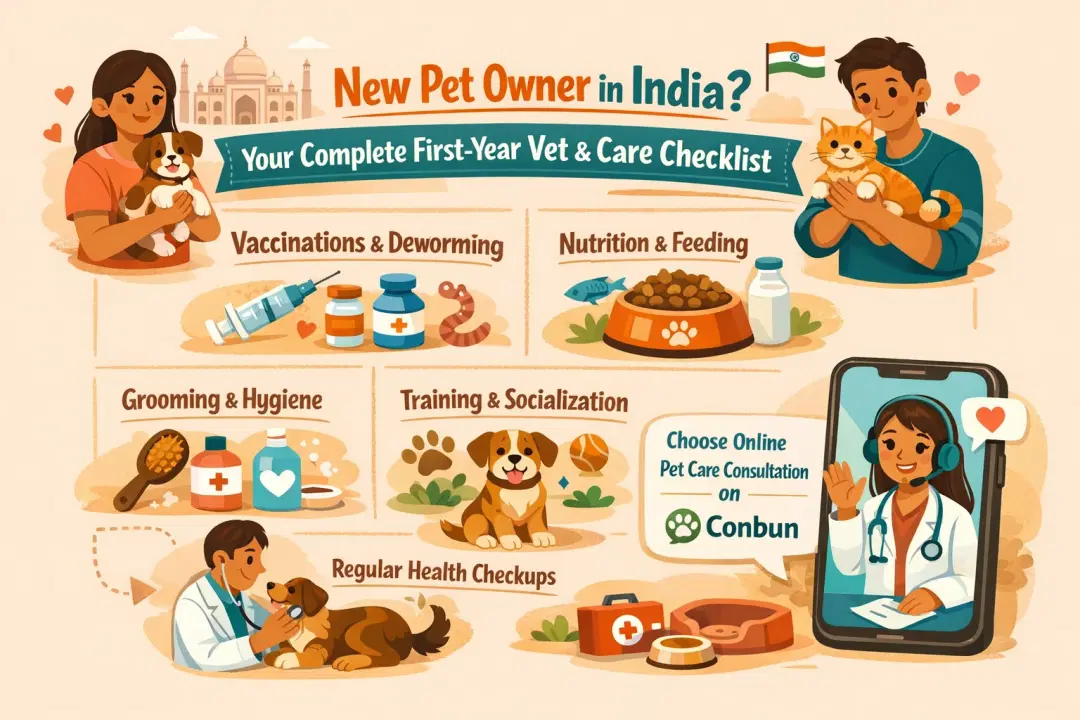
This is your practical, no-panic, month-by-month new pet owner guide, India edition.
The pet population in India has grown rapidly in the past few years, especially after the pandemic.
But these are the things that veterinary literature consistently shows:
Puppies, kittens and small breed pets are most vulnerable to infectious diseases, especially the first 4–6 months.
Early vaccination significantly reduces mortality risks from preventable diseases like parvovirus and distemper by over 90%.
Timely deworming helps prevent intestinal parasite loads that stunt your pet’s growth and affect their immunity.
The problem is that most new pet owners don’t know when to take the pet to the vet in India, or what the pet vaccination schedule in India actually looks like.
Week 1 - The First Things Every New Pet Owner Must Do
The first week should be less about cuddles (though there will be many) and more about laying health foundations.
1. Book the First Vet Visit
Yes, even if your breeder or rescue shelter owner says “everything is done.”
Your vet will:
Perform a full physical exam
Check for congenital issues
Assess weight and hydration
Start deworming protocol
Create a vaccination plan
Veterinary guidelines recommend the first check within 1st week of bringing a new puppy or kitten home.
Early detection matters, and it is only possible after a proper vet check. Many pet health conditions, like hernias, mange or congenital heart murmurs, are easier to manage if identified early.
2. Start the Deworming Schedule
Due to the tropical hot and humid climate, India has a high prevalence of ticks, fleas, worms and intestinal parasites.
Typical recommendation:
Every 2 weeks until 3 months of age
Then every month for 6 months
Then every 3 months
Worm infestations are not just gross; If not treated in time, they impair your pet’s immunity and nutrient absorption.
3. Set Up Feeding & Sleep Routine
Pets thrive on predictability and a consistent schedule. Consistency helps in reducing anxiety and digestive upsets. Thus, puppy care during the first year must focus on consistency.
Feed at the same time daily
Fresh water should always be available
Designate a proper sleeping area
Young pets generally need more sleep, around 16-20 hours daily. If they are not resting properly, their stress hormones increase, which also affects immunity.
4. Pet-Proof Your Home
Your pet is like a toddler with teeth (also attitude if it’s a cat).
Remove:
Electrical cords within reach
Chocolate (toxic to dogs)
Onions and garlic
Small swallowable objects
In India, accidental ingestion cases spike during festival seasons, especially around Diwali sweets and decorations.
Accident ingestion cases spike during festival seasons in India, especially on festivals like Holi were sweets, colours, and decorations may harm them.
Even after taking many precautions, many pet parents end up removing Holi colors from pets.
Month 1-3 - Vaccinations, Diet & Early Health Checks
Now things get serious.
Here’s a simplified pet vaccination schedule in India:
Week | What to Do |
Week 1 | First vet check, deworming |
Week 3–4 | First vaccine dose (DHPP for dogs / FVRCP for cats) |
Month 2 | Second vaccine booster |
Month 3 | Rabies vaccine |
Core canine vaccines typically protect against:
Parvovirus
Distemper
Adenovirus
Parainfluenza
The kitten care checklist includes vaccinations like:
Feline panleukopenia
Calicivirus
Herpesvirus
Rabies vaccination is legally mandatory in India. So, it should be at the top of your priority list of pet vaccination schedule in India.
Common Illnesses to Watch For
During puppy care, first year India stage, watch for:
Persistent vomiting
Bloody diarrhea
Lethargy
Nasal discharge with fever
Refusal to eat for more than 24 hours
Parvovirus is a common canine disease in India, especially in unvaccinated puppies between 6 weeks and 4 months old. Early vaccination dramatically lowers risk.
What’s Normal vs Red Flag?
Normal:
Mild loose stool during food transition
Sleeping most of the day
Occasional hiccups
If you are wondering when to take pet to vet, it must always be for the following red flags listed below:
Continuous diarrhea
Sudden swelling
Laboured breathing
Seizure activity
When in doubt, consult a vet online for triage.
The first three months of a pet's timeline are about immunity building. By skipping these vaccines, you are gambling with your pet’s health against preventable diseases.
Month 4-6 - Behavioral Development & Nutrition
During this period behavioral and nutritional development takes place. Energy increases, and boundaries get tested.
Solid Food & Nutrition
Most puppies and kittens are fully transitioned to solid food by 8 weeks. By 4–6 months:
Increase meal portions gradually
Shift to age-appropriate growth formula
Avoid excessive treats (obesity rates are rising in urban India)
Proper nutrition in the growth phase supports skeletal development and immune health.
Kittens require more protein-dense food. So, animal protein sources must be on the priority of your kitten care checklist.
If you’re confused about diet ratios, this is where a pet care app, India first time user can benefit from quick online vet guidance can prevent unnecessary clinic visits.
Through online consultations, you can get expert nutrition advice, vet-approved home-made recipes and diet plans to support your pet’s overall development
Training Foundations
Between 3 and 6 months, the socialisation window begins closing.
Exposure to:
Different sounds
Gentle handling
Basic commands
Studies show that early positive exposure in dogs reduces fear-based aggression later in life.
Healthy vs Struggling Behavior
Healthy signs:
Curious exploration
Playfulness
Good appetite
Concerning signs:
Hiding constantly
Sudden aggression
Loss of appetite
Excessive scratching
Behavioral issues, if caught early, are easier to correct. Remember: behavior is health.
Month 7-12 - Spay/Neuter, Annual Checks & Ongoing Care
By now, your tiny fluffball has developed political opinions, and they also have hormones.
Spay/Neuter - When and Why
Most veterinarians in India recommend neutering or spaying between 6-9 months, depending on their size, breed and health status.
Why it matters:
Prevents unwanted litters
Reduces roaming and aggression
Lowers risk of mammary tumours (up to 90% reduction if spayed before first heat, according to veterinary oncology studies)
Eliminates risk of uterine infections (pyometra), which can be life-threatening
Male dogs benefit too, with reduced testicular cancer risk and lower hormone-driven behaviours.
Spaying is not just a population control tool. It’s a preventive medicine.
Annual Health Check Checklist
If your pet has touched the one-year mark, schedule a full health review.
Your vet should:
Check weight and body condition score
Examine teeth and gums
Listen to the heart and lungs
Review vaccination status
Discuss parasite prevention
Many pet parents ask when to take pet to vet in India after puppy shots are done. The answer: at least once a year, even if your pet looks fine.
Dental Health Basics
By 1 year of age, plaque buildup begins.
Poor dental care can lead to:
Bad breath
Gum disease
Heart and kidney complications (bacteria can enter the bloodstream)
Start:
Weekly brushing (dog-safe toothpaste only)
Dental chews recommended by your vet
Practising small health habits now helps you in preventing anaesthesia-based dental cleaning later.
Build a Health Record (Future You Will Thank You)
Keep track of:
Vaccination dates
Deworming schedule
Weight history
Past illnesses
Medications
Proper medical records and documents help you spot patterns, recurring allergies, weight gain and growth delays. This marks the difference between reactive and proactive care. A pet care app helps you collect and save all medical history records at one place.
The One Tool That Makes This Whole Checklist Easier
Let’s be honest.
You won’t remember every vaccine date.
You won’t remember the deworming timing.
You definitely won’t remember which week rabies was due.
This is where a pet care app in India actually benefits first-time pet parents.
Look for an app that offers:
Vaccine reminders
Deworming alerts
Health logs
Easy access to vet consultations
Record storage
Think of it as your pet’s digital health diary.
Online pet care consultation apps should not be seen as replacements for physical clinics but as a support system between visits. A place to ask, “Is this normal?” before you panic.
Conclusion
The first years lay down the foundation for your pet’s lifetime of health. It’s okay to feel overwhelmed.
Just go at your own pace, follow the proper schedule, keep all medical records and consult when unsure.
And remember, there is no silly question when it comes to your pet’s health.
If you want reminders, health logs, quick access to veterinary guidance and everything related to pet care, download Conbun and make your first-year smoother.
Your pet only gets one first year. Make it count.
FAQ for New Pet Owners
1. How often should I take my puppy to the vet?
Answer. In the first 3-4 months, visits are typically every 3-4 weeks for vaccines and monitoring. After this period, at least once a year, or when there’s an illness.
2. What vaccinations does a puppy need in India?
Answer. Core vaccines include Rabies, Distemper, Hepatitis, Parvovirus and Parainfluenza. Your vet also recommends non-core vaccines based on lifestyle and region.
3. Can I consult a vet online for a new puppy?
Answer. Yes, for nutrition, behavioral guidance and minor concerns. For emergencies or vaccinations, always visit a clinic.
4. What’s the most important thing a first-time pet owner should know?
Answer. Prevention is cheaper than treatment. Vaccinate on time. Deworm regularly. Ask questions early. There is no such thing as “overthinking” when it comes to your pet’s health.