
Freeze-Dried vs Raw Dog Food: The 2026 Guide to Switching Without Gut Issues
Written by: Anand Sen; Reviewed by: Dr. Parth Patel (B.V.Sc & A.H., M.V.Sc)
It usually begins with a 15-second Instagram reel. You see a Labrador go wild over a slab of raw chicken while a dramatic voiceover declares, "This is how your dog is meant to eat!"
Just as you’re finally about to clock out of your "full-time job" of scrolling and hitting your daily target of 150 reels, the algorithm serves you a curveball; in that final video, you, the professional scroller, are being sold a bag of freeze-dried "superfood for dogs" that promises the raw experience without the salmonella-induced panic.
And just like that, you, a responsible Indian pet parent, are stuck in a very common modern dilemma:
Freeze-dried vs raw dog food: Which one is actually better?
The Imported Advice Problem
Choosing the best dog food is a real problem. In cities like Delhi, Mumbai, Chennai and Bengaluru, urban pet parents are slowly moving away from traditional kibble to explore “natural dog diets” that promise better digestion, shinier coats, and, of course, fewer vet visits.
But here’s the reality check: most of the "raw feeding" philosophy you read about on the internet is imported from Western blogs. They’re writing about snowy winters and perfectly climate-controlled kitchens. But ignore our Indian reality of 40°C heatwaves, monsoon-induced spoilage, the struggle of sourcing "human-grade" meat which is actually clean, and the specific lifestyle needs of a hardy Indie vs. a pampered Shih Tzu.
The Vet’s Perspective
Dog nutrition and health go hand-in-hand. On Conbun, one of the most common pet nutrition questions our veterinarians receive is exactly this:
“Should I switch my dog to raw food or freeze-dried?”
The truth? Raw feeding may sound natural, but if we take into account Indian conditions, it’s a high-stakes game related to food safety. Freeze-dried is convenient and safe, but it can be heavier on your wallet.
We’re here to cut through the overwhelming social media noise. In this guide, we’ll break down:
What raw dog food actually includes
How freeze-dried food is made
A head-to-head comparison (nutrition, safety, cost)
The real risks vets see in India
And which option works best for your dog’s breed and lifestyle
By the end of the blog, you’ll be making a choice that keeps your dog healthy, happy, and away from the clinic.
What Is Raw Dog Food? (And What Does It Actually Include?)
Raw dog food refers to feeding dogs uncooked/unheated animal-based ingredients, primarily meat, bones, and organs. The idea behind feeding raw diets is that dogs should eat as their wild ancestors did. It’s often called a species-appropriate diet, as food is not cooked or heated to high temperatures to kill germs.
Raw dog food contains
Uncooked muscle meat (Thigh and breast)
Uncooked organ meat (Liver and kidney)
Uncooked bones
Uncooked eggs
But “raw feeding” isn’t one single approach.
BARF vs Prey Model - What’s the Difference?
There are two main styles:
1. BARF Diet
The BARF diet, or Biologically Appropriate Raw Food diet, is a very good way to feed a pet, but it should be balanced in terms of ingredient mixing ratio. This diet was originally defined as Bones and Raw Food.
It includes:
Raw meat
Bones
Organ meats
Fruits and vegetables
Sometimes dairy or supplements
It’s more “balanced” and commonly followed by pet owners who are trying to recreate a complete diet.
2. Prey Model Raw (PMR)
This is a stricter and simpler diet model that consists of:
Muscle meat
Bones
Organs
No vegetables. No spices. No extras. Just feeding what a dog would eat in the wild.
Common Raw Food Ingredients in India
If an Indian household feeds their dogs raw diets, they are rarely commercial. Raw diets are usually homemade.
Typical raw food ingredients include:
Chicken (neck, wings, mince)
Goat meat (mutton)
Liver and other organs
Eggs
But here’s where things get interesting.
Unlike Western countries, India does not have strict regulations surrounding “pet-grade meat”. Most raw food is sourced from local butchers. And I think you can imagine how the hygiene conditions would be.
The Reality Check
Global veterinary bodies, including WASVA, are generally against raw feeding because raw food comes with:
Bacterial contamination risk (Salmonella and E. coli)
Nutritional imbalance, if not properly formulated, as homemade raw diets generally lack Calcium, Phosphorus, and vitamins (A, D, E)
Storage challenges, especially in Indian summers and monsoons
Hygiene-related challenges, if sourced from local butchers
In fact, at Conbun, our veterinarians see numerous cases every month where pet parents start raw diets with good intentions, but without proper guidance.
And the result?
Dogs suffer from digestive issues, infections, or nutrient deficiencies.
Related Readings: Dog Gut Health: How to Recognise Problems
What Is Freeze-Dried Dog Food? How Is It Made?
Now let’s discuss the modern alternative that’s gaining popularity.
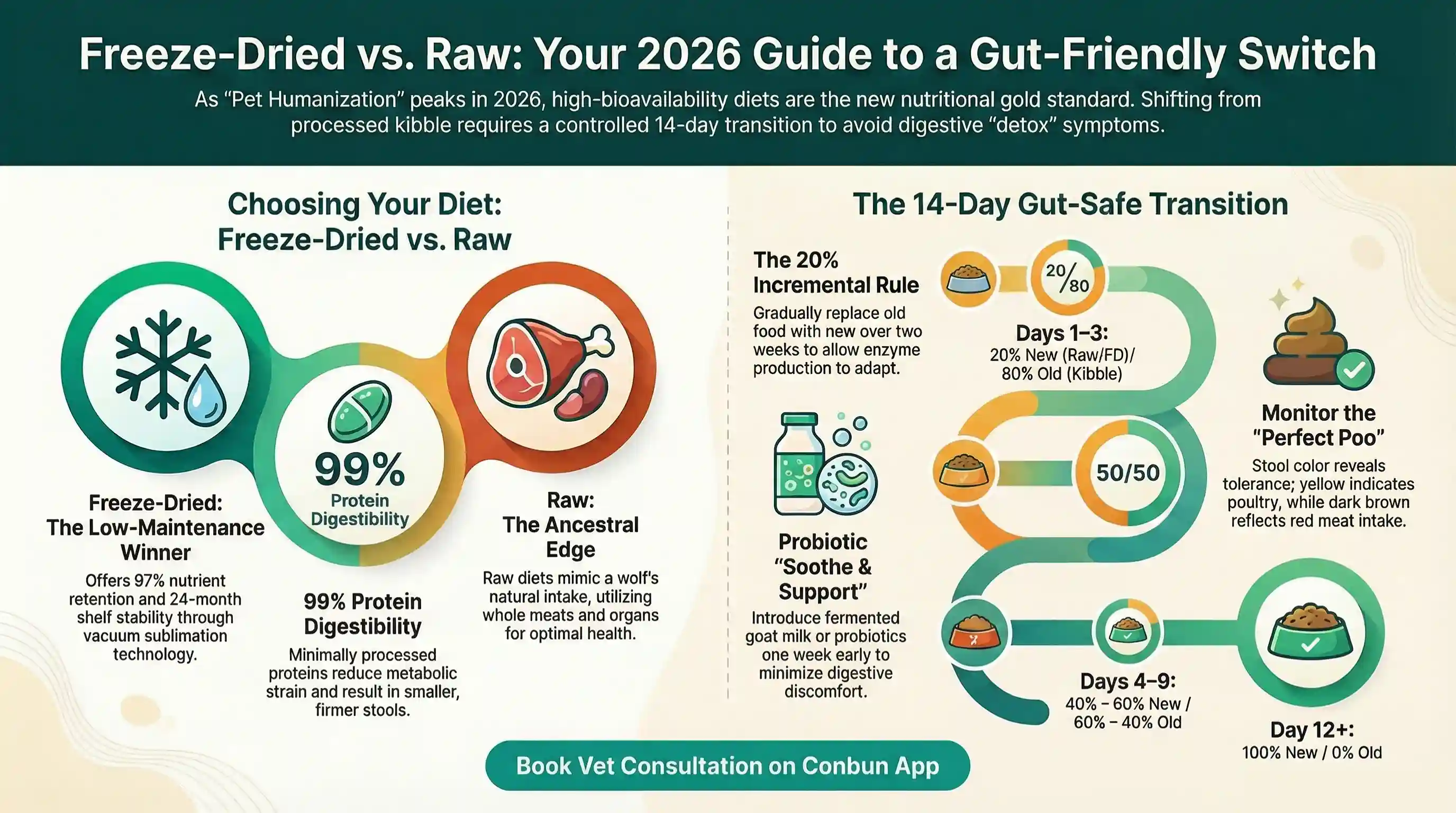
Freeze-dried dog food is raw food that undergoes a process to remove moisture while preserving nutrients. It is made by rapidly freezing raw ingredients and removing 98-99% of moisture through sublimation. This low-temperature process locks in flavour, natural enzymes and essential nutrients.
Freeze-dried dog food is a raw meat-based, nutrient-dense diet option that is palatable and minimally processed. It also has a longer shelf life.
Freeze-dried food can be the best option for owners who are wondering how to get their dog the vitamins and minerals they need, as it retains most of the nutrients, compared to raw dog food.
Think of it as raw food upgraded for safety and convenience.
How Freeze-Drying Works (Simple Breakdown)
Raw animal-based ingredients are frozen at very low temperatures
They’re placed in a vacuum chamber
Ice is removed directly as vapour (without melting)
What remains is nutrient-dense, shelf-stable food
The result?
95%+ nutrient retention
Minimal bacterial presence
Increased shelf life of 12–24 months
No preservatives. No cooking. Just science.
Freeze-Drying vs Dehydrating - Not the Same
Many Indian pet parents confuse these two.
Dehydrated food uses heat, which can destroy some nutrients
Freeze-dried food uses cold, which preserves nutrients better
This is why freeze-dried food is considered closer to raw food in terms of nutrition, but is also far safer.
Availability in India (2026)
While freeze-dried food is emerging in India, it is growing fast.
Popular brands include:
Stella & Chewy’s
Primal
K9 Natural
Freeze-dried dog options are mostly imported and thus are premium-priced. However, more Indian options are entering the market.
Freeze-Dried vs Raw Dog Food - Head-to-Head Comparison
Let’s now discuss the question everyone is asking.
Which one is better?
The answer to this question does not just depend on nutrition; it depends on lifestyle and real-life practicality in India.
FactorRaw Dog FoodFreeze-Dried Dog FoodNutrient RetentionVery highVery high (95%+)Bacterial RiskHigh (Salmonella, E. coli)Very LowShelf Life1–3 days12–24 monthsConvenienceLowHighCost (Monthly)₹3,000–₹5,000₹8,000–₹12,000Cost (Per unit)₹199 (Brands like Canine India)₹275 (Rawr4Dogs, Dogsee)Monsoon SafetyRiskySafePuppiesVet guidance neededSafeSeniorsCareful useEasy digestionAvailabilityEasy (local sourcing)Available on (e-commerce site, brand stores)
The Indian Context Matters Most
In countries with strict meat quality control, raw feeding can be safer.
But in India?
Heat and humidity dramatically increase microbial growth (especially in the monsoon)
Refrigeration is not always reliable
Meat hygiene standards are not up to the mark
That’s why many veterinarians on Conbun recommend Freeze-dried as a safer starting point. Raw feeding can be practised, but only with proper vet supervision.
If you are considering raw dog food, talk to a veterinarian or pet nutritionist online via veterinary doctor online consultation on Conbun to get guidance on homemade vet-approved dog food recipes.
Related Readings: How To Take Care of Dogs: The Ultimate Pet Parent Checklist
Is Raw Dog Food Safe for Dogs in India? Vet-Backed Risks You Must Know
Let’s be honest, raw feeding is not just a social media trend. It can be beneficial for your dog.
However, it also comes with real, documented risks, especially in India, where for a large population, hygiene is still a myth.
Bacterial Contamination
Raw meat can carry:
Salmonella
E. coli
Listeria
These can affect both you and your dog, as there are zoonotic risks associated with raw meat.
Parasites in Raw Meat
In India, meat is not always parasite-free.
This increases the risk of:
Worm infestations
Gastrointestinal infections
Zoonotic Risk (Yes, Humans Too)
Improper handling of raw food can transfer bacteria to humans, especially for those at risk, such as:
Children
Elderly
Immunocompromised individuals
Raw dog food diets come with high contamination risks. Salmonella, E. coli, and Listeria monocytogenes can cause severe and fatal infections in both humans and dogs.
In addition, a recent study published in Nature also found that raw diets can introduce multi-drug resistant bacteria into the home environment, thereby reducing the effectiveness of treatments.
High-Risk Groups (Avoid Raw)
Raw feeding is not recommended for:
Puppies under 6 months
Senior dogs
Dogs with weak immunity
What Our Vets See
During monsoon months (July–August), pet doctors on Conbun report a spike in:
Loose stools
Vomiting
Food-borne infections
It has to be noted that most of these cases trace back to improperly stored raw meat. Consider taking vet advice online on Conbun if you notice any of these symptoms in your dog. Timely veterinary guidance can prevent minor health problems from escalating.
Which Is Better for Indian Dog Breeds - Raw or Freeze-Dried?
There’s no one-size-fits-all answer. But patterns do exist.
INDogs (Indian Pariah Dogs)
Highly adaptable
Strong gut microbiome
Can handle both raw and freeze-dried meat well.
Labradors & Golden Retrievers
Prone to obesity
Raw diets need careful fat control. Freeze-dried options are better for portion control.
Shih Tzu & Pomeranian
Small stomachs
Sensitive digestion
Freeze-dried (rehydrated) is often easier to digest
German Shepherd & Doberman
High energy
Larger builds
Hybrid diets containing raw and freeze-dried options often work best for most dogs.
Raw dog food can be powerful but risky; on the other hand, freeze-dried balanced food is safer and more practical
If you’re still unsure what your dog specifically needs, that’s exactly where expert guidance comes in handy. Connect with a veterinarian online on Conbun to get tailored diet plans for your pets based on your budget and their lifestyle.
Related Readings: Online Vet Consultation vs Clinic Visit in India - Real Cost Comparison
Cost Breakdown - Raw vs Freeze-Dried Dog Food in India (2026 Prices)
Let’s talk numbers, because for pet parents in India, choosing the best dog food isn’t just about nutrition. It’s about the long-term sustainability of diets.
Both raw and freeze-dried diets are more expensive than traditional kibble. But the real question is:
What are you actually paying for?
Monthly Cost Comparison (Medium-Sized Dog)
Premium Kibble: ₹2,000–₹6,000
Home-Prepared Raw Diet: ₹2,000–₹6,000
Commercial Raw (Frozen/Imported): ₹8,000–₹12,000
Freeze-Dried (Full Diet): ₹5,000–₹12,000
Freeze-Dried (Topper Use): ₹1,500–₹3,000
The Hidden Cost Factor
Raw food looks cheaper at first, but there are some cons associated with it, like:
Time spent sourcing quality meat
Storage (refrigeration cost)
Risk of spoilage (especially in summer/monsoon)
Potential vet bills due to infections, food poisoning in dogs
Freeze-dried food, on the other hand:
Requires no refrigeration
Has a longer shelf life
Nutrient-dense solution
So, while the upfront cost may be higher, freeze-dried food generally balances out the costs if you consider convenience, safety and reduced health risks.
If you are a budget-conscious pet parent, the smartest entry point is using freeze-dried food as a topper and not as a full replacement
Can You Mix Freeze-Dried and Raw Food? What Conbun Vets Recommend
Short answer? Yes.
Long answer? That’s exactly what vets recommend.
As per veterinarians on Conbun, instead of choosing one extreme, you can go for a hybrid dog feeding approach that combines the benefits of both, for you and for the dog.
1. The “Topper Method” (Best for Beginners)
Add freeze-dried crumbles (from any high-quality brand) on top of regular dog kibble
Improves protein quality
Increases nutrient density
For most dog parents, this is:
Affordable
Safe
Easy to implement
It is also a perfect approach for first-time diet switchers.
2. The Hybrid Diet (Balanced Approach)
~70% freeze-dried
~30% raw (only under vet supervision)
This works well for:
Active breeds
Dogs are already accustomed to varied diets
Indie dogs
It allows:
Nutritional diversity
Minimal bacterial exposure
3. The Transition Plan (Safest Route)
Many vets suggest this structured approach:
Week 1–2: Kibble + freeze-dried
Week 3–4: Fully freeze-dried
Week 5+: Introduce raw (only if suitable)
This gradual transition:
Ensures gut health
No digestive pressure
Also helps in monitoring tolerance
Switching a diet too fast is one of the most common pet food mistakes that owners make. The diet transition should be slow, allowing the dog’s digestive system to get used to the new food.
When in Doubt
Every dog is different. A dog’s lifestyle, breed, age, activity level, and medical history, etc., are the factors that matter while you are introducing a diet.
If you’re still unsure about how to transition safely, a quick online vet consultation with a canine nutrition expert can save you weeks of trial and error.
Related Readings: Best Homemade Foods for Dogs (Vet-Approved Recipes)
Red Flags - When to Stop Raw or Freeze-Dried Feeding Immediately
Not every dog reacts well to a new diet. Even if it’s “premium” or “natural”, your dog has been eating different things for a long time, and thus switching foods will affect their bodies. However, the intensity of these effects may vary.
Usually, when things go wrong, the signs are clear.
Stop Immediately If You Notice:
Vomiting more than twice in 24 hours
Dog diarrhea lasting more than 48 hours
Mucus or blood in stool
Dog peeing blood (hematuria) due to the formation of bladder stones
Sudden lethargy or weakness
Anorexia or refusal to eat
Skin reactions (itching, rashes, hives)
Unexplained weight loss
Swollen abdomen or signs of bloat (emergency – sign that your dog needs a vet immediately)
Why This Matters
These symptoms indicate:
Food intolerance
Bacterial infection
Nutritional imbalance
Or improper transition
One particular mistake that many pet parents make? They wait too long, assuming that the body will “adjust.”
Sometimes a dog may recover, but when it doesn’t, that delay can turn a small issue into a serious health emergency.
What To Do Instead
If any of these signs appear:
Pause the new diet immediately
Switch to a bland, vet-approved diet
Seek professional advice
Quick action = faster recovery.
If you notice any of these signs, don’t wait; connect with a certified veterinarian on Conbun in under 60 seconds.
Case Spotlight: Bruno’s Monsoon Diet Scare - Delhi, July 2025
Bruno, a 3-year-old Labrador from South Delhi, had recently been switched to a home-prepared raw diet.
A 3-year-old Labrador from South Delhi recently transitioned to a home-based diet. His owner did a great job of research. Followed various online guides. Bought fresh chicken regularly.
Everything was alright until mid-July
Bruno had:
Loose stools
Low energy
Reduced appetite
At first, these symptoms seemed minor, and the owner thought that it was just a stomach upset.
But when Bruno’s condition didn’t improve, the owner reached out for expert advice late one evening.
After reviewing Bruno’s diet and routine, the issue became clear:
The chicken mince was being stored in a frost-free refrigerator, which cycles the humidity. During Delhi’s monsoon, this created the perfect environment for bacterial growth.
The solution? The vet suggested:
Pausing raw feeding immediately
Switching to rehydrated freeze-dried food
Adding a probiotic
Monitoring for 7–10 days
Bruno recovered in less than a week.
The Bigger Lesson
Here, the concept of raw feeding didn’t fail. But the execution of a freeze-dried diet in Indian conditions did.
Humidity. Storage. Temperature. Lifestyle. All these are additional variables that most online guides don’t account for, but they matter immensely here, especially in the case of diet changes.
Conclusion
So, freeze-dried vs raw dog food, what’s the final verdict?
This is the truth without bias:
Raw feeding is incredibly beneficial, but only with proper sourcing, storage, and veterinary guidance. If any of these things is compromised, your dog’s health may be too.
Freeze-dried food, on the other hand, offers a safer and more convenient alternative that retains most of the raw nutrition without the same level of risk
For Indian pet parents, the decision isn’t just about what’s “natural.” It’s about what’s practical, safe, and sustainable in our environment.
Because the worst thing you can do is switch your dog’s diet based on internet trends, without understanding your dog’s unique needs.
Dog nutrition and diet are the areas that many owners struggle with. Download Conbun app available on android and iOS otherwise you can consult a vet online to get personalised diet plans and nutrition advice for your dog and show how much you love them.
FAQs (People Also Asked)
1. Is freeze-dried dog food the same as raw?
Answer. No. In freeze-dried dog food, moisture is removed via a vacuum-freeze process to preserve nutrients while eliminating most harmful bacteria. It’s an upgraded version of raw food, but safer and with a longer shelf life.
2. Is raw dog food safe in India?
Answer. Inconsistent meat hygiene and tropical Indian heat make bacterial risks like Salmonella very common. Consult a veterinarian on Conbun for verified sourcing options and storage protocols before switching.
3. Which is better for puppies?
Answer. Freeze-dried is recommended for puppies under 6 months due to their developing immune systems. Use an online vet consultation before moving your puppy off a standard kibble diet.
4. Can I use freeze-dried food as a topper?
Answer. Yes! This is one of the most popular ways to boost protein and nutrients without the high cost of a completely freeze-dried diet.
5. How much does it cost in India?
Answer. Full diets range from ₹4,500–₹12,000/month for medium dogs, while toppers cost ₹1,500–₹3,000. Raw diets are cheaper, but they carry risks of contamination and spoilage.
6. Can I trust online diet advice?
Answer. Yes, if the platform uses licensed BVSc-qualified veterinary professionals. A veterinary doctor online consultation will ensure that advice is tailored to your dog’s specific breed, lifestyle and age.
7. Are there risks to humans?
Answer. Raw food brings zoonotic risks for children or the elderly. Thus, freeze-dried food is often considered the safer option for households.
8. Is raw food better than kibble?
Answer. It completely depends on your dog. Raw food offers high bioavailability of nutrients, and kibble is safer in the Indian climate. Talk to a vet online to assess your dog’s unique needs.
9. Are these brands available in India?
Answer. Yes, brands like Stella & Chewy’s and Ziwi Peak are available in major cities. Local dehydrated options are also emerging in 2026.
10. How do I transition safely?
Answer. Use a 7 - 14 day gradual mix (25% increments). If your dog shows signs of digestive upset, slow down or seek a veterinary doctor online consultation for a personalised transition plan.
Table of Content
- What Is Raw Dog Food? (And What Does It Actually Include?)
- What Is Freeze-Dried Dog Food? How Is It Made?
- Is Raw Dog Food Safe for Dogs in India? Vet-Backed Risks You Must Know
- Which Is Better for Indian Dog Breeds - Raw or Freeze-Dried?
- Cost Breakdown - Raw vs Freeze-Dried Dog Food in India (2026 Prices)
- Can You Mix Freeze-Dried and Raw Food? What Conbun Vets Recommend
- Red Flags - When to Stop Raw or Freeze-Dried Feeding Immediately
- Case Spotlight: Bruno’s Monsoon Diet Scare - Delhi, July 2025
- Conclusion
- FAQs (People Also Asked)

Anand Sen
Conbun – Your Trusted Pet Consult App for Dogs & Cats
Being a pet parent comes with daily questions and concerns. From sudden vomiting and itching to food confusion or unusual behaviour, every pet deserves quick and trusted care. With busy schedules and limited access to vets, finding reliable pet guidance at the right time can feel stressful. At Conbun, we make pet parenting easier with instant online vet consultations, expert advice, and trusted support for dogs and cats — all from your phone.