Written by: Anand Sen; Reviewed by: Dr. Souvik Sadhukhan
A few years ago, I lived with a friend who had a Golden Retriever named Bruno. From the outside, Bruno was a total Hero, with a shiny coat, bright eyes, and a tail that wagged with the force of a ceiling fan. But behind the scenes? Bruno’s stomach was more dramatic than the Shawshank Redemption.
One day, he was fine, the next day, he had loose stools. He had ears that were so itchy that no oil could soothe them, and occasionally, he also got so anxious sometimes, like he’d seen a ghost in the hallway. While there was never a "rush to the hospital" emergency, we still felt like Bruno was clearly not living his best life.
The culprit? It wasn't just "bad luck"; it was dog gut health.
In veterinary medicine, the gut isn’t just a tube that processes kibble or, occasionally, a stolen roti. It’s home to the canine gut microbiome.
The canine gut microbiome is a community of trillions of bacteria living in your dog’s intestines, influencing everything from immune function to skin health and even behavior.
A research article published in Frontiers of Veterinary Science shows that disruptions to the microbiome, known as dysbiosis, are linked to conditions such as chronic diarrhea, allergies, inflammatory bowel disease, and metabolic disorders in dogs.
If you have a dog whose digestive system feels more like a roller coaster than a smooth ride, it’s high time to fix the root cause. This guide will explore:
- What the canine gut microbiome actually is
- The most common signs of poor gut health in dogs
- Root causes of digestive imbalance
- Foods and supplements that support gut health
- Practical strategies to restore balance naturally
What Is Dog Gut Health - and Why Does It Matter More Than You Think?
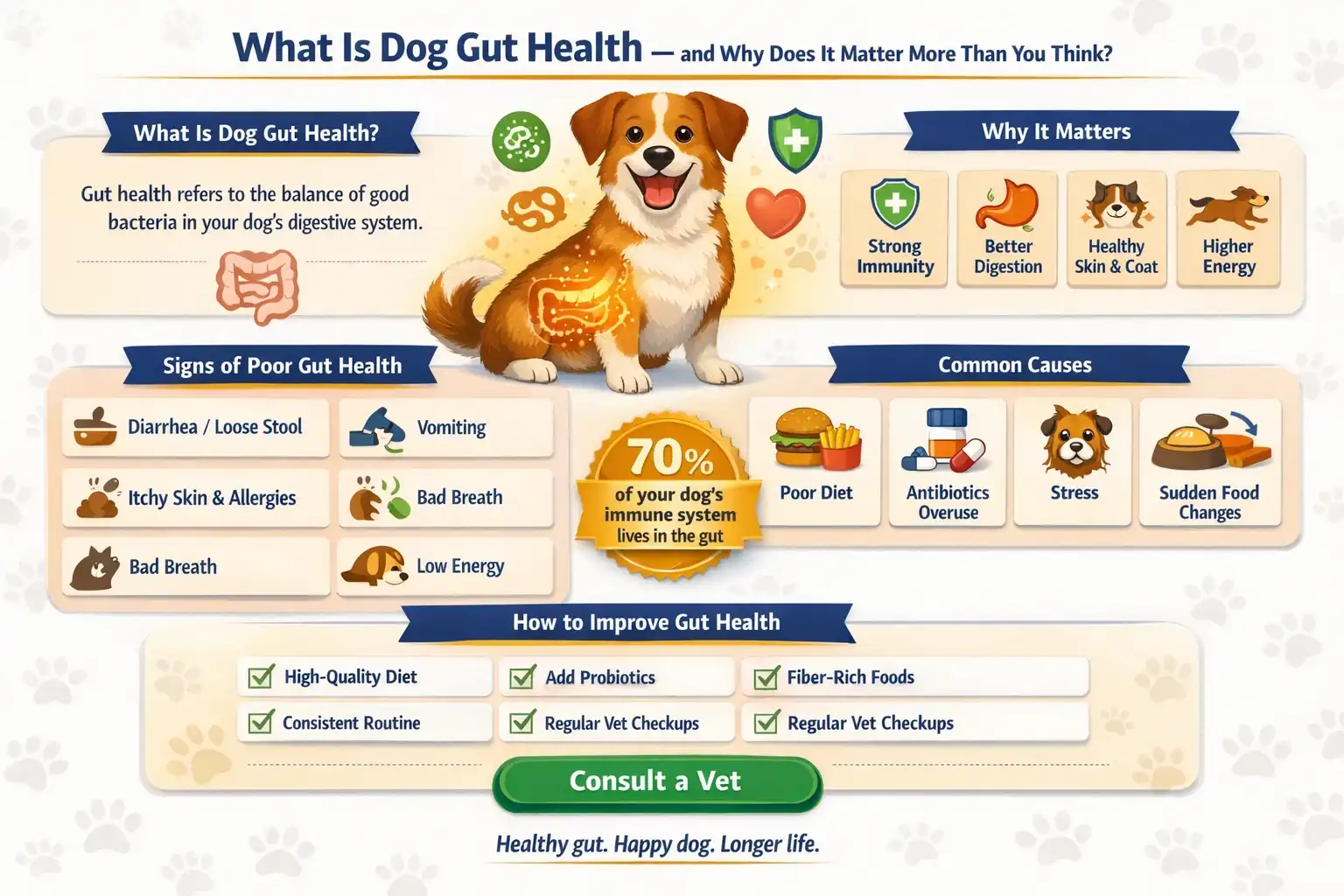
As per veterinarians, gut health is all about the balance and function of microorganisms in the digestive tract.
These microorganisms form the canine gut microbiome, which is a complex ecosystem of fungi, bacteria, and other microbes living inside the intestines.
When we hear the word microbes, we generally think of deadly invisible creatures that cause diseases. But far from being harmful, most of these microbes perform critical functions that keep your dog healthy.
According to Cornell Vet Resources, 70-90% of a dog's immune cells are associated with the gastrointestinal tract.
This means that your dog’s gut is their body’s most important defence system.
What Is the Gut Microbiome in Dogs?
The gut microbiome in dogs is a thriving community of beneficial microbes that are primarily concentrated in their large intestine.
These microbes can be divided into three main categories:
Commensal bacteria - Beneficial organisms that facilitate digestion and immune function
Transient microbes - Organisms that pass through the gut
Potential pathogens - Harmful microbes that lead to diseases when they overgrow
In healthy dogs, there is a delicate balance between these groups.
The microbiome begins forming at birth and continually develops through diet, environmental exposure and contact with other animals.
When this balance is disrupted due to any cause, dysbiosis occurs, leading to digestive and other problems.
The Gut-Brain Axis: How Your Dog’s Gut Affects Mood and Behaviour
The gut-brain axis is one of the most fascinating discoveries in veterinary medicine. It is the complex interactive network between the gut and the brain.
There is constant communication between the gut and the brain through nerves, hormones, and immune signalling.
According to an article in the Veterinary Medicine International, there are certain gut bacteria that even influence the production of serotonin, a neurotransmitter which is associated with mood regulation in dogs.
Animal behaviour research also links gut microbiome imbalance with issues such as:
- Anxiety
- Stress sensitivity
- Altered social behaviour
This explains why dogs with chronic digestive issues show behavioural signs like anxiety and restlessness.
Key Functions of a Healthy Canine Digestive System
A digestive system with a healthy balance of gut microbiome performs several vital roles.
- Nutrient absorption - breaking down proteins, fats, and carbohydrates
- Immune defence - protecting against pathogens
- Inflammation control - regulating immune responses
- Vitamin production - synthesising certain B vitamins
- Neurochemical signalling - influencing mood and behaviour
Thus, when gut health is threatened, many of these processes are also impaired.
What Are the Signs of Poor Gut Health in Dogs?
The signs of poor gut health are not always limited to the digestive system.
Veterinarians often see non-digestive symptoms that owners do not immediately associate with the gut.
Digestive Symptoms (The Obvious Ones)
The most common digestive symptoms include:
- loose or inconsistent stools
- Excessive gas
- Vomiting
- Constipation
Diarrhea in dogs is also related to dysbiosis due to sudden or rapid changes in diet. While occasional diarrhea is normal, veterinary guidelines suggest a checkup if symptoms persist for more than 48 hours.
Non-Digestive Signs You Might Be Missing
Poor gut health can also manifest outside the digestive tract, leading to problems like:
- Dull coat
- Chronic itching
- Recurring ear infections
- Fatigue
- Unexplained weight loss
Common skin issues in dogs, like itchy skin, dull coat or skin rashes, may signal underlying microbiome imbalances.
Can Dog Gut Health Affect Behavior or Anxiety?
Yes.
Contemporary veterinary literature suggests that dysbiosis can influence emotional regulation and even lead to neurodegenerative diseases in dogs.
Dogs with gut imbalance sometimes show:
- Increased anxiety
- Irritability
- Sensitivity to noise
- Difficulty settling down
Aggression and anxiety are also common behaviour problems in dogs caused by a reduced gut microbiome diversity.
While gut health might not be the sole cause of behavioural problems, it can contribute significantly.
When to See a Vet Immediately (Red-Flag Checklist)
Some symptoms require immediate veterinary attention.
These include:
- Blood in stool
- Persistent vomiting
- Rapid weight loss
- Lethargy combined with diarrhea
These signs indicate infections, pancreatitis, or inflammatory bowel disease.
What Causes Poor Gut Health in Dogs? (Root Causes, Not Just Symptoms)
Certain factors can disrupt the canine microbiome. Understanding the root cause effectively is important for restoring balance.
Antibiotics and Medication Overuse
Antibiotics are critical, but they also disrupt gut bacteria.
According to a study published in the Journal of Antimicrobial Agents, antibiotic use can significantly alter microbial diversity in a dog’s gut, leading to drastic consequences.
Thus, while they are necessary, antibiotics must be paired with strategies that focus on rebuilding microbiome balance.
Ultra-Processed Commercial Dog Food
Ultra-processed dog foods often contain:
- Refined carbohydrates
- Artificial preservatives
- Low fibre content
In addition to having zero nutritional value, these ingredients also fail to nourish beneficial gut bacteria.
Over time, microbiome diversity decreases.
Chronic Stress and Its Impact on the Canine Gut
Cortisol is a stress hormone that can affect gut motility and microbial composition.
Dogs living in stressful environments, including separation anxiety or unstable routines, develop digestive problems.
What Causes Leaky Gut in Dogs?
“Leaky gut” (increased intestinal permeability) is a condition where the intestinal lining becomes damaged, which allows toxins and inflammatory molecules to enter the bloodstream.
It leads to chronic inflammation, digestive problems and immune system overload.
Possible causes include:
- Inflammatory diets
- Parasite infections
- Chronic stress
- Certain medications
Other Common Triggers
Other common triggers that disrupt gut balance in dogs are:
- Intestinal parasites
- Food allergies
- Sudden diet changes
- Toxin exposure
All of these stress the digestive ecosystem.
What Foods Are Good for a Dog's Digestive Health?
Diet is the most common yet a powerful solution to improve dog gut health.
Fiber-Rich Foods That Feed Good Gut Bacteria
Certain foods may act as prebiotics that feed beneficial bacteria.
Examples include:
- Pumpkin
- Sweet potato
- Chicory root
These ingredients contain fermentable fibres that offer nourishment to healthy gut microbes in dogs.
Fermented Foods for Dogs
Fermented foods are the best natural probiotics.
Safe options you can include in your dog’s diet are:
- Kefir
- Goat milk
- Plain yoghurt
These food items directly introduce beneficial bacteria into the digestive system
Bone Broth for Gut Lining Repair
Bone broth contains amino acids like glycine and glutamine, which can support intestinal lining integrity.
It also improves the hydration and palatability of meals.
What Should I Avoid Feeding a Dog with Gut Problems?
Certain foods are known to worsen gut inflammation.
Avoid:
- Artificial preservatives
- High-fat processed treats
- Xylitol-containing foods
- Other common allergens like onion, garlic, etc
Raw vs Cooked vs Commercial Diets
Every diet format has its own advantages and disadvantages.
| Diet Type | Pros | Cons |
| Raw | Natural nutrient profile | Risk of pathogens |
| Cooked fresh | Highly digestible | Requires preparation |
| Commercial | Convenient | Quality varies |
The best choice depends on the dog’s individual health needs.
What Are the Best Probiotics for Dogs with Gut Issues?
Probiotics can support microbiome restoration.
Probiotics vs Prebiotics for Dogs
| Type | Function |
| Probiotics | Introduce beneficial bacteria |
| Prebiotics | Feed existing beneficial bacteria |
| Synbiotics | A combination of both |
Effective Probiotic Strains for Dogs
Research highlights several beneficial strains.
Lactobacillus acidophilus
- Supports gut health and digestion
- Improves stool consistency
- Enhances intestinal health and immune system.
Bifidobacterium animalis
- Aids in maintaining the microbiome balance.
- Promotes beneficial microbial growth and helps in reducing harmful strains
- Maintains the integrity of the skin barrier
Enterococcus faecium
Commensal, probiotic, gram-positive bacteria used to:
- Improve gut health,
- Treat diarrhea
- Support immune function
How to Choose a Dog Probiotic
While choosing a probiotic for your dog, look for:
- Multiple bacterial strains
- High CFU counts
- Third-party testing
Quality matters significantly.
Other Supplements That Support Dog Gut Health
Helpful supplements include:
- Digestive enzymes
- Slippery elm
- L-glutamine
- Omega-3 fatty acids
These support intestinal repair and microbial balance.
How Do I Improve My Dog's Gut Health Naturally? (A Step-by-Step Protocol)
There is no magic or overnight solution that can fix a dog’s gut health. What works is a structured and layered approach.
Step 1 - Audit and Adjust the Diet
Diet is always the first step.
If a dog eats highly processed food filled with artificial additives, the gut microbiome is already at a great disadvantage.
First steps to take:
- Eliminate low-quality treats and table scraps (it will also cut calorie intake)
- Switch to a high-quality diet with minimal processed food
- Introduce digestible proteins like chicken, Turkey, or fish
- Transition gradually over a period of 7 to 10 days to avoid digestive upset.
According to the Journal of Animal Science, sudden changes in diet can worsen dysbiosis. Thus, patience is key.
Step 2 - Introduce a Quality Probiotic (Slowly)
Including a probiotic too quickly can lead to loose stools or gas, not because it's harmful, but because the microbiome is adjusting to the host environment.
Introduce probiotics gradually:
- Start with a small dose for 3–5 days
- Increase to full dose over a week
Choose veterinary-grade probiotics with proven strains like Enterococcus faecium.
Step 3 - Add Prebiotic Fibre Sources
Prebiotics are also effective in balancing the gut microbiome in dogs. They act as food for beneficial bacteria.
Include small amounts of:
- Pumpkin puree
- Cooked sweet potato
- Chicory root
For small dogs, one teaspoon is enough, while for large dogs, consider adding one tablespoon and then adjust gradually.
Step 4 - Reduce Gut Stressors
Gut health isn’t just about food. Environmental stress plays a significant role.
Reduce:
- Sudden routine changes
- Exposure to lawn chemicals or toxins
- Unnecessary medications
Switching to steel or ceramic bowls and filtering drinking water can also reduce toxin exposure.
Step 5 - Support with Lifestyle Changes
Routine and predictability are more important than most dog owners realise.
Support your dog’s gut health by maintaining:
- Regular feeding schedules
- Daily exercise
- Consistent sleep cycles
A 2024 article suggests that consistent routines help dogs to regulate cortisol levels, which directly affects gut function.
How Long Does It Take to Fix a Dog's Gut Health?
One of the most common questions pet parents ask is:
“How long will it take for my dog’s gut to improve?” The answer depends on the severity of the imbalance.
Mild Imbalance: Days to 2 Weeks
If there is only a mild imbalance, with signs like occasional loose stools or minor dietary sensitivity, improvements generally occur quickly.
Within a few days to two weeks, you may notice:
- Firmer stools
- Reduced gas
- Improved appetite
Moderate Dysbiosis: 4–8 Weeks
Dogs suffering from chronic digestive concerns and skin issues require more time.
Gradual improvements can be seen over 4-8 weeks, which may include:
- Consistent stool quality
- Reduced itching
- Better energy levels
Chronic or Severe Cases: 3–6 Months
Severe gut imbalance or long-standing gut health conditions like inflammatory bowel disease need extended care.
Healing of the gut lining and restoration of microbial diversity takes 3-6 months and may require aggressive treatment in conjunction with veterinary supervision.
If your dog suffers from severe gut health issues, consider taking an online pet health consultation on Conbun and get veterinary guidance related to diet, treatment and overall pet health management.
Common Mistakes Dog Owners Make with Gut Health (and How to Avoid Them)
Even experienced and knowledgeable pet owners make mistakes that slow down the recovery of a dog with gut health issues.
Switching Foods Too Quickly
As soon as pet parents learn about diarrhea or digestive discomfort, they switch diets. However, this is one of the most common pet food mistakes pet owners make. Sudden dietary changes disrupt gut bacteria and worsen symptoms.
Follow the 7-day transition rule:
- 25% new food + 75% old
- Gradually increase the new food percentage over a week
Giving Human Probiotics to Dogs
Many dog owners offer human probiotics to their dogs, which are not effective for dogs.
Different species require different probiotic bacterial strains. Veterinary probiotics are specifically designed for animal gut microbiomes.
Treating Symptoms Without Addressing the Cause
Dog parents generally focus on symptoms. For example, they offer medications for symptomatic relief to treat diarrhea rather than understand why it’s happening.
Anti-diarrheal medications do provide temporary relief, but they never fix underlying dysbiosis.
Over-Supplementing Without Guidance
More is not always better. Balance is the key. Over-supplementation can lead to toxicity or can disrupt nutrient balance.
Introduce supplementation ideally and thoughtfully with veterinary guidance.
Real Dog, Real Results: How I Helped a Chronically Unwell Rescue Rebuild Her Gut
Let’s talk about Bella.
Bella was a rescued Indie dog with a long list of issues:
- Chronic loose stools
- Patchy hair loss
- Persistent itching
- Anxious, restless behavior
Her previous treatments revolved around anti-allergy injections, symptomatic relief, antibiotics and medicated shampoos, but problems kept returning.
The Presenting Problem
Her symptoms indicated a chronic gut imbalance with the secondary skin issues. Her stool fluctuated constantly, and her coat lost all its shine.
The Protocol We Followed
We implemented a structured plan:
- Switched to a fresh, limited-ingredient diet
- Introduced a veterinary probiotic gradually
- Added pumpkin for prebiotic fibre
- Removed unnecessary medications
- Created a consistent feeding and exercise schedule
The Outcome at 30, 60, and 90 Days
30 days:
- Stools became more consistent
- Itching reduced slightly
60 days:
- Coat began improving
- Energy levels increased
- Anxiety reduced
90 days:
- Normal stool quality
- Shiny coat
- Minimal itching
Bella didn’t just recover physically. Her personality changed. She became calmer, playful and more comfortable.
FAQs (People Also Asked)
1. Can poor gut health cause skin problems in dogs?
Answer. Yes. Veterinary literature suggests that there is a strong link between gut health and skin conditions. Imbalanced microbiomes trigger inflammation, which in turn leads to rashes, infections and itching.
2. Is it safe to give a dog yogurt for gut health?
Answer. Yes. in but in moderation. Plain, unsweetened yoghurt provides beneficial bacteria. However, you should avoid it for dogs who are lactose intolerant.
3. Do vets recommend probiotics for dogs?
Answer. Yes. Many veterinarians recommend probiotics for various digestive issues. Especially after antibiotic use. However, the quality and strain selection are important.
4. Can dog gut health affect behavior or anxiety?
Answer. Yes. The gut-brain axis links digestive health with behaviour. Dysbiosis contributes to stress, anxiety, sensitivity and mood changes.
5. How do I know if my dog's gut is healthy?
Answer. Signs of good gut health include:
- Firm, consistent stools
- Healthy weight
- Shiny coat
- Good energy levels
Conclusion
Gut health is not just about digestion, it’s the foundation of your dog’s overall wellbeing.
From skin health to immunity to behavior, the gut quietly influences everything.
The encouraging part is that most gut issues are manageable and often reversible with the right approach. Small, consistent changes - better diet, thoughtful supplementation, reduced stress- can create dramatic improvements over time.
And if you ever feel unsure about what your dog’s symptoms mean, you don’t have to figure it out alone.
With online vet consultations India on Conbun, android and iOS you can connect with experienced veterinarians, discuss your dog’s symptoms, and get personalised guidance on improving gut health, without the stress of a clinic visit.
Because sometimes, the difference between a struggling dog and a thriving one starts with understanding what’s happening inside the gut.
Sources & Further Reading
"Ambrosini, Y. M., Borcherding, D., Kanthasamy, A., Kim, H. J., Willette, A. A., Jergens, A., ... & Mochel, J. P. (2019). The gut-brain axis in neurodegenerative diseases and relevance of the canine model: a review. Frontiers in aging neuroscience, 11, 130. https://www.frontiersin.org/journals/aging-neuroscience/articles/10.3389/fnagi.2019.00130/pdf"
"Baillon, M. L. A., Marshall-Jones, Z. V., & Butterwick, R. F. (2004). Effects of probiotic Lactobacillus acidophilus strain DSM13241 in healthy adult dogs. American journal of veterinary research, 65(3), 338-343. https://avmajournals.avma.org/view/journals/ajvr/65/3/ajvr.65.3.338.xml"
"Benyacoub, J., Czarnecki-Maulden, G. L., Cavadini, C., Sauthier, T., Anderson, R. E., Schiffrin, E. J., & von der Weid, T. (2003). Supplementation of food with Enterococcus faecium (SF68) stimulates immune functions in young dogs. The Journal of nutrition, 133(4), 1158-1162. https://scholar.google.com/scholar?output=instlink&q=info:Yf8NvXX5-60J:scholar.google.com/&hl=en&as_sdt=0,5&scillfp=17648928112236642836&oi=lle"
"Cornell Veterinary Medicine. (2025), Diets to boost immunity. https://www.vet.cornell.edu/departments-centers-and-institutes/riney-canine-health-center/canine-health-topics/diets-boost-immunity#:~:text=GI%20help,suggest%20using%20a%20probiotic%20routinely"
"Deschamps, C., Apper, E., Brun, M., Durif, C., Denis, S., Humbert, D., & Blanquet-Diot, S. (2024). Development of a new antibiotic-induced dysbiosis model of the canine colonic microbiota. International Journal of Antimicrobial Agents, 63(4), 107102. https://www.sciencedirect.com/science/article/am/pii/S0924857924000207"
"Kim, M., Cho, H. Y., Park, E., Lee, K. E., Park, C., & Yoon, J. S. (2026). Effects of Canine-Derived Bifidobacterium animalis subsp. lactis DS008 Culture Supernatants on In Vitro Canine Keratinocytes. Animals, 16(4), 547. https://www.mdpi.com/2076-2615/16/4/547"
"Mârza, S. M., Munteanu, C., Papuc, I., Radu, L., Diana, P., & Purdoiu, R. C. (2024). Behavioral, physiological, and pathological approaches of cortisol in dogs. Animals, 14(23), 3536. https://www.mdpi.com/2076-2615/14/23/3536"
"Matar, A., Abdelnaem, N., & Camilleri, M. (2025). Bone broth benefits: how its nutrients fortify gut barrier in health and disease. Digestive diseases and sciences, 1-11. https://link.springer.com/article/10.1007/s10620-025-08997-x?cjdata=MXxZfDB8WXww"
"Maturana, M., Castillejos, L., Lesaux, A. A., & Martin-Orue, S. M. (2025). Impact of an abrupt change from dry to canned diet on digestive function and gut microbiota in dogs. Journal of Animal Science, 103, skaf143. https://academic.oup.com/jas/article-abstract/doi/10.1093/jas/skaf143/8141085"
"Pilla, R., & Suchodolski, J. S. (2020). The role of the canine gut microbiome and metabolome in health and gastrointestinal disease. Frontiers in veterinary science, 6, 502799. https://pmc.ncbi.nlm.nih.gov/articles/PMC6971114/#:~:text=Bile%20acids%20(BA)%20are%20essential,process%20rather%20than%20its%20cause."
"Sacoor, C., Marugg, J. D., Lima, N. R., Empadinhas, N., & Montezinho, L. (2024). Gut‐Brain Axis Impact on Canine Anxiety Disorders: New Challenges for Behavioral Veterinary Medicine. Veterinary medicine international, 2024(1), 2856759. https://onlinelibrary.wiley.com/doi/pdf/10.1155/2024/2856759"