
Written by: Anand Sen; Reviewed by: Dr. Ishwar Anand Senapati (B.V.Sc & A.H, M.V.Sc)
You bring home a playful, fluffy and constantly hungry 45-day-old Labrador puppy who thinks chewing your slippers is a full-time profession. But two weeks later, his belly suddenly looks bloated, and his stools become loose. Upon a vet visit, the vet asks the question most new Indian pet owners are never prepared for: Has he been dewormed?
Parasitic infections in pets are extremely common in India. Warm temperatures, monsoon moisture, stray dog exposure, public parks and contaminated soil create perfect conditions for parasites year-round.
Missing deworming schedules is one of the most common mistakes veterinarians see in puppies and even adult dogs.
The good news? A proper deworming schedule prevents most serious parasite problems before they become dangerous.
What Is Dog Deworming and Why Does It Matter in India?
Dog deworming involves giving medication that removes internal parasites from the digestive tract. In India, regular deworming is essential because worms spread easily through contaminated soil, puddles, fleas, mother’s milk, and contact with infected dogs.
Unlike colder countries, where parasite activity drops seasonally, India has a warm, tropical climate, due to which dogs face parasite exposure throughout the year.
A dog can pick up worms from:
Sniffing contaminated stool
Drinking contaminated water
Walking through parasite-infested soil
Swallowing fleas
Nursing from an infected mother
According to an article published in Veterinary Sciences, puppies are especially vulnerable because their immune systems are immature and many are infected before birth itself.
Contrary to popular belief, even indoor dogs in apartments need regular deworming. Parasite eggs enter homes through:
Shoes
Outdoor clothing
Shared pet areas
Flea infestations

The tropical conditions of India make parasite prevention non-negotiable for long-term canine health.
Signs Your Dog Has Worms
Many worm infections in dogs remain silent initially. But as symptoms start appearing, they usually follow recognisable patterns.
Common warning signs include:
Pot-bellied appearance in puppies
Scooting across the floor
Visible worms in stool or vomit
Weight loss despite usual appetite
Dull coat quality
Weakness or pale gums
Vomiting
Persistent coughing
One particularly dangerous parasite in India is hookworm.
Hookworm is a particularly dangerous parasite infecting Indian dogs and feeds on blood inside the intestines. Hookworms are dangerous because severe anaemia in puppies surprisingly quickly.
According to veterinary literature from the Merck Veterinary Manual, pale gums and lethargy are emergency signs in worm-infested puppies that should always be treated urgently.
Another common symptom that dog owners misunderstand is “Scooting”. Scooting in dogs is when a dog sits down and drags its bottom along the floor. As dogs cannot scratch their rear ends with their paws, they use the carpet or pavement as a "scratch pad" to relieve itching or pain.
Owners generally assume the dog is “just itchy.” Tapeworm segments near the anus are the real trigger.
And if your puppy vomits visible spaghetti-like worms? That is not a “wait and watch” situation. It is a sign that you must take your pet to the vet.
Types of Worms Common in Indian Dogs
Different types of worms infect dogs, and each one of them behaves differently. So not every medicine treats every parasite equally.
Roundworms (Toxocara canis) are the most common type of worms that infect Indian puppies. Roundworm infections happen before birth or through the mother’s milk. Puppies may develop:
Bloated bellies
Poor growth
Vomiting
Loose stools
Hookworms (Ancylostoma caninum) in dogs are especially dangerous because they can lead to severe blood loss and anaemia. During monsoons, hookworm larvae can survive easily in damp soil.
Tapeworms are usually spread through fleas. If your dog has recurring tapeworm infections, flea control is probably being missed somewhere.
Whipworms (Trichuris vulpis) attach to the walls of the large intestine and commonly cause:
Bloody diarrhoea
Chronic weight loss
Intermittent digestive upset
Vet insight: Thorough veterinary treatment and prevention are necessary because whipworm eggs can survive for years.
While heartworms (Dirofilaria immitis) are less common than intestinal worms, they are commonly seen in mosquito-heavy regions of India. These parasites live in the heart and lungs and may eventually cause:
Coughing
Exercise intolerance and even
Heart failure
Heartworm disease is a life-threatening condition, but it is 100% preventable via routine medication.
Dog Deworming Schedule India: Age-Wise Guide
This is the schedule most veterinarians in India broadly follow for routine parasite prevention.
Puppies (2 Weeks to 12 Weeks)
As mentioned earlier, puppies can carry worms extremely early. Sometimes, before even opening their eyes.
Standard schedule:
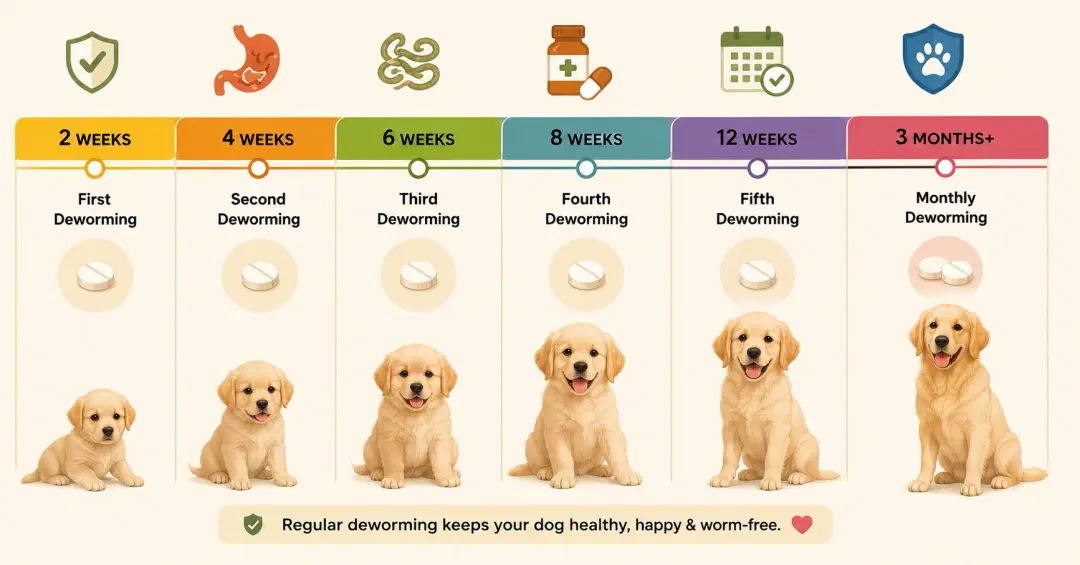
2 weeks — First deworming
4 weeks — Second dose
6 weeks — Third dose
8 weeks — Fourth dose
10 weeks — Fifth dose
12 weeks — Sixth dose
During this stage, liquid dewormers are preferred because dosing is easier and more accurate.
One important reality in India: many breeder-sold puppies arrive incompletely dewormed. Therefore, while looking for pets for adoption, it is important for new pet parents to collect complete vaccination and deworming history.
If records are incomplete, veterinarians generally advise restarting the schedule based on current age and body weight.
Puppies (3 Months to 6 Months)
After a puppy reaches 12 weeks of age, deworming shifts from every two weeks to once monthly.
At this stage:
It is easy to use tablets
Weight-based dosing becomes important
The risk of reinfection remains high
Because puppies still explore the world by:
Licking floors
Eating random objects and
Sniffing contaminated areas
Puppies at this age are terrible at making life decisions. They’ll refuse imported dog food but savour a plastic slipper found in the backyard. These micro-decisions lead to infections.
Thus, monthly deworming continues until 6 months of age.
Adult Dogs (6 Months and Above)
Most healthy adult dogs in India require deworming every 3 months. However, frequency may increase depending on the lifestyle. Outdoor dogs are more vulnerable to parasites and thus may require frequent deworming.
Dogs at higher exposure risk may require:
Monthly parasite control
More frequent stool testing
Higher-risk dogs include:
Community dogs
Dogs in shelters
Frequent Park visitors
Dogs living with multiple pets
Dogs exposed to stray populations regularly
Indoor apartment dogs still require: quarterly deworming minimum.
This may surprise many dog owners. But parasite eggs enter homes more easily than they realise.
Pregnant and Nursing Dogs
Many pet owners ignored this constantly. But pregnant and nursing dogs are also highly vulnerable to parasitic infections. And it is exactly why so many puppies begin life already infected.
Veterinary reproductive guidelines usually recommend:
Deworming before mating
Carefully selected treatment during pregnancy
Deworming alongside puppies after birth
According to veterinary reproduction literature, certain worms reactivate during pregnancy and migrate into puppies through:
Placenta
Mother’s milk
Important: never self-medicate pregnant dogs.
Some dewormers are unsafe during pregnancy and may affect fetal development. Always consult a veterinarian before giving medication during this stage.
Best Deworming Medicines for Dogs Available in India
Several high-quality veterinary dewormers are widely available in India.
Drontal
Drontal is a highly effective, broad-spectrum oral dewormer used to prevent and eliminate intestinal worms. It is effective against:
Roundworms
Hookworms
Tapeworms
It is often considered the “standard routine” dewormer in veterinary practice. This medication usually comes as a meat or liver-flavoured chewable tablet that can be given as a treat or mixed into food.
Panacur (Fenbendazole)
Another broad-spectrum dewormer is used against intestinal parasites.
Particularly useful for:
Puppies
Sensitive stomachs
Giardia infections
Whipworms
It is usually given over 3 consecutive days.
Cazitel
Similar broad-spectrum coverage to Drontal and widely available across Indian veterinary pharmacies.
Milbemax
Useful in mosquito-heavy areas as it provides heartworm prevention.
According to an article published in One Health, combined parasite prevention strategies are more effective in improving long-term disease control than standalone treatments or vaccinations against parasites.
Albendazole
This is where many Indian owners make mistakes.
Human dewormers containing albendazole are easily available at local pharmacies. But incorrect dosing in dogs may become dangerous.
Never use human medication without veterinary dosage guidance.
How to Give Your Dog a Deworming Tablet
Some dogs swallow tablets politely. Others behave as if you personally offended their political ideologies.
Helpful methods include:
Hiding tablets inside boiled chicken
Using peanut butter
Crushing tablets into wet food (if allowed)
Pill guns for difficult dogs
For very young puppies: liquid formulations remain safest and easiest. Never force tablets aggressively into struggling puppies because aspiration risk exists.
And avoid toxic foods like:
Onion
Garlic
Chocolate
While hiding medication.
What to Expect After Deworming
Owners generally panic after seeing dead worms in their dog’s stool. But this actually means that the medicine worked.
Normal short-term effects include:
Mild loose stools
Temporary lethargy
Reduced appetite briefly
Worms passing in stool or vomit
But call a veterinarian if you notice:
Bloody diarrhoea
Collapse
Persistent anorexia
Severe weakness
Heavily worm-infested puppies occasionally develop intestinal blockage after mass parasite death due to deworming medication, especially if treatment was delayed significantly.
Deworming vs Vaccination: Do Not Confuse the Two
First-time pet parents commonly get confused between deworming and vaccination.
Vaccines protect against:
Distemper
Parvovirus
Rabies
Hepatitis
Deworming targets internal parasites, and vaccination is for various dog diseases. A proper vaccination schedule for dogs must be followed in parallel with a dog deworming schedule to ensure your pet’s health. One does not replace the other.
In fact, veterinary doctors often recommend deworming before vaccinations because severe worm infestations may lead to a weakened vaccine response quality. Both schedules matter equally.
Prevention: Reducing Worm Reinfection
Deworming is for removing existing parasites. But prevention reduces the risk of future infections.
Effective prevention habits include:
Cleaning stool promptly
Preventing drinking from puddles
Consistent flea prevention
Hand washing after stool handling
Routine veterinary stool testing
As mentioned earlier, one especially overlooked issue in India is flea control. Tapeworm infection, which is transmitted by fleas, often continues endlessly because flea infestations were never treated properly.
Parasite prevention works best when all the following factors are controlled effectively:
Hygiene
Flea control
Deworming
Environmental cleaning
When to See a Vet vs. When an Online Consult Works
Visit a physical clinic if:
An 8-week-old puppy is showing symptoms
Blood in stool or vomit
Dog not eating or drinking for over 24 hours after deworming
A pregnant dog needs deworming
Unsure about which worm type is affecting the dog
An online vet consultation works for:
Understanding which dewormer to use for your adult dog’s weight
Dosage instructions for a new puppy’s first deworming
Understanding deworming symptoms better
Getting a deworming reminder schedule set up for your specific dog

Conclusion
Deworming is one of the simplest but most important parts of preventive dog healthcare in India. From tiny puppies infected through their mother’s milk to adult dogs exposed through parks, puddles, fleas, and contaminated soil, worm infections are extremely common in Indian conditions.
The good news is that a proper age-wise deworming schedule dramatically reduces the risk of serious health problems like anaemia, poor growth, digestive disease, and nutrient deficiency. Consistency matters far more than occasional treatment.
Regular deworming, flea control, hygiene, and routine veterinary checkups together form the foundation of long-term parasite prevention. And when symptoms like bloating, vomiting worms, blood in stool, or weakness appear, considering online veterinary advice can prevent complications before they become dangerous.
Frequently Asked Questions
Q.1: At what age should I first deworm my puppy in India?
Answer: Deworming should start as early as 8 weeks of age. Puppies can get infected with roundworms even before birth through the mother. Starting deworming at an early age can prevent serious health problems in the first weeks of life.
Q.2: How often should I deworm an adult dog in India?
Answer: Deworming every three months is the standard. Outdoor dogs or dogs exposed to contact with stray animals should be dewormed monthly.
Q.3: Can I use a human dewormer like Zentel for my dog?
Answer: No. Human medications should not be given without veterinary guidance. Albendazole (used for humans) can be given to dogs, but the dosage is different, and the margin of error is narrow.
Q.4: My puppy vomited after deworming - what should I do?
Answer: A single vomiting instance is not a concern. But if you see repeated vomiting beyond 12 hours, seek immediate veterinary attention.
Q.5: Does deworming need to be done on an empty stomach?
Answer: For most dewormers found in India, food does not affect absorption. Some vets recommend a light meal before dosing to reduce the chance of stomach upset.
Q.6: Can worms from my dog infect my family?
Answer: Yes. Hookworms and Roundworms may infect humans. Especially children who play in the soil. This is a big reason why homes with pets must follow a proper deworming schedule.
References
Giannelli, A., Schnyder, M., Wright, I., & Charlier, J. (2024). Control of companion animal parasites and impact on One Health. One Health, 18, 100679. https://www.sciencedirect.com/science/article/pii/S2352771424000053
Peregrine, A. (2018). Gastrointestinal Parasites of Dogs. Msdvetmanual.com. https://www.msdvetmanual.com/dog-owners/digestive-disorders-of-dogs/gastrointestinal-parasites-of-dogs
Pereira, M., Valério-Bolas, A., Saraiva-Marques, C., Alexandre-Pires, G., Pereira da Fonseca, I., & Santos-Gomes, G. (2019). Development of the dog immune system: from in utero to the elderly. Veterinary sciences, 6(4), 83. https://www.mdpi.com/2306-7381/6/4/83