.webp)
Written by: Anand Sen; Reviewed by: Dr. Manisha
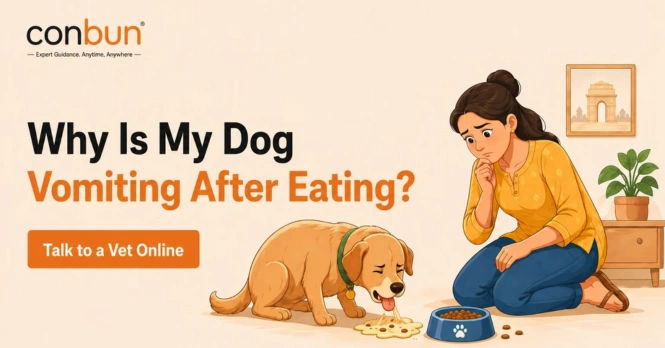
Dinner was the same as every day. Same food, same bowl and same enthusiasm. But then your dog threw it all up.
You stand there, confused. Maybe it’s nothing. Maybe it’s serious.
If you’ve searched “my dog is vomiting after eating”, you’re not alone. Vomiting is one of the most common clinical complaints in dogs, and according to established veterinary references like the American Veterinary Medical Association, gastrointestinal issues are among the top reasons for vet visits.
But here’s the catch:
Sometimes vomiting can be harmless, but sometimes it may signal something serious.
The difference lies in understanding the cause.
Is Your Dog’s Vomiting a Vet Emergency? Key Symptoms to Watch
Vomiting combined with other signs like blood, dehydration or diarrhea often indicates a serious underlying condition.
Vomiting alone doesn’t always signal danger. But when it comes with other signs, the situation changes.
Watch for These
- Diarrhea
- Loss of appetite
- Lethargy
- Bloating
- Dog vomiting and not eating
- Blood in vomit
- Dehydration
Why These Matter
In clinical practice, combined symptoms suggest deeper involvement.
For example:
- Vomiting and diarrhea → gastrointestinal infection
- Vomiting and lethargy → systemic illness
- Vomiting and bloating → possible emergency
Dehydration Risk
Repeated vomiting causes fluid loss, and in the summer, this can be lethal.
Signs include:
- Dry gums
- Weakness
- Reduced skin elasticity
Veterinary guidelines emphasise hydration as a critical factor in managing acute vomiting cases.
When symptoms combine, urgency increases.
When is Dog Vomiting a Life-Threatening Emergency?
- Vomiting blood (hematemesis) – Vomit resembles fresh blood or coffee grounds.
- Unproductive retching - Gagging with nothing coming out (a primary sign of life-threatening bloat).
- Swollen or painful abdomen – Bloated, hard belly that hurts when touched, indicating a twisted stomach.
- Signs of shock – Severe lethargy, collapse, or pale, blue gums followed by vomiting.
- Inability to keep water down - Constant, projectile vomiting that prevents fluid retention. It can lead to rapid dehydration.
Why Dogs Vomit After Eating
Dogs vomit after eating due to digestive disturbances ranging from fast eating and diet changes to infections, inflammation, or internal disease.
Vomiting isn’t a disease; It is a symptom, a reflex triggered by something happening inside.
When something irritates or overwhelms the digestive system of a dog, the stomach contracts and pushes out the contents inside. Dogs are particularly sensitive to this response because even minor triggers can cause vomiting.
In veterinary medicine, this is classified as either:
- Acute vomiting (sudden, short-term)
- Chronic vomiting (repeated or ongoing)
According to the MSD Veterinary Manual most acute vomiting cases are linked to dietary issues, while continuous vomiting indicates an underlying disease.
The key is not just that your dog has vomited, but why it happened after eating. This timing gives important diagnostic clues.
Common Causes of Dog Vomiting After Eating
Common causes include eating too fast, sudden diet changes, food intolerance, overeating, infections, pancreatitis, and intestinal blockage.
Let’s walk through the causes the way a veterinarian evaluates in real life.
Eating Too Fast
Eating too fast is the most common cause of a dog vomiting after eating.
Dogs that gulp food also swallow air along with it. Rapid stomach expansion triggers regurgitation or vomiting almost immediately after a meal.
Dog breeds like Beagles and Labradors are especially prone to this condition.
Sudden Food Changes
A dog’s gut health is influenced by its diet. Sudden dietary changes can disrupt the gut microbiome.
According to veterinary nutrition guidelines, transition to a new food must be gradual over 5-7 days because abrupt changes may lead to vomiting and diarrhoea in dogs.
Food Allergy or Intolerance
Dog food allergies are also a common cause of vomiting in dogs after eating. Some dogs react poorly to certain proteins, commonly dairy, chicken or grains.
Unlike infections, these cases often show:
- Repeated vomiting
- Chronic digestive upset
Overeating
Too much food can stretch a dog’s stomach beyond comfort, and their body responds to it by emptying it.
This is especially common in dogs with free access to food.
Eating Spoiled or Toxic Food
Dogs are opportunistic eaters. Overfeeding treats is a common pet mistake that pet owners make.
Garbage, leftovers, table scraps or toxic foods (like chocolate or fatty scraps) may irritate the stomach lining, leading to vomiting.
Sensitive Stomach or Indigestion
Like humans, some dogs simply have delicate digestion. Even minor variations in feeding can lead to vomiting.
Intestinal Blockage
This is a serious condition for which you need to rush to the vet.
Dogs may swallow:
- Toys
- Bones
- Cloth
These objects obstruct the digestive tract and may lead to repeated vomiting.
Infections and Parasites
Bacterial infections and intestinal parasites often cause:
- Vomiting
- Diarrhea
Young dogs are particularly vulnerable.
Pancreatitis
A medically significant condition often triggered by fatty meals.
It causes inflammation of the pancreas and presents with symptoms such as:
- Vomiting
- Pain
- Lethargy
Chronic Health Conditions
Kidney disease, liver disease, and endocrine disorders may also present as vomiting after meals.
Same symptom. Very different causes.
That’s why pattern and context matter more than the act itself.
What to Do if Your Dog Vomits After Eating (Home Care)
If you are wondering dog vomiting what to do you have to understand that mild vomiting can be managed with short fasting, adequate hydration, a bland diet and at-home monitoring, but only in otherwise healthy dogs.
If your dog vomits once and seems normal, careful home care can help. Following are the home remedies for dog vomiting.
Step 1: Pause Feeding
Pause food for 8–12 hours, but only for adult dogs.
This allows time for the stomach lining to recover.
Step 2: Hydration Matters
Offer small amounts of water constantly.
Too much water at once can also trigger vomiting.
Step 3: Introduce a Bland Diet
If vomiting has stopped, feed small portions of:
- Boiled chicken (plain)
- Rice
This aligns with standard veterinary recommendations for managing mild gastrointestinal upset.
Step 4: Monitor Closely
If vomiting:
- Stops → gradually return to normal diet
- Continues → seek veterinary care immediately
Step 5: Avoid Triggers
Stop treats completely and do not offer table scraps.
Let your dog’s digestive system stabilise.
Clinical Insight
As per veterinary literature, home care for dog vomiting is only appropriate for:
- Single, mild episodes
- Healthy adult dogs
Senior dogs, puppies or repeated vomiting episodes require immediate medical evaluation.
If vomiting continues beyond 24 hours, it is no longer a home-care situation. Consider booking an online vet consultation on the Conbun app to get your dog’s condition reviewed by a certified vet.
Immediate Action Plan: When to Rush Your Dog to an Emergency Vet
Visit a vet if vomiting is repeated, severe or accompanied by symptoms like lethargy, blood or dehydration.
Not all vomiting can be managed at home.
You should seek veterinary care immediately if you notice:
- Repeated vomiting (more than 2–3 times in 24 hours)
- Blood in vomit
- Severe lethargy or weakness
- Difficulty breathing
- Dog shaking and vomiting
- Signs of pain (whining, restlessness, guarding abdomen)
- Vomiting in puppies or senior dogs
- Suspected poisoning or ingestion of foreign objects
According to the veterinary literature and the American Veterinary Medical Association, emphasises that repeated vomiting increases the risk of dehydration and electrolyte imbalance, creating a dangerous cycle that can lead to severe health consequences.
In serious cases like pancreatitis or intestinal blockage, delay can rapidly worsen the condition. If you are unsure, consult a vet online on the Conbun app.
If you can't reach a clinic physically, immediately use the Conbun app for an urgent online vet consultation to assess if your dog needs a critical care unit.
How to Prevent Vomiting After Meals
Prevent vomiting by controlling feeding habits, maintaining diet consistency, avoiding toxins, and ensuring regular veterinary care.
Prevention is not complicated, but it requires consistency.
Slow Down Eating
Use slow-feeder bowls and feed smaller, more frequent meals
This reduces air intake, prevents overeating and digestive overload.
Maintain a Consistent Diet
Avoid sudden changes in your dog’s diet. Transition food gradually over 5–7 days, as recommended in veterinary nutrition protocols.
Avoid Table Scraps and Toxic Foods
Keep human food and table scraps out of reach. Fatty and spicy items can trigger vomiting and pancreatitis.
Regular Deworming and Checkups
Parasitic infections in pets are common hidden causes of vomiting. Routine veterinary care can help detect issues early.
Keep Hazardous Items Away
Prevent access to:
- Trash
- Small objects
- Toxic substances
Most dog vomiting cases seen in clinics are preventable with proper feeding and supervision.
FAQs(People Also Asked)
Q.1 What can I give my dog for vomiting?
Answer: If your dog has vomited after eating, offer bland food like boiled chicken and rice in small amounts. This is the perfect home remedy for dog vomiting.
Q.2 When to worry if your dog is throwing up?
Answer: If the dog is throwing up frequently, and it is severe combined with other signs like dehydration, blood, etc.
Q.3 Does yellow vomit mean a dog is hungry?
Answer: The yellow fluid is bile and is commonly seen when the stomach is empty. This type of vomiting is also known as hunger puke.
Q.4 Should I feed my dog after vomiting?
Answer: No. Wait 8–12 hours; if there are no more episodes of vomiting, introduce bland food gradually.
Q.5 Can I treat vomiting at home?
Answer: Yes. But only if it’s mild and your dog is otherwise healthy.
Q. 6 Dog vomiting yellow foam what to do?
Answer: If it's a single episode try feeding smaller, more frequent meals and include late-night snack to reduce acid build-up. If vomiting persists and there are other signs like dehydration, diarrhea seek immediate veterinary care.
Conclusion
Vomiting after eating can look sudden, but it’s rarely random.
It’s your dog’s way of saying something isn’t right.
Sometimes, it’s as simple as eating too fast.
Other times, it’s a signal of something deeper, an infection, inflammation, or even a blockage.
The key isn’t panic.
It’s an observation.
Watch patterns. Notice changes. Act early.
Because in veterinary medicine, timing matters more than intensity.
A single episode may pass.
Repeated episodes need attention.
And when in doubt?
Consult a veterinary doctor online on Conbun to choose clarity over guesswork