Written by: Anand Sen; Reviewed by: Dr. Manshi (B.V.Sc & A.H, M.V.Sc)
It is 11 PM on a Sunday. Your Labrador ate something an hour ago, but you don’t know what. Since then, he has vomited twice, drooled heavily, and is now unable to get up. You are not sure if this is an upset stomach or something worse.
So, you decide to wait, but by midnight, he is shaking.
This is where most pet parents freeze, not because they don’t care, but because they don’t know how serious it is. Maybe it’s nothing. Maybe it will pass, or maybe it won’t.
This wait could be exactly what turns a manageable pet health condition into a life-threatening emergency.
As per emergency veterinary literature:
Delay can be regarded as the most common cause of preventable pet deaths in acute cases.
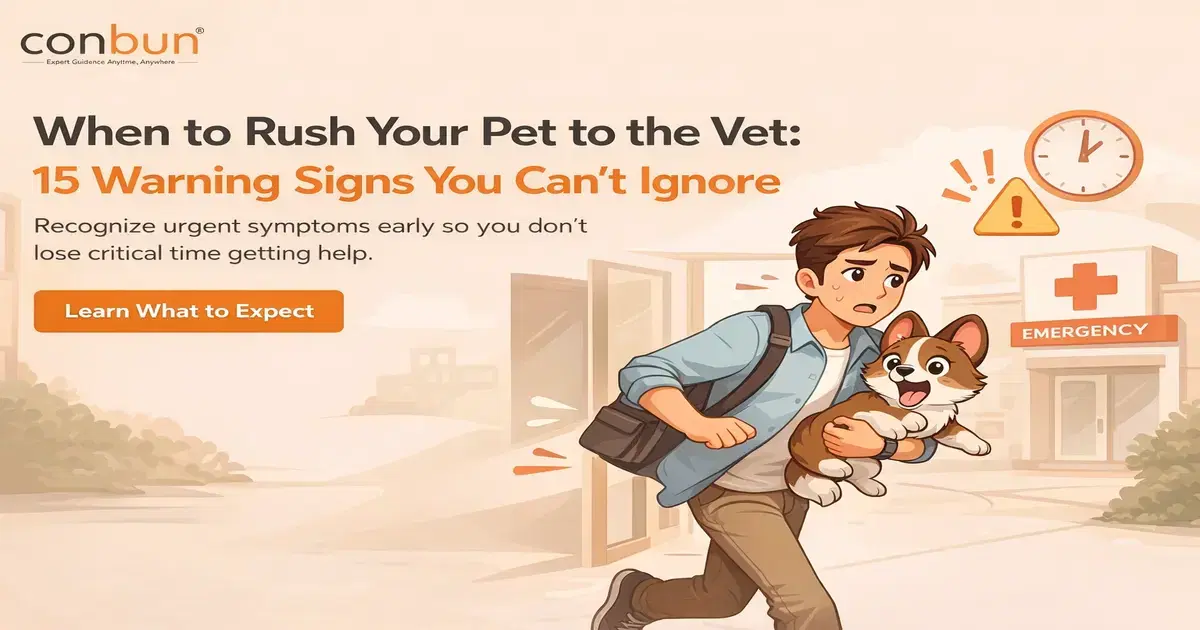
Rush your pet to the vet immediately if you see breathing difficulty, collapse, seizures, uncontrolled bleeding, inability to urinate, pale or blue gums, or suspected poisoning. These signs can worsen within minutes to hours and require urgent medical care.
This guide will teach you about 15 clear warning signs that remove the guesswork, so you know exactly when to act.
Immediate Vet Triage: Is It a Real Emergency?
If your pet exhibits any of the following critical indicators, skip this guide and drive to the nearest 24/7 animal hospital immediately:
Respiratory Failure: Open-mouth breathing (especially in cats) or blue/grey gums.
Neurological Trauma: Active seizures lasting >5 minutes or complete unresponsiveness.
Cardiovascular Shock: Uncontrolled bleeding or sudden collapse/paralysis.
Urological Blockage: Inability to pass urine (critical for male cats).
The 15 Warning Signs That Need Immediate Vet Attention
Sign 1: Difficulty Breathing
What it looks like:
Strenuous breathing, or dyspnea
Belly moving forcefully with each breath
Laboured breathing in dogs
Open-mouth breathing (especially in cats, always abnormal)
Blue, grey, or pale gums
Neck stretched forward, elbows out
Why is it serious?
Respiratory distress occurs when oxygen is not reaching vital organs like the heart and the brain, which could lead to serious complications.
According to an article published in the American Journal of Physiology-Heart and Circulatory Physiology, hypoxia a potent stressor that exacerbates immense pressure on respiration, hemodynamic and cardiovascular regulations in dogs.
According to emergency veterinary guidelines, oxygen deprivation or hypoxia can cause organ damage within minutes.
Common causes of hypoxia include:
Fluid buildup in the lungs
Heart failure
Airway obstruction
Severe allergic reaction
What to do:
Don’t panic and keep your pet calm. Quickly move them to vet. Don’t restrict their movement and don’t try home remedies.
Sign 2: Seizures
What it looks like:
Sudden collapse with convulsions
Paddling limbs
Jaw chomping
Drooling
Involuntary urination or defecation
Confusion
Loss of vision after/bumping into objects
Why is it serious?
If a seizure in a dog lasts more than 5 minutes, it indicates a neurological emergency. Toxin exposure and epilepsy are the causes.
What to do immediately:
Don’t place your hand on your pet’s mouth
Clear objects near your dog
Note the timing of the seizure
Maintain a quiet environment
Visit a vet immediately after the episode.
Sign 3: Inability to Urinate - Especially in Male Cats
What it looks like:
Straining with no urine output
Or a cat crying in the litter box
Repeated licking of the genital area
Hard lower abdomen
Why is it serious?
Urinary blockage is a common symptom of UTI and may lead to toxin buildup and even death within 24-48 hours. It is one of the most common cat health issues in urban India.
What to do:
If you see no urine output in your pets for 2-3 hours, contact a vet immediately. If a physical vet visit is not possible,talk to a pet online via the Conbun app for a virtual diagnosis and learn immediate steps to
Sign 4: Uncontrolled or Heavy Bleeding
What it looks like:
An injury that continues bleeding after 5 minutes of pressure
Blood from the nose, mouth, or rectum
blood in urine of dogs or stool
Burst blood vessels under your pet’s skin
Why is it serious?
Heavy bleeding can lead to shock and rapid blood loss, which is especially deadly for small pets.
What to do:
Apply firm pressure
Wrap the wound tightly with a clean cloth
Keep the pet calm
Transport immediately while continuing the pressure
Sign 5: Suspected Poisoning or Toxin Ingestion
Your pet has eaten something from this list:
Rat poison
Pesticide
Human medication
Datura
Oleander
Sago Palm
Xylitol (commonly found in sugar-free products)
Chocolate
Grapes
Raisins
What it looks like:
Vomiting, drooling, trembling
muscle tremors
Pale gums
Loss of appetite
Extreme lethargy
Abnormal bleeding
Common Indian Household Toxins: Mosquito coils, phenyl/floor cleaners, human medications (like paracetamol), chocolate, onions, and toxic plants (Datura, Oleander, Sago Palm).
Why is it serious?
Toxins act quickly. Many Indian household items, such as phenyl and mosquito coils, are dangerous to pets. Poisoning progresses fast and is often irreversible if the treatment is delayed beyond a few hours.
What to do:
Do not induce vomiting; it makes poisoning worse, and may even lead to aspiration pneumonia
Move your pet away from the substance
Note substance and timing
Go to the vet or call a pet poison helpline immediately
Sign 6: Persistent Vomiting or Diarrhoea
What it looks like:
Vomiting repeatedly within hours
Bloody or dark vomit
Severe diarrhoea lasting more than 24 hours
Why is it serious?
Persistent vomiting and diarrhoea can lead to rapid dehydration and may indicate the presence of infections like parvovirus or internal obstruction.
When to act:
Blood present
More than 3 episodes
Weakness or refusal to drink
Sign 7: Pale, White, Blue, or Yellow Gums
Normally, gums are bubblegum pink and moist. Anything different from this indicates serious health issues.
What it looks like:
Pale: blood loss, anaemia, shock or internal bleeding
Blue: oxygen deprivation, difficulty breathing or heart failure
Yellow: liver disease or severe infection
Bright red: heatstroke or early stage of sepsis
Dry gums: Severe dehydration
Why is it serious?
Gum colour is a direct indicator of internal health status, acting as a visible cue for internal health conditions like infections, blood disorders and systemic diseases.
What to do:
Press gums; if colour doesn’t return in 2 seconds, contact a vet immediately
Check for other symptoms
Always check for toxicity
Practice preventive care for ticks, fleas and worms to prevent anaemia
Sign 8: Bloated, Distended, or Hard Abdomen
What it looks like:
Visibly swollen abdomen
Firm stomach
Retching without vomiting
Restlessness
Shallow breathing
Why is it serious?
GDV (Gastric Dilatation-Volvulus) or bloat is a life-threatening condition, especially in large dog breeds in india, where the stomach twists on itself. This condition requires immediate veterinary intervention.
What to do:
Don’t think. Visit a vet as soon as possible.
Sign 9: Collapse or Sudden Inability to Stand
What it looks like:
Sudden fall
Hind leg paralysis, front legs may still work fine
Inability to rise
Loss of consciousness
Why is it serious?
A pet collapsing is a serious condition indicate heart failure, stroke, internal bleeding, a blood clot or a neurological event like a disc herniation.
In cats, hind limb paralysis is often due to a condition called Feline Aortic Thromboembolism. It is a life-threatening condition where a blood clot from the heart lodges in the hind limbs.
What to do:
Keep still and place in a quiet room
Do not try to massage or move the affected limbs
Transport flat
Seek urgent veterinary care
Sign 10: Eye Injuries or Sudden Vision Changes
What it looks like:
Red, swollen or visibly injured eyes
Squinting or pawing
One eye appears larger than the other
Cloudiness or white film
Visible scratch on the cornea
Walking into objects
Sudden disorientation
Why is it serious?
Eye/ear infections are common pet health conditions. However, severe vision impairments in pets can deteriorate rapidly. Corneal ulcers deepen, and glaucoma can cause permanent blindness within hours.
Pugs and other flat-faced breeds are especially prone to such eye emergencies.
What to do:
Cover the affected eye lightly with a damp cloth and reach a vet immediately. If the clinic is far, consult an online vet through Conbun to alleviate the symptoms.
Sign 11: Severe Limping or Inability to Bear Weight
What it looks like:
Refusal to put weight on a limb
Visible swelling or deformity
Unnatural angle of the limb
Crying when touched
Limping after a sudden jump or accident
Why is it serious?
Non-weight-bearing limping often indicates severe fractures, bone infections, ligament tears (common cruciate injuries), and dislocations. Waiting will only make the pain worse and complicate the treatment.
What to do:
If your pet avoids using the limb for more than 2–3 hours or shows deformity, seek immediate veterinary consultation.
When can you monitor:
Mild limping with weight-bearing ability not impacted, and minor limping can be monitored. But if symptoms don’t improve after 2-3 days, consult a vet.
Sign 12: Loss of Consciousness or Extreme Lethargy
What it looks like:
Unresponsive to noise, touch or their name
Breathing but not responding to stimuli
Cannot lift or move head
Sleeping excessively, refusing water/food for more than 24 hours
Why is it serious?
This is a serious condition and signals systemic failure, organ issues, poisoning, or neurological problems.
What to do:
Unresponsiveness is an emergency. Immediate veterinary doctor intervention is non-negotiable.
Sign 13: Choking or Swallowing a Foreign Object
What it looks like:
Repeated pawing at the mouth
Gagging or choking that produces nothing
Sudden distress after eating, especially in puppies who chew toys
Extended neck
Struggling to swallow
Sudden drooling
Why is it serious?
A full airway blockage is a medical emergency and can become fatal within minutes. Partial obstruction can lead to aspiration pneumonia if not removed.
Veterinarians on Conbun see numerous cases monthly of puppies swallowing toy parts, plastic bags or chicken bones.
What to do:
Remove object only if visible
Do not blindly reach inside with fingers
Go to a vet immediately if you notice breathing distress
Sign 14: Signs of Severe Pain
What it looks like:
Continuous crying
Aggression when touched
Hunched posture
Why is it serious?
Pets usually hide pain. It is especially hard to detect if a cat is in pain. Visible pain indicates distress and that the illness has reached an advanced stage.
Critical warning:
Never give human painkillers as they are toxic to dogs and cats.
What to do:
Consult a veterinary doctor immediately
Sign 15: Heatstroke
What it looks like:
Heavy panting
Drooling
Red gums
Vomiting
Collapse
Why is it serious?
In India, summer temperatures exceed 40°C, making heatstroke very common in dogs and cats. If left untreated, heatstroke leads to organ failure, brain damage and even death.
What to do:
Move to shade
Apply cool water (not ice)
Offer water
Contact a vet immediately
Quick Reference - Symptoms at a Glance
Emergency Category | Red Flag Symptoms | Immediate Action Window |
Respiratory Distress | Labored breathing, blue gums, choking | Instant (Within minutes) |
Gastric Torsion (GDV) | Bloated/hard abdomen, dry heaving | Instant (Life-threatening) |
Feline Urinary Blockage | Straining, crying in litter box, no urine | Within 2–4 hours |
Severe Trauma/Fractures | Non-weight-bearing limping, deformity | Same day urgent care |
When an Online Vet Consult Is Safe vs. When It Is Not
Always Go to a Clinic
Breathing difficulty
Collapse or paralysis
Poisoning
Active bleeding
Seizures
When Online Help Works
Mild symptoms
Follow-up care
Dosage clarification
Late-night confusion
An instant online vet consultation via a trusted pet doctor app helps you:
decide urgency
avoid delay
get instant veterinary consultation guidance
What Vets Say About Indian Pet Owners Missing These Signs
Dr Vinod Kumar Jain, a state-verified MVSc Surgeon and a trusted expert on Conbun, highlights one issue: Delay due to uncertainty.
Common reasons:
Clinics closed at night
Cost concerns
Not recognising severity
Practical Solutions
Save a 24-hour clinic number
Use best online vet consultation india for triage
Prepare emergency transport plan
Vet Insight
“If something feels wrong, don’t wait for confirmation. Early action saves lives.”
Conclusion
The above-discussed signs are common emergency signs in pets. You don’t need to memorise all these signs. Just remember one principle: if it looks serious, it is serious.
Breathing issues, collapse, poisoning, immediate emergency
Male cat urinary blockage, life-threatening
Heatstroke and bloating, time-sensitive
Never use human medication
vet online consultation helps, but does not replace emergencies
When in doubt: Use Conbun, a trusted pet doctor app and speak to a veterinary doctor to get clarity through a quick veterinary consultation
Because in emergencies, waiting is the biggest risk
FAQs (People Also Asked)
Q.1: When should I rush my pet to the vet?
Answer: If you see signs like breathing issues, collapse, seizures, or poisoning, visit a vet immediately.
Q.2: What are the most serious warning signs in dogs?
Answer: Breathing trouble, heatstroke, seizures, bloating, collapse, and poisoning are the most serious warning signs in dogs.
Q.3: What are the most serious warning signs in cats?
Answer: Urinary blockage, breathing issues, collapse, repeated vomiting, etc., are the most serious warning signs in cats.
Q.4: Can I give my dog or cat paracetamol for pain at home?
Answer: No. Human medications are toxic to dogs and cats.
Q.5: What should I do if my pet has a seizure?
Answer: Clear the surroundings, note the timing and visit a vet immediately after.
Q.6: What are the signs of heatstroke in pets?
Answer: Panting, red gums, drooling, loss of coordination, lethargy and collapse are the signs of heatstroke in pets.
Q.7: How do I know if my cat has a urinary blockage?
Answer: Straining with no urine, crying in the litter box, vomiting, and hiding are the common signs of urinary blockage.
Q.8: When is an online vet consult enough vs. needing a clinic visit?
Answer: For mild symptoms, consider online vet consultations; For emergencies, clinic care is non-negotiable.