.webp)
Written by: Anand Sen; Reviewed by: Dr. Vinod Kumar Jain
You adopt a kitten from a rescue centre in Delhi. Quiet meows, tiny paws and endless energy. But one morning while cleaning the litter box, you notice something strange. Tiny worm-like pieces moving in the stool.
Like every other new pet owner in India, you ask yourself:
- How serious is this?
- Do indoor cats get worms too?
- What is the correct cat deworming schedule?
As per feline veterinarians, intestinal worms are extremely common in Indian cats, even well-cared-for indoor cats. An India-based study published in the International Journal of Veterinary Sciences and Animal Husbandry found a 53.06% prevalence of gastrointestinal parasites in cats in Mumbai.
According to parasitology guidance referenced by the Companion Animal Parasite Council and the World Small Animal Veterinary Association (WSAVA), regular deworming is considered essential preventive healthcare for cats worldwide.
And in India, the risk becomes even higher because:
- Warm climate supports parasite survival
- Flea infestations are common
- Stray animal density is high
The good news is that worm infestations are highly manageable if treated early and consistently.
Why Cat Deworming in India Is Non-Negotiable
Indoor cats are immune to parasites. This is one of the biggest misconceptions veterinary practitioners hear.
Cats get parasitic infections through:
- Fleas
- Contaminated shoes
- Soil particles
- Raw prey
- Mother’s milk
Even a cat that has never stepped outside can ingest parasite eggs indirectly. Therefore, parasite management protocols must be implemented even for indoor cats.
Why India Increases Parasite Risk
The warm and tropical climate of India allows many parasite eggs to survive longer on:
- Floors
- Balconies
- Litter areas
- Outdoor surfaces
Roundworm eggs are especially resilient. And due to a higher stray cat population density in most Indian cities, it is extremely difficult to avoid environmental contamination.
Human Health Risk Matters Too
Some parasites, especially roundworms (Toxocara cati), can occasionally infect humans.
Children face the highest risk because of:
- Floor contact
- Hand-to-mouth behavior
- Shared bedding with pets
Thus, regular deworming protects both pets and families.
Types of Worms Commonly Seen in Indian Cats
Roundworms (Most Common)
Roundworms are the most common intestinal worms in Indian cats and kittens. They spread through mother’s milk, infected prey, and contaminated environments. Infected cats may develop bloated bellies, vomiting, diarrhoea, and visible spaghetti-like worms in stool or vomit.
Roundworms (Toxocara cati) affect rescue kittens, street cats and outdoor hunters. Young kittens are most likely to have roundworms because they are transmitted from the mother’s milk during nursing. These worms compete directly for nutrition inside the intestine.
That’s why infected kittens frequently appear:
- Pot-bellied
- Thin despite eating
- Weak or underdeveloped
Tapeworms
Tapeworms spread primarily through flea ingestion. Cats become infected while grooming themselves and swallowing infected fleas. Rice-grain-like segments near the tail are the classic sign of tapeworm infestation.
Tapeworm (Dipylidium caninum) infestations are strongly linked with fleas. If a cat keeps getting tapeworms repeatedly, the fleas are usually the real issue.
This is why veterinarians always recommend flea control and deworming together.
Hookworms
Hookworms attach to the intestinal wall and feed on blood. They are especially dangerous for kittens because they can cause severe anaemia, weakness, pale gums, and life-threatening blood loss if untreated.
While hookworms are smaller, they are deemed to be more dangerous than many owners realise, as, unlike roundworms, they feed directly on blood.
Thus, young kittens deteriorate surprisingly fast from:
- Blood loss
- Weakness
- Dehydration
Giardia and Coccidia
Giardia and Coccidia are microscopic, single-celled protozoan parasites that cause intestinal infections (diarrhea) in dogs, cats, and sometimes even in humans. While technically not worms, they are clinically important as they commonly cause:
- Chronic diarrhea
- Weight loss
- Poor growth
And it is hard to eliminate them with standard cat deworming medicine.
Signs Your Cat Has Worms
Common signs include visible worms in stool, bloated belly, vomiting, diarrhea, dull coat, weight loss, scooting, and increased hunger. Some adult cats show no symptoms at all, which is why following a regular cat deworming schedule remains essential.
One of the most frustrating parts about worms is that many infected cats, especially adults, look completely normal.
Common Symptoms of worms in cats
- Pot-bellied appearance in kittens
- Vomiting (sometimes with worms visible)
- Loose stools or mucus
- White rice-like segments near the tail
- Weight loss despite good appetite
- Rough hair coat
- Scooting behaviour
Subtle Signs Owners Often Ignore
There are some subtle signs of worms in cats that owners often ignore:
- Slight lethargy
- Slower growth
- Mild digestive upset
Which is why worm prevention and cat vaccination schedule in India matters more than waiting for symptoms.
This is why scheduled prevention becomes important. Cat owners should not wait for symptoms. If you are unsure, consult a veterinary doctor online on Conbun to get instant guidance on your pet’s deworming and other vaccinations.
Cat Deworming Schedule India: Age-Wise Breakdown
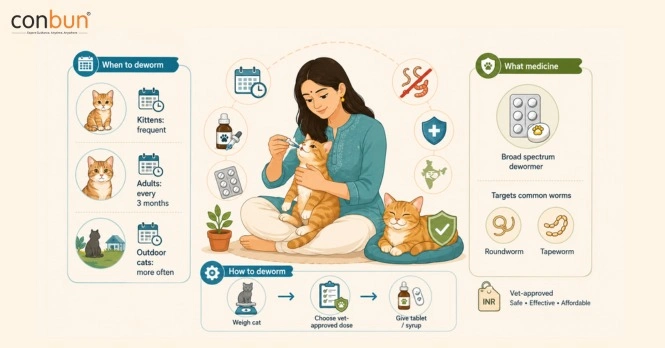
Kittens should be dewormed every 2 weeks until they are 8 weeks old. Then every month for 6 months. Adult indoor cats need to be dewormed less frequently, every 3 months. Outdoor cats may require monthly treatment depending on flea exposure and hunting.
This is the section most owners need to bookmark.
Deworming Schedule for Kittens in India
| Age | Frequency |
| 2–8 weeks | Every 2 weeks |
| 2–6 months | Once monthly |
| Above 6 months | Adult schedule |
Why Kittens Need Frequent Deworming
Kittens are highly vulnerable because:
- Maternal transmission is common
- Immunity is immature
- Parasite burden builds rapidly
- If infected, they deteriorate faster
This is why veterinarians recommend starting deworming at an early age.
Deworming Schedule for Adult Cats in India
| Lifestyle | Frequency |
| Indoor cat | Every 3 months |
| Indoor-outdoor cat | Every 1–2 months |
| Outdoor/hunting cat | Monthly |
Best Cat Deworming Medicine Available in India
The best cat deworming medicines commonly contain pyrantel, praziquantel, fenbendazole, or milbemycin. Combination products are preferred because they target multiple intestinal worms simultaneously.
Veterinarians choose cat dewormers based on:
- Age
- Weight
- Parasite type
- Lifestyle
Common Active Ingredients
| Ingredient | Targets |
| Pyrantel Pamoate | Roundworms, hookworms |
| Praziquantel | Tapeworms |
| Fenbendazole | Broad intestinal parasites |
| Milbemycin | Broad-spectrum protection |
Commonly Used Cat Deworming Medicine in India
- Drontal
- Milpro
- Profender spot-on
- Pyrantel-based kitten syrups
Cat Deworming Syrup vs Tablets
Syrups
Best for:
- Young kittens
- Small body weight
- Easier dosing
Tablets
Better for:
- Adult cats
- Combination treatment
Spot-On Dewormers
For cats that hate tablets: Spot-on products can help significantly. These are applied behind the neck and absorbed through the skin.
How to Give Deworming Medicine to a Cat
Cat deworming at home is safest when the cat is weighed accurately, and medication is dosed correctly. Syrups are ideal for kittens, while tablets or spot-on products work well for adults. Always follow weight-based dosing instructions carefully.
Most owners struggle less with the medicine and more with the cat.
Step-by-Step Cat Deworming at Home
- Weigh the cat accurately
- Confirm correct dosage
- Wrap the cat gently in a towel
- Administer the tablet or syrup carefully
- Follow with a small amount of water if needed
Easier Alternatives
If tablets fail:
- Use pill pockets
- Try flavoured syrups
- Consult a vet online to know spot-on options
Home Remedies for Cat Deworming - Do They Work?
There are no scientifically proven home remedies for cat deworming. Garlic is toxic to cats, while coconut oil, turmeric, and neem have no reliable evidence against intestinal parasites. Veterinary-approved dewormers remain the only safe and effective treatment.
This part needs clarity because misinformation online is dangerous.
Garlic Is Dangerous
Despite internet advice, garlic is toxic to cats. It damages red blood cells and, as per the MSD Veterinary Manual, may cause hemolytic anaemia.
Coconut Oil and Turmeric
There is no reliable veterinary evidence that supports Coconut oil and Turmeric as effective dewormers for cats.
Instead, it has been found that they may:
- Upset digestion
- Delay proper treatment
Veterinary Reality
Licensed cat deworming medicine is:
- Affordable
- Safe
- Proven effective
Therefore, experimentation with home remedies can be risky and unnecessary.
When to Visit a Vet vs When Online Consultation Is Fine
Visit a veterinarian physically if:
- Your cat is under 6 weeks old
- Severe diarrhea develops
- Vomiting persists
- Pale gums appear
- Weight loss becomes severe
Veterinary Doctor Consultation Online Is Suitable For:
- Routine deworming advice
- Medicine selection
- Weight-based dosing guidance
- Mild symptoms
- Schedule clarification
Many Indian owners now use: veterinary doctor consultation online platforms like Conbun for routine preventive care guidance. Especially in areas where finding a veterinary doctor near me becomes difficult late at night.
Conclusion
Modern pet care is no longer limited to clinic visits alone. From quick guidance to follow-ups and everyday health concerns, digital veterinary support is making pet parenting easier and faster across India.
The key is knowing when online care is enough and when physical treatment is necessary. Whether you need advice, preventive guidance, or urgent support, you can now easily book a veterinary doctor on Conbun and access professional help from home.
FAQs (People Also Asked)
Q1. How to Know When to Deworm Your Cat?
Answer. If you see worms in stool, fleas, pot belly, vomiting, or scooting, your cat likely needs immediate deworming. Ideally, it is advised not to wait for symptoms at all. Stick to a preventive deworming schedule for cats in India.
Q2. Do indoor cats need deworming?
Answer. Yes. Fleas that carry tapeworm larvae can enter homes on bags, shoes and clothing, etc. Deworming 4 times a year is the minimum recommended, regardless of their indoor lifestyle.
Q3. Can I deworm a 2-month-old kitten at home?
Answer. Yes. But make sure to use a vet-recommended pediatric deworming, for example, syrup formulations of pyrantel pamoate. Tablets are meant for adults. It can be difficult to administer them to kittens according to weight. Always weight you kitten to dose, not age alone.
Q4. Can I buy cat deworming tablets over the counter in India?
Answer. Yes, basic dewormers like pyrantel-based syrups and other combination tablets are available OTC at pet stores in India. However, for cats with health conditions, make sure that you purchase dewormers only with a vet’s prescription.
References
CAPC. (2025). General Guidelines for Dogs and Cats. https://capcvet.org/guidelines/general-guidelines/
Hayes, C. (2024). Garlic and Onion (Allium spp) Toxicosis in Animals. https://www.msdvetmanual.com/toxicology/food-hazards/garlic-and-onion-allium-spp-toxicosis-in-animals
Mehta, P. (2026). What to Know About Roundworms in Cats. WebMD. https://www.webmd.com/pets/cats/what-to-know-about-roundworms-in-cats
Patil, V. A., Gudewar, J., Gadhave, P. D., & Naringrekar, H. Y. (2024). Prevalence of gastrointestinal parasites of cats in Mumbai and efficacy of commonly used anthelmintics. International Journal of Veterinary Sciences and Animal Husbandry,9,555561. https://www.researchgate.net/profile/Riddhi-Pednekar/publication/383263869_Prevalence_of_gastrointestinal_parasites_of_cats_in_Mumbai_