.webp&w=384&q=75)
First Week with Your New Fish: A Complete 7-Day Checklist
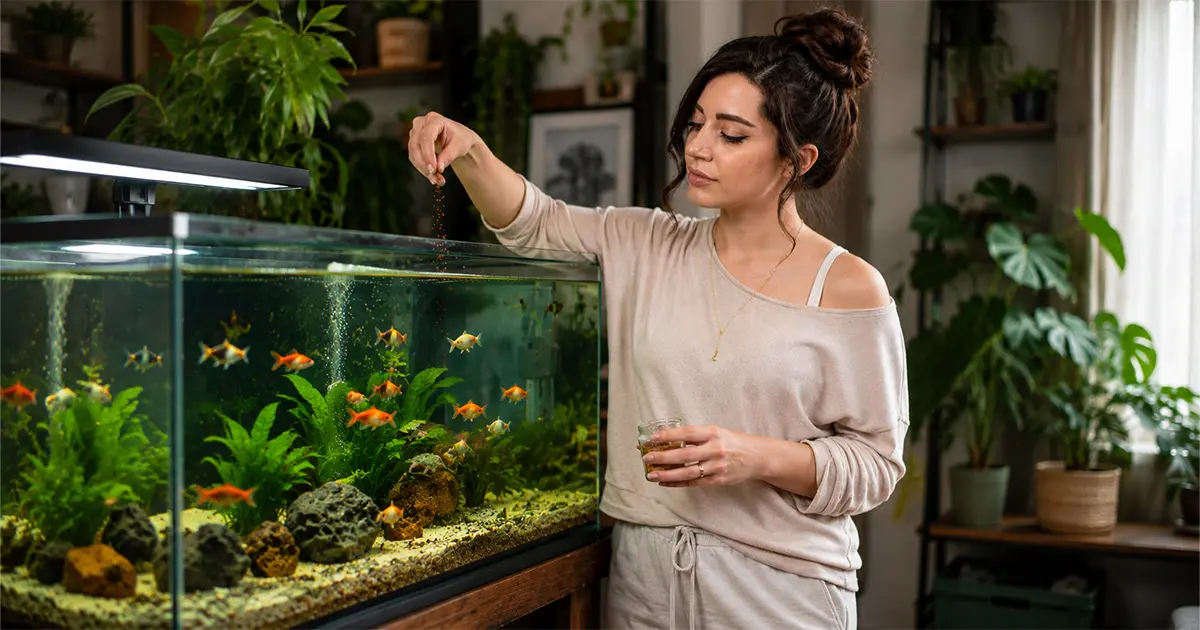
In your first week with your new fish, you should focus on safe acclimation, stable water quality, appropriate feeding, and careful observation. Do not overcrowd the tank or feed excessively while your fish adjusts to its new aquarium. Monitor swimming, breathing, appetite, colour, fins, and behaviour daily, as sudden changes like appetite loss or fin discolouration can indicate stress, environmental problems, or illness.
For beginner fish care, remember that the aquarium itself is part of your pet's health environment. Temperature, nitrite, ammonia, pH, oxygen, filtration, and stocking all influence wellbeing.
This new pet fish guide covers aquarium preparation, acclimation, feeding, water quality, behaviour, tank maintenance, health monitoring, and veterinary care.
Before Your Fish Arrives: Prepare the Aquarium
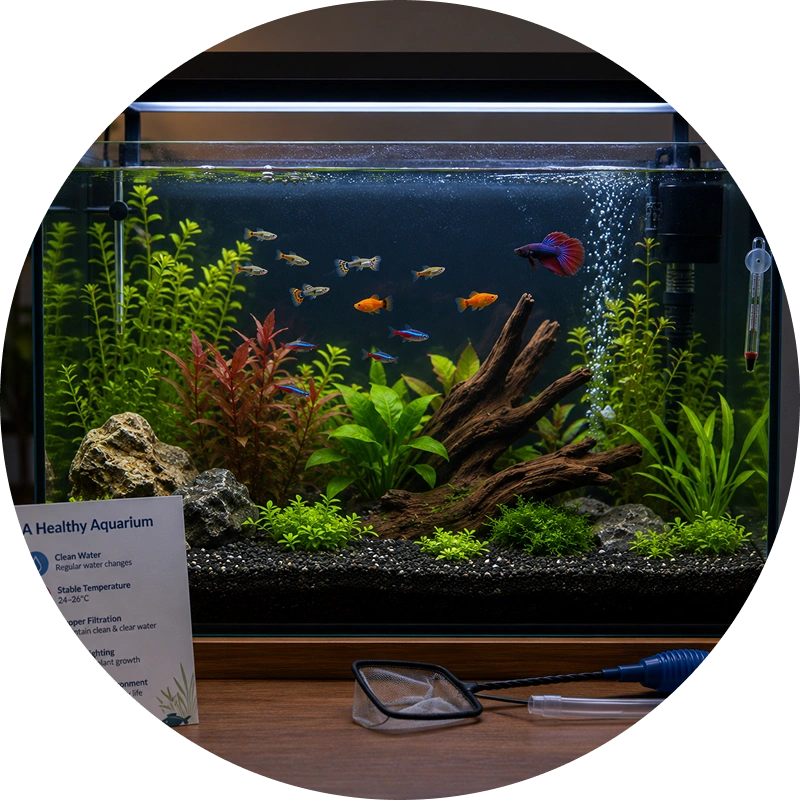
A successful new fish setup starts before your fish reaches home. Prepare the fish tank setup, check its water parameters, and ensure the filter is functioning properly. A newly established aquarium may not yet have a mature biological filter. This makes ammonia and nitrite particularly important, especially during the early weeks.
New Fish Setup Checklist
Appropriately sized aquarium
Established biological filtration
Filter and appropriate flow
Heater where required
Thermometer
Water conditioner
Suitable substrate
Species-safe plants or decorations
Hiding places
Species-appropriate food
Water-testing kit
Aquarium net
Quarantine tank where practical
Check Water Quality
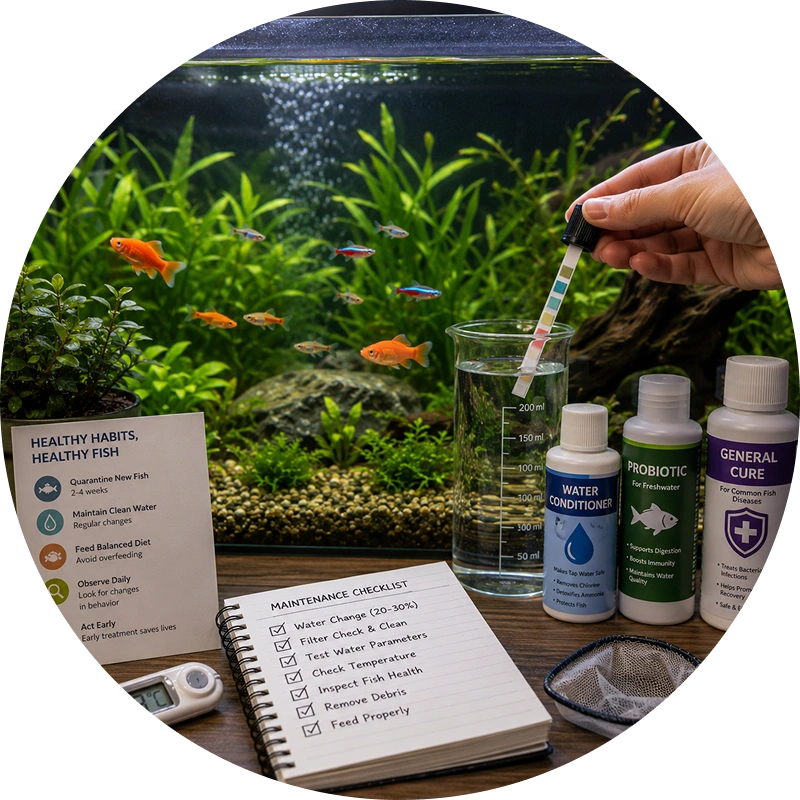
Monitor temperature, ammonia, nitrite, nitrate, pH and, where relevant, dissolved oxygen or salinity. Clear water does not necessarily mean healthy water. Water quality testing is an important part of aquarium care for beginners.
Veterinary Insight: If the aquarium is newly established, verify that the nitrogen cycle is functioning before adding fish.
Day 1: Acclimate Your Fish Slowly
The first day should be quiet and predictable. Moving from a shop, breeder, or another aquarium into a new environment can be stressful, so avoid immediately handling, feeding heavily or adding tank mates.
Step-by-Step acclimation process
Dim the aquarium lights.
Acclimate the transport container according to the species and supplier's instructions.
Gradually introduce aquarium water when appropriate.
Transfer the fish without unnecessarily adding transport water.
Allow the fish to explore quietly.
Keep household activity around the aquarium low.
Avoid immediately adding additional fish.
Increased hiding, reduced activity, exploration or temporary colour changes may occur during adjustment. However, severe gasping, abnormal swimming behaviour, or obvious distress should not automatically be dismissed as normal setting-in behaviour.
Veterinary Insight: Check water parameters if your fish appears distressed rather than assuming it simply needs more time to adjust.
Days 2–3: Establish a Healthy Feeding and Observation Routine
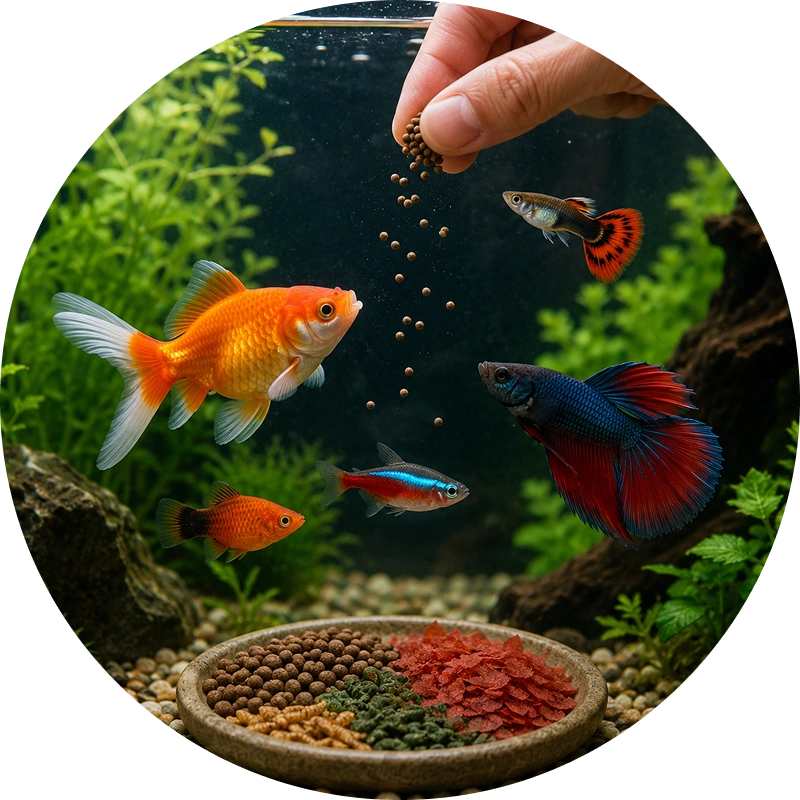
By days two and three, establish a consistent fish feeding schedule. Feeding must be according to the nutritional requirements of the fish species. Offer small portions and avoid free feeding only because the fish seems interested.
Feeding Routine
Feed species-appropriate food.
Offer small portions.
Maintain consistent feeding times.
Avoid overfeeding.
Remove excessive uneaten food.
Avoid sudden dietary changes.
Overfeeding increases organic waste and may contribute to ammonia toxicity, particularly in a new aquarium. New tank syndrome is associated with inadequate biological filtration and may become more likely when new systems are overstocked or overfed.
Daily Health Observation
Your daily fish care checklist should include:
Appetite
Swimming pattern
Breathing
Body position
Colour
Fins
Visible spots or lesions
Interaction with tank mates
Veterinary Insight :Persistent appetite loss, abnormal respiration, or unusual swimming should prompt assessment of both the fish and its water conditions. Changes in swimming, colour, body, or fins are recognised signs that may indicate illness.
Days 4–5: Help Your Fish Settle into Its New Aquarium
By days four and five, ensure that you are continuing the same predictable routine rather than constantly changing the aquarium. Stable environmental conditions are important because temperature fluctuations and water chemistry can lead to stress in fish.
Continue Your Routine
Keep lighting consistent.
Feed at regular times.
Maintain the appropriate temperature.
Avoid unnecessary rearrangement.
Observe interactions with other fish.
Provide species-appropriate hiding areas.
Keep sudden movement and excessive noise around the aquarium limited.
Signs of Stress
Watch for:
Persistent hiding
Rapid breathing
Gasping
Clamped fins
Erratic swimming
Loss of appetite
Repeated aggression
Stress can result from poor fish water quality, incompatible tank mates, inadequate space, inappropriate temperature, or other environmental problems. Therefore, behaviour should always be considered alongside aquarium conditions.
Days 6–7: Review Your Fish's Health and Aquarium
At the end of the first week, complete a fish health checklist covering both your pet and its environment.
Health/Environment Check | Why It Matters |
Appetite | Indicates feeding response |
Swimming | Helps identify behavioural abnormalities |
Breathing | Can reveal respiratory or water-quality problems |
Fins and skin | Helps identify visible disease signs |
Temperature | Supports species-specific requirements |
Ammonia | Should remain at an appropriate safe level |
Nitrite | Elevated levels indicate nitrogen-cycle problems |
Nitrate | Helps assess accumulated waste |
pH | Should suit the species |
Merck Veterinary Manual recommends regular monitoring of key aquarium parameters, including temperature, pH, ammonia and nitrite.
Contact an aquatic veterinarian if your fish remains unwell, multiple fish become sick, unexplained deaths occur, severe respiratory distress develops, dropsy, significant swelling or lesions appear, or water-quality corrections fail to resolve the problem.
Common First-Week Fish Care Mistakes
Avoid these common mistakes during your first week with a pet fish:
Adding fish before the aquarium is ready.
Overfeeding.
Overstocking.
Ignoring ammonia or nitrite.
Changing aquarium water unnecessarily or incorrectly.
Aggressively cleaning biological filter media.
Adding incompatible species.
Changing temperature suddenly.
Ignoring persistent abnormal behaviour.
Treating disease without considering environmental causes.
Many early aquarium problems are associated with unstable water quality, unsuitable stocking, poor acclimation, or incorrect feeding.
Veterinary Insight: When a new fish becomes unwell, assess the aquarium environment as well as the animal.
When Should You Contact an Aquatic Veterinarian?
Fish do not necessarily need a routine veterinary appointment immediately after purchase, but getting professional advice is appropriate when health concerns arise. Through Conbun, talk to an aquatic vet online for guidance about persistent appetite loss, abnormal swimming, gasping at the surface, severe lethargy, visible wounds, lesions, swelling, multiple sick fish, or unexplained deaths.
An online fish health consultation online on our pet care app can help determine appropriate next steps. It gives you the confidence needed to care for your new fish and ensure positive health outcomes.
Severe cases may require hands-on examination, water analysis, microscopy, imaging, laboratory testing, or other diagnostic assessment. Veterinary treatment should be based on the suspected cause rather than indiscriminate medication.
Conclusion
Prepare the aquarium before arrival, acclimate your fish carefully, maintain stable water quality, and follow a species-appropriate feeding schedule. Observe behaviour every day and avoid overfeeding or overcrowding.
If abnormal signs appear, respond promptly rather than assuming they are normal adjustment. Continue learning about species-specific nutrition, compatibility, water quality, and common diseases to support lifelong fish health. Schedule an online veterinary appointment on Conbun to get a web-based pet health diagnosis or to learn more about how you care for your pet fish with confidence.
Frequently Asked Questions
Q1. What should I do when I bring a new fish home?
Ans. Prepare the aquarium first, check water quality, acclimate the fish gradually according to species requirements, and keep the environment calm. Provide appropriate food and hiding places, then observe appetite, breathing, swimming and behaviour closely.
Q2. How long does it take a new fish to settle into an aquarium?
Ans. Adjustment varies by species and individual fish. Some settle within several days, while others take longer. During this period, maintain stable water parameters, consistent lighting and feeding, appropriate hiding places, and minimal environmental disruption.
Q3. What should I feed my new fish?
Ans. Feed species-appropriate food based on its natural dietary requirements, age and size. Offer small portions at consistent times and avoid overfeeding. Excess food increases waste and can contribute to deteriorating water quality and ammonia problems.
Q4. How do I know if my new fish is stressed?
Ans. Possible signs of stress include persistent hiding, gasping, rapid breathing, clamped fins, erratic swimming, appetite loss, colour changes, or repeated aggression. Check water quality, temperature, tank mates, stocking and other environmental factors instead of assuming stress has one cause.
Q5. When should I take my new fish to a vet?
Ans. Seek prompt veterinary advice when appetite loss persists, breathing becomes abnormal, swimming changes significantly, lesions or swelling appear, several fish become sick at a time, or unexplained deaths occur. Severe illness require physical examination, diagnostic testing, or laboratory assessment.
Table of Content
- Before Your Fish Arrives: Prepare the Aquarium
- Day 1: Acclimate Your Fish Slowly
- Days 2–3: Establish a Healthy Feeding and Observation Routine
- Days 4–5: Help Your Fish Settle into Its New Aquarium
- Days 6–7: Review Your Fish's Health and Aquarium
- When Should You Contact an Aquatic Veterinarian?
- Conclusion
- Frequently Asked Questions

Anand Sen
Categories