Written by: Anand Sen; Reviewed by: Dr. Ishwar Anand Senapati (B.V.Sc & A.H, M.V.Sc)
Delhi hits 45°C. Rajasthan crosses 46°C. Humidity in Mumbai turns every room into a slow pressure cooker. The pavement outside your apartment is hot enough to fry an egg.
Your dog is overstimulated due to high stress, irritability and exhaustion. Your cat is stretched out on the tile floor, silent and still.
And here’s an uncomfortable truth:
Indian summers are not just hot; they are medically dangerous for pets.
Dogs and cats don’t sweat like humans. Dogs rely on panting. Cats have minimal sweat glands in their paws called the merocrine glands. When outside temperatures approach or exceed their body temperature (38–39°C), their cooling system gives up.
According to an article published in Veterinary Medicine: Research and Reports, once body temperature crosses 41°C, the risk of organ damage rises rapidly, especially in dogs.
This is why summer pet care for Indian dogs and cats in 2026 should not rely on Western advice. A “warm day” in the UK is 25°C. In India, that’s winter.
This guide will break down:
Which pets are most at risk
The exact signs of heatstroke
And 9 practical, India-tested w
Hydration tips:
ays to keep your pet safe
Because in Indian summers, prevention isn’t just helpful. It’s survival.
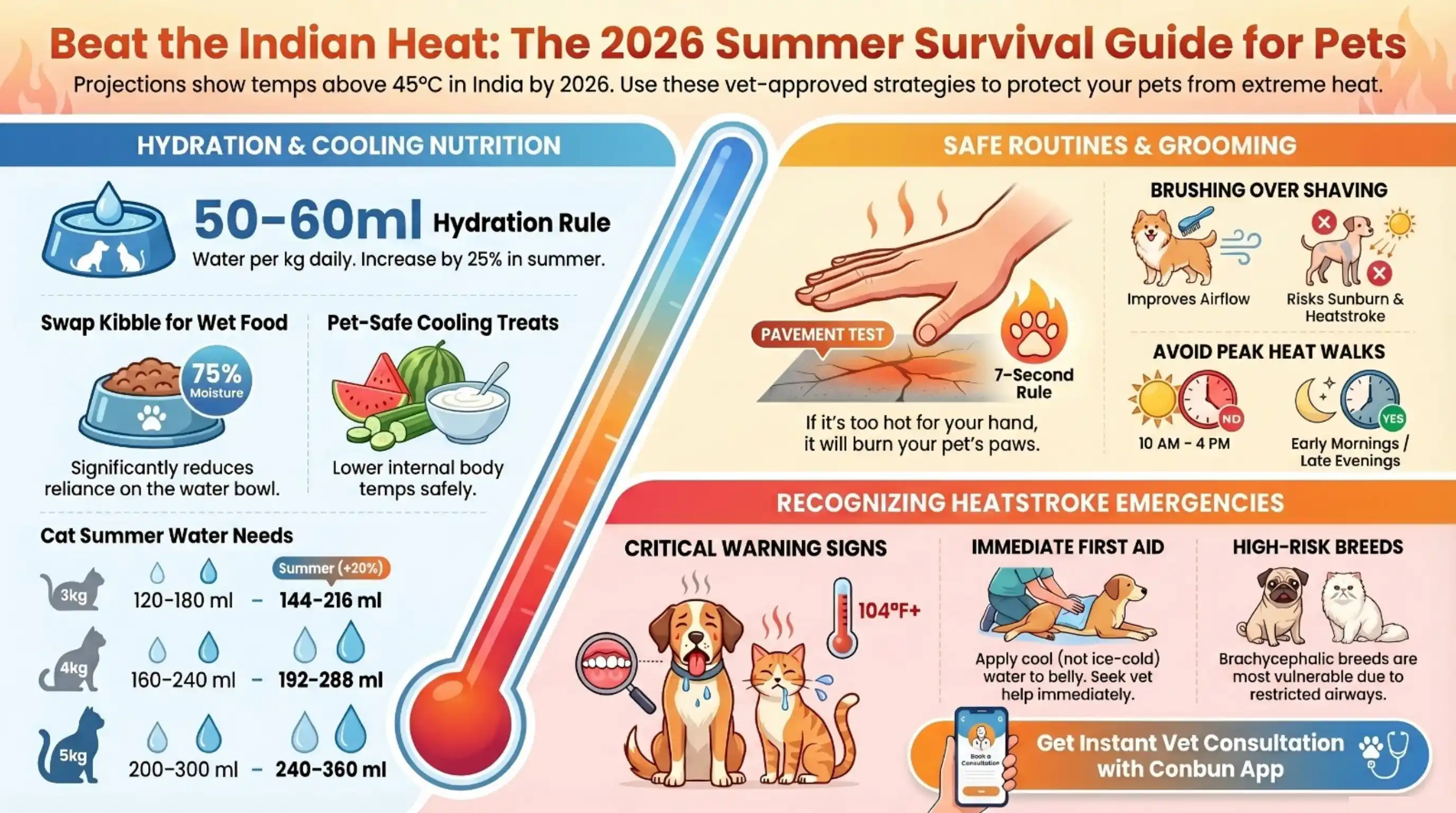
Why are Indian summers dangerous for dogs and cats?
Indian summers are dangerous for pets because temperatures often exceed 40°C, which leads to fatal dehydration and heatstroke. Heat overwhelms the natural cooling systems of pets long before it feels extreme to humans.
Unlike humans, pets cannot sweat effectively across their skin. Dogs cool by panting. But at 44°C, the air they inhale is already extremely hot for them, making panting ineffective. Cats? Even more vulnerable indoors without airflow.
Body Temperature Danger Zone
Temperatures above 40°C can lead to Heat exhaustion. If above 41.5°C, the risk of heatstroke becomes strong, and above 43°C may lead to genuine life-threatening pet emergencies like organ failure or kidney damage.
Related Readings: My Cat Refuses Water in Summer - Is It Dangerous?
Which dog and cat breeds are most at risk during Indian summers?
Dog and cat breeds that have thick coats are brachycephalic (flat-faced) or originate in colder climates are at the highest risk of dehydration, heatstroke and breathing difficulties.
High-risk breeds include:
Pug
Bulldog
Shih Tzu
Persian cats
Exotic Shorthair
Low-risk breeds
Indian stray cats and Indian Pariah Dogs (INDogs) are generally considered to be low-risk breeds due to their strong resilience in Indian climates.
Why?
Natural selection.
These breeds have adapted to Indian climates over thousands of years, making them significantly more heat-resilient. Evolution is the reason why foreign dog breeds like Husky, or popular cat breeds like the Persian cats, do not have this resilience and hence are not suitable to Indian climate.
What are the early signs of heatstroke in dogs and cats?
Early signs of heatstroke in dogs and cats include rapid panting, heavy drooling, lethargy, bright red gums, vomiting and diarrhea.
Key early warning signs
Rapid breathing
Lethargy
Loss of coordination
Collapse
Bright red gums
Excessive salivation
Increased heart rate and
Digestive stress
Related Readings: 10 Best Dog Breeds for the Indian Climate (Vet-Recommended List)
What should you do immediately if your pet shows heatstroke symptoms?
Move them to a cool, shaded area and start active cooling. Contact a vet immediately, as delays in treatment can lead to severe complications.
Immediate First Aid
Move the pet to shade or AC
Apply cold water, not ice, particularly on their stomach, armpits, paws and groin
Offer small sips of water
Avoid covering them with a wet towel, as it can trap heat
Use a fan for airflow to speed up cooling through evaporation
Contact a vet immediately
Do NOT use ice as it can cause shock.
According to veterinary literature on canine heatstroke (PubMed), delayed cooling significantly increases mortality risk. If an emergency clinic visit is not possible, connect to a veterinarian online to get guidance on how to alleviate heat stroke symptoms.
What are the best summer care tips for pets in India?
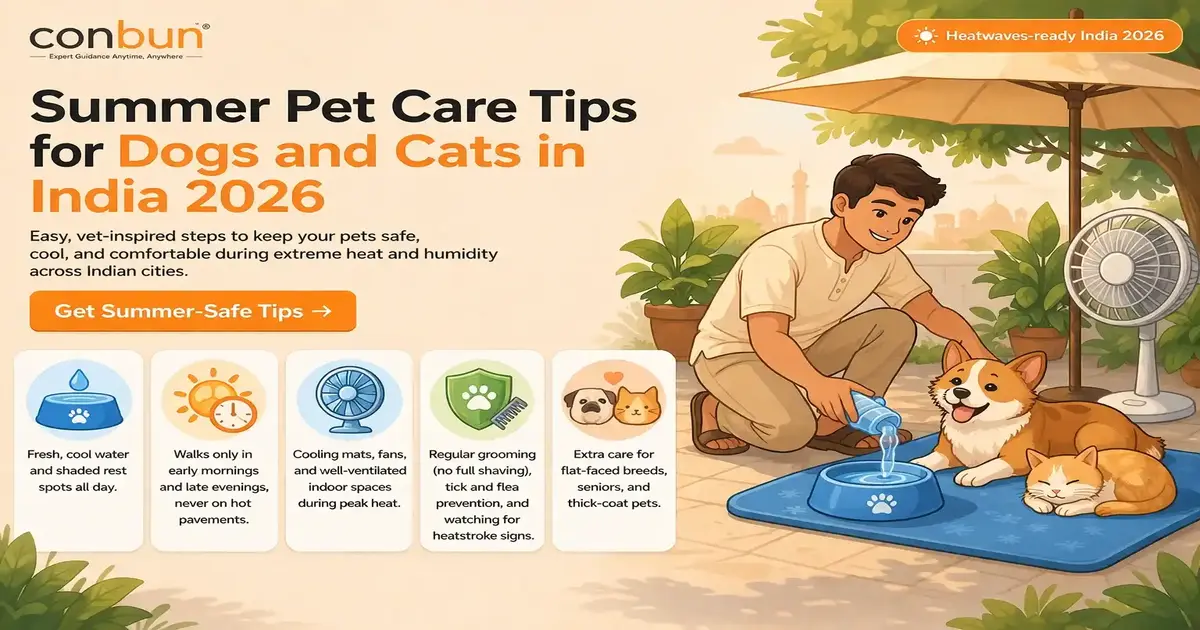
Prioritise constant access to fresh water, limit their outdoor activity, use cooling mats and practice regular grooming during summer.
Daily summer care checklist:
Walk pets only early in the morning or late in the evening
Use cooling mats or damp towels
Keep multiple water bowls accessible
Practice grooming regularly
Home cooling with ACs, coolers and fans
Do not shave double-coat dogs; you can trim, but leave an inch of hair to protect against sunburn
Avoid walking them on hot roads or surfaces
These are the most effective tips pet parents can follow. If you are still wondering how to care for dogs during summer, connect to a vet online on Conbun.
How much water do dogs and cats need in summer?
During summer, dogs and cats generally need to consume about 50-60 ml of water per kilogram of body weight daily, but this can increase based on heat and activity.
Daily water requirement guide:
Pet Weight | Water Needed |
5 kg | 250–350 ml |
10 kg | 500–700 ml |
20 kg | 1–1.4 L |
This equates around 50-60 ml per kg body weight daily. Pets that are active or spend time outside in the heat require more than the baseline amount.
Hydration tips:
Use wet food for cats
Add electrolytes if advised
Change water twice daily
Cats may refuse water even in summer. They need extra care. Keep their water bowl away from their litter box, use multiple water bowls and clean the bowl regularly.
Related Readings: Common Winter Diseases in Dogs & How to Prevent Them
What foods help keep pets hydrated in summer?
Offer them a moisture-rich diet. Incorporate watermelon, cucumbers and celery and switch to a wet-food diet to fulfil their hydration needs.
Hydrating food options:
Watermelons & Cantaloupe
Frozen treats like blueberries and ice cubes
Coconut water and yoghurt
Cucumbers
Boiled chicken with broth
Commercial wet food options
Avoid excessive sugar, salt and processed foods.
What mistakes do pet owners make during the summer in India?
Walking pets on hot surfaces, leaving them in parked cars, ignoring heat stroke signs, and not giving proper hydration are common summer mistakes which can lead to serious harm.
Avoid:
Afternoon walks
Over-exercising or high-intensity play sessions
Inadequate hydration and indoor ventilation
Shaving double-coated breeds
Ignoring early signs of heatstroke
What do vets recommend for pet care during extreme heat?
Keeping pets indoors during extreme heat, offering constant access to fresh water and restricting exercise to early morning and late evening are essential veterinary recommendations.
India-specific insight:
Most heatstroke cases occur between 12 PM and 4 PM
Flat-faced breeds show higher emergency visits
Delayed action may lead to serious harm and significantly increase treatment costs
Delay in treatment is the prominent cause of mortality in pets during India’s summer. If you see signs of heatstroke in pets, contact a veterinarian immediately.
Real case: what happens when heatstroke is ignored in pets?
If left untreated, heatstroke can lead to serious complications like organ failure, seizures, or even death. With delays in care, internal damage increases, and the chances of recovery decrease.
Case example:
Priya has a Pug, which was exposed to the terrace heat for 2 hours
This exposure led to:
Severe dehydration and collapse
Emergency treatment
Costly recovery:
Priya incurred heavy treatment costs, which exceeded the purchase costs. The recovery took several days.
Lesson: Early prevention avoids high medical costs.
Related Readings: Top Rated Pet Care Consultation App: Features, Benefits, How It Works (2026 Guide)
Conclusion
Indian summers are not mild. Summers in India are not mild. They are extreme, unforgiving, and often underestimated by pet owners.
But here’s the good news: almost every summer emergency in pets is preventable if you are vigilant enough.
Walk early. Hydrate often. Avoid heat exposure. Know the signs.
And if something feels off? Don’t wait. Because in summer:
Minutes matter more than anything else. If your pet is facing issues due to intense Indian heat or dehydration, connect to a vet instantly to get expert guidance and effective India-specific tips to ensure that your pet is healthy and active.
Frequently asked questions about summer pet care in India
Q1: Can I walk my dog during the daytime in summer?
Answer. Yes, but it is generally advised to avoid the peak hours (10:00 AM to 6:00 PM) to reduce heatstroke risk.
Q2: Do cats need cooling like dogs?
Answer. Yes. Cats also need cooling support as they face heat stress. As they show fewer signs, it is important to monitor constantly and ensure adequate hydration.
Q3: Is AC necessary for pets in India?
Answer. Yes. Especially for flat-faced cats and dogs, as they cannot regulate their body temperature and face breathing issues.
Q4: How do I know my pet is dehydrated?
Signs of dehydration in pets include dry gums, lethargy, reduced urination, sunken eyes and restlessness.