

Written by: Anand Sen; Reviewed by: Dr. Harsh
Ramesh, a dog parent from Pune, noticed his two-year-old Beagle, Bruno, scratching his ears constantly. The smell, the redness, and the nonstop head shaking had been happening for weeks. He assumed it was “just dirt” and tried coconut oil at home. But three weeks later, the dog was diagnosed with a ruptured eardrum. This is not rare.
Beagles are cheerful, affectionate, and wonderfully food-obsessed little dogs. But they are also genetically predisposed to several health conditions that become worse in India’s climate and lifestyle conditions. Humidity, obesity, poor-quality diets, and delayed diagnosis make many problems progress faster than owners expect.
The good news is that most Beagle health issues are manageable if caught early.
The following blog covers the most common Beagle health issues, what to watch for, and exactly when to act.
How Long Do Beagles Live? (And What Affects It)
Beagles usually live 12-15 years. Their lifespan depends heavily on weight control, early disease detection, preventive care, and managing breed-specific genetic conditions before complications develop.
There are many changes that Beagles face in India:
- Excess humidity leads to ear and skin infections
- Indian summer reduces activity and promotes obesity
- Many owners overfeed due to the breed’s strong appetite
- Homemade diets are often nutritionally unbalanced
According to the World Small Animal Veterinary Association, Beagles are prone to obesity, and excess weight can also increase the risk of intervertebral disease.
Most Common Beagle Health Problems
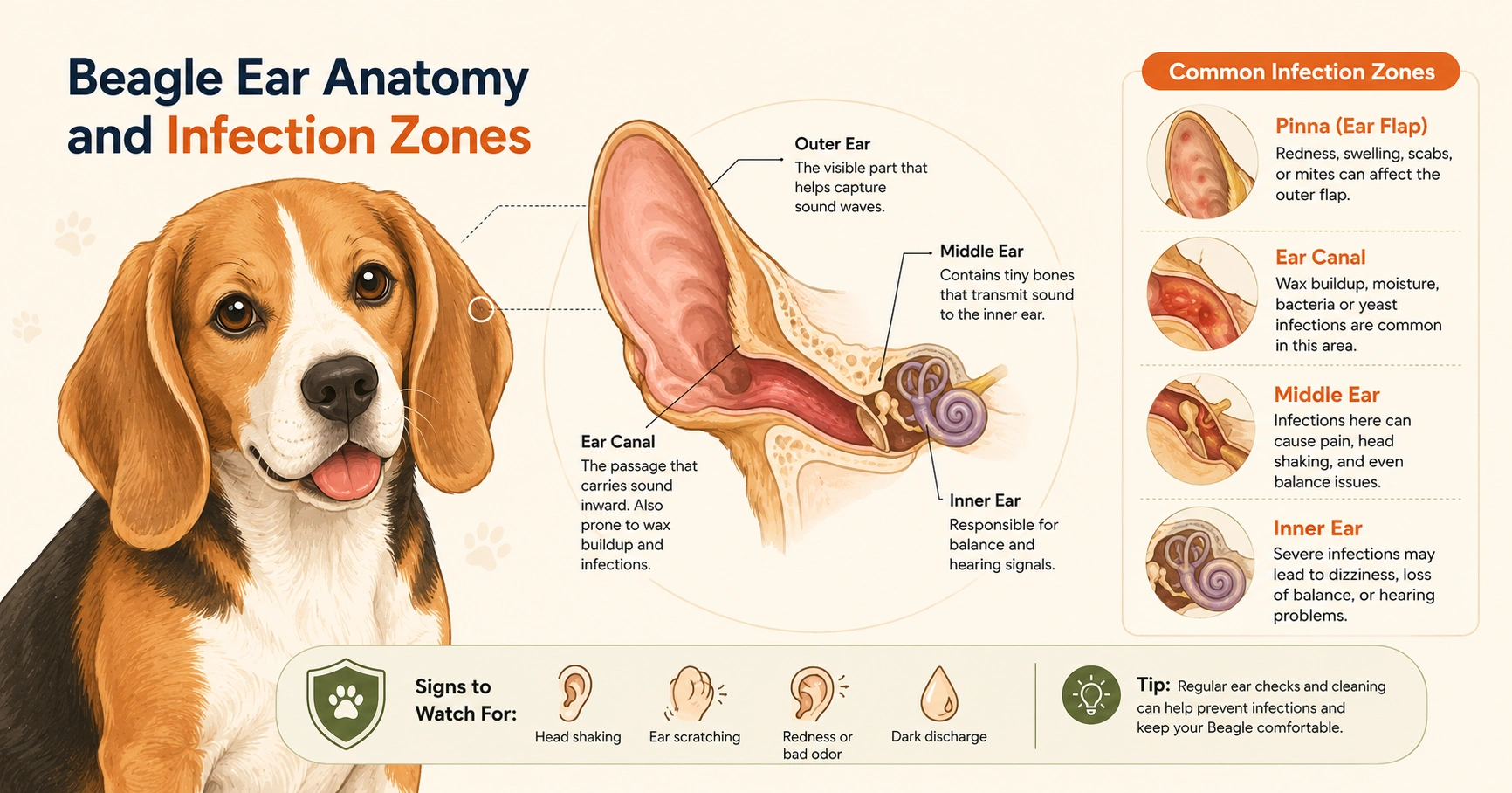
1. Ear Infections (Otitis Externa)
Ear infection (Otitis Externa) is one of the most common health issues veterinarians see in Indian Beagles.
Beagles have long floppy ears that trap heat, moisture, wax and debris. India’s humidity creates a perfect environment for yeast and bacteria growth.
Early signs of ear infections in Beagles:
- Frequent head shaking
- Scratching ears repeatedly
- A strong odour from the ear canal
- Dark brown discharge
- Red inflamed inner ears
The frustrating part is recurrence. Owners often treat symptoms briefly while ignoring the underlying causes: moisture retention, allergies, poor ear cleaning and excess bathing.
According to the Canadian Veterinary Journal, chronic, untreated ear infections can permanently damage the ear canal and hearing structures. In the Indian monsoon season, infections worsen dramatically because many Beagles:
- Stay damp after walks
- Sweat around the ear region
- Develop secondary yeast overgrowth
Weekly cleaning with a vet-approved dog ear cleaning solution can help enormously. But never insert cotton buds deeply into the canal. That usually pushes debris further inside.
If you notice a foul smell from your Beagle’s ears or if it appears painful, do not wait and watch hoping it resolves on its own.
2. Beagle Epilepsy and Seizures
According to Cornell Veterinary Resources, idiopathic epilepsy is a common, inherited neurological condition in Beagles. Most cases begin between 6 months and 5 years of age. It is a neurological condition characterized by recurrent seizures with no identifiable underlying cause.
Seizures in dogs are a common neurological condition and watching it for the first time can be terrifying for owners. Dogs may:
- Collapse suddenly
- Lose bladder control
- Paddle their legs
- Appear confused afterwards
- Become temporarily unconscious
According to the Journal of Internal Veterinary Medicine, idiopathic epilepsy is among the most common inherited neurological disorders in dogs that adversely affects the quality of life (QoL) of both the dogs and the owner.
However, the good news is that many epileptic Beagles can live normal lives once seizures are properly controlled with medication.
The are several triggers particular to Indian that can worsen seizure risk:
- Heat stress
- Sleep disruption
- Certain flea medications
- Sudden environmental changes
During a seizure:
- Stay calm
- Move dangerous objects away
- Never place your hand near the mouth
- Time the episode carefully
A seizure lasting over 5 minutes (status epilepticus) is a life-threatening emergency.
Online veterinary consultation may help guide first-time owners after brief episodes, but repeated or prolonged seizures always require diagnostic investigation.
3. Hypothyroidism in Beagles
Hypothyroidism occurs when a dog’s thyroid gland fails to produce enough thyroid hormones causing a dramatic slowdown in the body’s metabolism.
This disease hides itself beautifully. Many owners assume symptoms simply to be:
- Laziness
- “Normal ageing”
- Summer fatigue
But the signs of Hypothyroidism in dogs gradually become obvious:
- Unexplained weight gain
- Lethargy
- Hair thinning
- Darkened skin
- Recurrent skin and coat conditions
- Reduced exercise tolerance
According to endocrine references from the American Animal Hospital Association, hypothyroidism is one of the most common hormonal disorders in middle-aged dogs.
Diagnosis is straightforward: blood testing for T4 and TSH levels.
Treatment is usually very effective with:
- Daily levothyroxine tablets
- Weight management
- Regular monitoring
Most Beagles may improve dramatically within 1-2 months. Their energy levels return and coat shine improves. Your lazy dog becomes active again.
4. Skin Allergies and Itching
Beagles are extremely allergy-prone dogs. Their genetic predisposition, floppy ears and active outdoor nature make them prone to different kinds of allergies.
India offers endless allergy triggers:
- Dust
- Pollen
- Humidity
- Grass
- Storage mites
In addition to these triggers, Beagles may also develop dog food allergies due to some protein ingredients.
Signs usually include:
- Paw licking
- Belly redness
- Recurring ear infections
- Hair loss
- Constant scratching
One important issue in India is diet quality.
Many Beagles receive:
- Wheat-heavy meals
- Excess rice
- Flavoured biscuits
- Leftover human food
While some dogs may tolerate this perfectly, others might develop chronic allergic inflammation.
According to an article published in Applied Sciences, food allergy diagnosis requires proper elimination diet trials, not random food switching every few days.
Omega-3 supplementation often improves skin barrier health significantly in allergic dogs.
But severe cases may require:
- Prescription diets
- Allergy testing
- Anti-itch medication
- Long-term management plans
Consult a veterinarian online on Conbun to get personalized diet advice, diet charts and effective nutrition planning guidance.
5. Obesity and Weight Problems
If Beagles had life goals, food would probably rank above world peace. And treats are the ultimate currency for them. They are genetically driven to eat constantly.
Obesity is one of the most common pet health issues and also biggest long-term threats to a Beagle’s health.
Excess body fat increases risks of:
- Joint disease
- Diabetes
- Heart disease
- Heat intolerance
- Reduced lifespan
According to a recent article published in the Journal of Veterinary Science, overweight dogs may lose up to 2 years of life expectancy.
And Indian owners unintentionally overfeed constantly through:
- Table scraps
- Biscuits
- “Just one more treat”
- Free feeding
A healthy adult Beagle usually weighs: 9–11 kg depending on height and sex. Anything above this requires attention. One practical recommendation: measure food using a kitchen scale, not guesswork.
Replacing high-calorie treats with:
- Carrot slices
- Cucumber
- Boiled beans
Helps surprisingly well. Exercise matters too. Beagles need: 45–60 minutes daily minimum.
One practical summer pet care tips that can work effectively in Indian summers is to split activity into:
- Early morning
- Late evening
6. Hip Dysplasia and Joint Problems
Hip dysplasia is a common condition Indian dogs. While it less severe in Beagles than giant breeds, it exists especially in overweight or poorly bred dogs.
The condition develops when the hip joint forms abnormally, causing:
- Instability
- Inflammation
- Arthritis over time
Signs appear gradually:
- Stiffness after sleeping
- Hesitation while jumping
- Reduced willingness to climb stairs
- Bunny-hopping gait during running
According to the American College of Veterinary Surgeons (ACVS), excess body weight dramatically accelerates joint degeneration.
This matters because: overweight Beagles age orthopedically much faster. So make sure that your dog is getting vitamins and minerals they need.
Include in their diet Joint-support supplements containing:
- Glucosamine
- Chondroitin
- Omega-3 fatty acids
These supplements may help senior dogs significantly. Controlled low-impact and physiotherapy exercise also improve long-term mobility.
7. Intervertebral Disc Disease (IVDD) - Beagle Slipped Disc
Beagles are genetically predisposed to spinal disc degeneration because of chondrodystrophy abnormal cartilage development affecting the spine.
This increases risk of Intervertebral Disc Disease (IVDD) where a herniated disc suddenly compresses the spinal cord.
Warning signs include:
- Sudden neck pain
- Crying when lifted
- Arched back posture
- Hind leg weakness
- Dragging paws
- Loss of bladder control
These are emergency signs and you should visit a vet immediately. According to the Journal of Internal Veterinary Medicine, rapid treatment dramatically improves recovery chances in IVDD cases.
What owners must never do:
- Force exercise
- Massage aggressively
- Give human painkillers like ibuprofen
Human medications are toxic to dogs and may cause kidney failure. Strict rest and immediate veterinary evaluation are critical.
8. Beagle Eye Problems - Cherry Eye and Cataracts
Cherry eye occurs when the gland of the third eyelid prolapses outward, creating a red swollen mass in the eye corner. It looks alarming but is usually treatable surgically.
Cataracts are more common in older Beagles and cause:
- Cloudy eyes
- Reduced night vision
- Hesitation in dim light
Senior Beagles may begin:
- Bumping into furniture
- Avoiding stairs in low lighting
During puppy selection, always examine eye clarity, redness and excess discharge. Poor breeding practices increase inherited eye disease risk substantially in India.
9. Dental Disease in Beagles
Dental disease is one of the most ignored chronic problems in Indian dogs. By age three, many untreated Beagles already develop:
- Gum inflammation
- Plaque buildup
- Tartar
- Early periodontal disease
Bad breath is usually not “normal dog smell.” It is bacterial overgrowth. Advanced dental disease may eventually affect:
- Heart health
- Kidney function
- Appetite
Veterinary dental guidelines strongly recommend:
- Brushing 3 times weekly minimum
- Dog-safe toothpaste only
- Annual professional dental scaling
Dental chews approved by the Veterinary Oral Health Council may also help reduce plaque accumulation.
Proper dog dental care which is started early can save enormous suffering later.
10. Steroid-Responsive Meningitis (SRM)
This is a lesser-known but serious Beagle-specific condition. It causes inflammation of the brain and spinal cord lining.
Steroid-Responsive Meningitis is a serious but lesser known Beagle-specific condition that causes inflammation of the brain and spinal cord lining.
Signs appear suddenly:
- Severe neck pain and stiffness
- High fever
- Hunched back, reluctance to move
- Sensitivity to touch
It usually affects Beagles between 6 months and 2 years old. It requires immediate veterinary care and responds well to steroids when caught early. Do not wait.
Beagle Health Check: What to Monitor Every Month
A monthly health check at home can help your spot health issues before they become serious.
Monthly check routine:
- Ears: Smell and look inside. If you see any odour or discharge, rush your pet a vet.
- Skin and coat: Run your fingers through the coat. Look for redness, flaking, or bald patches.
- Weight: Monthly weight check-up using a bathroom scale
- Teeth: Lift the lip and check for plaque and tartar
- Eyes: Cloudiness, redness, or unusual discharge need attention.
- Movement: Limping, stiffness, or hesitation in Jumping etc
- Appetite and thirst: Changes in appetite or thirst signals a systemic problem.
Beagle Vaccination Schedule in India
|
Age |
Core Vaccines |
Optional |
|
6–8 weeks |
DHPPiL (Distemper, Parvovirus, Hepatitis) |
— |
|
10–12 weeks |
DHPPiL booster |
Leptospirosis, Kennel Cough |
|
14–16 weeks |
DHPPiL booster + Rabies |
— |
|
Annual |
DHPPiL + Rabies booster |
Leptospirosis, Bordetella |
Anti-rabies vaccination is legally mandated by the government for all pet dogs and thus should be included in vaccination schedule for dogs in India.
When to Visit a Clinic vs. When an Online Consult Works
Visit a clinic when:
- Loss of bladder or bowel control
- Seizures lasting more than 5 minutes
- Severe neck or back pain
- Eye injury or change in vision
- High fever above 39.5°C
- Poison ingestion or trauma
Online vet consultation is safe for:
- Mild, recurring ear scratching
- Soft stools without blood for 1–2 days
- First-time allergy flare-ups (for initial guidance)
- Medication dose questions for known, managed conditions
- Supplement or diet advice

Conclusion: Keep Your Beagle Healthy, One Step at a Time
Beagles are affectionate, intelligent, and endlessly entertaining companions, but they are not completely low-maintenance dogs, especially in India’s climate. Ear infections, obesity, allergies, epilepsy, spinal disease, and thyroid problems are among the most common health issues veterinarians see in the breed.
The encouraging part is that most of these conditions become manageable when owners notice the warning signs early and act consistently. Simple habits like weekly ear checks, weight monitoring, regular exercise, balanced nutrition, and annual veterinary screenings can dramatically improve a Beagle’s quality of life and lifespan.
In the end, preventive care matters far more than emergency treatment, and attentive owners remain a Beagle’s strongest protection against long-term health complications.
Is your Beagle struggling with a health concern right now? Talk to a vet through online consultation to figure out whether it needs an urgent visit or at-home management.
Most Frequently Asked Questions
Q.1) Are Beagles healthy dogs overall?
Answer: Beagles are considered a healthy breed generally. However, they are specific breed-related conditions including epilepsy, hypothyroidism, ear infections, and IVDD. With proper care, they can live for 12–15 healthy years.
Q.2) Why does my Beagle keep getting ear infections?
Answer: Floppy ears restrict airflow and trap moisture and in Indian humidity this gets worse. Regular ear cleaning and drying after baths are essential to break the cycle.
Q.3) What are signs of hypothyroidism in my Beagle?
Answer: Weight gain without an increase in food intake, low energy, a dull coat and recurring skin infections are the key signs of hypothyroidism in Beagles
Q.4) My Beagle is shaking its head constantly. What should I do?
Answer: Constant head shaking always points to an ear infection. Check for discharge or bad odour. Do not use home remedies or oil drops without a vet’s prescription.
Q.5) When should I worry about a Beagle seizure?
Answer: Seizures lasting more than 3-5 minutes are considered as medical emergencies. For first-time brief seizures, consult a vet within 24 hours to discuss diagnostics.
Q.6) What is the best diet for a Beagle in India?
Answer: Moderate-fat, low-carbohydrate and high-protein food is best for Beagles. Avoid wheat-heavy and home-cooked meals. Practice portion control and avoid excess treats and table scraps.
References
American College of Veterinary Surgeons. (2025). Osteoarthritis in Dogs. https://www.acvs.org/small-animal/osteoarthritis-in-dogs/
Bajwa, J. (2019). Canine otitis externa—Treatment and complications. The Canadian Veterinary Journal, 60(1), 97. https://pmc.ncbi.nlm.nih.gov/articles/PMC6294027/
Blanchard, G., Priymenko, N., & Oh, W. S. (2025). Nutrition and aging in dogs and cats: assessment and dietary strategies. Journal of Veterinary Science, 26(Suppl 1), S96. https://pmc.ncbi.nlm.nih.gov/articles/PMC12520854/
Jones, G. M. C., Volk, H. A., & Packer, R. M. A. (2021). Research priorities for idiopathic epilepsy in dogs: Viewpoints of owners, general practice veterinarians, and neurology specialists. Journal of Veterinary Internal Medicine, 35(3), 1466-1479. https://academic.oup.com/jvim/article-pdf/35/3/1466/66653157/jvim16144.pdf
Matias, D., & Martins, L. (2026). Food Allergy in Companion Animals: Integrating Traditional Diagnostics with Emerging Approaches. Applied Sciences, 16(5), 2169. https://www.mdpi.com/2076-3417/16/5/2169
Olby, N. J., Moore, S. A., Brisson, B., Fenn, J., Flegel, T., Kortz, G., ... & Tipold, A. (2022). ACVIM consensus statement on diagnosis and management of acute canine thoracolumbar intervertebral disc extrusion. Journal of Veterinary Internal Medicine, 36(5), 1570-1596. https://academic.oup.com/jvim/article-pdf/36/5/1570/66665225/jvim16480.pdf
Orens. S. et al. (2025). Idiopathic epilepsy in dogs. https://www.vet.cornell.edu/departments-centers-and-institutes/riney-canine-health-center/canine-health-topics/idiopathic-epilepsy-dogs
WSAVA. (2023). Meet the Beagle – Update Your Knowledge! WSAVA https://wsava.org/updates/meet-the-beagle-update-your-knowledge/