Hip Dysplasia in Indian Dogs: Breeds at Risk & Treatment Options
Written by: Anand Sen; Reviewed by: Dr. Saroja Patil (B.V.Sc & A.H, M.V.Sc)
Ravi, a pet parent from Bengaluru, thought that his Labrador had a simple muscle pull when the dog started “bunny hopping” after walks and struggled while getting up from the floor. Fellow pet parents suggested calcium syrup and blamed slippery tiles.
But X-rays confirmed something far more serious:
Canine hip dysplasia is one of the most commonly misunderstood orthopaedic conditions veterinarians see in India.
Large breed dogs are often expected to be naturally “lazy” or “heavy”, so early symptoms get ignored until the joint damage becomes painful.
According to orthopaedic literature referenced by the American College of Veterinary Surgeons, hip dysplasia is one of the leading causes of chronic rear-leg pain and osteoarthritis in dogs worldwide.
But the good news is that early diagnosis can change outcomes dramatically.
What Is Hip Dysplasia in Dogs?
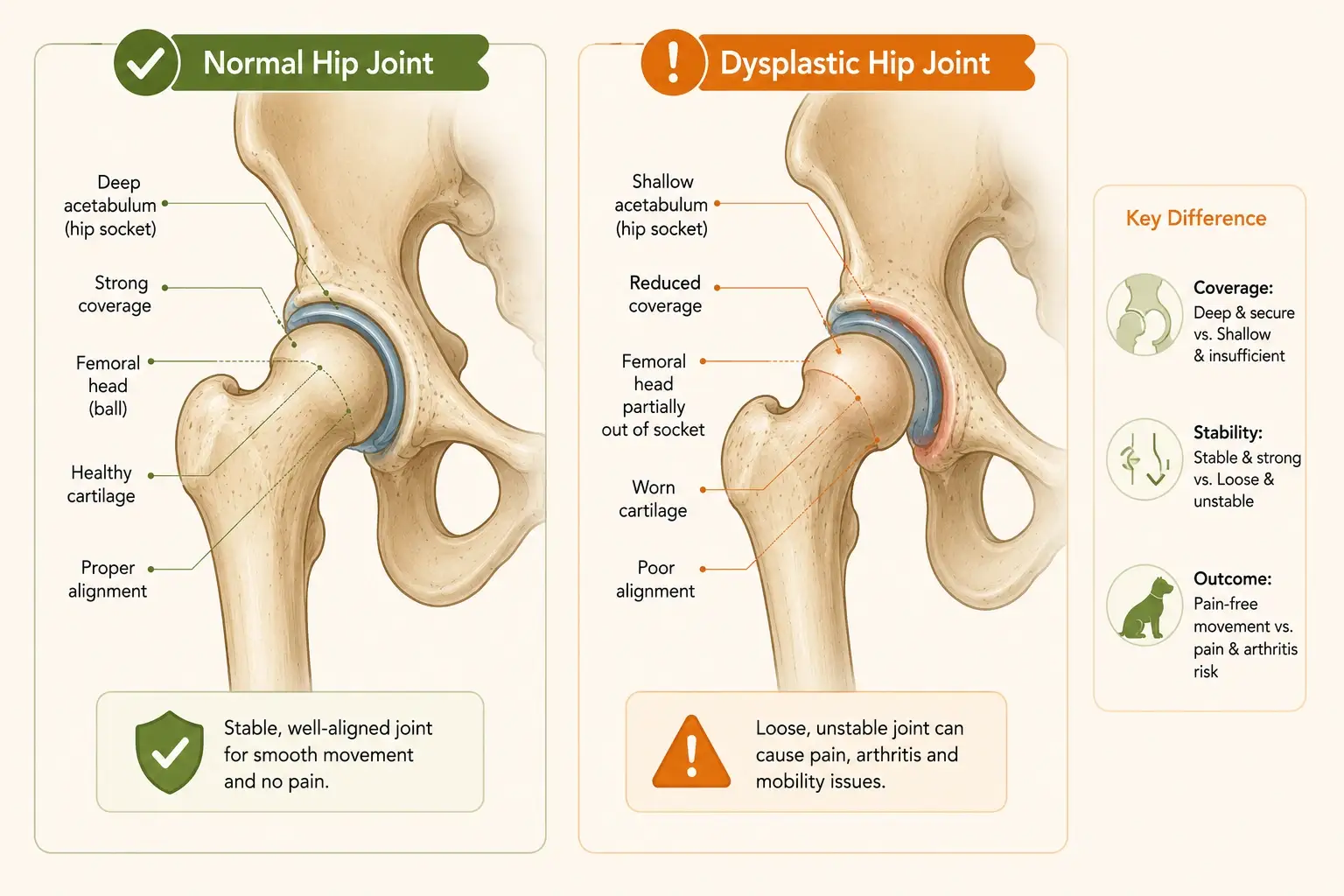
Hip dysplasia is a developmental orthopaedic condition where the hip joint forms abnormally. Instead of fitting tightly, the ball-and-socket joint becomes loose and unstable, leading to cartilage wear, inflammation, arthritis, and chronic pain. It commonly affects large-breed dogs and worsens progressively without management.
The hip joint works like a ball-and-socket mechanism.
As per veterinary studies, in healthy dogs:
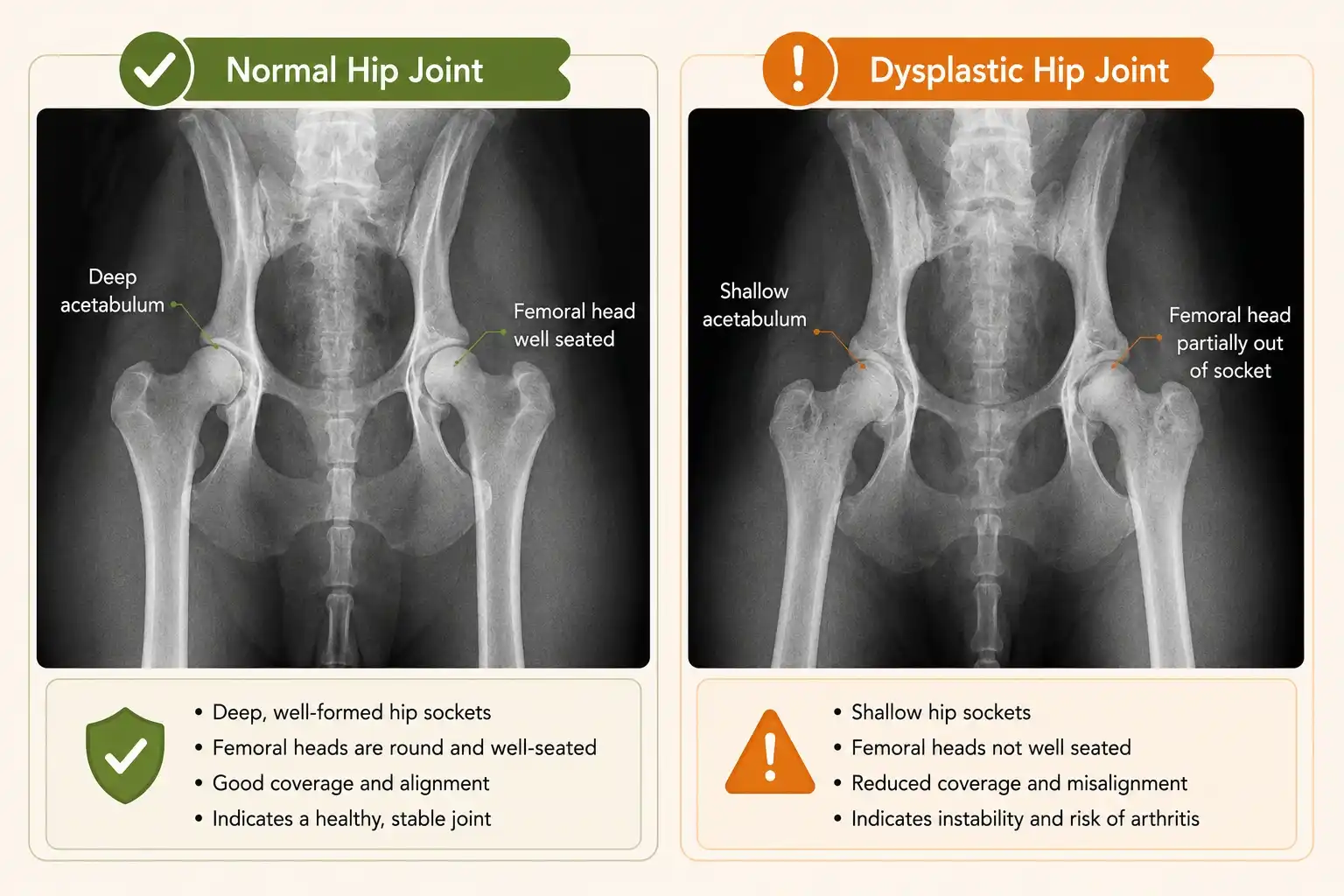
The femoral head (“ball”) fits snugly into the pelvic socket
Movement remains smooth and friction-free
In dogs with hip dysplasia:
The socket becomes shallow
The joint loosens
Bones grind abnormally
Over time, the body responds by forming Bone spurs and arthritis. This leads to chronic pain and restricted movement.
Why Hip Dysplasia Gets Worse Over Time
Canine hip dysplasia is not just a “joint issue.” It is a progressive disease where the instability gradually damages:
Cartilage
Joint capsule
Surrounding muscles
Eventually, even walking becomes painful.
Is Hip Dysplasia Genetic?
Primarily, yes.
According to veterinary research, genetics remains the strongest risk factor. For example, Joint Dysplasia is a common health problem in Labradors as they are at a great genetic risk of developing this condition.
But environmental triggers strongly influence severity.
What it means:
Two puppies with similar genetics may progress very differently depending on their environment, lifestyle and nutrition.
Which Dog Breeds in India Are Most at Risk?
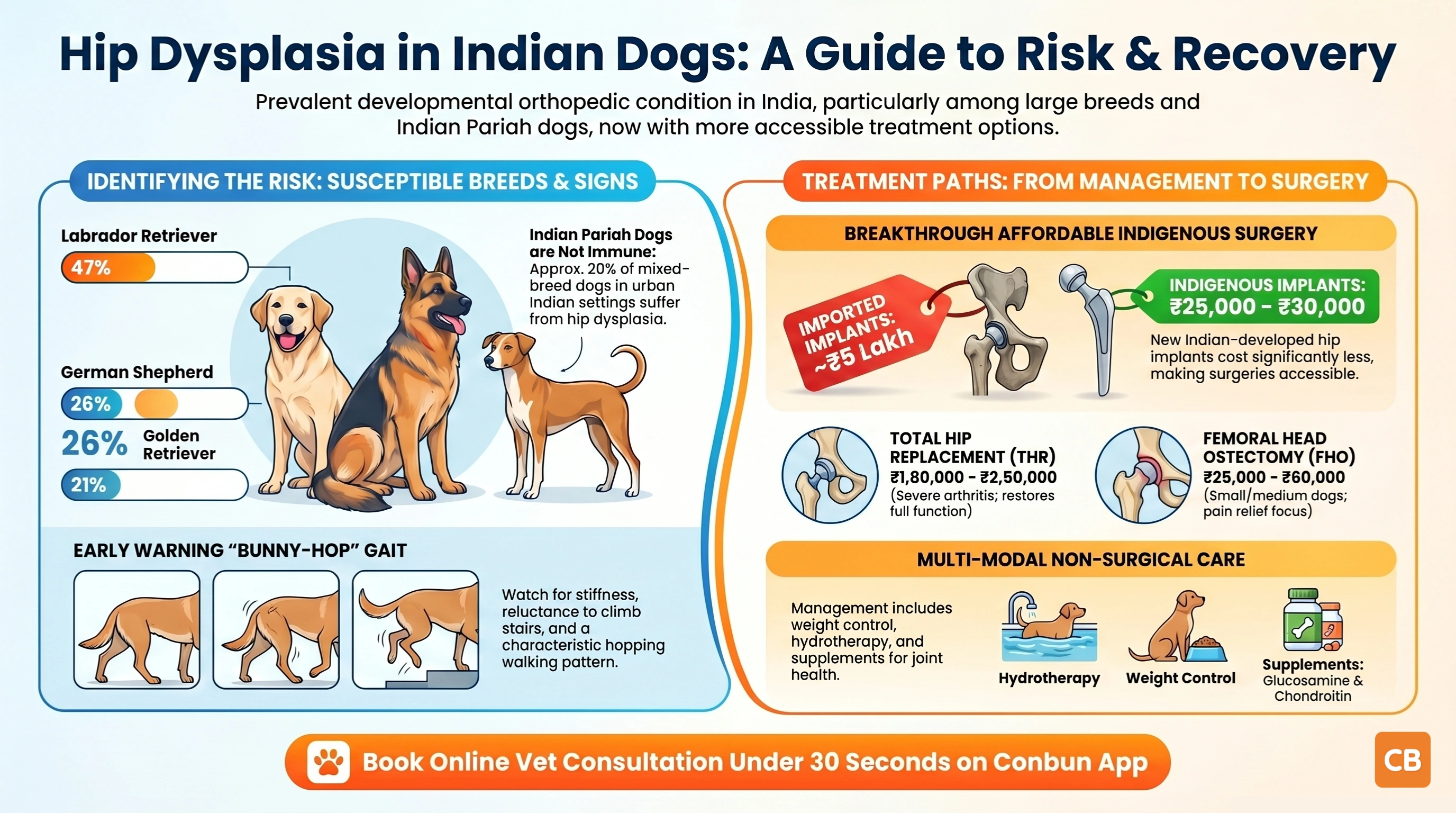
Large and giant dog breeds carry the highest hip dysplasia risk. In India, Labradors, German Shepherds, Golden Retrievers, and Rottweilers are most commonly affected. Obesity, rapid growth, and improper exercise further increase risk in genetically predisposed breeds.
Some breeds are dramatically overrepresented in veterinary orthopaedic clinics. The following are high-risk breeds common in India:
Breed | Risk Level |
Labrador Retriever | Very High |
German Shepherd | Very High |
Golden Retriever | High |
Rottweiler | High |
Saint Bernard | High |
Great Dane | High |
Bulldog | High |
Dachshund | Moderate |
Why Labradors Are the Most Common Cases in India
Labradors are among the most popular family dogs in India. But some factors make Labrador hip dysplasia extremely common.
Overfeeding
Obesity
Poor breeding practices
Many Indian Labradors are significantly overweight by age two. This extra weight puts constant pressure on their hip joints.
Can Indian Pariah Dogs Get Hip Dysplasia?
Yes. Indian Parian dogs may also get hip dysplasia, but it is far less common.
INDogs evolved naturally with:
Efficient skeletal structure
Lower body weight
Hip-related problems in Indian stress dogs are trauma-related rather than genetic.
What Causes Hip Dysplasia in Dogs?
Hip dysplasia develops from genetic predisposition combined with environmental factors like rapid growth, obesity, poor nutrition, slippery flooring, and inappropriate exercise during puppyhood. These factors increase joint instability and accelerate cartilage damage.
Many owners assume that this is genetic, so nothing matters. That’s incorrect. Lifestyle influences progression massively.
1. Genetics (Primary Cause)
Poor breeding practices are a major issue in India. Many breeders do not perform:
OFA testing
Hip certification screening
This allows dysplastic genetics to pass silently between generations.
2. Rapid Puppy Growth
Large-breed puppies growing too fast place abnormal stress on developing joints. This commonly happens due to:
Excess calories
High-fat diets
Incorrect supplementation
Veterinary nutrition guidelines consistently recommend controlled growth, not maximum growth.
3. Obesity
Obesity is one of the most common pet health concerns. This is one of the biggest contributors. Even genetically healthy hips struggle under chronic excess body weight.
A study published through veterinary orthopaedic research demonstrated that lean dogs show significantly slower arthritis progression than overweight dogs, implying a strong connection between obesity and joint disorders.
4. Wrong Exercise Patterns
Many Indian puppies:
Climb stairs daily
Run on marble floors
Jump from cars or beds
These repetitive stresses worsen joint instability. These repetitive stresses put great impact on joint stability.
5. Nutritional Imbalance
Excess calcium supplementation is surprisingly common in India. Owners often believe: “More calcium, stronger bones.”
In reality:
Excess calcium disrupts skeletal development
Accelerates abnormal growth
Vet insight: Balanced nutrition matters more than aggressive supplementation.
Signs and Symptoms of Hip Dysplasia in Dogs
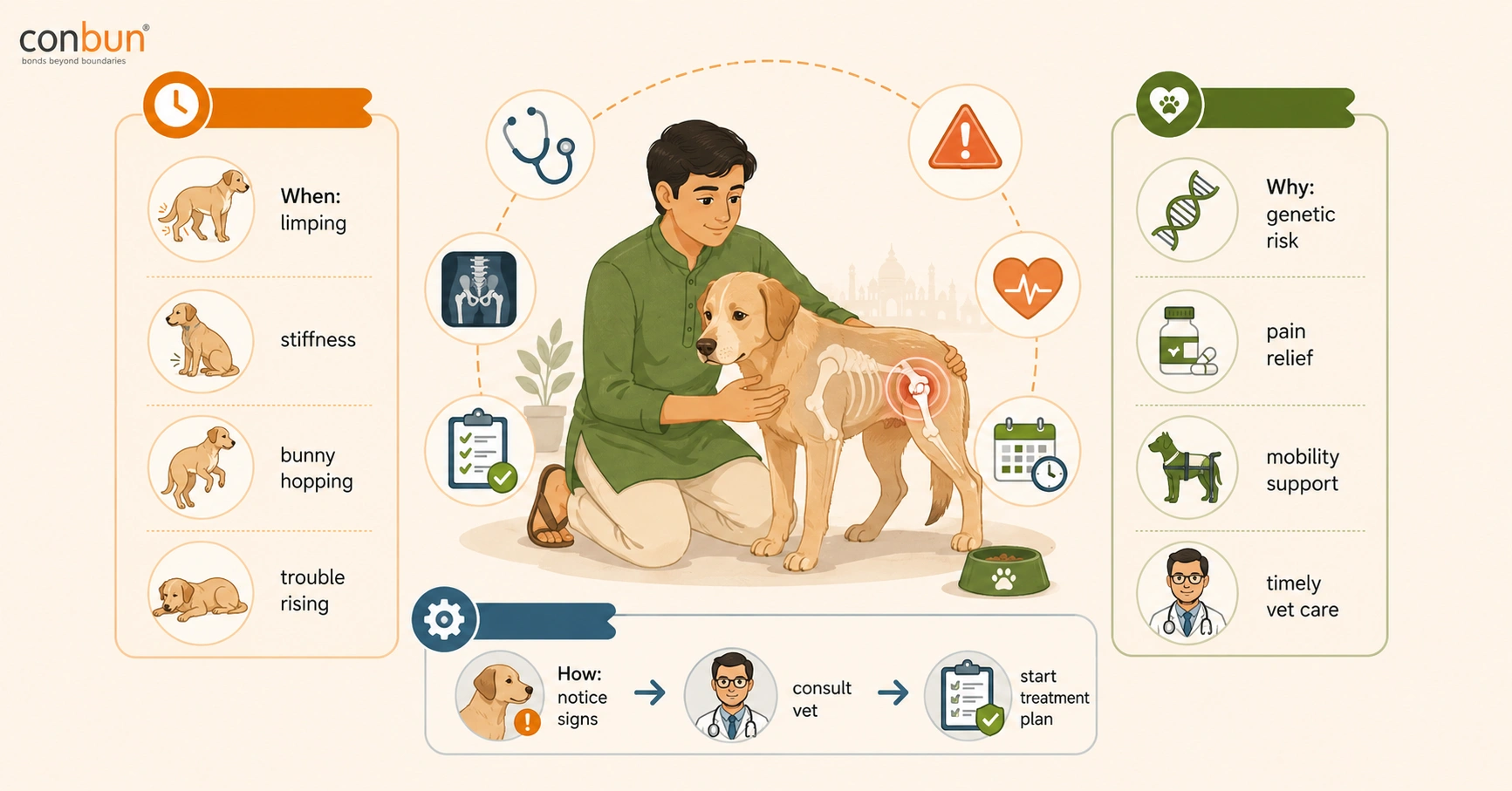
Early hip dysplasia symptoms include bunny hopping, stiffness after rest, reluctance to climb stairs, and abnormal sitting posture. Advanced disease causes limping, muscle loss, pain, and difficulty standing. Symptoms often worsen gradually, making early recognition challenging for pet owners.
Most dogs do not suddenly collapse. Hip dysplasia develops slowly. And because dogs instinctively hide pain, owners often miss early warning signs.
Early Signs Most Indian Owners Ignore
Bunny Hopping
The dog moves both hind legs together while running.
Very common in:
Labradors
German Shepherds
Morning Stiffness
Dogs appear:
Slow after naps
Reluctant to rise
Better after movement
This is an early arthritis clue.
Avoiding Stairs or Jumping
Many owners misread this as: Laziness. But dogs often avoid movement because it hurts.
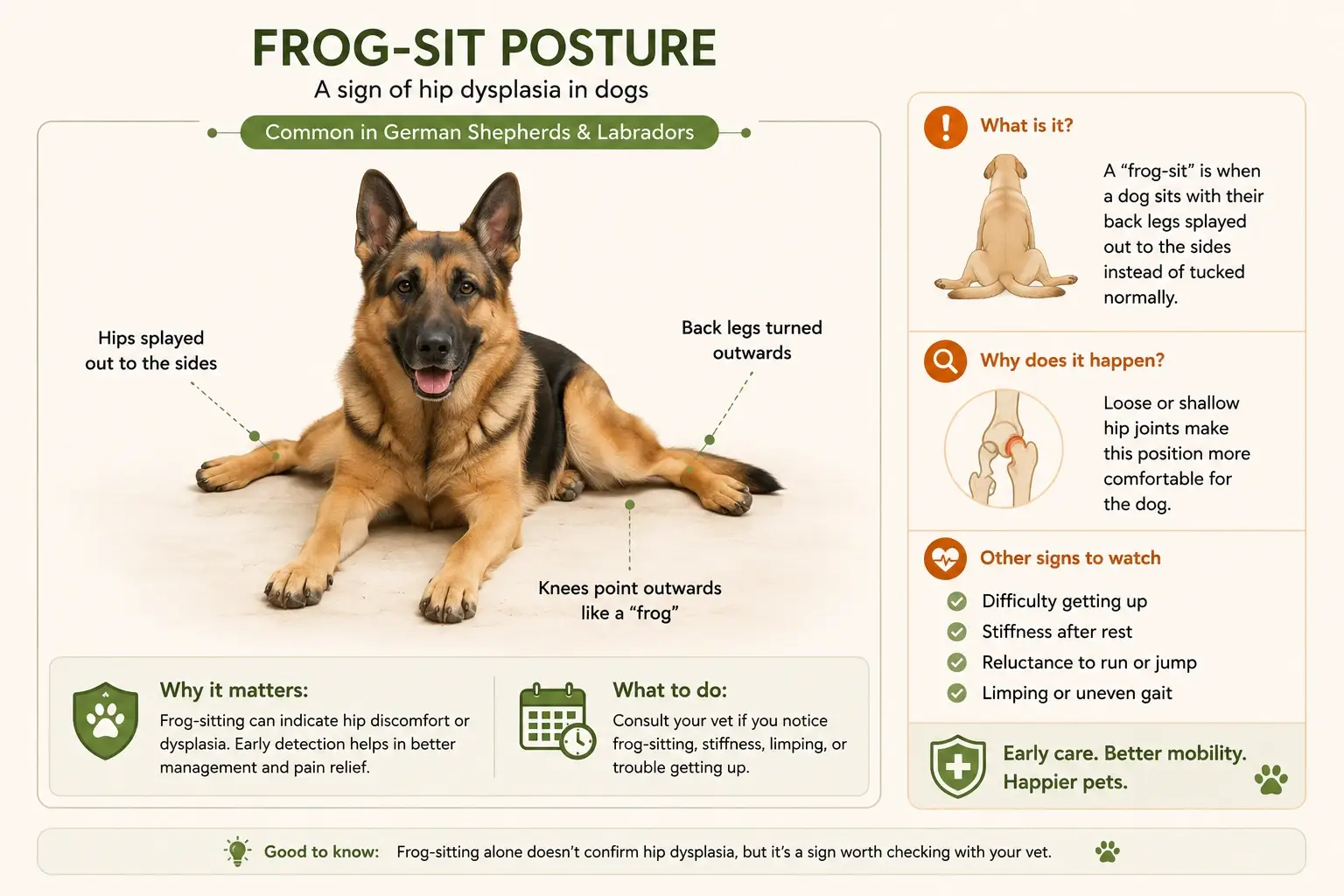
Frog Sitting
One or both hind legs extend outward unnaturally while sitting. Veterinarians frequently see this in dysplastic puppies.
Progressive Symptoms
As joint damage worsens:
Rear-leg limping develops
Muscle mass decreases
Front shoulders enlarge from compensation
Some dogs become visibly painful when their hips are touched.
How Is Hip Dysplasia Diagnosed?
Hip dysplasia diagnosis requires physical examination and X-rays. Veterinarians assess joint looseness, pain, gait abnormalities, and structural changes inside the hip joint.
There are other advanced testing methods, like OFA and PennHIP helps evaluate early laxity and breeding dogs.
Do not self-diagnose hip dysplasia based on internet videos.
Several conditions mimic it:
Ligament injuries
Spine disease
Muscle disorders
Proper diagnosis matters.
Step 1 - Physical Examination
Veterinarians evaluate:
Range of motion
Pain response
Gait pattern
Joint looseness
Grinding sensations (crepitus) may be felt during manipulation.
Step 2 - Hip Dysplasia X-Ray
X-rays confirm:
Socket depth
Arthritis
Joint alignment
Bone remodelling
Most dogs require mild sedation for accurate positioning.
Step 3 - OFA or PennHIP Testing
These specialised systems assess:
Hip quality
Joint laxity
Breeding suitability
PennHIP can help detect abnormal looseness as early as 16 weeks.
Can Hip Dysplasia Be Detected Early?
Yes. And early screening is extremely valuable for:
Labradors
German Shepherds
Golden Retrievers
Large-breed puppies should ideally undergo orthopaedic screening before symptoms become severe.
Treatment Options for Hip Dysplasia in Indian Dogs
Treatment for Hip Dysplasia ranges from physiotherapy to weight management to surgery and medication. Mild cases improve significantly with conservative care, while severe hip dysplasia may require procedures like total hip replacement or FHO for long-term mobility and comfort.
Treatment depends on:
Age
Severity
Pain level
Budget
Quality-of-life impact
And importantly: Not every dog needs surgery.
Non-Surgical (Conservative) Management
Conservative management focuses on reducing pain, improving mobility, and slowing arthritis progression through weight control, supplements, medication, physiotherapy, and lifestyle changes. Many dogs with mild-to-moderate hip dysplasia live comfortable lives for years without surgery if managed early and consistently.
Many Indian pet parents generally think:
“Can this be treated without surgery?”
And in many cases: Yes.
Especially if the disease is diagnosed before severe arthritis develops.
Weight Management for Hip Dysplasia
This is the single most important intervention.
Even a 10–15% reduction in body weight significantly decreases pressure on painful hip joints.
According to orthopedic studies published through veterinary rehabilitation literature, Lean dogs experience slower arthritis progression and better long-term mobility.
India-Specific Feeding Mistakes
Many owners unknowingly worsen hip pain by overfeeding:
Rice-heavy meals
Excess treats
High-fat leftovers
Large-breed dogs should maintain:
Visible waistline
Controlled calorie intake
Stable body condition
Joint Supplements for Dogs
Dog health and nutrition are interdependent. Proper nutrition and supplementation work best: early, not late. Common veterinary-supported supplements include:
Glucosamine
Chondroitin
MSM
Omega-3 fatty acids
These help:
Reduce inflammation
Support cartilage health
Improve mobility
Fish oil supplementation is especially useful for dogs low in omega-3s. If your focus is on homemade diets, make sure that you only feed homemade vet-approved diets.
NSAIDs for Hip Pain
Veterinarians commonly prescribe:
Carprofen
Firocoxib
These medications reduce:
Pain
Joint inflammation
Stiffness
Critical Warning
Never give:
Combiflam
Disprin
Ibuprofen
Paracetamol
These human painkillers can be extremely toxic to dogs.
Physical Therapy for Hip Dysplasia
Canine physiotherapy has grown significantly in Indian metro cities.
Modern rehabilitation approaches include:
Underwater treadmill therapy
Laser therapy
Guided exercises
Hydrotherapy
These therapies strengthen muscles surrounding the hip joint with the aim of improving stability.
Home-Based Exercise Tips
Helpful low-impact activities:
Controlled leash walks
Swimming
Gentle incline walking
Avoid:
High jumps
Slippery floors
Sudden running bursts
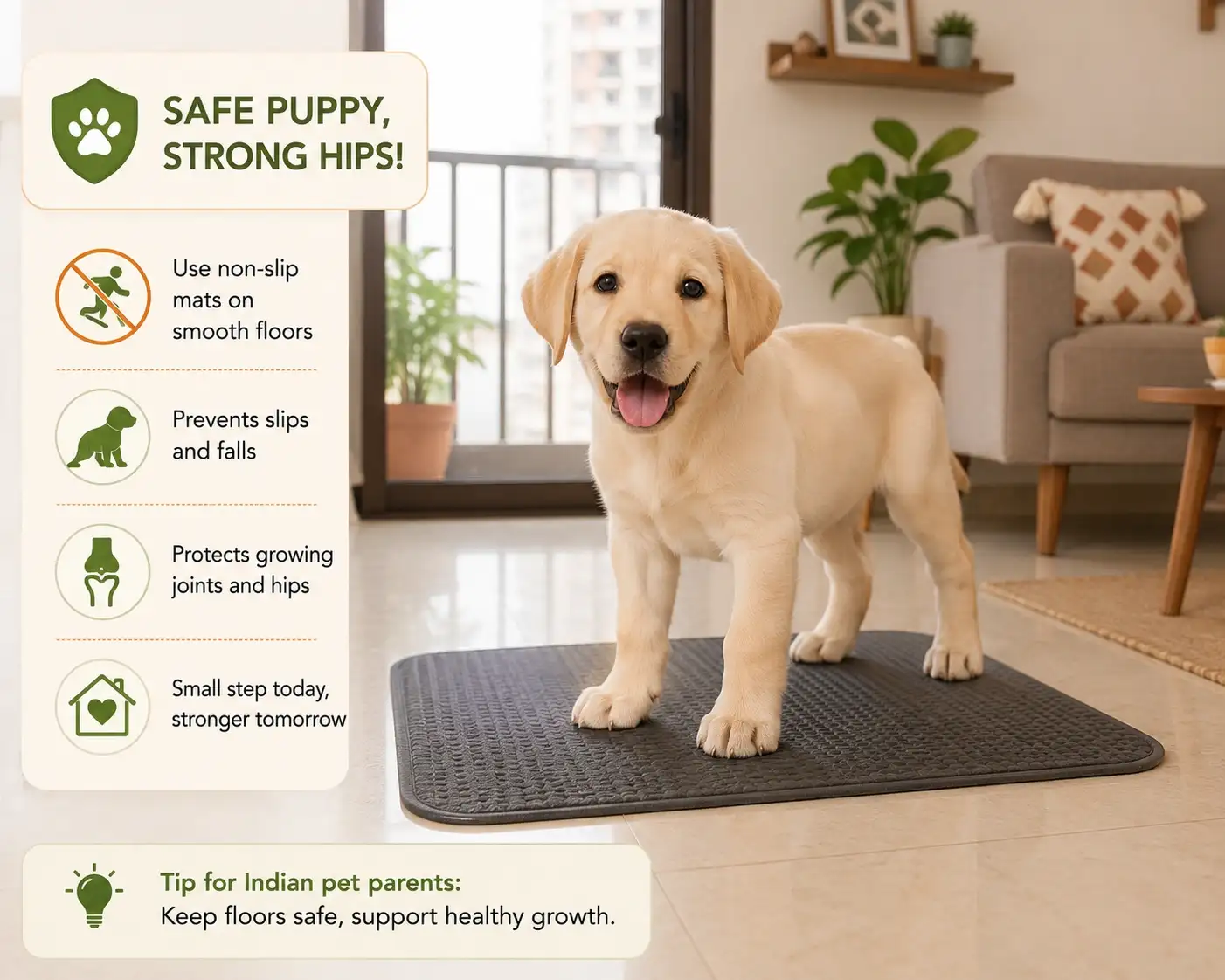
Why Flooring Matters in Indian Homes
Marble and tile floors worsen instability. Dogs repeatedly slipping: Increase joint strain daily.
Simple changes help dramatically:
Yoga mats
Rubber runners
Anti-slip rugs
Especially for:
Labradors
German Shepherds
Golden Retrievers
Surgical Treatment Options
Surgery is recommended for severe hip dysplasia, young dogs with major joint instability, or dogs not responding to conservative treatment. Procedures range from femoral head ostectomy (FHO) to total hip replacement, depending on age, severity, size, and budget.
In some dogs, hip dysplasia may progress beyond what medication and therapy can control. At such a stage, surgery is the best long-term option.
1. Triple Pelvic Osteotomy (TPO)
This surgery is usually performed:
Before severe arthritis develops
In young dogs under 10 months
The pelvis is surgically rotated to improve joint alignment.
Best results occur when: Hip laxity is detected early.
2. Femoral Head Ostectomy (FHO)
In this procedure:
The femoral head (“ball”) is removed
The body then forms a “false joint” using scar tissue and muscle support.
FHO in India
This remains one of the most accessible orthopaedic surgeries in India because:
It is more affordable
Available in many mid-level hospitals
Typical cost: ₹15,000–₹50,000.
Which Dogs Respond Best?
Small-to-medium dogs generally recover best.
Large dogs may still improve, but outcomes vary.
3. Total Hip Replacement (THR)
This is considered the gold standard. The damaged joint is replaced with Prosthetic implants. Most dogs regain near-normal movement after recovery.
THR Cost in India
Usually: ₹80,000–₹2,00,000 per hip.
Available mainly in:
Bengaluru
Mumbai
Delhi
Pune speciality centres
Is Surgery Always Necessary?
No. Many dogs, particularly with mild to moderate cases, remain comfortable for years using:
Weight management
Pain relievers
Mobility support
Medication
Physiotherapy
Lifestyle adjustments
Surgery is usually recommended when:
Pain remains uncontrolled
Mobility declines severely
Quality of life worsens significantly
When to Visit a Vet Clinic vs. When Online Consultation Is Safe
Dogs showing severe limping, inability to stand, or worsening pain require in-person examination and imaging. Online consultations are useful for understanding symptoms, discussing supplements, reviewing gait videos, and managing already diagnosed cases.
Hip dysplasia cannot be diagnosed online alone.
X-rays remain essential.
Visit a Veterinary Clinic Immediately If:
Your dog cannot stand properly
Rear-leg weakness worsens suddenly
Pain becomes severe
Limping persists beyond a few days
You suspect spinal or neurological disease
Online Consultation Can Help If:
You want a second opinion
You need guidance on supplements
Your dog already has a diagnosis
You want a vet to review gait videos
An online vet consultation in India may help owners decide whether symptoms justify immediate orthopedic imaging.
Can Hip Dysplasia Be Prevented?
Hip dysplasia cannot always be prevented because, as stated above, genetics plays a major role in its development. However, healthy weight, controlled growth, proper nutrition, use of non-slippery flooring, and avoiding excessive exercise during puppyhood can significantly reduce the severity and progression risk of hip dysplasia in dogs.
Important thing pet parents should remember: Prevention begins before symptoms appear.
For Breeders
Responsible breeding is amongst the most important factors. Dogs with poor hip scores should not be bred. By breeding, they are already putting at risk a life that has not even seen the face of this world.
Ethical breeders perform:
OFA certification
PennHIP evaluation
Unfortunately, in India, breeding is largely profit-oriented. So many breeders across the country ignore such procedures.
For Puppy Owners
Feed Large-Breed Puppy Food
These diets control:
Calcium
Calories
Growth rate
Fast growth is not healthy growth.
Avoid Excessive Exercise
Young puppies should not:
Run long distances
Jump repeatedly
Climb steep stairs daily
Their joints are still developing.
Keep Puppies Lean
One of the strongest protective factors: Healthy body weight.
Reduce Slipping Risks
Especially in apartments with marble flooring:
Use mats
Improve traction
Limit uncontrolled running indoors
Living With a Dog That Has Hip Dysplasia
Most dogs with Hip dysplasia can still live active and happy lives with proper management. Consistent pain control and weight management procedures, orthopedic support, and regular veterinary monitoring help maintain long-term comfort and mobility.
A hip dysplasia diagnosis is not the end of your dog’s quality of life. It is far from it.
Many dogs continue:
Walking comfortably
Playing gently
Living happy lives for years
Practical Daily Adjustments
Helpful changes include:
Orthopaedic memory foam beds
Raised food bowls
Gentle leash walks
Consistent exercise routines
Dogs do better with: Frequent low-impact activity rather than occasional intense exercise.
Long-Term Monitoring Matters
Large-breed dogs over 5 years benefit from:
Regular orthopedic evaluations
Weight tracking
Pain reassessment
Because arthritis progression changes over time.
Summary: Key Takeaways
Hip dysplasia in dogs is a common, often genetic, orthopedic condition where the hip joint (ball and socket) develops abnormally, causing laxity, cartilage wear, and eventually osteoarthritis. Early symptoms are subtle and often missed, due to which both diagnosis and treatment are delayed. Weight management is the most powerful intervention for hip dysplasia.
While surgery is the last option in advanced stages, many dogs can still live an active and healthy life with proper management and monitoring. A proactive approach by the parent is needed to manage this condition.
Most importantly: Don’t wait until your dog stops walking comfortably. Early action makes the biggest difference. If unsure, talk to a veterinarian online using Conbun and get expert veterinary support.
FAQs (People Also Asked)
Q.1 Is hip dysplasia painful for dogs?
Answer. Yes. As the joint degrades, inflammation can lead to chronic pain. Dogs often mask pain instinctively, so behavioural changes, reduced activity, reluctance to rise, irritability when touched near the hips may be the only visible signs pet parents can notice.
Q.2 Can a Labrador with hip dysplasia still live a normal life?
Answer. Yes. But with early diagnosis and consistent management. Joint supplements, weight control and physiotherapy allow most labradors to stay active and comfortable for years.
Q.3 What is the cost of hip dysplasia treatment in India?
Answer. Non-surgical management that typically includes NSAIDs, physiotherapy and supplements. They may cost ₹2,000–₹8,000 per month, depending on the protocol. FHO surgery costs ₹15,000–₹50,000.
Q.4 Is hip dysplasia genetic, or can it develop from injuries?
Answer. Hip dysplasia is primarily genetic, but environmental factors may lead to obesity, wrong exercise, rapid growth and nutritional imbalance. All these can trigger or even accelerate the condition in genetically predisposed dogs.
Q.5 Should I avoid adopting a breed prone to hip dysplasia?
Answer. Not necessarily. If you know the risks beforehand, you can take proactive steps like regular screening, weight control, and proper diet that may dramatically reduce the impact of the condition.
References
Johnson, K. A., Lee, A. H., & Swanson, K. S. (2020). Nutrition and nutraceuticals in the changing management of osteoarthritis for dogs and cats. Journal of the American Veterinary Medical Association, 256(12), 1335-1341. https://avmajournals.avma.org/view/journals/javma/256/12/javma.256.12.1335.xml
Schachner, E. R., & Lopez, M. J. (2015). Diagnosis, prevention, and management of canine hip dysplasia: a review. Veterinary Medicine: Research and Reports, 181-192. https://www.tandfonline.com/doi/pdf/10.2147/VMRR.S53266
Serighelli, F., Snowdon, D. A., Barton, C., Crossley, K. M., King, M. G., Kemp, J. L., ... & Silva, D. D. O. (2025). “I think there is something not right in my body”: Beliefs and attitudes of active adults with hip/groin pain towards hip crepitus–A qualitative study. Musculoskeletal Science and Practice, 103427. https://www.mskscienceandpractice.com/article/S2468-7812(25)00175-4/pdf
SHARMA, MRIDULA. "A Clinical appraisal of the orthopaedic conditions of coxofemoral joints in dogs." (2024). https://krishikosh.egranth.ac.in/server/api/core/bitstreams/45c0934f-d50e-4206-863d-9e1cd445238e/content
SKS Veterinary Hospital. (2025).https://www.skspethospital.com/pet-obesity-in-india-a-comprehensive-research-level-guide-for-veterinarians-and-pet-parents/#:~:text=Executive%20Summary,precision%20in%20diagnosis%20and%20management
Table of Content
- What Is Hip Dysplasia in Dogs?
- Why Hip Dysplasia Gets Worse Over Time
- Signs and Symptoms of Hip Dysplasia in Dogs
- How Is Hip Dysplasia Diagnosed?
- Treatment Options for Hip Dysplasia in Indian Dogs
- Non-Surgical (Conservative) Management
- Surgical Treatment Options
- When to Visit a Vet Clinic vs. When Online Consultation Is Safe
- Can Hip Dysplasia Be Prevented?
- Living With a Dog That Has Hip Dysplasia
- Summary: Key Takeaways
- FAQs (People Also Asked)
- References