Written by: Anand Sen; Reviewed by: Dr. Harsh (B.V.Sc & A.H.)
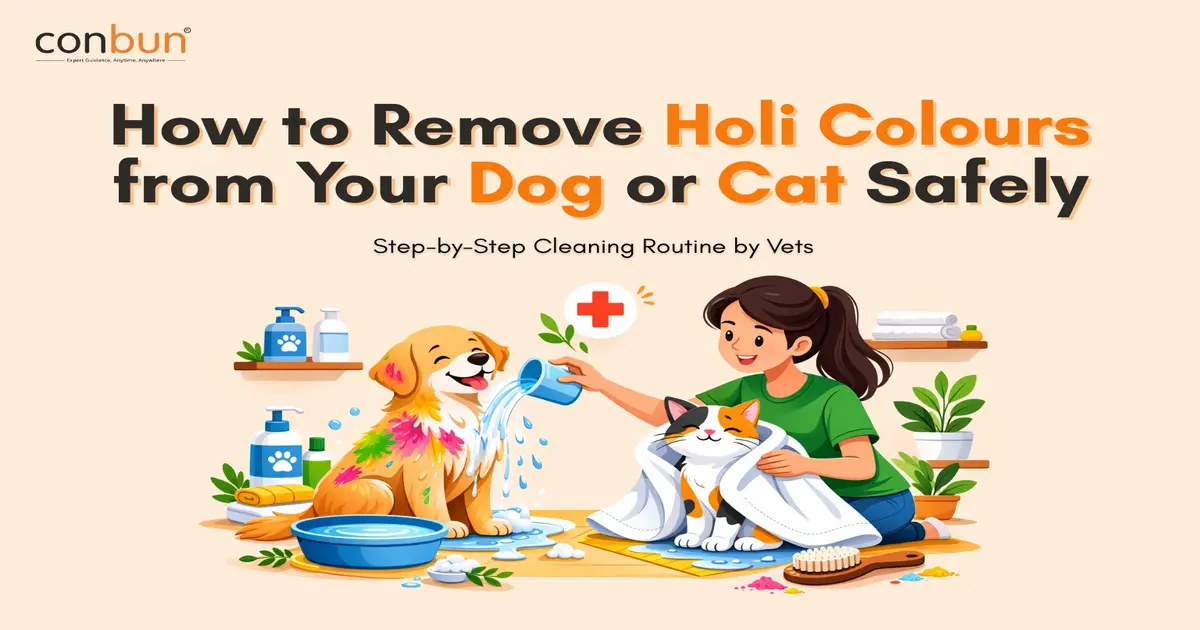
Your Pet Has Holi Color on Them - Here's Exactly How Vets Say to Remove It Safely
Every desi pet parent has been there. One moment you’re dodging a rogue pichkari and reaching for the last gujiya, and the next, you find that your dog has been transformed into a neon-pink disco ball.
During the festival of colours, veterinarians frequently witness the "Holi Walk of Shame". Usually, it starts with a panic-stricken pet parent standing in a veterinary clinic, still covered in gulal, looking at their dog like they’ve just witnessed a supernatural event.
When the "Pakka Rang" hits a pet’s fur, most Indian pet parents fall into the Big Three Panic Traps:
The 'Ziddi Daag' mentality: Viewing your Labrador’s coat like a stained pressure cooker and scrubbing with the intensity of a thousand suns to remove that ziddi daag.
The ‘Sabki pasand nirma’ mentality: Reaching for Nirma, Vim Liquid, the Rin bar, or God forbid the sarson ka tel (mustard oil) and everything else you can find in the kitchen to "loosen" the colour.
The 'Daag ache hai’ mentality: Assuming that because the packet has "Herbal" written on it, your dog or cat can safely lick it off their fur like it’s a bowl of milk. (Spoiler: It’s not, and they shouldn't be doing that)
Here’s the truth: The raw, angry and inflamed skin veterinarians treat every Holi isn't usually the result of colors. It’s the “Safai Abhiyan” that takes a toll on your pet’s skin. We see dogs with skin as red as a Kashmiri Lal Mirch because a pet parent apparently used hot water and a rough towel to remove the color. We see cats in the ICU because they groomed themselves and ended up with a belly full of synthetic chemicals.
So, take a breath. Your pet isn't a canvas, and you are not in a race with your neighbour’s "purity" standards.
The following is a desi pet parent’s guide to post-Holi recovery. It is based on actual toxicology cases and dermatology wins from years of post-Holi clinic chaos.
Let’s get that rang off without taking the skin off.
Related Readings: How do online vet consultations work: A pet owner’s guide?
Why You Can't Just Wash Holi Color Off Like Normal Dirt
This is the most common thing people misunderstand about Holi colors.
Holi color often has artificial pigments and heavy metals.
Heavy metals and artificial pigments are often the main ingredients in synthetic dyes. These ingredients bind to your pet’s fur differently than dust. Some colors are oil-based, and some are alkaline. Some dyes even have chemical stabilisers and mica powder that cling to hair shafts.
When you start scrubbing aggressively, you think you’re removing the color faster, but in reality, you’re grinding it deeper into your pet’s coat and irritating the skin barrier.
Human Shampoo Is a Big Mistake
Human skin pH: 4.7 to 5.5
Dog skin pH: 6.5 to 7.5
Cat skin pH: 7.0 to 9.0
These numbers matter.
Thus, if you think you can remove Holi colors from your dog’s skin using a human shampoo, you’re wrong.
Using a human shampoo on your dog can strip the protective lipid layer from their skin. Similarly, using a dog shampoo on a cat can disrupt their pH balance, causing dryness, irritation and skin infections.
Veterinary dermatology literature shows that pH disruption can increase the risk of dermatitis and secondary infection in pets. Baby shampoo is not safe either. It’s just milder for humans.
The Scrubbing Mistake
Scrubbing hard, especially on short-haired breeds, can lead to:
Micro-abrasions
Skin inflammation
Increased absorption of chemicals, which is dangerous (especially synthetic ones)
Once the skin barrier is compromised, irritation and inflammation worsen.
Why Timing Matters
The first two hours after your dog is exposed to Holi colors are critical:
The longer the dye sits on your pet's skin:
The more your pet licks it
The more it bonds to fur
The higher the ingestion risk
Early intervention to remove colors reduces chemical exposure dramatically
Veterinary toxicology guidelines suggest that decontamination is most effective when done quickly.
So no, you can’t just hose them down like after a muddy park day.
Gather These Things Before You Wet Your Pet
Pet safe Holi is all about preparation. Gather everything before turning on the tap.
Because once your dog is half wet and half colored, you don’t want to be running around the house looking for shampoo and towels.
Essentials Checklist
Vet-approved pet shampoo
Choose a product that says:
pH-balanced for dogs or cats
Hypoallergenic
No artificial fragrance
Lukewarm water
Not hot. Not cold.
Why lukewarm water? Because hot water can increase chemical absorption and dryness. Cold water can make your pet tense and harder to manage.
Soft microfiber cloth or sponge
Never use loofahs or scrub pads. As stated above, hard scrubbing can lead to micro-absorption and inflammation. So choose a soft microfiber cloth or sponge.
Pet-safe coconut or olive oil
For dry color patches. Oil helps in loosening pigment before washing.
Cotton balls
For cleaning around the eyes and ears, gently.
Clean towels
Multiple. You’ll need them.
Calm indoor space
Closed door. No noise. No distractions. Your pet is already stressed with color, loudspeakers and, of course, unpredictable bathing.
Quick Tip: Keep treats nearby. A calm pet is easier and safer to clean. Stress increases heart rate and panic behavior.
Now that you're ready, let’s walk through the exact color removal routine.
Related Readings: How to Groom Your Dog at Home Like a Pro
How to Remove Holi Color from Your Dog or Cat - Step by Step
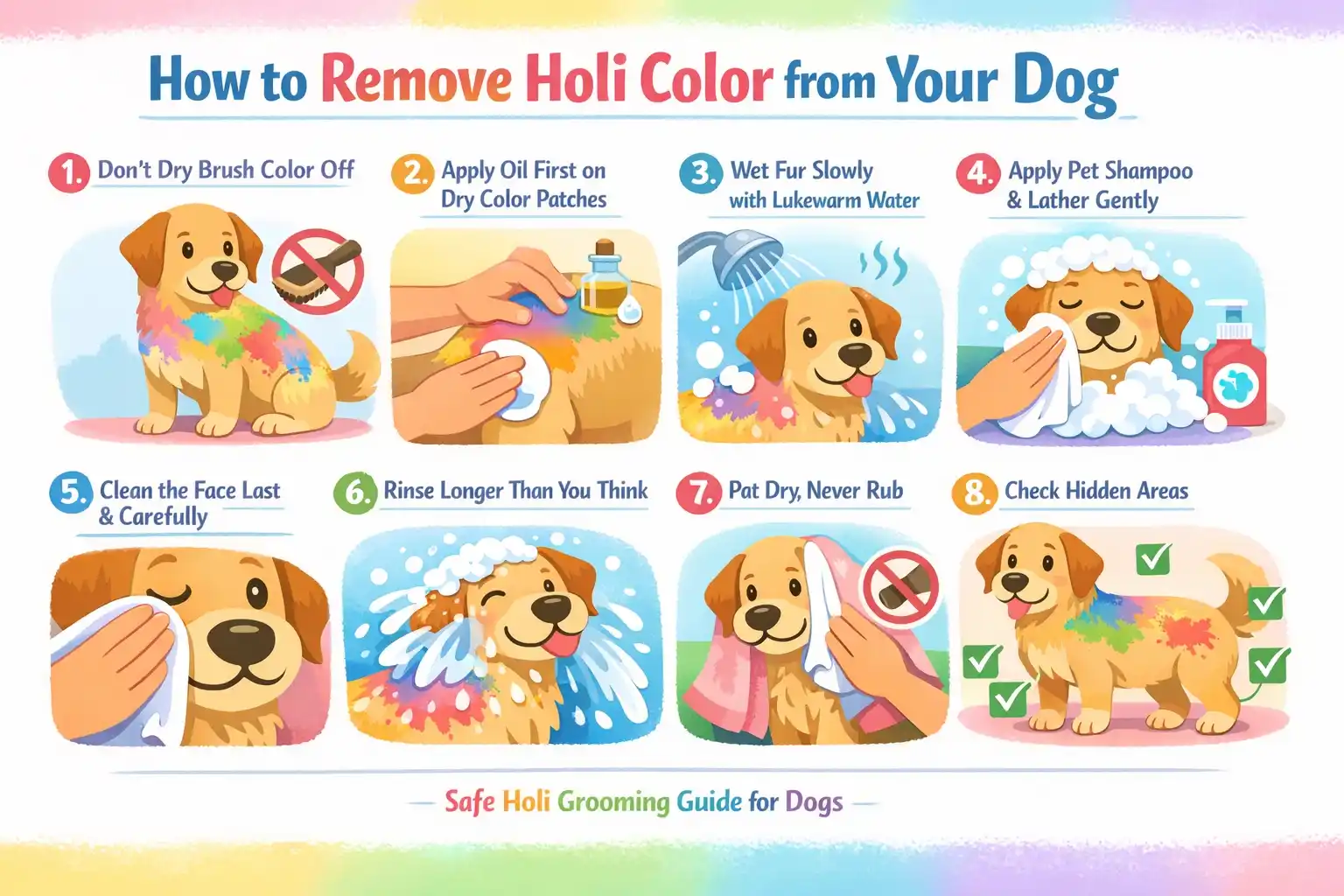
After a pet is exposed to Holi colors most people Google in panic.
Follow this sequence carefully.
Step 1 - Don’t Dry-Brush Color Off
Brushing dry can send particles airborne.
This can lead to:
Inhalation
Eye irritation
More stress
More importantly, respiratory stress
Instead, contain it. Keep your pet in one area.
Step 2 - Apply Oil First on Dry Color Patches
Before pouring water on your pet’s skin, apply a small amount of:
Coconut oil
Olive oil
Then, massage gently into heavily stained dry areas.
Why oil first?
Many Holi colors people use are partially oil-soluble. Oil loosens pigment bonds before water spreads it further. Wait 5–10 minutes after applying oil.
Step 3 - Wet Fur Slowly with Lukewarm Water
Always start from the neck downward. Never start with the head. Sudden water on the face can increase panic and cause:
Aspiration risk
Eye exposure
Let water flow gently down your pet’s body.
Step 4 - Apply Pet Shampoo & Lather Gently
Apply the shampoo in circular motions. Do not apply pressure.
Work in sections:
Neck
Back
Legs
Belly
If the lather turns tinted, that’s a good sign. It means pigment is lifting. Rinse thoroughly before moving to the next section.
Step 5 - Clean the Face Last & Carefully
Do not pour water directly on your pet’s face. This may cause panic.
Instead:
Make use of a damp cotton ball
Gently wipe around eyes
Clean ears externally only
If you see the color in the ear, don’t just try to insert anything into the ear canal. Gently wipe the outer ear and ear flap with a cotton ball soaked in a veterinary-approved ear cleaner. Ensure that no liquid enters the deep ear canal. Use warm, damp cotton and avoid cotton-tipped swabs
Use a damp cotton ball to clean the eyes. Veterinary ophthalmology warns that even mild dye residue can cause corneal irritation.
If your pet’s eyes are red or squinting, consult a vet immediately.
Step 6 - Rinse Longer Than You Think
Leftover shampoo causes itching.
Rinse twice.
Then rinse again.
Post-bath scratching is commonly caused by residue.
Step 7 - Pat Dry, Never Rub
Use a soft microfiber towel.
Part dry and press gently.
Don’t rub vigorously; Friction can irritate skin further.
Do not use high-heat blow dryers, as heat can increase dryness and cause discomfort.
Step 8 - Check Hidden Areas
Color hides in:
Between paw pads
Under tail
Skin folds
Behind ears
Don’t rush with cleaning your dog during Holi. Take your time, as these areas develop delayed reactions if missed.
Related Readings: Holi Pet Safety Guide for Indian Homes
Cleaning Holi Color from Cats - Extra Precautions
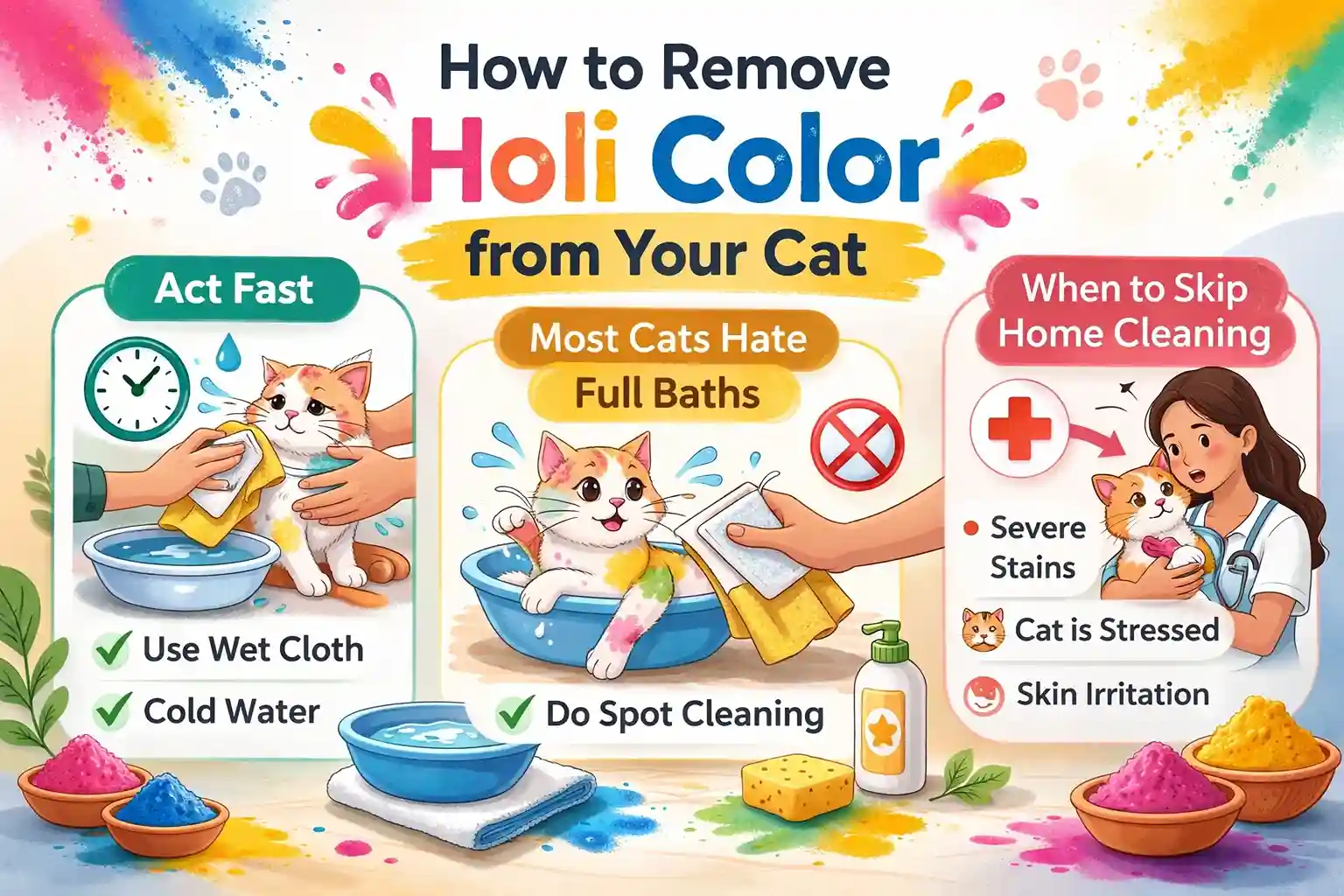
Cats are not dogs. They are constantly running grooming machines. If your cat has caught color the risk of ingestion is much higher due to their strong grooming behaviors.
Act Fast
Cats spend 30-50% of their waking hours on self-grooming. Cat grooming happens within minutes. If they have dye on their body, it will enter their system quickly.
Watch out for these red flags:
Drooling
Vomiting
Pawing at the mouth
Sudden lethargy
If ingestion is suspected, call a vet immediately.
If you suspect ingestion, consult a vet immediately. Online pet care apps like Conbun could be a good place to start to get instant pet care advice on what you can do next.
Most Cats Hate Full Baths
If you think it is just mild exposure:
Use a damp cloth wipe-down method
Clean small sections at a time
Keep the session short
If you wish, you can use Catnip to make bathing easier for your cat. Catnip acts as a calming agent or a distraction, reducing stress and fear
If your cat is heavily stained, consulting a professional could be a smarter choice.
When to Skip Home Cleaning
If you notice signs like:
Eye swelling
Persistent vomiting
Tremors
Extreme agitation
You should not attempt prolonged home bathing with cats. If you think they are heavily stained and are showing symptoms consult an online veterinarian to know if it is a pet emergency or not.
Cats stress easily, and thus, excessive handling may increase the risk of shock in sensitive ones.
Holi colour removal is not about force. It’s about patience and correct technique.
Related Readings: Dog Nutrition Guide: Best Food, Puppy Feeding Chart & Foods to Avoid
6 Things Vets Say You Should Never Do After Holi
Holi not only leads to color burns but also damages your pet’s skin through cleaning attempts.
We just discussed how to remove Holi colors from pets. Below, we’ll discuss how NOT to remove Holi colors from pets.
1. Using Human Shampoo or Baby Shampoo
As described above, the pH levels of pets and humans are different. Application of human products can strip the lipid barrier, which may lead to:
Redness
Dry, flaky skin
Delayed itching 24 - 48 hours later
If you think baby shampoo may be pet-safe, it's not. It's just “gentle” on adult humans.
2. Scrubbing With Rough Cloth or Loofah
Pet owners panic after seeing color stains. Panic leads to pressure.
Excess scrubbing causes:
Micro-abrasions
Skin barrier damage
Secondary bacterial infections
If your pet’s skin turns pink or looks inflamed while cleaning, you’re pressing too hard.
3. Using Acetone, Dettol, or Antiseptic Liquids
I cannot stress this enough.
Do NOT use:
Nail polish remover
Dettol
Alcohol wipes
Hydrogen peroxide
These chemicals can lead to chemical burns on skin and systemic toxicity if absorbed or licked.
If color doesn’t come off, that’s cosmetic. Burned skin is medical.
4. Blow-Drying on High Heat
Using blow or heat driers excessively can worsen:
Itching
Inflammation
Stress (especially in cats)
If you must dry, use:
Towel only
Or use the drier on cool-air setting at low speed from a safe distance
5. Leaving Color “Just Overnight”
Many owners wait, thinking: “It’ll fade on its own.”
Unfortunately:
Synthetic dyes oxidise
Fragrance compounds penetrate
Grooming increases ingestion
The first 2 hours after colour exposure matter the most. Delaying cleaning may increase the risk of ingestion and irritation.
Related Readings: Cat Nutrition & Health 101: Healthy Food for Cats, Homemade Diets & Foods to Avoid
6. Cleaning Inside the Ear Canal With Q-Tips
Do not use Q-tips as they can push color deeper into the ear canal. If you suspect that dye has entered the ears:
Wipe only the outer flap
Do not insert anything
If you notice:
Head shaking
Ear redness
Odor
That’s vet territory you should not enter. Take your pet to a vet as soon as possible. Consulting an online veterinarian could help you take necessary steps till the time you reach a clinic physically.
After the Bath - What to Monitor for 2 Days
Most parents think that after cleaning their pet thoroughly, they have dodged all the risks. However, the truth is that reactions are often delayed.
According to dermatology literature, contact dermatitis may appear 12–24 hours after the exposure.
Watch for:
Red patches
Small bumps or hives
Excessive licking
Paw chewing
Watery eyes
Sneezing that persists
Go to the vet immediately if you see:
Swollen face or eyelids
Bleeding or oozing skin
Non-stop vomiting
Extreme lethargy
Collapse
Seizure activity
These are not “wait and watch” signs. They require urgent veterinary care.
Related Readings: Is Online Pet Care Consultation Right for Your Pet?
Holi Color Removal - Do’s and Don’ts at a Glance
Do This | Never Do This |
Use pet-safe shampoo | Use human/baby shampoo |
Apply oil on dry color first | Dry-brush powder |
Use lukewarm water | Use hot/ice-cold water |
Pat dry gently | Rub harshly |
Clean face with damp cotton | Pour water directly on face |
Monitor 48 hrs | Assume “bath fixed it” |
Removing Holi Color from Pets - FAQ's (People Also Asked)
1. Is coconut oil safe to remove Holi color?
Answer. Yes, you can apply it in small amounts externally as it helps loosen dry powder safely. But you have to prevent licking during application and bathing.
2. My cat licked Holi color. What should I do right now?
Answer. If your cat has licked Holi color, wipe its mouth gently with a damp cloth and prevent further grooming. Monitor for vomiting within 3 hours. If you see vomiting, drooling, or lethargy, consult a vet immediately.
3. How many baths does it take to fully remove Holi dye?
Answer. Usually, 1 - 2 gentle washes can fully remove Holi dye. Keep in mind that you should not repeat multiple harsh baths in a day. It is comparatively better to tolerate slight staining than to damage skin.
4. How to remove Holi color from a dog?
Answer. If your dog has caught colour on Holi, use a mild dog shampoo to remove all of the dye as quickly as possible. If you see any skin irritation, take your dog to your veterinarian immediately.
5. Can I use Dettol or an antiseptic after Holi?
Answer. No. Antiseptics are used for wounds, not routine cleaning. In addition, improper dilution can cause chemical burns.
Conclusion
Holi is chaotic, colorful and chemically harsh for our pets. But here’s the good news. Most Holi-related skin issues are preventable and manageable if you handle them correctly. If you’re unsure whether a reaction is mild irritation or something more serious, don’t rely on guesswork.
With animal care consultation on Conbun android and iOS, you can instantly connect with veterinarians online who understand festival-related pet emergencies. Whether it’s a skin reaction, vomiting after dye ingestion, or anxiety symptoms, getting quick personal advice can prevent small issues from becoming dangerous complications.
This Holi, celebrate responsibly. Protect wisely. And when in doubt, ask a vet, not WhatsApp.