
Written by: Anand Sen; Reviewed by: Dr. Saroja Patil (B.V.Sc & A.H, M.V.Sc)
The mayhem in an Indian veterinary clinic on the morning after Holi is always heavy. The silence is broken only by the scratching of a Labrador’s paws against a metal exam table or the depressed hum of a cat that has spent the night hiding in a dark corner.
Behind the doors of a vet clinic, the “Festival of Colours” paints a much darker picture. Chemical burns, which are hidden beneath matted fur, and respiratory distress from inhaled metallic powders and the hollow stare of a dog traumatised by a “harmless” water balloon.
Every one of us loves the vibrance of Holi, but for our four-legged family members, this festival can feel less like a celebration and more like a battlefield. And the most heartbreaking part? Almost all these injuries are avoidable.
To ensure your home remains a sanctuary rather than a hazard zone, we’ll tell you what you can do before, during and after Holi. Rooted in real clinical cases and toxicology data, this guide isn’t just a list of tips. It is an SOP for a safe, joyful and fear-free Holi.
Before the first fistful of gulaal hits the air, let’s talk about what really happens to our pets on Holi, and how you can be their hero.
What Makes Holi Toxic for Dogs and Cats?
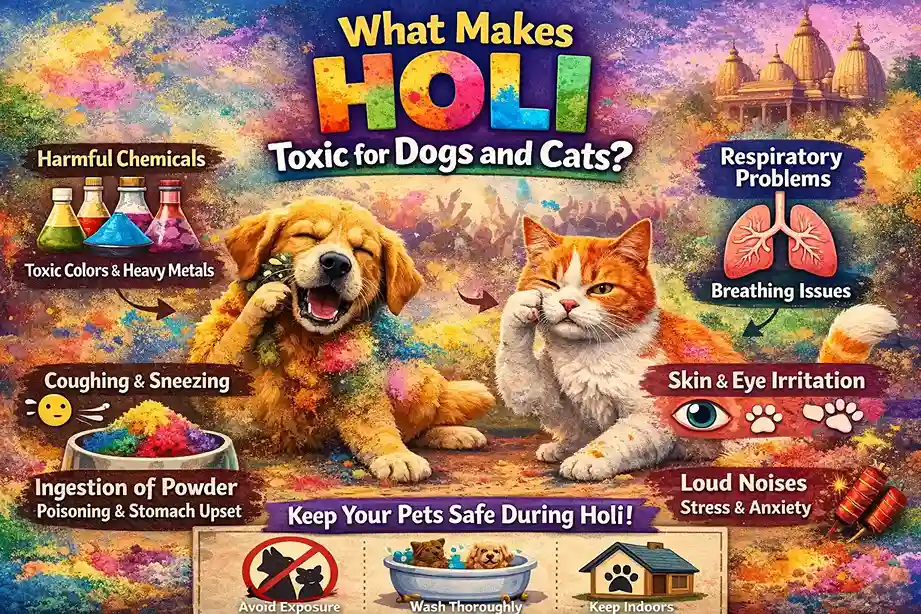
Holi is surely festive to us, but for our pets, it is chaos mixed with chemicals. While we see a vibrant sky, filled with pink and gold, our pets see a world turning unpredictable, loud, and physically painful.
To a dog or cat, the "Festival of Colors" is a sensory assault that their instincts simply weren't built to handle.
1. Chemical Dyes Are Not Skin-Safe
Most commercial gulal contains:
Copper sulfate (green)
Aluminium bromide
Artificial azo dyes
These chemicals can cause:
Skin irritation
Eye burns
Gastrointestinal poisoning (when licked)
According to veterinary toxicology literature, ingestion of these synthetic dyes can lead to vomiting, diarrhea, and neurological signs in dogs. Cats are also sensitive because of their grooming behavior.
And yes, even “herbal gulal” is not automatically safe. Many contain fragrance oils and plant extracts that irritate the skin.
2. Why Pets Lick Color Off Their Fur
Dogs and cats groom themselves constantly to remove foreign substances. If someone smears color on them, they instinctively lick it. This leads to ingestion.
In clinics, we often see:
Hypersalivation
Vomiting within 1–3 hours
Pawing at the mouth
Diarrhea
It’s not dramatic, until it is.
Traditional gulaal and liquid colors aren't just dyes; they are often cocktails containing aluminium bromide, mercury, and crushed glass.
Related Readings: Pet Care Consultation Guide: Expert Advice for Indian Pet Parents
Before you start with precautions for Holi, you should have knowledge about pet diseases and symptoms.
The Lick Reflex: As stated above, cats and dogs are meticulous groomers. When a splash of harmless purple lands on their coat, the first instinct is to lick it off. This can lead to secondary poisoning, which manifests as vomiting, excessive drooling, and, in severe cases, may even lead to organ failure.
Chemical Burns: Our pets’ skin is significantly more sensitive than ours. Synthetic dyes can cause contact dermatitis. This leaves their paws and bellies raw, itchy, and inflamed long after the stains have faded.
3. Noise Sensitivity Is a Bigger Problem Than You Think
Dhol beats. Shouting. Balloons bursting. Sometimes even firecrackers. All these may be a part of our celebration, but for our pets, this is just pure noise.
Veterinary literature suggests that fear of noise is a common behavioural problem in pets. According to a study published in Applied Animal Behaviour Science, more than 50% of dogs display noise-related anxiety.
Sudden loud sounds may trigger:
Elevated cortisol
Rapid heart rate
Trembling
Escape attempts
Many veterinarians report treating dogs who ran out of their homes during Holi panic and got hit by vehicles. Fear makes pets bolt. And once they bolt, they don’t think.
Dr. R. Mehta (Mumbai-based small animal vet) says: “Holi is among the top 3 festivals where we see stress-related emergencies in pets.”
This is why holi pet safety india isn’t overprotective parenting, it’s preventive medicine.
Related Readings: Top Rated Pet Care Consultation App: Features, Benefits, How It Works
5 Things to Do Before Holi Week Starts
Preparation before Holi is important to prevent injuries and other unwanted situations.
Step 1 - Vet Visit First
If your pet:
Has anxiety
Is elderly
Has asthma or breathing issues
Schedule a pre-Holi check-up.
Your vet may recommend:
Anti-anxiety supplements
Pheromone diffusers
Short-term medication (if severe panic history)
Catnip can be a good option for cats
Never try to self-medicate. Sedatives without supervision can be dangerous. If you’re unsure, book an online vet consultation early. Pet care apps like Conbun can come in handy as preventive advice is cheaper than emergency treatment.
Step 2 - Create a Safe Room
This is non-negotiable. A quiet, safe room for pets during Holi is essential to protect them from toxic colours, anxiety and loud noises.
Think of how you would act if there were a nuclear war outside. This is what Holi does to our pets.
Pick one room in your home and:
Close windows fully
Draw curtains
Keep lights dim
Add familiar bedding
Turn on white noise or calming music;
Dogs calm down faster in enclosed, predictable environments. Cats need vertical hiding spaces; a cupboard top or a cat tree helps. Think of this as your pet’s Holi bunker.
Step 3 - Stock Up Early
Don’t wait until Holi afternoon.
Keep ready:
Pet-safe wipes
Vet-approved shampoo
Sterile saline eye wash
Anti-itch spray
Clean towels
Never use:
Human shampoo
Detergent
Dish soap
Scrubbing brushes
All these items can lead to harsh cleaning, which may cause more damage than the dye itself.
Related Readings: Pet Care Goes Digital: How Apps Are Making Vet Consultations Faster, Cheaper & More Reliable
Step 4 - Update ID Tags & Microchip Info
Pets try to escape when they feel threatened. If a neighbourhood has loud noises, firecrackers and people just randomly throwing colours on everything they see, pet animals may run to hide.
It doesn’t matter how “well-trained” your dog is.
Make sure:
ID tag has the correct phone number
Collar fits securely
Microchip details are updated
Embrace the power of technology. Most pets lost during Holi are recovered only because someone called the number on the tag.
Step 5 - Inform Neighbours & Building Staff
This step may feel awkward, but it saves lives and you from unnecessary hassle.
Politely inform:
Neighbours
Security guards
Kids in your building
Tell them clearly: “Please don’t apply color to my pet. It can cause poisoning.”
Most people are unaware of the risks. Once educated, they cooperate. Prevention is social, not just medical.
What to Do on the Day of Holi to Keep Your Pet Safe
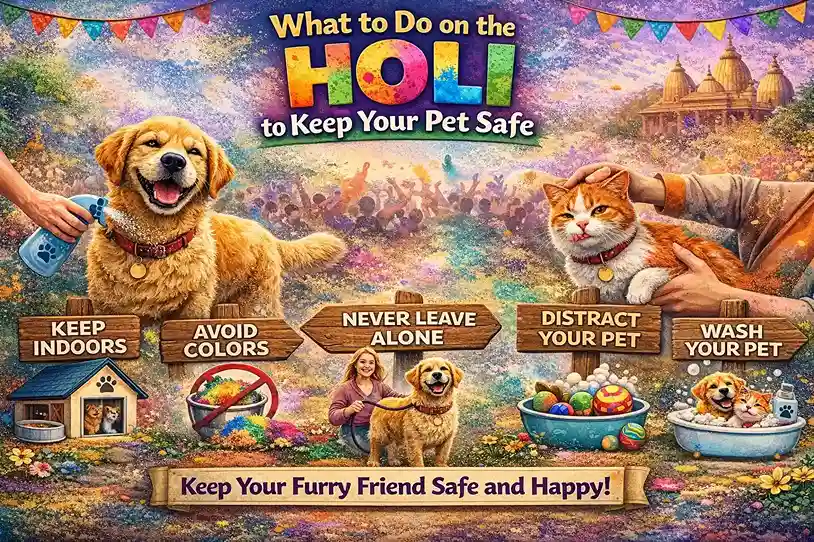
This is the most critical window. This is where most accidents happen.
Step 6 - Keep Pets Strictly Indoors
Even if your pets are longing to go outside, you should deny them because it is for their safety. Keep them indoors strictly.
Even one balloon splash can cause:
Eye ulcer
Chemical dermatitis
Panic escape
Keep doors and curtains closed. Inform your guests. Keep gates locked. If you want to truly protect pets during Holi, strict indoor confinement is non-negotiable, especially during Holi.
Step 7 - Block Windows & Muffle Sound
Loud noises spike anxiety. Here’s what you should do:
Curtains fully drawn
AC or fan running (background noise)
White noise apps
TV on low volume
Avoid checking on your pet every two minutes anxiously; that increases stress. Stay calm. They mirror you.
Related Readings: Is Online Pet Care Consultation Right for Your Pet?
Step 8 - Never Apply Color on Pets - Even “Natural” Ones
Let’s settle this honestly. Gulal or other colors are not tested clinically for pet safety.
Even turmeric-based colors can:
Stain permanently
Cause contact dermatitis
Trigger excessive licking
Even lead to gastrointestinal issues, nausea or vomiting
Pets are not props for Instagram reels. Their skin pH is different from that of humans. In addition, their eyes are also more sensitive. Pet’s grooming behaviour makes ingestion inevitable.
If your friend or a relative tries to apply color to your pet, say not to them. Firmly.
Step 9 - Watch for These Emergency Symptoms
Rush to a vet immediately if you see:
Redness around the mouth
Pawing at eyes
Foaming
Vomiting repeatedly
Collapse
Seizures
Excessive panting
Even mild signs like:
Squinting
Lethargy
Refusal to eat
All the above-listed are emergency symptoms should be carefully monitored. Understand that the earlier the intervention, the better the outcome.
Holi is joyful for us, but for our pets, it is sensory overload mixed with toxic exposure.
Planning makes the difference. Create a safe environment, be alert during the peak Holi hours, and you can reduce risks significantly.
Post - Holi Pet Care - Don’t Skip This Part
The colors may fade from the streets by evening. But for pets, damage can show up hours, sometimes days, later. This is the most ignored phase of Holi pet safety in India.
Step 10 - Safe Color Removal Bath
If color got on your pet despite precautions, don’t panic.
First rule: Never scrub. Second rule: Do not ignore the first rule.
Scrubbing can push chemicals deep into your pet’s skin and can cause micro-abrasions.
Instead:
Use lukewarm water (not hot, not cold)
Use only vet-approved pet shampoo
Massage gently
Rinse thoroughly - twice
Pat dry (don’t rub aggressively)
If dye is near the eyes or the mouth:
Flush eyes with sterile saline
Wipe gently with a damp cloth
If irritation persists after bath, consult a vet immediately.
According to medical literature, delayed contact dermatitis can appear 24 - 48 hours later. That’s why monitoring matters.
Related Readings: 10 Benefits of booking vet consultation online vs. in-person visits?
Step 11 - Check Paws, Ears & Eyes Separately
Color hides.
Common problem areas:
Between paw pads
Inside ear flaps
Around eyelids
Under collar area
Check for:
Redness
Swelling
Discharge
Excessive licking
During Holi, paw pad burns are common. Synthetic dyes in combination with wet roads can lead to softening of paw pads and thereby increase chemical absorption.
If you see your dog licking their paw constantly, it should not be ignored.
Step 12 - Monitor for 48 Hours
You won’t see symptoms right away after ingestion. Some reactions are delayed.
Watch for:
Vomiting
Diarrhea
Reduced appetite
Eye discharge
Lethargy
Behavioral withdrawal
If you think that your pet isn't getting any better or the symptoms have persisted beyond 24 hours, seek immediate veterinary care. An online veterinary consultation could be a good way to start to rule out your doubts and plan the next steps forward.
Ingestion-related signs after Holi can take time to manifest, especially if small amounts were licked repeatedly. Therefore, early treatment equals better outcomes.
Holi Pet Safety - At a Glance
Phase | Key Action | Red Flag to Watch |
Before | Vet visit and safe room setup | Anxiety signs, restlessness |
During | Indoors, no color, muffled noise | Vomiting, seizures, panic escape |
After | Gentle bath + 48hr monitoring | Skin redness, lethargy, eye discharge |
Print this. Save it. Share it.
Conclusion
During Holi, when the sky becomes pink and gold, our pets witness a world turning unpredictable, loud, and physically painful. To a dog or cat, Holi isn't a Festival of Colors, it’s a sensory assault of stinging chemicals, suffocating smells, and terrifying noises they didn't ask to be part of.
While we celebrate with our families, they hide in seclusion. While we laugh in joy, they tremble with fear.
Don’t think protecting a pet during Holi is "over-the-top" or dramatic. It is an act of responsible pet parenting.
Share this guide in at least one WhatsApp group. One forwarded message could prevent a dangerous chemical burn. One reminder could stop a stranger from smearing toxic dye on a defenseless stray.
Don't wait until the clinics are packed and your pet is in distress. Whether you need a safe anxiety management plan or a list of "pet-safe" cleaning protocols, professional help is just a tap away.
Book a pre-holi vet consultation online with top-rated veterinarians on the Conbun android and iOS App today. Talk to an expert from the comfort of your home and ensure your pet stays as happy as you are this festive season. Download the Conbun App because a safe pet is a happy pet.
Holi Pet Safety FAQs (People Also Asked)
1. Is natural or herbal gulal safe for dogs?
Answer. No Holi color or gualan has been tested to be clinically safe for pets. Even herbal gulal many contain fragrance oils and plant extracts that irritate your pet’s skin. The most effective pet Holi safety measure is zero exposure.
2. My dog got color on him - what do I do immediately?
Answer. The very first step is to prevent licking. Rinse the exposed area with lukewarm water. Use pet-safe shampoo and monitor for vomiting, eye redness, or lethargy. If you see symptoms like redness around the mouth, pawing at the eyes and foaming, visit a vet.
3. Can cats have anxiety medication before Holi?
Answer. Yes. However, medication should only be given if prescribed by a veterinarian. Catnip can be beneficial for short-term anxiety. Never give your cat human medication.
4. How do I explain pet safety to kids playing Holi?
Answer. A Keep it simple. Dogs and cats don’t understand what Holi is. Colors can make pets sick. Children usually cooperate when they understand harm.