
Dog Distemper in India: Early Signs, Treatment & Vaccination Guide for Pet Owners
Written by: Anand Sen; Reviewed by: Dr. Manshi (B.V.Sc & A.H, M.V.Sc)
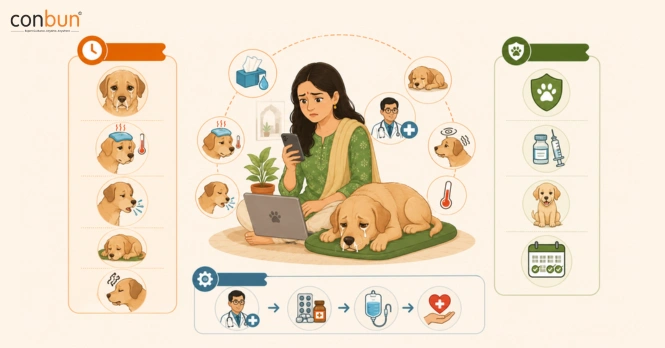
Your three-month-old Labrador puppy has developed a runny nose after an evening walk in the park. He also seems slightly warm, is sleeping more than usual, and is refusing dinner. Your family thinks it is probably just a seasonal cold.
You wait for four days, but now the puppy has developed vomiting, eye discharge, and muscle twitching.
The diagnosis? Canine distemper.
And unfortunately, veterinarians across India see this story repeatedly, especially in unvaccinated puppies. According to a study by The Pharma Innovation, canine distemper is highly prevalent among unvaccinated stray dog populations, with a clinical incidence of 19% and higher.
Distemper in dogs is one of the most serious viral diseases affecting Indian puppies and unvaccinated adult dogs. The biggest problem is that early symptoms of Canine distemper look deceptively mild, which leads to delays in treatment during the most critical window.
The following article will explain:
Early distemper symptoms in a dog show
Treatment realities
The DHPP vaccine schedule
And why fast action matters far more than most owners realise.
What Is Dog Distemper? (And Why Indian Dogs Are at High Risk)
According to the Journal of Advances in Biology and Biotechnology, Canine distemper is a highly contagious viral disease caused by the dog distemper virus (CDV), a paramyxovirus. It attacks the respiratory, digestive, and nervous systems simultaneously. There is no cure, only supportive treatment, making prevention the only real defence.
Dog distemper is caused by the canine distemper virus (CDV), a virus closely related to the human measles virus. According to a 2023 article, CDV infects and kills lymphocytes and mononuclear cells, causing significant immunosuppression
Once inside the body, CDV starts attacking multiple systems simultaneously:
Respiratory tract
Gastrointestinal system
Nervous system
Immune system
This is why the symptoms that start subtly evolve dramatically over time.
How Distemper Spreads
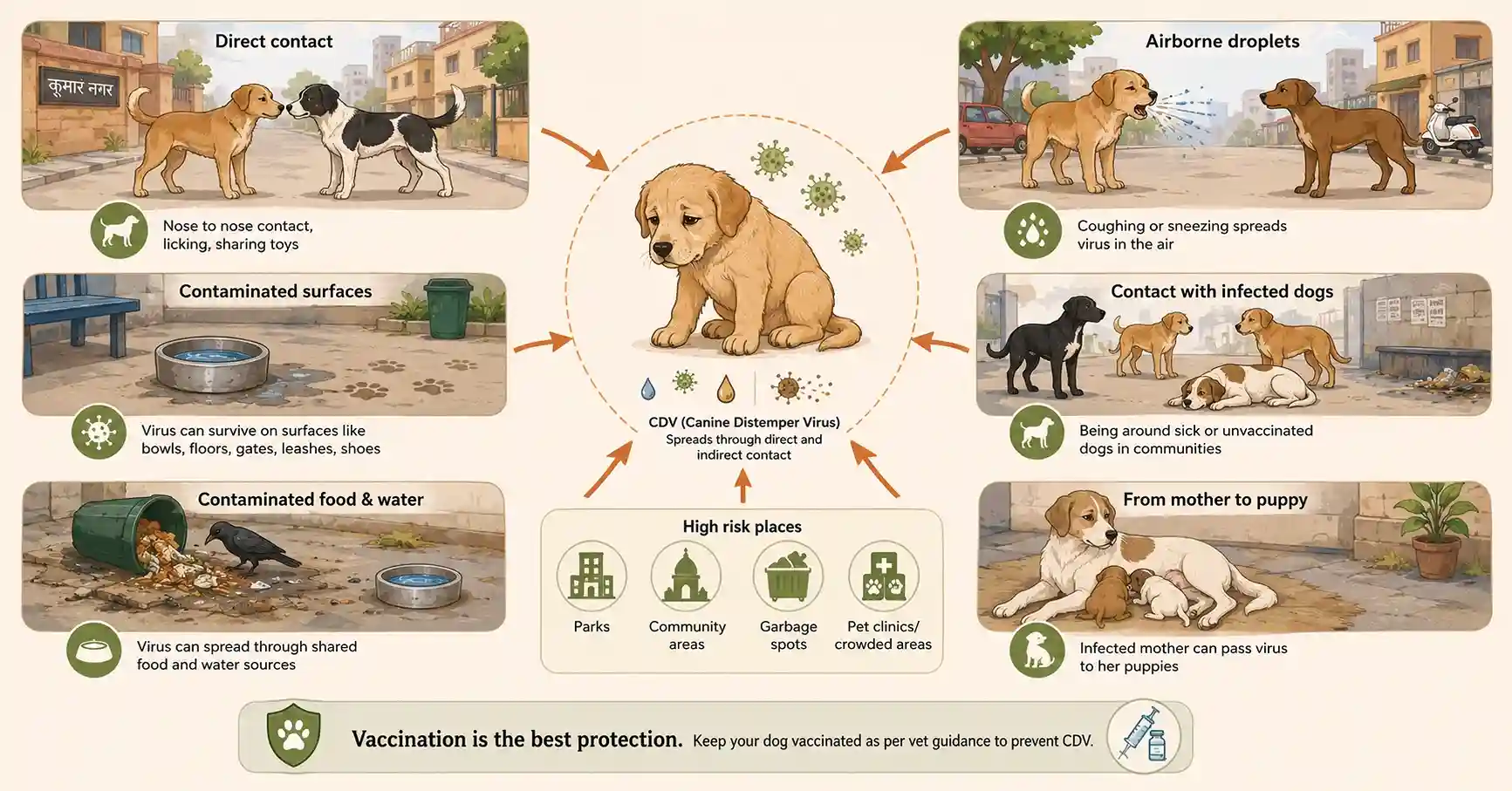
The virus spreads primarily through:
Sneezing
Nasal discharge
Cough droplets
Direct dog-to-dog contact
Infected dogs can continue shedding the virus for several weeks.
According to an article published in the Preventive Veterinary Medicine, crowded dog populations significantly increase the transmission risk of CDV.
Why Indian Dogs Face Higher Exposure Risk
India creates the perfect environment for the spread of CDV because of:
High stray dog population density
Crowded shelter homes
Shared outdoor spaces
Unvaccinated community dogs
During the monsoon season, exposure is worsened due to:
Covered spaces
Shared dry areas
Apartment corridors and parks
Some wild animals, like jackals and civets, are also known to carry and spread the virus in semi-urban Indian regions.
Early Signs of Distemper in Dogs - What to Watch For
Early distemper symptoms look like a common cold: fever, watery eyes, nasal discharge, lethargy, and loss of appetite. These appear 1–2 weeks after exposure and are easy to miss, making early vet contact critical.
One big reason behind canine distemper being so dangerous is that Stage 1 looks harmless.
Most owners initially assume:
Allergy
Seasonal infection
Mild kennel cough
And this delay influences health outcomes dramatically in the case of canine distemper.
Stage 1 - Respiratory Signs (Days 1–14)
Early distemper symptoms that dogs commonly show include:
Clear nasal discharge that later becomes yellow or green
Watery or sticky eye discharge
Fever
Dry cough progressing gradually
Noticeable lethargy
Many Indian pet owners, especially in Tier 2 cities, mistake this stage for seasonal flu or kennel cough. But unlike mild respiratory infections, distemper spreads aggressively through the body.
Stage 2 - Gastrointestinal Signs
As the virus progresses, a dog may show signs like
Diarrhoea
Severe dehydration
This stage is especially dangerous during Indian summers because puppies dehydrate extremely fast. Therefore, pet owners need to provide proper summer care through adequate hydration, moisture-rich meals and limited physical activity.
Stage 3 - Neurological Signs (Severe Stage)
This is the stage veterinarians fear the most. Symptoms include:
Muscle twitching
Tremors
Head tilt
Circling behaviour
Limb weakness or paralysis
Apart from these, you may also see seizures in dogs and hardening of paw pads.
This classic symptom is still widely called “Hard pad disease” in India.
Distemper Symptoms Comparison Table
Stage
Key Signs
What To Do
Stage 1 — Respiratory
Fever, cough, eye discharge, lethargy
Visit the vet immediately
Stage 2 — GI
Vomiting, diarrhoea, dehydration
IV fluids + the clinic care
Stage 3 — Neurological
Seizures, tremors, paralysis
Emergency treatment
How Is Dog Distemper Diagnosed?
Distemper diagnosis is usually clinical first, laboratory next. To diagnose Canine distemper, veterinarians typically assess:
Symptoms
Vaccination history
Exposure risk
Neurological signs
PCR testing for canine distemper is available in major Indian metro cities like Mumbai, Bengaluru, Delhi and Hyderabad.
However, many Indian veterinarians diagnose based on symptom patterns and examination. This is common because advanced testing is limited to smaller cities.
According to veterinary literature, clinical diagnosis is extremely important in distemper because treatment decisions cannot wait for delayed testing.
For new pet parents in India, it is important to maintain a proper puppy health checklist because vaccination history not only influences health outcomes but also affects diagnosis accuracy.
Distemper Treatment in Dogs - What Actually Helps
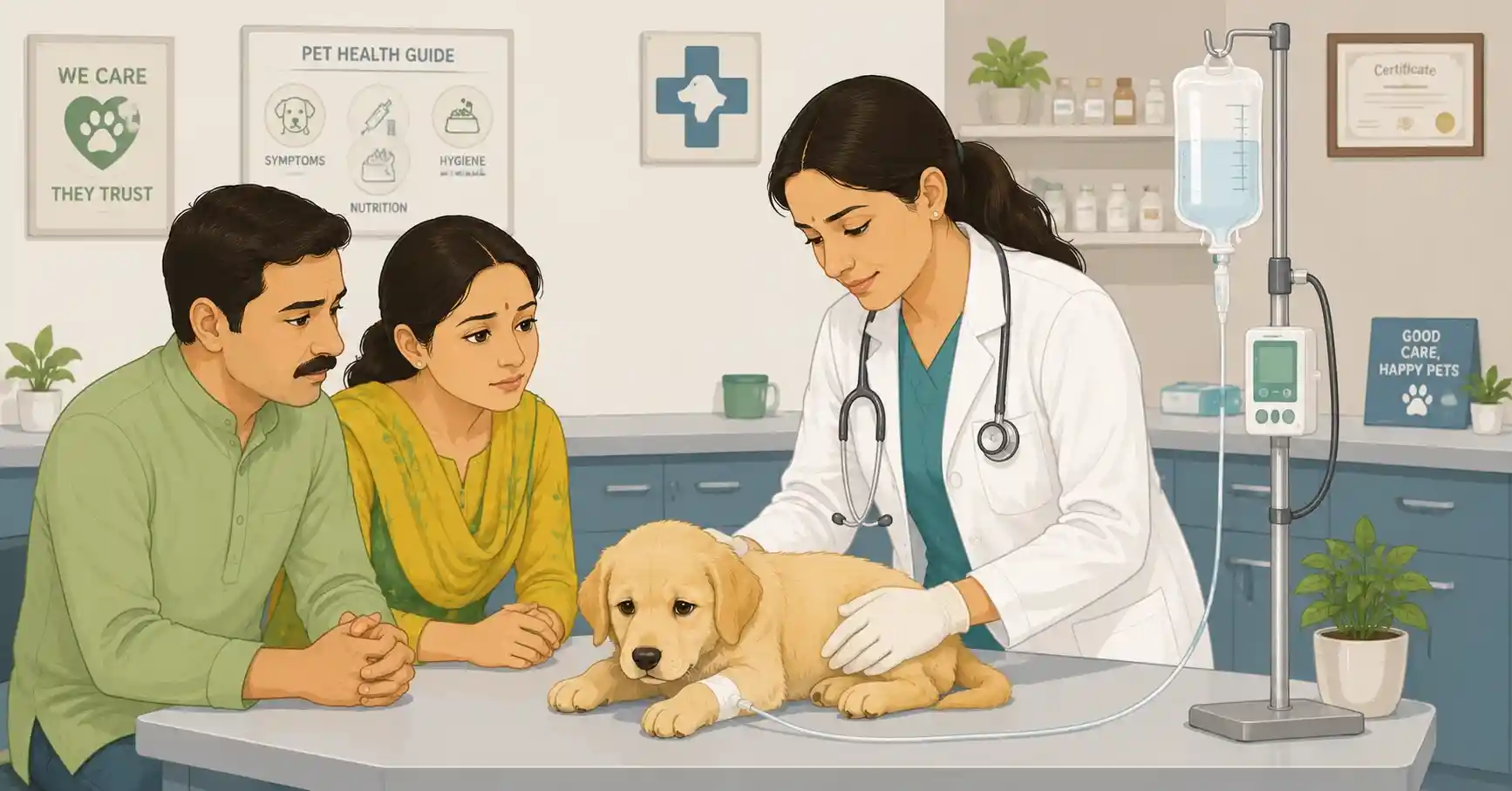
There is no antiviral drug that cures distemper. Treatment is supportive, managing symptoms, preventing secondary infections, and keeping the dog stable enough for their immune system to fight back.
This is the hardest part for owners to hear: There is no direct cure for CDV. Distemper treatment for dogs revolves entirely around supportive care.
What Supportive Care Includes
Veterinarians usually offer:
IV fluids for dehydration
Antibiotics for secondary bacterial infections
Anti-seizure medications
Nutritional support
Oxygen support in severe respiratory cases
According to the American Veterinary Medical Association, supportive care, if started early, can dramatically improve survival chances in canine distemper.
Isolation Is Essential
Dogs affected with distemper must remain isolated from other dogs for 4–6 weeks minimum. Sometimes even longer.
When Treatment Does Not Work
Severe neurological distemper often carries a poor prognosis. Highest mortality risk occurs in:
Puppies under 4 months
Unvaccinated dogs
Severely malnourished/immunocompromised dogs
Treatment costs in India generally range between: ₹8,000–₹15,000+
These costs depend on:
Hospitalization
ICU support
Seizure management
In cases where the dog is suffering severely and recovery becomes unlikely; euthanasia may sometimes be recommended.
Home Care - What Owners Can Do
If you are wondering how to care for dogs with canine distemper, keep in mind that supportive home care for canine distemper focuses on managing symptoms and boosting immunity. It includes:
Keeping the dog warm
Cleaning nose and eye discharge gently
Encouraging hydration
Feeding soft, digestible food
But owners should NEVER:
Delay vet care
Depend entirely on home remedies
Distemper can deteriorate extremely quickly. For home care and management tips, pet owners can book veterinary appointments online on Conbun.
Distemper Vaccine for Dogs - India’s Puppy Vaccination Schedule
The distemper vaccine is a core vaccine in India, given as part of the DHPP or DAPP combo shot. Puppies need 3 doses plus regular boosters for strong protection.
Vaccination is the single most effective protection against dog distemper.
The DHPP vaccine protects dogs against:
Distemper
Hepatitis
Parvovirus
Parainfluenza
Puppy Vaccination Schedule India
Step 1 — 6–8 Weeks - First DHPP/DAPP vaccine dose
Step 2 — 10–12 Weeks - Second DHPP booster
Step 3 — 14–16 Weeks - Final primary series dose
Step 4 — 1 Year - Annual booster
Step 5 — Every 1–3 Years
Future boosters based on veterinary advice
DHPP Vaccination Schedule Table
Age
Vaccine
Notes
6–8 weeks
DHPP Dose 1
First puppy visit
10–12 weeks
DHPP Dose 2
Core booster
14–16 weeks
DHPP Dose 3
Completes series
12–16 months
Booster
Annual follow-up
Every 1–3 years
Booster
Based on risk
Why Multiple Puppy Doses Are Necessary
According to an article in Frontiers in Immunology, maternal antibodies interfere with early vaccine effectiveness. This is why: One vaccine dose is NOT enough.
The full puppy vaccination schedule India follows is designed to protect puppies as maternal immunity fades gradually.
When Vaccination Does Not Fully Protect
Rare breakthrough infections happen when:
Vaccine schedules are incomplete
Puppies were already incubating the disease
Severe malnutrition weakens immunity
Which Dogs Are Most at Risk for Distemper in India?
Highest-risk groups include:
Unvaccinated puppies (6 weeks–6 months)
Rescue dogs with unknown history
Shelter dogs
Dogs frequently exposed to strays
Senior dogs lacking boosters
One major Indian problem is that puppies are sold too early. Many pet shops sell puppies at 4–5 weeks old before proper vaccination protection develops, which dramatically increases the risk of unvaccinated dogs contracting distemper.
Dogs visiting these areas face a higher exposure risk
Dog parks
Boarding centres
Shared apartment areas also face a higher exposure risk.
If your puppy has missed boosters or recently interacted with unknown dogs, it is safer to:
Talk to a vet online on Conbun or visit a clinic immediately rather than waiting.
When to Visit a Clinic vs. When an Online Consult Is Safe
Visit a Clinic Immediately If:
Seizures or tremors appear
Puppy is under 3 months with fever + discharge
Dog refuses food for over 24 hours
Breathing becomes laboured
In case of emergencies, visit a clinic, but consult a veterinarian online if:
You need a second opinion
Vaccination timing needs clarification
Minor symptoms appear during recovery
A physical clinic is temporarily inaccessible
A responsible veterinarian will always recommend physical treatment for severe symptoms.

Conclusion - Key Takeaways
Distemper in dogs is one of the most dangerous viral diseases affecting Indian puppies. The biggest problem is that early symptoms look harmless.
Remember these five things:
Distemper has no direct cure
Vaccination prevents distemper
Stage 1 may be missed
Severe neurological signs drastically worsen prognosis
Prompt veterinary action saves lives
Most importantly: Prevention costs far less than treatment.
If your puppy develops fever, eye discharge, runny nose or sudden lethargy, do not wait several days hoping it “passes naturally.” And if you are unsure whether symptoms are serious, it is always safer to:
Consult a vet from home early rather than delay until the disease reaches Stage 3.
FAQs (People Also Asked)
Q.1 - Can a Dog Recover from Neurological Distemper?
Answer: Dogs with mild neurological cases may recover partially. But permanent nervous system damage is common and irreversible. Prognosis is significantly poorer once paralysis or seizures begin.
Q.2 - Is There a Test for Distemper in Dogs?
Answer: Yes. PCR testing confirms CDV infection, but many Indian clinics depend on clinical diagnosis as specialised labs may not be accessible in many areas.
Q.3 - Can I Treat Dog Distemper at Home?
Answer: No. Home care is supportive. You cannot treat a dog with canine distemper at home. Veterinary care is irreplaceable, and early in-clinic care can significantly improve survival chances.
Q.4 - Can a Vaccinated Dog Still Get Distemper?
Answer: Rarely, yes, but symptoms are usually mild, and survival chances improve dramatically compared to unvaccinated dogs. Following a puppy vaccination schedule in India is far cheaper and safer than distemper treatment later.
References
Allen, C., Ellis, A., Liang, R., Lim, A., & Newbury, S. (2023). Prolonged persistence of canine distemper virus RNA, and virus isolation in naturally infected shelter dogs. PLoS One, 18(1), e0280186. https://journals.plos.org/plosone/article/file?id=10.1371/journal.pone.0280186&type=printable
AVMA. (2026). Canine distemper. https://www.avma.org/resources-tools/pet-owners/petcare/canine-distemper
Diaz, N. M., Mendez, G. S., Grijalva, C. J., Walden, H. S., Cruz, M., Aragon, E., & Hernandez, J. A. (2016). Dog overpopulation and burden of exposure to canine distemper virus and other pathogens on Santa Cruz Island, Galapagos. Preventive veterinary medicine, 123, 128-137. https://www.sciencedirect.com/science/article/pii/S0167587715300866
Kamalla, R., Ambika, G., Satish, K., Kumar, B., (2023) Incidence of canine distemper in dogs. The Pharma Innovation, 12(27), 2750-2752. https://www.thepharmajournal.com/archives/2023/vol12issue7S/PartAG/S-10-12-331-739.pdf
Tripathi, A., Sharma, S., Tiwari, A., Gautam, V., & Rajput, N. (2026). Epidemiological Study of Canine Distemper in Dogs at Jabalpur, India. Journal of Advances in Biology & Biotechnology, 29(3), 96-108. https://journaljabb.com/index.php/JABB/article/view/3718/9906
Table of Content
- What Is Dog Distemper? (And Why Indian Dogs Are at High Risk)
- Early Signs of Distemper in Dogs - What to Watch For
- How Is Dog Distemper Diagnosed?
- Distemper Treatment in Dogs - What Actually Helps
- Distemper Vaccine for Dogs - India’s Puppy Vaccination Schedule
- Puppy Vaccination Schedule India
- Why Multiple Puppy Doses Are Necessary
- When to Visit a Clinic vs. When an Online Consult Is Safe
- Conclusion - Key Takeaways
- FAQs (People Also Asked)
- References