
Dog Diet Chart India: By Breed & Age
Written by: Anand Sen; Reviewed by: Dr. Shree (B.V.Sc & A.H, M.V.Sc)
Riya got a Labrador puppy. For the first two months, she fed the dog whatever she felt was healthy. It was rice, dal, leftover and chicken on weekends, and occasionally dog biscuits. By the third month, the puppy started facing common Labrador health problems like poor coat quality, loose stools and early calcium deficiency. Riya did not neglect nutrition, but she neglected structure.
This is one of the most common mistakes new pet owners in India make. Dogs of different sizes, breeds and life stages have different dietary needs. A growing German Shepherd puppy does not have the same nutritional needs as a senior Pomeranian living in an apartment. That is why a proper dog diet chart India owners can realistically follow matters so much.
Why a One-Size-Fits-All Dog Diet Does Not Work in India
Most generic feeding charts that you get online are designed for Western climates and imported commercial dogs. But dogs in India live in completely different conditions.
Hot summers
Variable exercise levels
Home-cooked feeding habits
Humid monsoons
Ignoring breed, age and lifestyle requirements is one of the most common pet food mistakes that pet owners make. You should keep in mind these three major factors while preparing a dog food guide:
Breed size and metabolism
Age and life stage
Activity level and climate
According to an article published in the Canadian Veterinary Journal, balanced feeding must consider caloric intake, body condition, growth rate, and nutrient distribution rather than simply “feeding more.”
As per the article, Large-breed dogs especially need controlled growth because excess calories and calcium may worsen future orthopaedic disease risk.
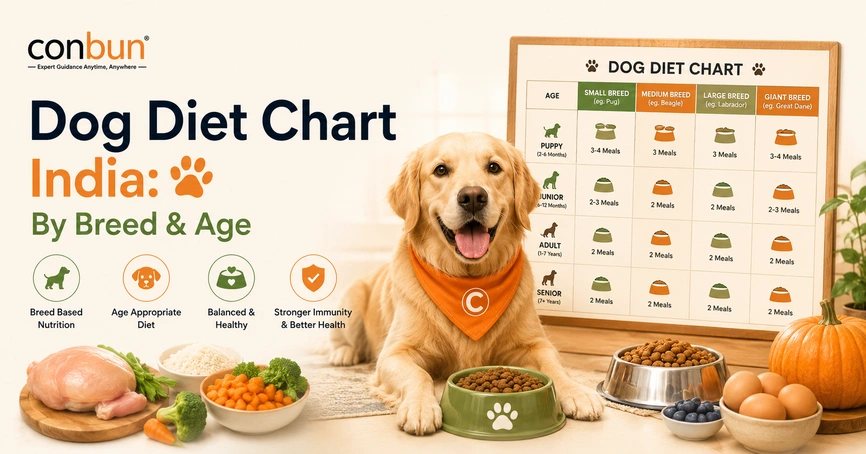
Dog Diet Chart by Life Stage: The Core Framework
Puppy Stage (2 Weeks to 12 Months)
To prepare a puppy feeding chart, it is important to note that puppies require the highest calorie intake relative to body weight because their bodies are building:
Bone
Muscle
Brain tissue
Immune function
According to the Royal Kennel Club, Puppies under 3 months of age should usually eat 4 meals daily. From 3–6 months, most dogs transition to 3 meals. After 6 months, 2 meals daily work for most medium and large breeds.
Adult Stage (1 Year to 7 Years)
Adult dogs generally require two structured meals daily. This is especially important for large breeds like:
Labradors
German Shepherds
Rottweilers
Tibetan Mastiffs
Every meal should be portion-controlled, as just one large meal daily increases the risk of gastric dilatation-volvulus (GDV), a dangerous condition in which a dog’s stomach twists abnormally.
Senior Stage (7 Years and Above)
Senior dogs need:
Reduced calories
Better fibre balance
Joint-supportive nutrition
Easier digestion
According to veterinary literature, obesity remains one of the most common health problems in senior dogs that stems from improper nutrition. Most dog owners fail to reduce portions after activity declines, which leads to a calorie surplus over time.
Labrador Diet Chart by Age (Labrador Retriever Food Chart)
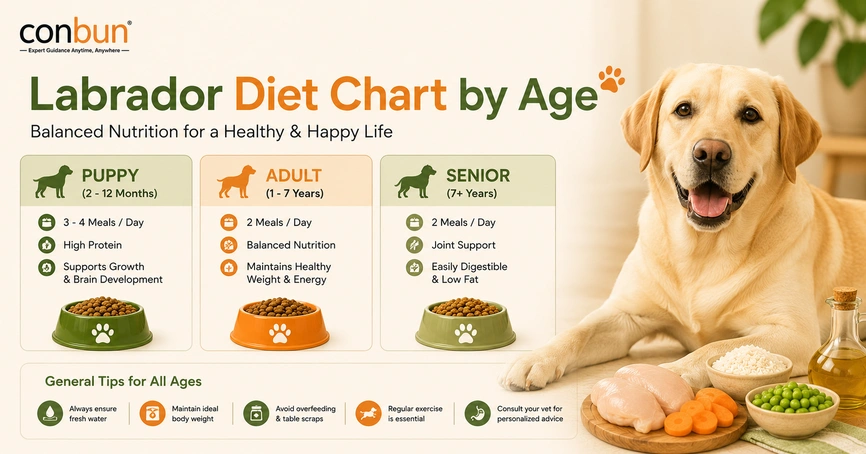
Labradors are considered the best dog breeds for the Indian climate. But they are genetically predisposed to obesity. Overweight Labradors face a significantly higher risk of:
Arthritis
Diabetes
Reduced lifespan
Recommended feeding structure:
Age
Meals Per Day
Daily Food Quantity (Approx.)
Key Nutrients
6 to 12 weeks
4
150 to 200g (puppy kibble or home food)
High protein, DHA
3 to 6 months
3
250 to 350g
Calcium, phosphorus
6 to 12 months
2 to 3
350 to 450g
Balanced protein and fat
1 to 6 years (adult)
2
400 to 500g
Lean protein, controlled fat
7+ years (senior)
2
300 to 400g
Joint support, fibre
Labrador food chart - home food option:
Morning: 1 boiled egg + 100g cooked chicken + 1 cup rice or roti (no salt or spices)
Evening: Boiled vegetables (carrot, beans) + 100g paneer or curd + 1 cup cooked rice
Avoid: Grapes, onions, garlic, excess salt, raw dough, chocolate
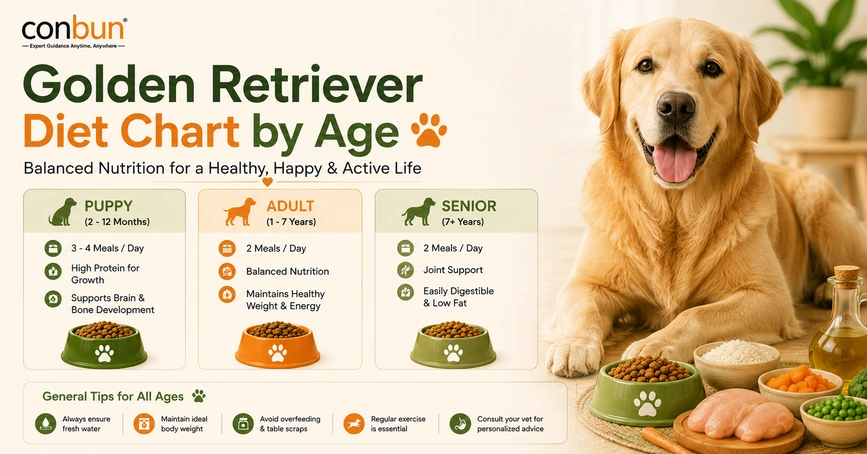
Golden Retriever Diet Chart by Age
Golden Retrievers in India commonly struggle with:
Skin allergies
Obesity
Hip dysplasia
And nutrition influences all three significantly.
Goldens need:
Controlled fat intake
High-quality protein
Omega-3 fatty acids
Joint-supportive nutrition
Typical feeding structure:
Age
Meals Per Day
Food Type
Portions
2 to 4 months
4
Puppy kibble or soft home food
150 to 200g
4 to 6 months
3
Kibble + boiled chicken or egg
250 to 300g
6 to 12 months
2 to 3
High-protein diet
350 to 450g
1 to 6 years
2
Balanced adult diet
400 to 500g
7+ years
2
Low-fat, high-fibre
300 to 400g
Indian summers create an additional issue: heat stress.
Heavy-coated breeds often lose appetite during extreme heat. If you are wondering what to feed your dog in summer, the following additions can help maintain fluid intake better:
Plain curd
Coconut water in moderation
Wet food for hydration
German Shepherd Diet Chart (GSD Food Chart)
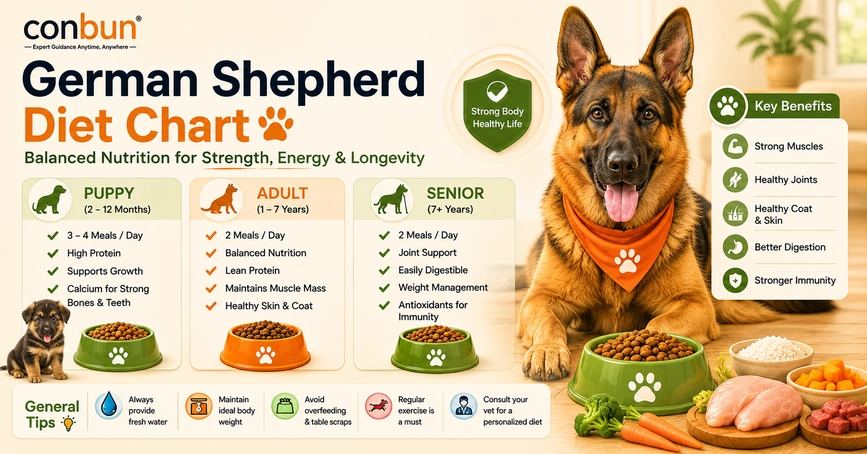
German Shepherds are working dogs. So they need quality protein at every life stage due to:
High energy needs
Strong muscle maintenance requirements
Underfeeding protein leads to:
Muscle loss
Poor coat quality
Reduced stamina
German Shepherd diet chart by age:
8 weeks to 4 months: 4 meals, approx. 200g per meal (puppy formula kibble or home food with egg and chicken)
4 to 6 months: 3 meals, 250 to 300g per meal
6 to 12 months: 2 to 3 meals, 400g per meal, high-protein focus
1 to 5 years (adult): 2 meals, 450 to 550g total per day, lean meat, rice, curd
6+ years: 2 smaller meals, reduce fat, add joint support like fish oil
According to Frontiers in Veterinary Science, overfeeding large-breed puppies can significantly increase the risk of Osteoarthritis.
This means more food is not automatically healthier. Balanced growth matters more than rapid growth.
Rottweiler Diet Chart
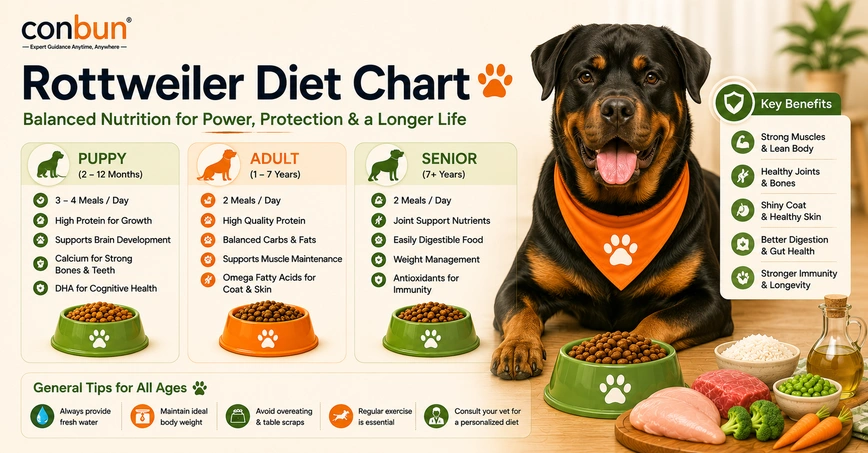
Rottweilers are muscular dogs with high protein requirements, yet Indian owners often unintentionally underfeed them out of fear of making the dog too heavy.
This leads to poor muscle development, weak growth and nutritional imbalances.
Depending on the activity and body condition, adult Rottweilers usually require 600–700g daily food intake.
Protein sources commonly used in Indian home feeding:
Chicken
Eggs
Fish
Paneer
Curd
Healthy fats matter too:
Fish oil
Egg yolk
Small amounts of coconut oil
Rottweiler food chart:
2 to 4 months: 4 meals, 200 to 250g each
4 to 8 months: 3 meals, 300g each
8 to 18 months: 2 to 3 meals, 400 to 500g
Critical veterinary insight: Never exercise large dogs immediately after meals.
Rottweilers are highly predisposed to gastric torsion (bloat), especially after:
Heavy meals
Intense exercise
Excess water intake immediately after eating
According to Animals, GDV remains one of the most life-threatening emergencies in large deep-chested dogs.
Pomeranian Dog Diet Chart
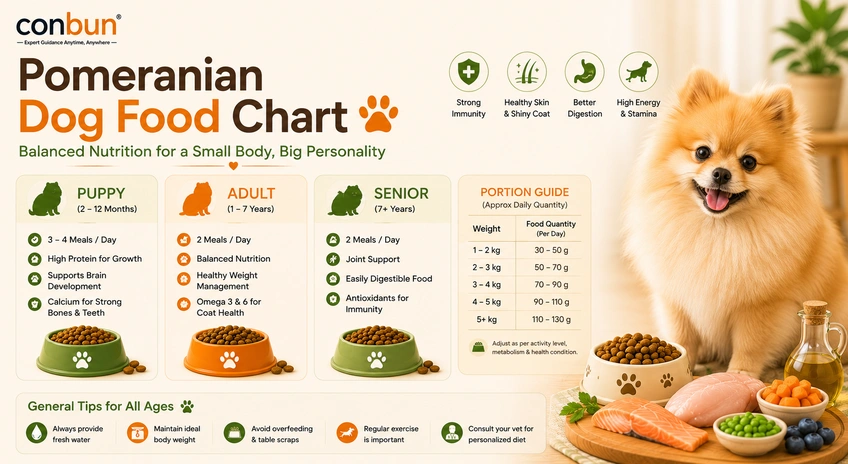
With small dogs, there is a nutritional paradox. They come with tiny stomachs and very fast metabolism. Pomeranians need calorie-dense nutrition in smaller portions. Typical feeding recommendations:
Puppies: 3–4 meals daily
Adults: 2 meals daily
Seniors: 2 smaller low-fat meals
Indian-friendly home food options include:
Boiled egg
Chicken
Rice
Carrot
Plain curd
But owners frequently overdo treats because small dogs look cute while begging.
Unfortunately, obesity develops very quickly in toy breeds. Even 1 kg of excess weight places substantial stress on:
Knees
Heart
Spine
1 Month Puppy Food Chart (For All Breeds)
One-month-old puppies ideally remain with the mother because maternal milk provides:
Nutrition
Antibodies
Immune protection
If early separation becomes unavoidable, puppies require:
Puppy milk replacer
Soft puppy gruel
Frequent feeding every 3–4 hours
Important:
Cow’s milk is not an appropriate replacement for puppies. It commonly causes:
Diarrhoea
Bloating
Digestive upset
According to neonatal veterinary nutrition guidance, commercial puppy milk replacers provide a much safer nutritional balance for orphaned or separated puppies.
Very young puppies also dehydrate quickly, making proper feeding frequency critical.
Homemade Dog Food Chart: What Works in India
In India, homemade diets can work extremely well when properly balanced. However, the biggest problem is inconsistency.
One day, chicken and rice, Next day: Biscuits and leftovers; then: Plain roti only. This cannot be classified as balanced nutrition.
A practical homemade structure includes:
40% lean protein
30% carbohydrates
20% vegetables
10% healthy fats
What can a dog eat
Chicken
Fish
Eggs
Rice
Oats
Pumpkin
Beans
Carrot
Toxic food items to avoid strictly:
Onion
Garlic
Grapes
Raisins
Chocolate
Excess salt
According to veterinary toxicology literature from the ASPCA Animal Poison Control, even small amounts of grapes or raisins may trigger kidney failure in susceptible dogs.
At home, dog feed must only be supported by homemade vet-approved recipes. If you are planning on feeding homemade food exclusively, you should discuss supplementation, multivitamins and omega-3 support with a veterinarian or canine nutritionist. Talk to an online pet nutritionist on Conbun to get a detailed and personalised diet chart.
When Home Food Works - and When It Does Not
Home food for dogs is only effective when:
Meals are consistent
Portions are measured properly
The dog is healthy
You balance nutrients intentionally
It becomes more difficult when dogs are suffering from health issues like:
Kidney disease
Food allergies
Diabetes
Pancreatitis
Severe obesity
Prescription therapeutic diets often become medically necessary in these conditions. In addition, in the case of dog food allergies, vet-formulated elimination diets are the only options.
And for puppies under 3 months, nutritional precision becomes especially important because rapid growth magnifies dietary mistakes quickly.
Risks of Getting the Dog Diet Wrong
Poor nutrition creates both short-term and long-term health consequences.
Overfeeding commonly causes:
Obesity
Joint stress
Heat intolerance
Diabetes
Underfeeding may lead to:
Stunted growth
Poor immunity
Muscle loss
Weak bones
Calcium imbalance deserves special attention in India because owners often add supplements randomly without veterinary guidance.
According to developmental orthopedic literature from the Canadian Veterinary Journal, excessive calcium supplementation in large-breed puppies may contribute to skeletal abnormalities. More supplements are not always healthier.
Vet insight: You should focus on diet combination to give your dog the vitamins and minerals they need.
When to Visit a Vet vs. When an Online Consult Is Enough
Clinic visits are necessary if:
The puppy refuses food beyond 24 hours
Vomiting or diarrhoea develops suddenly
Weight loss occurs despite eating
Toxin ingestion is suspected
Online veterinary consultation works well for:
Portion planning
Breed-specific feeding advice
Supplement questions
Transitioning from kibble to home food
Reviewing body condition and calorie intake
For many Indian owners, online dog nutrition guidance has become a practical first step before making major dietary changes.
Conclusion
Dog nutrition is not about feeding a lot of food. It is about feeding correctly. Breed, age, weight, activity level, and climate are the factors that influence what a dog actually needs to eat. Labradors, German Shepherds, Golden Retrievers, Rottweilers, Pomeranians and all other dog breeds require different nutritional strategies, especially during growth stages.
Homemade food can absolutely work in India, but only when protein, carbohydrates, vegetables and healthy fats remain properly balanced.
And if owners are unsure about portions, supplements, or breed-specific requirements, getting professional veterinary nutrition guidance with Conbun can prevent far bigger nutritional problems later. Online pet nutritionists on Conbun can offer personalized dog food guides, diet charts and nutrition recommendations tailored to your dog's health, age and lifestyle.
References
Anderson, K. L., Zulch, H., O'Neill, D. G., Meeson, R. L., & Collins, L. M. (2020). Risk factors for canine osteoarthritis and its predisposing arthropathies: a systematic review. Frontiers in veterinary science, 7, 220. https://www.frontiersin.org/journals/veterinary-science/articles/10.3389/fvets.2020.00220/full
Grant, C. E., Dodd, S., Abood, S. K., & Verbrugghe, A. (2021). Commercial diet recommendations and follow-up for a large breed puppy with an intrahepatic portosystemic shunt. The Canadian Veterinary Journal, 62(6), 598. https://pmc.ncbi.nlm.nih.gov/articles/PMC8118183/pdf/cvj_06_598.pdf
Olimpo, M., Cillari, S., Ferraris, E. I., Giacobino, D., Savarino, P., Piras, L. A., ... & Morello, E. M. (2025). Gastric dilatation-volvulus in dogs: Analysis of 130 cases in a single institution. Animals, 15(4), 579. https://www.mdpi.com/2076-2615/15/4/579
Royal Kennel Club. (2026). Your growing puppy. https://www.royalkennelclub.com/your-dog/getting-a-dog/caring-for-a-new-pup/feeding-your-puppy-or-dog/
Tal, M., Parr, J. M., MacKenzie, S., & Verbrugghe, A. (2018). Dietary imbalances in a large breed puppy, leading to compression fractures, vitamin D deficiency, and suspected nutritional secondary hyperparathyroidism. The Canadian veterinary journal, 59(1), 36. https://pmc.ncbi.nlm.nih.gov/articles/PMC5731398/pdf/cvj_01_36.pdf
Table of Content
- Why a One-Size-Fits-All Dog Diet Does Not Work in India
- Dog Diet Chart by Life Stage: The Core Framework
- Labrador Diet Chart by Age (Labrador Retriever Food Chart)
- Golden Retriever Diet Chart by Age
- German Shepherd Diet Chart (GSD Food Chart)
- Rottweiler Diet Chart
- Pomeranian Dog Diet Chart
- 1 Month Puppy Food Chart (For All Breeds)
- Homemade Dog Food Chart: What Works in India
- When Home Food Works - and When It Does Not
- Risks of Getting the Dog Diet Wrong
- When to Visit a Vet vs. When an Online Consult Is Enough
- Conclusion
- References