Parvo in Dogs: Symptoms, Treatment & Prevention in India
Written by: Anand Sen; Reviewed by: Dr. Harsh (B.V.Sc & A.H.)
Riya noticed that her 4-month-old Labrador puppy was acting strangely on a Tuesday morning. He ignored breakfast. Threw up twice and also refused to play.
By evening, the dog was peeing blood. Upon diagnosis, it was found that the dog had canine parvovirus. And unfortunately, this story is not uncommon.
Parvo in dogs is regarded as one of the deadliest viral diseases seen in Indian veterinary practice, especially in dogs under the age of six.
According to the American Veterinary Medical Association and the Merck Veterinary Manual, canine parvovirus causes severe intestinal damage, rapid dehydration, and immune suppression, often progressing within hours.
And the dangerous part?
Pet parents often mistake it for “stomach upset”. And by the time they see bloody diarrhea, the virus has already multiplied aggressively.
The following article will explain:
Early symptoms of parvo in dogs
How parvo treatment works in India
Recovery expectations
And how vaccination can prevent one of the most devastating diseases in puppies
What Is Canine Parvovirus?
Canine parvovirus (CPV) is a highly contagious viral disease that attacks a dog’s intestines and immune system. It spreads through infected faeces, contaminated surfaces, and soil. Without immediate veterinary treatment, parvo can become fatal within 48–72 hours, especially in puppies.
Parvo is not “food poisoning.” It’s a highly aggressive virus.
After getting inside a dog’s body, the virus targets:
The intestinal lining
Bone marrow cells
White blood cells (leukocytes)
It destroys the dog’s ability to:
Digest food properly
Absorb fluids
Fight secondary infections
Why the Virus Is So Dangerous
Canine parvovirus causes severe inflammation and erosion inside the intestines.
This leads to:
Bloody diarrhea
Vomiting
Massive fluid loss
And in puppies, dehydration happens frighteningly fast.
A Virus Built to Survive
One reason parvo spreads so easily in India is environmental resilience. According to an article published in Canine and feline infectious diseases, the transmission of Parvovirus occurs through the faecal-oral route, after exposure to the virus in faeces or vomit, or importantly, the virus that persists on fomites.
According to veterinary literature, canine parvovirus can survive:
On floors
In soil
On bowls
On shoes and clothing
Key fact: Canine Parvovirus can survive for months to years. Even Indian summer heat often isn’t enough to kill it completely. This makes it very tough to eradicate it from a household or kennel.
Who Is Most at Risk?
Parvo can affect any dog, but the highest-risk groups include:
Puppies between 6 weeks and 6 months
Unvaccinated dogs
Shelter and street puppies
Multi-dog households
Breeds that are more vulnerable to severe disease progression are:
Rottweilers
Dobermans
German Shepherds
Why India Sees So Many Cases
In India, puppies are frequently exposed to:
Shared apartment walkways
Public parks
Contaminated puddles during monsoon
High stray dog population density
This is why vets repeatedly advise: Never walk unvaccinated puppies in public spaces.
Early Signs of Parvo in Dogs
Early parvo symptoms include loss of appetite, lethargy, vomiting, fever, and bloody diarrhea. Symptoms worsen rapidly within 24-48 hours. Early recognition and immediate treatment significantly improve survival chances.
Parvo rarely starts dramatically. Symptoms of parvovirus start appearing quietly. And that’s exactly why so many owners miss it.
Stage 1: Early Warning Signs (Days 1-2)
The first symptoms of parvo are subtle. Most dogs show:
Sudden loss of appetite
Low energy
Mild fever
“Sad” expression or dull eyes
The most obvious symptom of parvovirus in dogs is weakness. Some puppies simply stop behaving like puppies. They stop playing. Stop reacting and stop eating.
Why These Signs Are Missed
Indian pet owners often assume:
Teething
Minor indigestion
Heat exhaustion
But veterinary studies show that early intervention during this phase dramatically improves survival rates. Waiting is the biggest mistake.
Stage 2: Active Symptoms (Days 2-4)
This is when the virus becomes aggressive. Symptoms escalate quickly into:
Severe vomiting
Bloody diarrhea
Foul-smelling stool
Abdominal pain
Rapid dehydration
Parvo diarrhea often has a strong metallic or rotten smell, a detail that many veterinarians immediately recognise clinically.
What Dehydration Looks Like
Parvo kills primarily through Fluid loss and septic complications. These can be incredibly serious for small puppies.
Watch for:
Dry gums
Sunken eyes
Skin that stays “pinched” when lifted
Puppy Parvo Symptoms vs Adult Dog Symptoms
Symptom | Puppies | Adult Dogs |
Speed of progression | Extremely fast | Slightly slower |
Dehydration risk | Very high | High |
Risk without treatment | 80–90% | 30–50% |
Recovery chances with treatment | 70–80% | 80–90% |
Why Puppies Decline Faster
Puppies tend to have:
Smaller fluid reserves
Immature immune systems
Lower energy storage
Higher metabolism rates
This means they crash much faster than adult dogs.
How Is Parvo Diagnosed?
Parvo is diagnosed using a fecal antigen test, bloodwork, and clinical symptoms. Most veterinary clinics in India can confirm parvo within 10–15 minutes using a stool sample.
Veterinarians usually suspect parvo before the test result even arrives.
Why? Because the symptom pattern is so distinctive.
The Rapid Parvo Test
The most common diagnostic tool for canine parvovirus is a faecal antigen test. It uses a stool sample and usually gives results within:
10–15 minutes
This test is widely available across Indian veterinary clinics.
Blood Tests Matter Too
Parvo commonly causes a severe drop in white blood cells known as leukopenia. This weakens their immune system further. Blood tests also help assess:
Dehydration severity
Electrolyte imbalance
Organ function
Why Diagnosis Cannot Wait
Many owners try:
Home remedies
Syrups
Waiting overnight
But parvo progression is measured in hours, not days. According to a 2020 article on canine parvovirus, early hospitalisation drastically improves survival outcomes.
Parvo Treatment in Dogs
There is no direct cure for parvovirus. Treatment focuses on aggressive supportive care, including IV fluids, anti-vomiting medication, antibiotics, electrolyte correction, and nutritional support. Most dogs require hospitalisation for 3–7 days.
This is the part most owners misunderstand. There is no magic anti-parvo injection.
The virus must be fought by the dog’s own immune system. Veterinary treatment for parvovirus exists to keep the dog alive long enough for that to happen.
Step 1 - Hospitalisation
Most parvo cases require immediate isolation and hospitalisation.
Why isolation?
Because parvo spreads extremely easily between dogs.
Hospital stays typically last:
3-7 days
Severe cases may need longer.
Step 2 - IV Fluid Therapy
This is the single most important treatment. Dogs with parvo lose enormous amounts of:
Water
Sodium
Potassium
Glucose
Without IV fluids, Organs begin shutting down rapidly.
According to an article published in The Veterinary Clinics of North America. Small animal practice, aggressive fluid therapy is the cornerstone of parvo survival. According to the article, the standard of care for parvo-infected dogs includes IV crystalloid and sometimes colloid fluids.
Step 3 - Medications
Treatment for parvovirus usually includes:
Anti-vomiting injections (maropitant, ondansetron)
Antibiotics to prevent secondary bacterial infection
Electrolyte supplementation
Pain management
Once diarrhoea and vomiting improve, bland nutritional support begins.
Step 4 - Monitoring
Veterinarians generally monitor:
Hydration
Temperature
Appetite
Stool quality
Blood parameters
These parameters are monitored daily, sometimes hourly, in critical puppies.
Can Dogs Survive Parvo Without Treatment?
Honestly, it is rare. Without treatment, the survival rate for canine parvovirus is extremely low, with mortality rates often reaching 90% of higher.
With timely hospitalisation, dogs can survive parvovirus, and the survival increases to 70–90%. That difference is everything.
Can Parvo Be Treated at Home?
Home treatment is not safe for parvo. Dogs with parvovirus usually require IV fluids, injectable medications, and continuous monitoring that cannot be properly provided at home. Delaying veterinary care drastically reduces survival chances, especially in puppies.
This is one of the most dangerous misconceptions in pet care.
Dog owners generally get suggestions like:
Give curd and rice
Try ORS at home
Wait one day
This delay can become fatal.
Why Home Care Fails in Parvo Cases
Parvo is not just stomach upset. The virus causes:
Severe fluid loss
Electrolyte imbalance
Immune suppression
Intestinal damage
By the time bloody diarrhea appears, a dog’s body is already under extreme stress.
Temporary home remedies for parvo
If you cannot transport your dog to a vet clinic immediately:
Keep the dog warm’
Offer tiny amounts of oral electrolyte solution to ensure hydration
Prevent further stress
Offer only bland diets (only if vomiting is stopped)
If gums look pale, rub molasses or honey directly onto the dog’s gums every hour to prevent life-threatening low blood sugar
In multi-pet households, keep the sick pet isolated from others
Where Online Vet Consultation Helps
This is where online vet consultation becomes useful, not for curing parvo, but for:
Assessing urgency
Identifying warning signs
Guiding immediate next steps
A licensed online pet doctor can determine whether symptoms strongly suggest parvo and advise immediate transport.
Important Reality Check
No online pet care app can replace:
IV fluid therapy
Blood monitoring
Emergency hospitalisation
However, you have to understand that this is not a treatment. It is temporary support until veterinary care becomes available. Parvo is a serious health condition and thus it is important to understand the distinction between in person visits vs. online consultations. For parvo: Physical veterinary treatment is non-negotiable.
Parvo Recovery: What to Expect
Most dogs recovering from parvo improve gradually over 3–6 weeks. Recovery requires rest, bland food, hydration, hygiene control, and careful monitoring for relapse or secondary infection.
Week-by-Week Recovery Timeline
Week 1
Extreme lethargy
Provide a bland diet only
Minimal activity
Most dogs still appear fragile, tired and weak.
Week 2
Appetite improves gradually
Vomiting stops
Energy slowly returns
Increased physical activity
Week 3-4
Stool quality normalises
Activity increases
Weight gain may start
After 6 Weeks
By the end of the 6th week, most properly treated dogs recover fully.
According to Dr Arti (BVSc, MVSc, PhD), dogs that have survived the acute phase of parvo generally develop strong long-term immunity.
After-Care Tips
In case of parvo, proper recovery management matters almost as much as treatment itself.
Feed Carefully
To ensure proper recovering feed only homemade vet-approved recipes for dogs.
Boiled chicken
Rice
Easily digestible food
Small and portion-controlled meals generally work the best.
Restrict Activity
Avoid:
Running
Rough play
Public parks
Your dog’s body is still healing internally. Putting strain on the body can hinder the recovery process.
Maintain Strict Hygiene
Parvo can continue shedding through faeces for up to 6 weeks after recovery. This means that recovering dogs can still infect others.
Watch for Relapse
Some dogs may worsen again shortly after discharge.
Warning signs:
Vomiting returns
Loose stool worsens
Appetite disappears again
If this happens: Contact your vet immediately.
Parvo Prevention in India
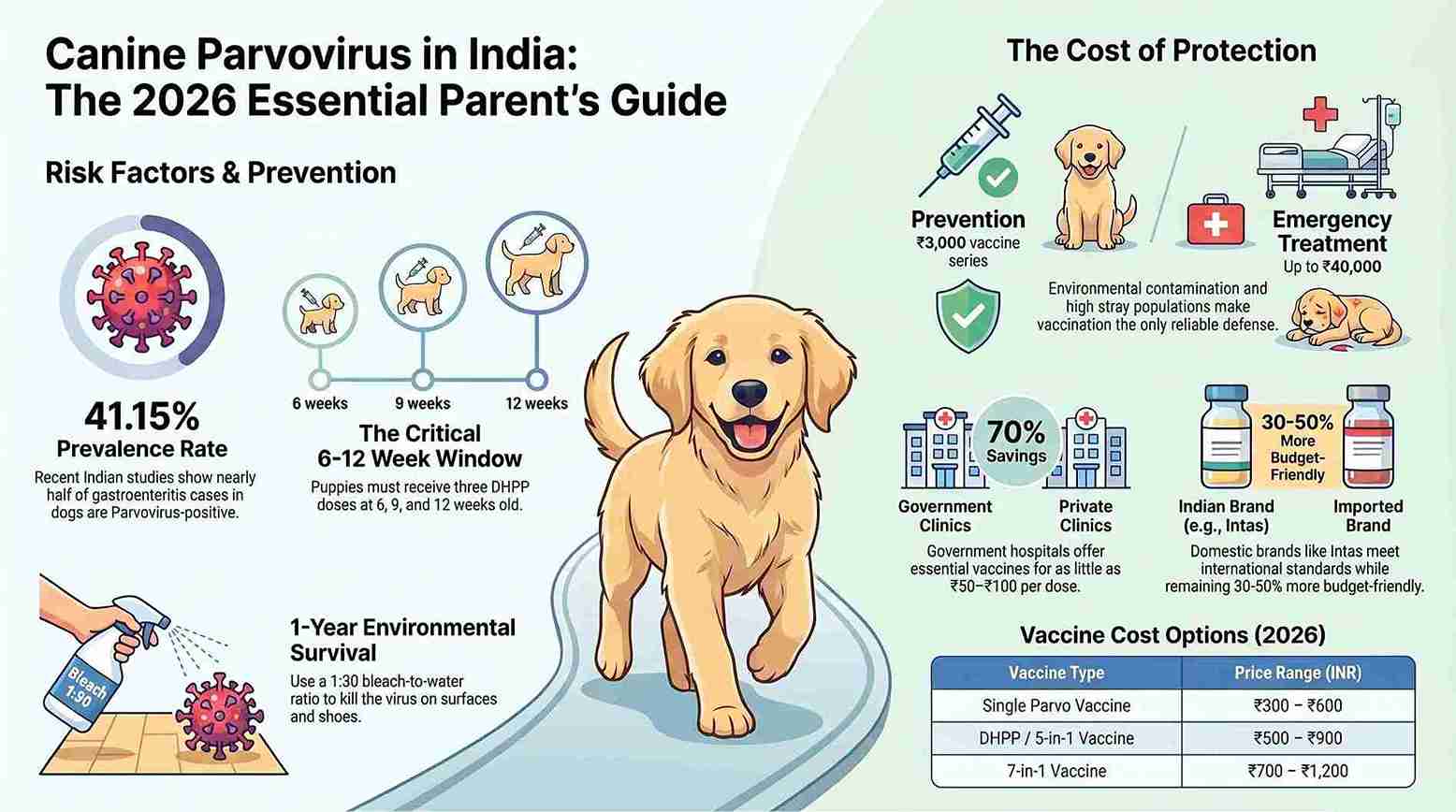
Vaccination is the most effective protection against parvo. Puppies require a complete DHPP vaccination series starting at 6–8 weeks of age, followed by boosters.
In India, preventing exposure to contaminated areas is also extremely important.
Parvo prevention is dramatically easier and cheaper than treatment. And yet, many Indian puppies remain incompletely vaccinated.
Puppy Parvo Vaccination Schedule
Age | Vaccine |
6–8 weeks | First DHPP dose |
10–12 weeks | Booster |
14–16 weeks | Final puppy booster |
1 year | Annual booster |
The DHPP parvovirus vaccine protects against:
Distemper
Hepatitis
Parvovirus
Parainfluenza
Why Full Vaccination Matters
One vaccine is not enough. Maternal antibodies can interfere with early protection, which is why the full series is critical.
Veterinary immunology guidelines strongly emphasise: Partial vaccination, partial protection.
Hygiene Tips for Indian Pet Owners
Parvo spreads easily in shared environments.
Practical prevention steps:
Avoid public walks before vaccination completion
Disinfect surfaces with bleach (1:30 dilution)
Keep bowls and bedding clean
Avoid contact with infected dogs
Most household cleaners do not kill parvo effectively. Bleach remains the most reliable household disinfectant.
Parvo in Puppies: Special Considerations
Parvo hits puppies hardest. Not because the virus changes. Because puppies are physically less capable of surviving it. Parvovirus treatment in puppies includes ensuring hydration, small fluid reserves and limited energy stores.
Why Puppies Crash So Fast
Puppies have:
Small fluid reserves
Immature immune systems
Limited energy stores
This makes dehydration and shock develop rapidly.
India-Specific Risk Factors
Street puppies, shelter puppies, and partially vaccinated puppies face especially high exposure risk.
Many owners stop vaccinations after the first dose. This is one of the most common and deadly mistakes vets see.
When to Visit a Clinic vs. When Online Consultation Is Safe
Parvo symptoms like bloody diarrhea, repeated vomiting, weakness, or severe dehydration always require immediate clinic care. Online veterinary consultation is helpful only for early guidance, recovery questions, or when transport delays are unavoidable.
Go to a clinic immediately if:
Bloody diarrhea appears
Vomiting happens repeatedly
Your dog cannot stand
Gums look pale or bluish
When Instant Vet Consultation Helps
An instant vet consultation may help if:
You’re unsure whether symptoms are serious
You live in a remote area
You need post-treatment recovery advice
You have vaccination questions
A qualified online pet doctor can guide you until you reach physical care.
Cleaning Your Home After Parvo
Parvo doesn’t disappear when symptoms do. The environment remains contaminated for months or even years. Strong decontamination protocols are to be followed.
Cleaning Steps
Remove contaminated bedding and toys
Use bleach solution (1:30 ratio)
Scrub floors, bowls, kennels, surfaces
Allow 10 minutes drying time
Outdoor areas remain risky for months.
Key Takeaways
If your dog shows signs of parvo, do not “wait and watch.” Act early. If you are unsure, consider talking to a vet online on Conbun for an initial assessment. Because with parvo, Time matters more than anything.
FAQs (People Also Asked)
Q.1 Can I Test My Dog for Parvo at Home?
Answer: Home parvo kits are available online in India, but they are not substitutes for veterinary diagnosis. A positive home result should always be treated as a medical emergency. Because treatment, not testing, is what saves the dog.
Q.2 How Much Does Parvo Treatment Cost in India?
Answer: Treatment for parvovirus typically ranges between ₹5,000-₹25,000, depending on severity, city, and hospitalisation duration. Government veterinary hospitals in India generally offer subsidised and sometimes even free treatment.
Q.3 When Can My Dog Go Outside After Parvo?
Answer: Avoid parks, public roads, and contact with unvaccinated dogs for at least 6 weeks after recovery.
Q.4 Can Vaccinated Dogs Get Parvo?
Answer: Yes, but it is uncommon. Most breakthrough cases occur when:
Vaccination schedules are incomplete
Puppies were exposed before immunity fully developed
Vaccines were improperly stored
Q.5 How Fast Can Parvo Kill a Puppy?
Answer: In severe cases, a fatal decline can happen within 48–72 hours. If a young puppy stops eating, vomits repeatedly and appears weak, do not wait overnight.
Q.6 What Kills Parvovirus?
Answer. Bleach and veterinary disinfectants like potassium peroxymonosulfate-based cleaners are most effective.
References
Addie, D. D., Boucraut-Baralon, C., Egberink, H., Frymus, T., Gruffydd-Jones, T., Hartmann, K., ... & European Advisory Board on Cat Diseases. (2015). Disinfectant choices in veterinary practices, shelters and households: ABCD guidelines on safe and effective disinfection for feline environments. Journal of feline medicine and surgery, 17(7), 594-605.https://scholar.google.com/scholar?output=instlink&q=info:_SrXFD0crYcJ:scholar.google.com/&hl=en&as_sdt=0,5&scillfp=7373716726415800558&oi=lle
Alex Gallagher (2025). Canine Parvovirus Infection (Parvoviral Enteritis in Dogs)https://www.msdvetmanual.com/digestive-system/infectious-diseases-of-the-gastrointestinal-tract-in-small-animals/canine-parvovirus-infection-parvoviral-enteritis-in-dogs
Carcéles, A. F., Degani, M., Soler, C., Serra, C. I., Fernández-Salesa, N., García de Carellán Mateo, A., ... & Briganti, A. (2025). Veterinary enhanced recovery after surgery (Vet-ERAS) program in dogs undergoing emergency laparotomy. Veterinary Sciences, 12(4), 377.https://www.mdpi.com/2306-7381/12/4/377
Horecka, K., Porter, S., Amirian, E. S., & Jefferson, E. (2020). A decade of treatment of canine parvovirus in an animal shelter: a retrospective study. Animals, 10(6), 939.https://www.mdpi.com/2076-2615/10/6/939
Mazzaferro, E. M. (2020). Update on canine parvoviral enteritis. The Veterinary clinics of North America. Small animal practice, 50(6), 1307.https://pmc.ncbi.nlm.nih.gov/articles/PMC7467068/pdf/main.pdf
Sykes, J. E. (2013). Canine parvovirus infections and other viral enteritides. Canine and feline infectious diseases, 141.https://pmc.ncbi.nlm.nih.gov/articles/PMC7152455/pdf/main.pdf
Yogesh, B. P. (2022). Therapeutic management of parvo virus infection in dogs (Doctoral dissertation, Doctoral dissertation Maharashtra Anımal and Fıshery Sciences University).https://krishikosh.egranth.ac.in/server/api/core/bitstreams/651f2d83-fd08-4356-8aea-273ed695e24a/content
Table of Content
- What Is Canine Parvovirus?
- Early Signs of Parvo in Dogs
- Parvo Treatment in Dogs
- Can Parvo Be Treated at Home?
- Why Home Care Fails in Parvo Cases
- Parvo Recovery: What to Expect
- Parvo Prevention in India
- Parvo in Puppies: Special Considerations
- When to Visit a Clinic vs. When Online Consultation Is Safe
- Cleaning Your Home After Parvo
- FAQs (People Also Asked)
- References