
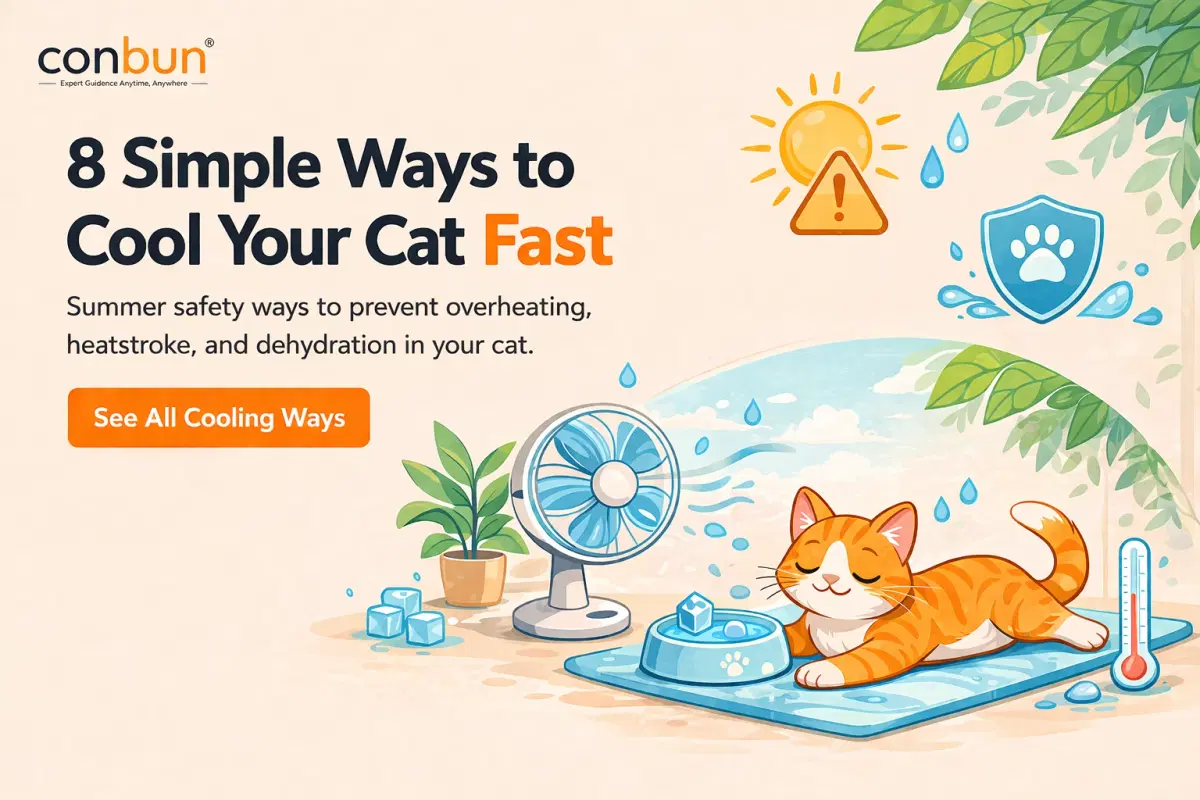
8 Simple Ways to Cool Your Cat Fast - Summer Safety Guide
Written by: Anand Sen; Reviewed by: Dr. Saroja Patil (B.V.Sc & A.H, M.V.Sc (General Veterinary Medicine & Surgery)
It’s 2 PM on a Sunday in May. The AC is running, but the walls of your apartment are as hot as dosa pans.
You see your cat stretched out on the bathroom tiles. Not moving much and breathing a little faster than usual.
You pause to take the daily dose of cat parent panic and ask why is my cat not eating? Is she just hot… or is this something more serious?
Cats are stoic in nature. Unlike dogs, they don’t announce discomfort loudly. They endure it quietly, until they can’t.
And that’s what makes summer incredibly dangerous for cats.
According to feline care guidelines from the American Association of Feline Practitioners, cats are prone to a silent progression of heat stress. This means that visible symptoms often appear late, leading to delays in care.
To cool a cat quickly, move them to the coolest room, use a damp cloth on paws and ears, improve airflow, and encourage hydration. Avoid ice baths or extreme cooling. If signs like panting or lethargy appear, act immediately.
This guide will tell you how to cool your cat fast at home, and more importantly, how you can recognise when it's no longer a home problem.
How Cats Handle Heat - And Why Indian Summers Are Harder on Them
Cats regulate heat mainly through grooming and seeking cool surfaces. In Indian conditions, temperatures above 38–40°C can increase the risk of heat stroke in cats. Humidity, indoor heat, and lack of proper ventilation increase the risk of overheating, even if there is no direct sun exposure.
Cats are called elegant problem-solvers due to their high intelligence and physical agility.
When it’s warm, cats usually:
lick their fur to facilitate evaporative cooling
find tiles, shaded corners, sinks
reduce physical activity
Did you know?
According to the Proceedings of the National Academy of Sciences, cats can drop their temperature by 17 ° C by evaporative cooling.
In moderate climates, this works beautifully.
In India?
Not so much.
This works great in moderate climates, but in extreme Indian climates, these tactics are ineffective.
The Real Problem
In cities like Delhi, Chennai, or Pune:
Indoor temperatures can cross 38-42°C
Humidity prevents effective cooling
Airflow is often limited
This creates a situation where:
Your cat’s natural cooling system is overwhelmed
In Indian cities like Chennai, Pune or Delhi:
Indoor temperature can exceed 38°C
In coastal areas, humid air prevents the effectiveness of evaporation
Airflow is limited
8 Simple Ways to Cool Your Cat Down Fast at Home
1. Move Your Cat to the Coolest Room Immediately
Changing location is the first intervention you should focus on to cool your cat.
In most Indian homes:
Bathrooms with tiles are naturally cooler than other rooms. Even better if it’s a ground-floor bathroom.
What to do:
Place your cat in a cool location
Close curtains to block sunlight
Do not force your cat to stay; let her settle freely
Cooling starts with the environment, not gadgets.
2. Use a Damp Cloth on Paws, Ears, and Belly
This is one of the quickest, easiest and safest methods, especially for Indian households, which most cats can easily tolerate.
Steps:
Use cool (not cold) water
Soak a clean washcloth and wring it until damp
Gently wipe paws, ears, and belly
Repeat every few minutes
Don’t wet the fur; dampening is enough
Why these areas?
These areas have better blood circulation. Cooling them brings down the temperature quickly.
3. Set Up a Cooling Mat
A cooling mat is one of the most practical investments cat owners can make to save their cats from heat stress. It requires no water, no electricity and works every time your cat lies on it.
How it works: Cooling mats generally use a pressure-activated gel that absorbs body heat when pets lie on them, and the heat is released slowly. It automatically charges when not in use.
Place in a shaded corner or under a table. Cats generally prefer semi-enclosed, low-simulation spaces.
Vet note: Non-toxic gel mats are safe when used correctly. A cooling mat is an essential summer pet care accessory for both dogs and cats.
Recommended options:
Fofos Watermelon Cooling Mat — Summer design, pressure-activated and cat-friendly
Trixie Cooling Mats — A trusted brand for Indian pets
4. Add a Cooling Bed or Ice-Silk Sleeping Surface
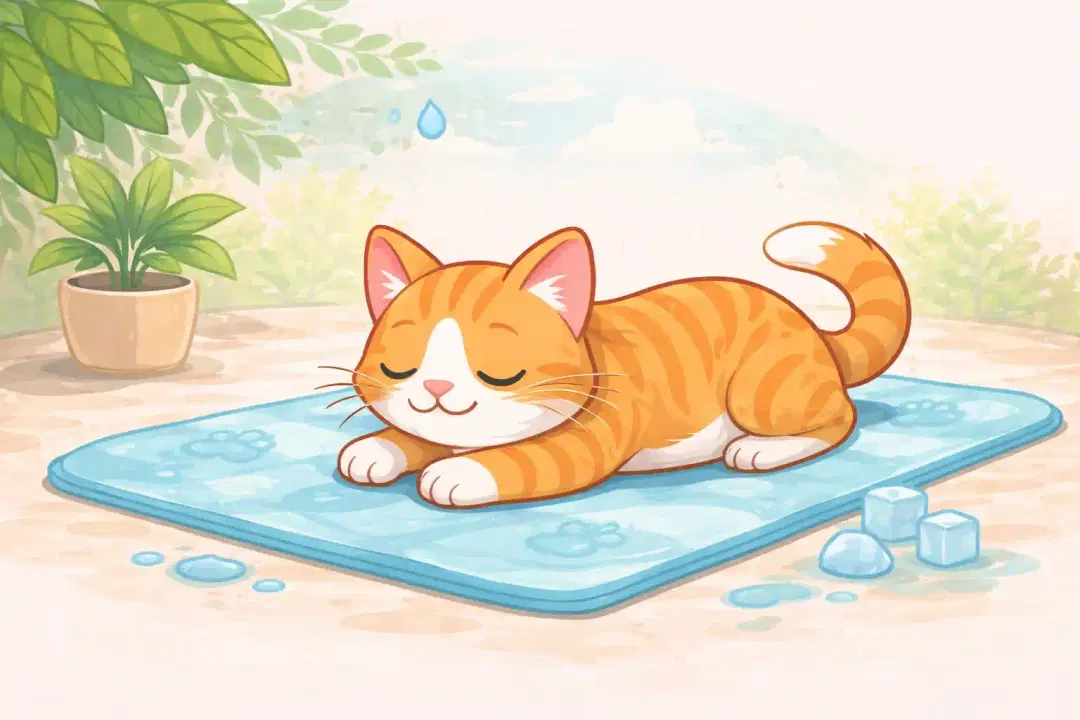
Fabric beds trap heat. Switch to a cooling bed designed for warm months.
Choose
Mesh material
Ice-silk material
Flat surfaces
Cats prefer stretching out when overheated
Recommended options
Dog Cat Sleeping Mat - Luvin – Self-cooling silk fabric
Smart Choice Cooling Mats by Lords & Labradors: Pressure-activated option
5. Improve Airflow - Not Just Fan Speed
Fans alone cannot cool cats the way they cool humans. As cats do not sweat across their skin, moving air has a limited effect.
Make them work better:
Place fans near windows
Create cross-ventilation across the room
Don’t confine cats in a room with only one fan
Add an ice tray in front of a desk fan, and the air passing over the ice becomes cooler
Airflow may reduce ambient heat, but not body heat directly
6. Encourage Hydration - Your Strongest Tool
Cats may refuse to drink water in summer. This could lead to dehydration, which in turn accelerates overheating.
Cats may reduce their water intake in summer because tap water gets warm quickly or still water in a bowl may feel less appealing.
How to increase intake:
Change water every 2–3 hours, as cats are sensitive to water temperature
Add multiple bowls in different rooms
Use water fountains, as moving water is more appealing to cats
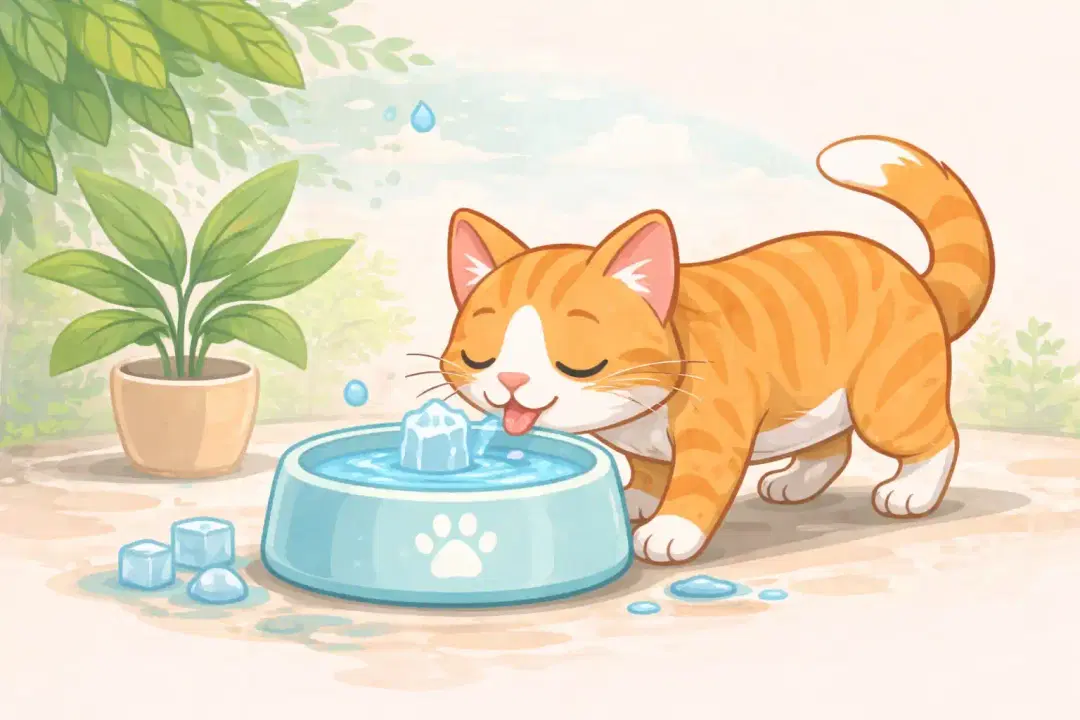
Add ice cubes to the water bowl to keep it cooler for longer
Choose wet cat food over dry food to ensure hydration through food
According to veterinary studies, even mild dehydration can increase the risk of heatstroke in cats
7. Use Frozen Treats for Cooling Enrichment
Frozen treats in summer serve two purposes. One, they cool your cat from the inside, and two, they keep your cat mentally engaging when the heat makes them restless.
Options:
Freeze chicken broth (no salt/onion) in an ice tray
Small frozen treats like frozen fish or chicken
Use Ice-infused catnip to mentally engage cats
Ice-infused catnip keeps your cat cool and mentally engaged.
8. Can You Use a Spray Bottle to Cool Your Cat?

Yes. But most cats hate it. It may make your cat stressful and stress will raise body temperature. So, if your cat is a drama queen, prefer a damp cloth.
Use only if:
emergency
very light mist on paws and face
avoid face
Use a fine mist, not a direct stream
Stop if you feel that the cat is agitated
A damp cloth cooling method is always better.
Cat Diet Advice for Summer from Expert Veterinarians
Dr Vinod Kumar Jain, a state-verified MVSc Surgeon and a trusted expert on Conbun says:
During summer, cats need higher moisture, easily digestible foods to stay hydrated and cool in this season.
Diets for cats focus on wet food, treats and cooked chicken and fish, and a small amount of water-rich snacks like cucumber must be given.
Hydration may be increased by adding water to food and feeding smaller and more frequent meals during the day.
Summer foods include:
Wet/canned foods
Cooked proteins like plain boiled chicken and fish
Fruits and veggies like cucumber, Spinach, watermelon
These are better for digestion and hydration.
Always avoid heavy, fatty, salty foods and raw chicken and fish for cats.
What Not to Do When Your Cat Is Overheated
Cooling mistakes can make things worse.
What to Avoid
Why It Makes Things Worse
Ice water baths
A sudden drop in temperature can lead to shock and vasoconstriction
Wrapping a cat in a wet towel
Traps body heat instead of releasing it
Forcing water into the mouth
Risk of aspiration, especially if it’s a weak cat
Leaving the cat alone to "rest it off"
Heat stroke can progress fast; monitoring the cat is essential
Pointing a fan directly at the cat's face
May dry out mucus membranes
Using menthol or aromatic cooling products
Toxic to cats
Applying human sunscreen
Most human sunscreens are toxic to cats
Signs of Heatstroke in Cats - Know When It Is an Emergency
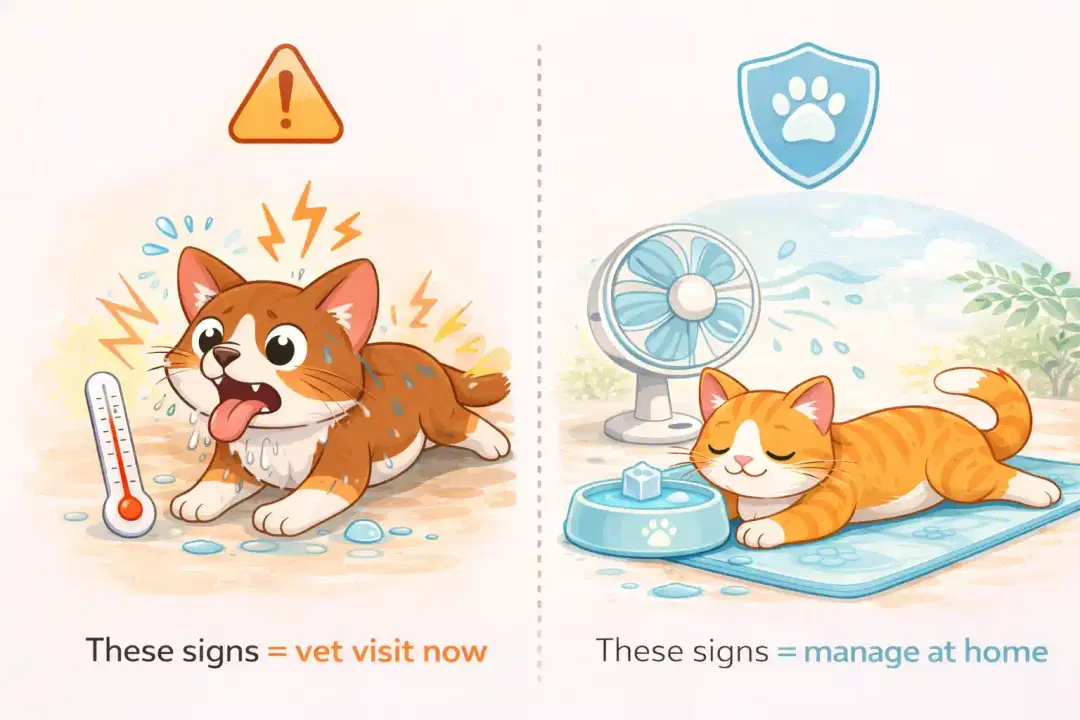
Heatstroke in cats begins with panting, lethargy, and drooling. As it worsens, vomiting, unsteadiness, abnormal gums, and collapse occur. This is an emergency; start cooling immediately and seek veterinary care.
As stated earlier, cats are stoic creatures. They won’t tell you, but symptoms will, and generally it's too late until symptoms appear. Even the most popular cats in India are not immune to heatstroke. In fact, imported cats are at higher risk due to non-suitability to the Indian climate.
Early Warning Signs (Monitor Closely)
Excessive grooming
Seeking cold surfaces
Reduced activity
Slightly warm ears
Mild panting
Even mild panting in cats is abnormal
Emergency Signs (Act Immediately)
Open-mouth breathing
Heavy drooling
Vomiting
Pale, white, or bright red gums
Loss of coordination
Collapse or unresponsiveness
Seizures
According to veterinary literature, Heatstroke mortality increases significantly if treatment is delayed beyond 30 minutes
Immediate Action Plan
Move to a cool/shaded space
Apply a damp cloth
Offer small sips of water
Begin cooling gradually
Contact a vet immediately
If a physical vet is not possible at the moment, you can talk to a pet doctor online to get emergency advice on how to treat heatstroke in cats.
When to Visit a Vet vs. When an Online Consult Is Safe
Heat-related situations in pets can escalate quickly, especially in cats. Therefore, knowing when to act and how fast can make a huge difference.
Contact a Vet Immediately If Your Cat Shows:
Open-mouth panting
Pale, white, or bright red gums
No improvement even after 10–15 minutes of cooling
Unresponsiveness or seizures
Severe lethargy or collapse
These are not wait-and-watch situations. These are emergencies that need veterinary care.
When an Online Consult Is Safe
Consider guidance through an online vet consultation app if your cat shows:
Mild lethargy, but is still responsive
Slight drop in appetite (1–2 days)
Early signs of discomfort due to heat without severe symptoms
Questions about cooling methods or hydration
A quick veterinary doctor consultation online helps you:
Assess the severity of the situation
decide urgency and
avoid unnecessary panic
Smart Rule
Use online advice for clarity
Use clinic visits for critical care
Which Cats Are at Higher Risk in Summer?
Not all cats experience heat the same way. Some are far more vulnerable.
High-Risk Categories
Flat-faced breeds (Persian, Exotic Shorthair)
Long-haired cats (Maine Coon, Ragdoll)
Kittens under 6 months
Senior cats (10+ years)
Overweight cats
Cats with heart, kidney, or respiratory conditions
Why They Struggle More
Reduced airflow (brachycephalic breeds)
Thick coats trap heat
Slower physiological response
Lower heat tolerance due to illness
If your cat falls into these categories, it’s better to start cooling measures earlier, not after symptoms appear.
Conclusion
To cool your cat during Indian summers, you don’t require expensive gadgets or complicated routines.
It just requires awareness.
A cool room. Fresh water. A damp cloth. A safe resting spot.
These are simple steps, but powerful ones.
Because in extreme heat, small delays lead to big cat health problems.
And early action? That’s what keeps your cat safe.
If your cat is suffering from heat stress, consider an online vet consultation to get instant guidance on summer care tips for your cat.
FAQs ( People Also Asked )
Q.1: How can I cool my cat down quickly at home?
Answer: Move your cat to a cool room, use a damp cloth, and offer fresh water.
Q.2: What are the first signs of heatstroke in cats?
Answer: Gasping or panting, lethargy, drooling, and a warm body are the first signs of heatstroke in cats.
Q.3: Is it safe to put a wet towel on my cat?
Answer: No, use a damp cloth to wipe paws and ears instead. A wet towel will cause shock and discomfort.
Q.4: What temperature is too hot for cats?
Answer: Cats are comfortable between 24-30°C. Above 38°C, especially in places with high humidity, the risk of heat stress increases sharply.
Q.5: Can I use ice cubes to cool my cat?
Answer: Yes, in water, but never directly on the body. Ice cubes are also great for mental enrichment.
Q.6: Do fans help cats stay cool?
Answer: Yes, but only by improving airflow. Fans provide ambient cooling but not direct cooling.
Q.7: What are the first signs of heatstroke in cats?
Answer: Open-mouth panting is the earliest and most critical sign.
Q.8: Can cats overheat indoors?
Answer: Yes. Indoor heat in Indian cities can reach 40°C, posing a serious risk of heatstroke in cats.
Table of Content
- How Cats Handle Heat - And Why Indian Summers Are Harder on Them
- 8 Simple Ways to Cool Your Cat Down Fast at Home
- Cat Diet Advice for Summer from Expert Veterinarians
- What Not to Do When Your Cat Is Overheated
- Signs of Heatstroke in Cats - Know When It Is an Emergency
- When to Visit a Vet vs. When an Online Consult Is Safe
- Which Cats Are at Higher Risk in Summer?
- Conclusion
- FAQs ( People Also Asked )

Anand Sen
Get Conbun in your Google results
Add Conbun as a preferred source and Google will show our vet-written guides more often in your Search results and AI answers.