Written by: Anand Sen; Reviewed by: Dr. Ishwar Anand Senapati (B.V.Sc & A.H, M.V.Sc)
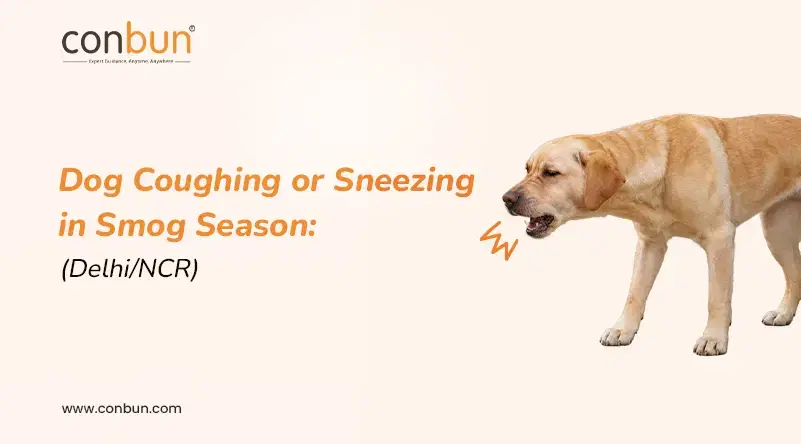
In Delhi/NCR, during the smog season cough and sneezing may be triggered in dogs by fine particulate matter, dust, irritating the nasal passages and airways. High AQI in Delhi (frequently reaching “very poor” at 301-400 and “severe” at 401-500) causes airway inflammation, coughing, bronchitis, eye and throat irritation and increased heart or lung strain in dogs.
In this blog, we’ll understand how Delhi/NCR smog affects dogs, what to do if your dog is coughing and sneezing and how to protect them from pollution.
Kennel Cough vs Allergy vs Pollution
Dogs may experience coughing for different reasons. Let’s take a quick look at some common reasons.
Feature | Kennel Cough (Infectious) | Seasonal Allergies | Smog & Pollution Irritation |
Type of Cough | Loud, dry, "honking" cough; may end in gagging or white foam | Occasional mild cough or reverse sneezing | Dry, hacking cough or frequent throat clearing |
Sneezing & Eyes | Clear or thick nasal discharge; watery eyes | Frequent sneezing; itchy, red, watery eyes | Mild sneezing; red, irritated, or burning eyes |
Other Key Signs | Contagious; worsens with excitement or leash pulling | Itchy skin, paw licking, ear scratching (no fever) | Worse immediately after outdoor walks; lethargy |
Fever / Appetite | Mild fever or reduced appetite in severe cases | Normal temperature; normal appetite | Normal temperature; normal appetite |
Typical Trigger | Bacteria/viruses from boarding, parks, or other dogs | Pollen, dust mites, mold | High AQI (PM2.5/PM10), smoke, vehicle exhaust |
When to see a vet immediately: If your dog shows labored breathing, blue/pale gums, persistent lethargy, thick yellow/green nasal discharge, or refuses to eat or drink, consult a veterinarian right away.
Why Is My Dog Coughing or Sneezing in Delhi Smog?
Delhi smog irritates a dog’s nasal passages, throat and airways with fine particulate matter (PM2.5 and PM10), vehicle and smoke pollutants and ground-level ozone. It triggers coughing and sneezing as their bodies try to clear irritants.
High AQI in Delhi causes airway inflammation, coughing, bronchitis, eye and throat irritation and increased heart or lung strain in dogs. Dogs are especially vulnerable in Delhi smog because they inhale air near ground level where heavier dust and pollutants collect. Fine particles can accumulate and inflame lining tissues, increase mucus production, and lead to bronchitis or continually worsening chest congestion if exposure continues.
Dry cough in dogs during winters in Delhi/NCR is commonly triggered by poor air quality, smog, cold dry air or kennel cough (infectious tracheobronchitis). Severe pollution combined with winter infections can quickly develop into respiratory distress or pneumonia, especially in puppies, senior dogs or dogs with chronic lung/heart conditions.
How Air Pollution Affects Dogs' Breathing
Air pollution irritates a dog’s nose, throat and airways. Fine particles like PM2.5 can reach deep into the lungs, leading to inflammation and breathing difficulty. Dogs often feel a stronger impact compared to humans because they breathe faster, exercise outdoors and are closer to ground-level dust and exhaust.
Smoke, dust, ozone and gases inflame the lining of the nasal passages, bronchial tubes, throat, triggering oxidative stress, immune reactions, airway irritation and inflammation.
According to a 2020 article published in Veterinary Medicine and Science Microscopic particles (especially PM2.5) travel past the upper airways into small airways and lung air sacs to trigger a hypercellular response in lower airways, increasing mucus production in turn triggering coughing, gagging, wheezing and chronic bronchitis.
Inflamed lungs and gases like carbon monoxide reduce oxygen efficiency forcing the lungs and heart to work harder. Repeated or heavy exposure may ultimately contribute to chronic bronchitis, lung scarring or emphysema.
Cough when AQI is high
High AQI levels irritate a dog’s airways and throat, which often triggers coughing, gagging, sneezing or watery eyes. Because pollution may also unmask or worsen issues like kennel cough, heart disease or collapsing trachea. If your dog is coughing during high AQI, it should be taken seriously.
Fine particles like PM2.5 and gases like the ozone or nitrogen dioxide act as direct irritants and activate a dog’s cough reflex.
Flat-faced (brachycephalic) breeds like bulldogs and pugs, puppies, senior dogs and dogs with heart or lung conditions face higher risks from poor air quality.
Kennel Cough in Dogs
Kennel cough or Canine infectious tracheobronchitis) is a contagious upper respiratory infection in dogs that causes inflammation of the windpipe and airways. When bacteria and virus enter into the respiratory tract larynx (voice box) and trachea (windpipe) get swollen.
Common symptoms of kennel cough are:
Dry, harsh and often sounds like gagging or goose honk, and generally end in gagging, retching and white foam.
Cold signs like runny nose, sneezing or water eyes.
Healthy dogs generally stay active and eat normally during uncomplicated cases.
Runny nose, white discharge from eyes or nose
Causes and spread
It is caused by viruses like parainfluenza or adenovirus and bacteria, most commonly Bordetella Bronchiseptica. It spreads easily through airborne droplets from sneezing or coughing, direct contact, shared bowls, toys or bedding.
Kennels, dog parks, boarding facilities, grooming salons and shelters. The symptoms generally appear from 2 to 14 days after exposure; Healthy dogs generally recover within 1 to 3 weeks.
Is Kennel cough common in Delhi winters?
Kennel cough itself can happen year-round whenever dogs mix closely. However, in winter coughing in Delhi is heavily driven by severe smog and poor air quality that irritate airways and make dogs more vulnerable to infections.
Treatment in NCR
Treatment includes a veterinary exam with targeted medications and supportive care. You can go to 24/7 diagnostic and admission facilities. Generally, consultation fees across NCR often range from ₹300 to ₹1000.
You can also get mobile vet services and home visits across Delhi/NCR. Additionally, you can also consult a vet online on Conbun, get veterinary prescriptions online, supportive care and management guidance from the convenience of your home.
Allergy in Dogs During Pollution Season
Dogs may also suffer from allergies during the pollutions season. They can experience worsened skin, ear and respiratory reactions as airborne particles, dust, smoke and seasonal allergens settle on their coat and irritate their airways.
Symptoms
Frequent scratching, chewing, face rubbing, rashes or hair loss
Head shaking, scratching at the ears, redness, odour or recurring ear infections
Redness around the paws and constant paw licking
Watery or red eyes, coughing, sneezing or heavy breathing
Chronic ear infections, frequent head shaking
Digestive issues like vomiting or diarrhea
Seasonal allergy sneezing
Seasonal allergies can cause sneezing in dogs when environmental triggers like dust, pollen, mold spores or dust irritate their nasal passages. Regular bathing, reducing allergen exposure by wiping coat and fur after outdoor time can protect from seasonal allergens.
Allergic cough vs pollution cough
Sneezing vs Reverse Sneezing in High AQI
High Air Quality Index (AQI) levels expose dogs to fine particulate matter, smoke, dust and chemical fumes irritating the lining of their nose and back of the throat, triggering both normal sneezing and reverse sneezing.
Normal sneezing: It is the rapid outward burse of air to clear irritants (dust, soot, allergens) from the nasal passages.
Reverse sneezing: Also known as paroxysmal respiration is the sudden rapid inward pulling of air through nose causing honking and snorting sounds. Air pollutants irritate the fort palate and nasopharynx sparking spams. It resolves on its own quickly with the pet acting normal right after.
Kennel Cough vs Pollution Cough vs Allergy: Compared Side-by-Side
You can tell apart between kennel cough, pollution cough and allergy in dogs primarily by the sound of the cough and accompanying symptoms.
Feature | Kennel Cough | Pollution Cough | Allergy |
Sound of Cough | Loud, dry, "honking" cough; often ends with gagging or white foam | Dry, hacking cough or frequent throat clearing | Occasional mild cough or reverse sneezing |
Onset | 2–10 days after exposure to infected dogs | Sudden or gradual during high-smog days; spikes right after walks | Seasonal or gradual upon exposure to specific triggers |
Contagion | Highly contagious to other dogs | Not contagious | Not contagious |
Fever | Possible mild fever (especially if secondary infection develops) | No fever | No fever |
Discharge | Clear, watery nasal/eye discharge; can turn thick yellow/green | Mild clear tearing or slight watery nose | Clear, watery eye and nasal discharge |
AQI Link | No (caused by viruses/bacteria like Bordetella) | Direct link (worsens as PM2.5/PM10 levels rise) | Indirect (smog can aggravate existing sensitivities) |
Check recent social interaction, tack indoor vs outdoor patterns, look for itchiness and watch out for red flags like lethargy, complete loss of appetite or laboured breathing.
What to Do If Your Dog Is Coughing in Delhi Smog
If your dog is coughing in Delhi smog:
Limit outdoor exposure immediately, if you aim for early afternoon when air quality often better
Run an air purifier or humidifier if available
Avoid indoor smoke sources like incense or mosquito coils
Use harness instead of a neck collar to avoid extra pressure on irritated trachea
Ensure constant access to fresh water
Do not self-medicate
When to Take Your Dog to a Vet in Delhi/NCR
Persistent symptoms or changes in breathing require veterinary attention. Seek veterinary help if your dog develops:
Breathing trouble
Pale or blue gums
Collapse of extreme weakness
Sudden severe sneezing
Facial swelling
Dog coughing blood or nasal bleeding
If your dog shows these signs consider seeking veterinary attention immediately. You can also schedule a veterinary appointment online on Conbun for quick triage and diagnosis.
How to Protect Your Dog from Pollution in Delhi NCR
Follow this checklist to protect your dog from air pollution in Delhi NCR:
Adjust walks by AQI. Keep walks short if AQI is between 201-300. Limit trips and keep toilet breaks if air quality is very poor (301-400). If it is severe (401-500) keep outings strictly to toilet breaks. Use indoor games and puzzles for mental enrichment.
Keep windows and doors closed during high AQI periods
Avoid indoor smoke sources
Mop or wipe floors instead of sweeping which kicks settled dust back into the air
Ensure constant access to fresh water to help keep airways, moist and wash your dog’s bedding regularly
Wipe paws, muzzle, face and around the eyes with a damp cloth or plain water after every walk
Brush coats regularly to remove trapped dust, without over-bathing so winter skin does not dry out.
Flat-faced breeds, senior dogs and puppies are at higher risks and need extra caution to avoid respiratory distress.
Frequently Asked Questions
Can pollution alone cause dog cough?
No. Pollution is not the only cause of coughing in dogs. Similar symptoms can come from other medical causes, like infections, airway or lung conditions, allergies and indoor irritants.
Is kennel cough contagious in societies/parks?
Yes. Kennel cough is a highly contagious condition. It can transmit between dogs in residential societies and parks. Despite the name, dogs do not need to visit a boarding kennel to catch it.
Is a dry cough in winter normal?
Yes, a mild, short-term dry cough in winter is normal. However, persistent dry cough should not be considered normal and should be checked by a vet.
Can I use human cough syrup?
No. You should never give your dog human cough syrup. Many syrups contain xylitol which is toxic to dogs. They may also have paracetamol, ibuprofen, and pseudoephedrine that may causes poisoning and organ damage.
Does AQI affect indoor dogs?
Yes. AQI affects indoor dogs has fine particles and gases seep indoors through open windows, doors and ventilation. Dogs go for toilet breaks outside which can still affect their respiratory organs.
Conclusion
During Delhi smog season vets in Delhi NCR commonly report more pets with sneezing, water eyes and coughing. Fine particular matter (PM2.5 – PM10) can make its way deeper into a dog’s lungs and cause sneezing and coughing. Limit outdoor exposure, use an indoor air purifier and ensure consistent grooming to protect your dog from respiratory distress.
With an online vet consultation on Conbun get a quick virtual diagnosis for your dog’s coughing and sneezing. Get digital prescriptions, supportive care and management guidance from experienced online vets from the convenience of your home.
References
Lin, C. H., Lo, P. Y., & Wu, H. D. (2020). An observational study of the role of indoor air pollution in pets with naturally acquired bronchial/lung disease. Veterinary Medicine and Science, 6(3), 314-320. https://onlinelibrary.wiley.com/doi/pdf/10.1002/vms3.231
Rose, K. T., Rajesh, J. B., Marwein, S. C., Kar, P., Behera, S. K., Chethan, G. E., ... & Prasad, H. (2026). Significance of Bordetella bronchiseptica in respiratory tract infections of canines. International Journal of Bio-resource and Stress Management, 16(1), 01-09. https://www.academia.edu/download/124303000/5_IJBSM_January_2025_Volume_16_Issue_1_Rose_et_al_1_.pdf