
- Home
- About Us
- Petcare
- Become a Consultant
- Blog
- Terms and Conditions
Dog Licking Paws Constantly - Causes & Treatment in India
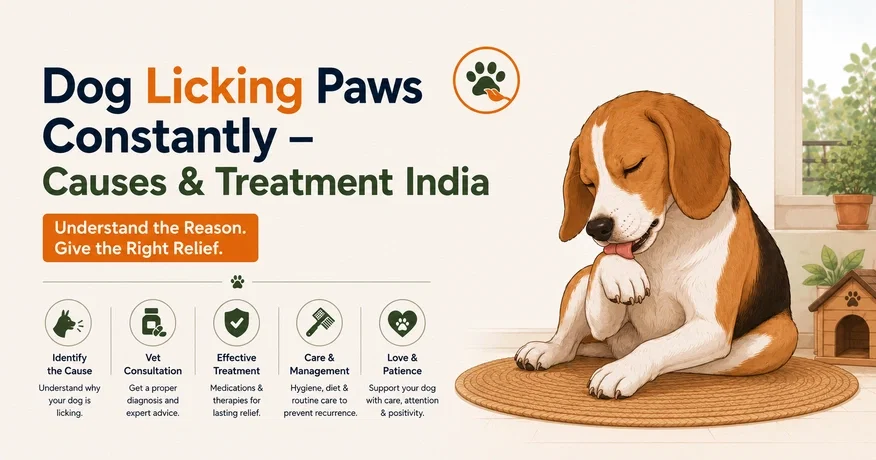
Your dog isn’t just licking his paws anymore. He’s now obsessed. Every time you see him, he’s chewing or nibbling at the same foot like there’s some mystery hidden between his toes. At first glance, it seemed harmless. But now the fur is turning brown, the skin looks irritated, and the licking doesn’t seem to stop.
Is it normal grooming or an allergy? Or an infection? The truth is that constant paw licking in dogs could be a clinical symptom of an underlying problem and not a quirky dog habit.
Why Is My Dog Licking His Paws?
Constant paw licking in dogs is usually triggered by allergies, yeast infections, bacterial infections, injuries, parasites, anxiety, or environmental irritants. Foreign objects like thorns and ticks, or anxiety and boredom, can also kick off paw licking. Occasional licking is normal, but persistent licking that causes redness, swelling, hair loss, staining, or discomfort usually indicates an underlying medical issue that needs attention.
Let’s uncover the reasons in detail.
1. Allergies: The Most Common Cause of Paw Licking
Allergies are the number one cause behind your dog treating their paw like a popsicle.
Many dogs develop allergic reactions to environmental triggers such as dust mites, pollen, mould, and grasses. Others react to specific protein ingredients in their food. In fact, chronic dog food allergy symptoms often show up first in the paws before owners notice problems elsewhere.
According to the Journal of Entomology and Zoology Studies, food allergies are the commonest form of hypersensitivity next to flea allergic dermatitis and atopic dermatitis.
The classic signs of food allergies in dogs are:
- Red paws
- Constant licking
- Belly rashes
- Itchy ears
- Recurring skin irritation.
And the reason dogs lick is simple: itchy paws feel miserable.
In India, this problem is very common due to humidity, seasonal pollen and prolonged exposure to outdoor allergens, which create a perfect environment for allergic flare-ups. Breeds like Beagles, Labradors and Golden Retrievers are particularly vulnerable.
2. Yeast & Bacterial Skin Infections in Dogs
Once a dog starts licking, a second problem often follows: infection.
Your dog’s paws are constantly exposed to harsh elements like dirt, sweat and outdoor allergens that make them highly vulnerable to yeast and bacterial infections.
Constant licking makes the skin even wetter, creating ideal conditions for yeast and bacteria to multiply, leading to an infection that makes itching inevitable.
Signs of infection often include brown saliva staining, red skin between the toes, swollen paw pads, and a distinct smell owners describe as stale popcorn or corn chips.
According to the MSD Veterinary Manual, constant paw licking in dogs may also be a sign of Interdigital Furunculosis, a painful, chronic skin condition in dogs where inflamed hair follicles between the toes rupture.
Bacterial and yeast infections are especially common during the humid monsoon season, which allows for an optimum environment for microbial growth. Take special care during humid weather to avoid skin ailments.
Usually, dogs start licking their paws because of allergies, but then secondary infections develop, keeping the cycle going. Thus, treatment should address both the underlying cause and the infection itself.
If your dog's paws look inflamed or smell unusual, the problem may be more than simple irritation. Many cases fall under broader categories of dog skin diseases, which often require veterinary diagnosis to identify correctly.
3. Foreign Objects and Physical Injuries
Not every licking dog has allergies.
Sometimes the explanation is much simpler: something hurts.
Grass seeds, splinters, tiny cuts, insect stings, tick attachment sites, and hot pavement burns can all trigger sudden paw licking. Unlike allergies, these issues often affect only one paw and appear very suddenly.
A dog may limp, pull the paw away when touched, or focus obsessively on one specific area. Even a tiny foreign object lodged between the toes can cause significant discomfort.
If only one paw is involved, think about injury before allergy. A quick inspection may reveal the culprit, although deeper foreign objects sometimes require veterinary removal.
4. Stress, Anxiety, and Boredom Can Trigger Licking Too
Picture this: it’s Mumbai Indians vs Royal Challengers Bengaluru, and it’s a Super Over deciding the match. Your nails are already gone; you're basically chewing your fingers down to the knuckles.
But dogs can’t chew their nails. So, there are different mechanisms that they use to cope with anxiety, and paw licking is one of them.
Stress-related licking is similar to nail-biting in people. Dogs experiencing boredom, frustration, or separation anxiety in dogs may develop repetitive licking behaviours as a coping mechanism.
Licking due to boredom or anxiety usually affects multiple paws and tends to occur during quiet periods, like when the dog is left alone or lacks adequate physical exercise or mental stimulation.
However, behavioural causes are often blamed too quickly. Veterinarians generally recommend ruling out infections, allergies and injuries because these are far more common.
What You Can Safely Do at Home
A few simple steps can help reduce irritation while you determine the cause.
Check your dog's paws daily, especially after walks. Wipe away dirt, pollen, and debris, and dry the paws thoroughly to prevent excess moisture. During monsoon season, these habits are particularly important.
Using vet-approved paw balms may help soothe mild irritation. Many veterinarians also include paw care in broader summer pet care tips, especially for dogs walking on hot surfaces.
Avoid applying human creams, essential oils, or constantly bandaging the paw. These often create additional problems rather than solving the original one.
Supportive care helps, but it doesn't replace finding the underlying cause.
Dog Paw Licking: Quick Reference Table
|
Cause |
Symptoms |
Treatment & Next Steps |
|
1. Allergies (Food or Environment) |
Affects multiple paws Red, inflamed paws Constant licking Belly rashes and itchy ears |
Identify and remove food allergy triggers Avoid contact with dust, pollen, and grass Consider an online vet consultation |
|
2. Infections (Yeast or Bacteria) |
Stale popcorn or corn chip smell Brown fur due to saliva staining Redness of toes or swollen pads |
Vet diagnosis Ensure paws are always completely clean and dry |
|
3. Injuries & Foreign Objects |
Occurs sudden Usually affects only one paw Limping Obsessive biting at one spot Caused by thorns, ticks, cuts, or hot pavement |
Check paws after outdoor walks Clean debris or remove visible ticks after activities Seek immediate vet intervention if you see bleeding, deep wounds, or severe swelling |
|
4. Anxiety & Boredom |
Can affect multiple paws Happens when the dog is alone or resting |
Focus on daily exercise and mental stimulation |
Those Paws Are Trying to Tell You Something
Dong can’t tell us that their feet are itchy. So, they communicate the only way they know.
An online vet consultation is an excellent first step when paw licking becomes persistent. By reviewing photos, videos, diet history and symptom patterns, a vet often narrows down the most likely causes and the recommended next steps.
This is especially useful when you're trying to determine whether the issue is allergy-related, infection-related, or simply environmental. Professional guidance can also help identify whether dietary changes or further testing may be needed.
However, some situations require immediate in-clinic care. Severe swelling, bleeding, limping, open wounds, or a visible foreign object embedded in the paw should not be managed at home.
The challenge is that many paw problems look almost identical at first glance. What appears to be a simple itch could actually be an infection, allergy, or injury. If you're unsure, it's easy to schedule a veterinary doctor appointment online and get expert advice before the problem worsens.
Conclusion
Constant paw licking is not just a quirky dog habit. Allergies, injuries, infections and environmental irritants are generally the causes. If only one paw is affected, think injury. If multiple paws are involved, allergies or infection are more likely the problems.
The earlier a cause is identified, the easier it is to prevent chronic irritation, skin damage, and recurring problems. If the licking continues for more than a few days, don't ignore it; your dog's paws are trying to tell you something important.

Recent Post
Popular Categories
Subscribe Us for Best Deals
Download App