.webp)
Written by: Anand Sen; Reviewed by: Dr. Saroja Patil
It's 2 AM. Your dog has decided that sleeping is overrated and has adopted scratching as his full-time profession. Scratch. Scratch. Pause. Scratch again. You check for fleas. Nothing. You check again because surely there must be fleas. Still nothing.
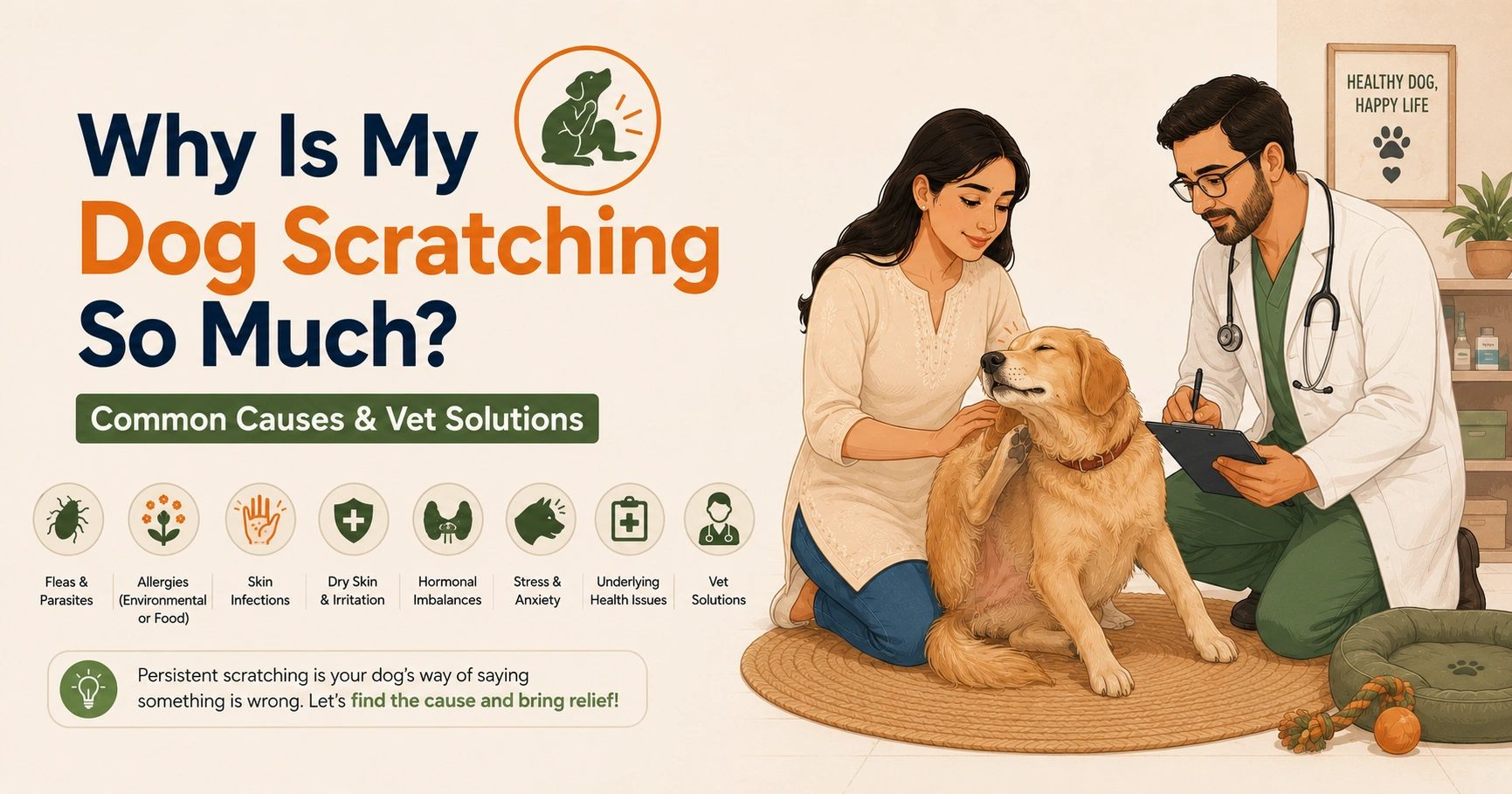
If you're wondering, "Why is my dog scratching so much?" you're asking one of the most searched pet health questions in India. The truth is that fleas are one tiny piece of that puzzle. From allergies and yeast infections to mites and hormonal problems, there may be various reasons why your dog has turned into a furry sandpaper.
The Usual Suspects: Why the Itch Won't Quit
1. Allergies: The Itch You Can't See
If your dog is itching all over its body, what to do depends on the trigger, and allergies are “the usual suspects.”
Dogs can be allergic to pretty much everything: food, pollen, dust mites, mold spores, or even the ultra-fancy, lavender-scented detergent you used to wash their bedding. So, while you're out there politely sneezing your way through spring, your dog is spending allergy season scratching silly, treating their own body like a lottery ticket.
The Critical Reviews in Food Science and Nutrition defines food allergies as immune-mediated reactions following food intake.
Dog food allergy symptoms commonly show up as:
- Itchy paws
- Red belly
- Recurring ear infections
- Face rubbing
Environmental allergies often cause:
- Paw chewing
- Constant licking
- Seasonal flare-ups
- Red, inflamed skin
Generally, owners think that allergies go away on their own. Unfortunately, allergies usually worsen over time if the trigger is not identified.
2. Yeast and Skin Infections: When the Smell Gives It Away
Let's talk about the dog that smells like a forgotten gym bag.
If your dog is scratching consistently and has a strong odour, a yeast or bacterial infection could be the main culprit. India’s tropical climate with warm weather and humidity creates the perfect environment for microorganisms to multiply, which is why skin infections have become extremely common in India.
Dogs with yeast infections often have:
- Darkened skin
- Greasy coat
- Constant paw licking
- Smelly ears
Bacterial infections can lead to:
- Red patches
- Crusty skin
- Hot spots
- Persistent scratching in one area
This is where many pet parents start searching for dog skin allergy treatment at home in India. While oatmeal baths and skin-friendly shampoos may provide temporary relief, infections usually require proper veterinary guidance to resolve completely.
3. Mites: Tiny Bugs, Big Problems
The frustrating thing about mites is that you usually can't see them.
Your dog may look perfectly clean while these silent parasitic mites on dogs are causing relentless itching underneath the surface. Mange mites are one of the most common examples.
"According to an article published in the Organ-Specific Parasitic Diseases of Dogs and Cats, Sarcoptic mange often causes:"
- Intense itching
- Hair loss around ears and elbows
- Scratching that seems impossible to stop
- Red, irritated skin
Demodectic mange may cause:
- Patchy bald spots
- Facial hair loss
- Skin thickening
Because mites are microscopic, many owners assume there are no parasites involved. A simple veterinary skin test is often needed to confirm the diagnosis.
If your dog seems obsessed with scratching despite no visible fleas, mites should always remain on the suspect list.
When to See a Vet
Mild scratching here and there is completely normal.
A dog that scratches occasionally after rolling in the grass is just being a dog. A dog that spends hours constantly licking, chewing, shaking, is trying to tell you something.
You should seek immediate veterinary attention:
- The itching lasts more than two weeks
- The skin becomes red, raw, or infected
- There is a strong smell coming from the skin or ears
- Your dog cannot sleep comfortably
- Paw licking becomes constant
- Allergic reactions such as swelling or hives
If you're unsure whether it's serious, connecting to a vet online can help you determine whether home care is appropriate or whether an in-clinic examination is necessary. It can also help in identifying whether mites, infections, allergies and other conditions are most likely responsible.
Conclusion
The answer to "why is my dog scratching so much?" is rarely as simple as fleas. Allergies, yeast infections, mites, and even hormonal conditions are far more common than most pet parents realise. The good news is that once the cause is identified, treatment becomes much more effective.
If your dog is itching all over its body, what to do starts with finding the reason, not just stopping the scratching. And if the itch refuses to quit, it may be time to book an online vet consultation and get veterinary guidance before a minor problem becomes a much bigger one.