Written by: Anand Sen; Reviewed by: Dr. Saroja Patil (B.V.Sc & A.H, M.V.Sc)
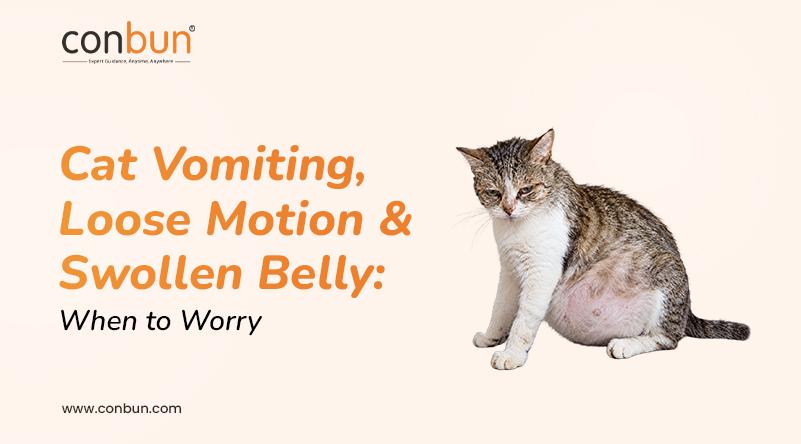
If your cat is vomiting, has loose motion and has a noticeably swollen or painful belly, don’t assume it is simply a stomach upset. This combination may result from dehydration, gastroenteritis, parasites, toxins or an intestinal obstruction that requires urgent treatment.
A single episode of vomiting in an otherwise alert cat should be monitored closely. However, repeated vomiting and diarrhoea in a cat, together with abdominal swelling, deserve veterinary diagnosis. A hard or painful abdomen, severe weakness, repeated unproductive retching, collapse, breathing difficulty, or blood in vomit or stool should be treated as an emergency.
Is Vomiting, Loose Motion and a Swollen Belly in Cats an Emergency?
Every episode of vomiting and diarrhoea in cats is not an emergency, but the combination with abdominal swelling deserves more attention. Vomiting and diarrhoea can lead to dehydration and electrolyte disturbances, while abdominal distension can result from gas, food, fluid, reduced intestinal movement, or a physical obstruction.
Symptoms | What to do |
One mild vomit, normal behaviour | Monitor closely |
Mild diarrhoea, otherwise normal | Contact a vet if persistent |
Repeated vomiting + diarrhoea | Veterinary assessment promptly |
Swollen or painful abdomen | Urgent veterinary assessment |
Hard/distended belly + vomiting | Emergency evaluation |
Collapse, severe weakness or breathing difficulty | Emergency immediately |
Blood in vomit or stool | Prompt veterinary assessment; emergency if severe |
Sometimes, a cat may appear quiet even when seriously unwell, so changes in appetite, behaviour, hydration, and abdominal comfort matter.
Why Is My Cat Vomiting and Having Diarrhoea with a Swollen Belly?
Various conditions can produce this combination, ranging from temporary digestive upset to potentially life-threatening disease.
Gastrointestinal upset
A sudden diet change, food intolerance, eating something inappropriate, or gastrointestinal inflammation can cause vomiting and diarrhoea. Gastrointestinal disease can also cause abdominal pain and bloating.
Parasites or infection
Bacterial, viral, and parasitic infections can affect the digestive tract and cause diarrhoea, vomiting, appetite changes, and abdominal discomfort. Your veterinarian may recommend faecal testing when parasites or infection are suspected.
Foreign body or intestinal blockage
A swallowed object can partially or completely obstruct the digestive tract. Cats are particularly prone to ingesting linear objects such as string, yarn, or dental floss. Obstruction can cause vomiting, appetite loss, diarrhoea, lethargy, abdominal pain, and swelling.
Intestinal blockage is considered a medical emergency because untreated obstruction can damage the intestine and cause perforation or shock.
Toxins
Human medications, toxic plants, household chemicals, and certain foods can cause gastrointestinal signs or more serious illness. Suspected poisoning should be discussed with a veterinarian promptly rather than treated at home.
Other internal diseases
Vomiting may also occur with diseases affecting organs such as the kidneys, liver, pancreas, or intestines. Symptoms alone cannot reliably identify the cause.
When Is a Swollen Belly in a Cat Dangerous?
A swollen belly is more concerning when it develops suddenly, becomes tense or painful, or appears together with vomiting, weakness, breathing changes, or repeated attempts to vomit.
Seek urgent veterinary attention if your cat has:
A suddenly enlarged, hard, or tense abdomen
Abdominal pain or unusual posture
Repeated vomiting
Repeated retching with little or nothing produced
Severe lethargy or weakness
Difficulty breathing
Collapse
Refusal to eat
Straining or inability to pass stool
Abdominal distension can have relatively simple causes, but it can also occur with obstruction or other serious abdominal disease.
Cat Vomiting, Loose Motions and Swollen Stomach: Signs You Should Not Wait
Do not wait for symptoms to become severe. If your cat has repeated or persistent vomiting, frequent watery diarrhoea, black/tarry stool, blood in vomit or stool, a visibly swollen or painful abdomen, pale gums, severe lethargy, breathing difficulty, collapse, or suspected toxin or foreign-body ingestion.
Repeated vomiting and diarrhoea can cause significant dehydration, while gastrointestinal obstruction can become life-threatening. VCA recommends urgent assessment for repeated vomiting, multiple episodes of soft or watery stool, anorexia, lethargy, or blood in the stool; emergency cat care is appropriate when a pet appears severely ill or has difficulty standing or walking.
What Should I Do If My Cat Is Vomiting, Has Loose Motion and a Swollen Belly?
First, assess how your cat is behaving. Check alertness, breathing, gum colour, abdominal appearance, appetite, and how frequently the cat is throwing up or passing stool.
Record the time when the symptoms first appeared and what the vomit or stool looks like. Think about recent diet changes and whether your cat could have accessed medication, plants, chemicals, string, toys, or other unusual objects.
If symptoms are repeated, severe, or accompanied by abdominal swelling or other warning signs contact a veterinarian, severe, or accompanied.
Do not give human anti-diarrheal, pain, or anti-nausea medication. Also avoid relying on home remedies or attempting to treat a potentially obstructed or poisoned cat yourself. Do not try to induce vomiting, as it may lead to the obstruction moving even deeper into the body.
Can a Swollen Belly, Vomiting and Diarrhoea Mean a Blockage?
Yes. Vomiting combined with abdominal swelling and changes in bowel movements can occur with an intestinal obstruction. Cats can swallow objects such as string, yarn, plastic, or small toys. A blockage may cause vomiting, appetite loss, lethargy, abdominal pain, diarrhoea, and distension.
Importantly, passing some stool does not reliably rule out a partial blockage. Intestinal blockage is a life-threatening emergency. If you suspect your cat swallowed a foreign object, contact a veterinarian rather than waiting for it to pass.
How Do Vets Diagnose a Cat with Vomiting, Diarrhoea and a Swollen Belly?
A veterinarian may perform a physical examination, assess hydration, palpate the abdomen, and recommend blood or faecal tests. Depending on the findings, abdominal X-rays or ultrasound may be needed to look for obstruction, intestinal changes, masses, or other abnormalities.
Treatment depends on the underlying cause. It involves fluid and electrolyte replacement medications, treatment for infections, parasites, toxin management and removal of a foreign body. Obstructions require endoscopic or surgical treatment.
How Long Can I Wait Before Taking My Cat to the Vet?
There is no single safe waiting period for every cat.
A single episode in an otherwise bright, comfortable adult cat may sometimes be monitored closely. But repeated vomiting, ongoing diarrhoea, abdominal swelling, weakness, pain, blood, dehydration, or inability to keep food or water down requires prompt veterinary advice rather than prolonged observation.
If your cat is a kitten, elderly, medically vulnerable, or rapidly getting worse, contact a veterinarian sooner.
When Should I Talk to a Vet Online?
An veterinary online consultation can be useful when you're unsure how serious your cat's symptoms are, want to discuss what happened before the vomiting or diarrhoea started, or need help deciding whether an in-person visit is needed.
If you're unsure whether your cat's vomiting, loose motion, or swollen belly can wait, talking to a vet online can help you decide what to do next.
However, don't delay emergency in-person care for a painful or severely distended abdomen, collapse, breathing difficulty, severe weakness, suspected poisoning, or suspected obstruction.
FAQs About Cat Vomiting, Diarrhoea and Swollen Belly
Why is my cat vomiting and having diarrhoea at the same time?
It happens with infections, gastroenteritis, parasites, dietary problems, toxins or other illnesses. If symptoms are repeated or accompanied by abdominal swelling, veterinary assessment is recommended.
Why is my cat's stomach swollen and hard?
A swollen or hard abdomen may have several causes, including intestinal distension, fluid, obstruction, or other abdominal disease. A suddenly swollen and painful abdomen requires urgent veterinary evaluation.
Can diarrhoea cause a swollen belly in cats?
Diarrhoea and gastrointestinal inflammation occur alongside bloating, but significant abdominal swelling should not automatically be attributed to diarrhoea. Other causes, including obstruction, may need to be ruled out.
Can a cat have a stomach blockage and still poop?
Yes. Passing some stool does not reliably exclude a partial obstruction. Vomiting, appetite loss, abdominal pain, lethargy, or swelling after possible foreign-body ingestion should be assessed by a veterinarian.
What should I do if my cat ate something it shouldn't?
Contact a veterinarian promptly and tell them what was eaten, approximately how much, and when. Do not give medication or attempt home treatment unless instructed by a veterinary professional.
Bottom Line: Don't Ignore the Combination
Loose motion or vomiting in cats can sometimes be mild, but adding a painful, swollen, or suddenly distended belly changes the picture.
Watch for red flags and contact a veterinarian when symptoms are persistent, severe, or unusual. If you're unsure, getting veterinary advice early is safer than waiting for your cat to deteriorate.
Conbun can help connect you with a certified veterinarian online when you need help deciding your next step.
Download the app from the Playstore or the App Store and talk to a vet online instantly.