Written by: Anand Sen; Reviewed by: Dr. Harsh
Ashmita, a cat parent from Pune, noticed a tiny bald patch near her Persian cat’s ear one evening.
The patch looked harmless, similar to a scratch from overgrooming or rough play. One week later, the cat developed a red circular rash on her arm.
Cat ringworms are tricky. They spread quietly, survive stubbornly, and often look “too small to matter” in the beginning. Cat owners often mistake it for allergies, dandruff or flea irritation until the fungus has already spread through the home.
Yes. Ringworms are zoonotic, which means even humans can contract ringworms by petting and handling infected animals.
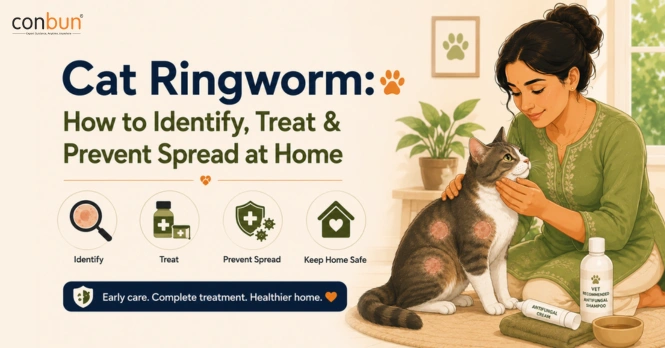
If your cat has unusual hair loss, flaky skin, or circular bald spots, ringworm could be the reason. And early treatment matters, not just for your cat, but for your entire household. In this blog, we’ll learn how to identify, treat and prevent ringworms in cats.
What Is Ringworm in Cats?
Despite the name, ringworm has absolutely nothing to do with worms.
According to Science Direct, a Ringworm is a fungal infection caused by dermatophytes, fungi that feed on keratin found in hair, nails, and skin. In cats, the most common culprit is Microsporum canis, which veterinarians diagnose frequently in kittens, rescue cats, and even the most popular cat breeds like the Persians.
The medical term for the disease is: feline dermatophytosis. The fungus spreads through:
Direct contact with infected animals
Contaminated bedding and furniture
Grooming tools
Shed hair carrying fungal spores
Unfortunately, ringworm spores are incredibly resilient. According to Medical News Today, fungal spores may persist in the environment for months if cleaning is inconsistent.
Cat ringworm is a contagious fungal skin infection that causes circular bald patches, flaky skin, crusting, and broken hairs. It spreads to humans and other animals through direct contact and contaminated surfaces.
Elderly cats, kittens and immunocompromised cats often develop extreme lesions because their immune systems struggle to control fungal growth.
How to Tell If Your Cat Has Ringworm
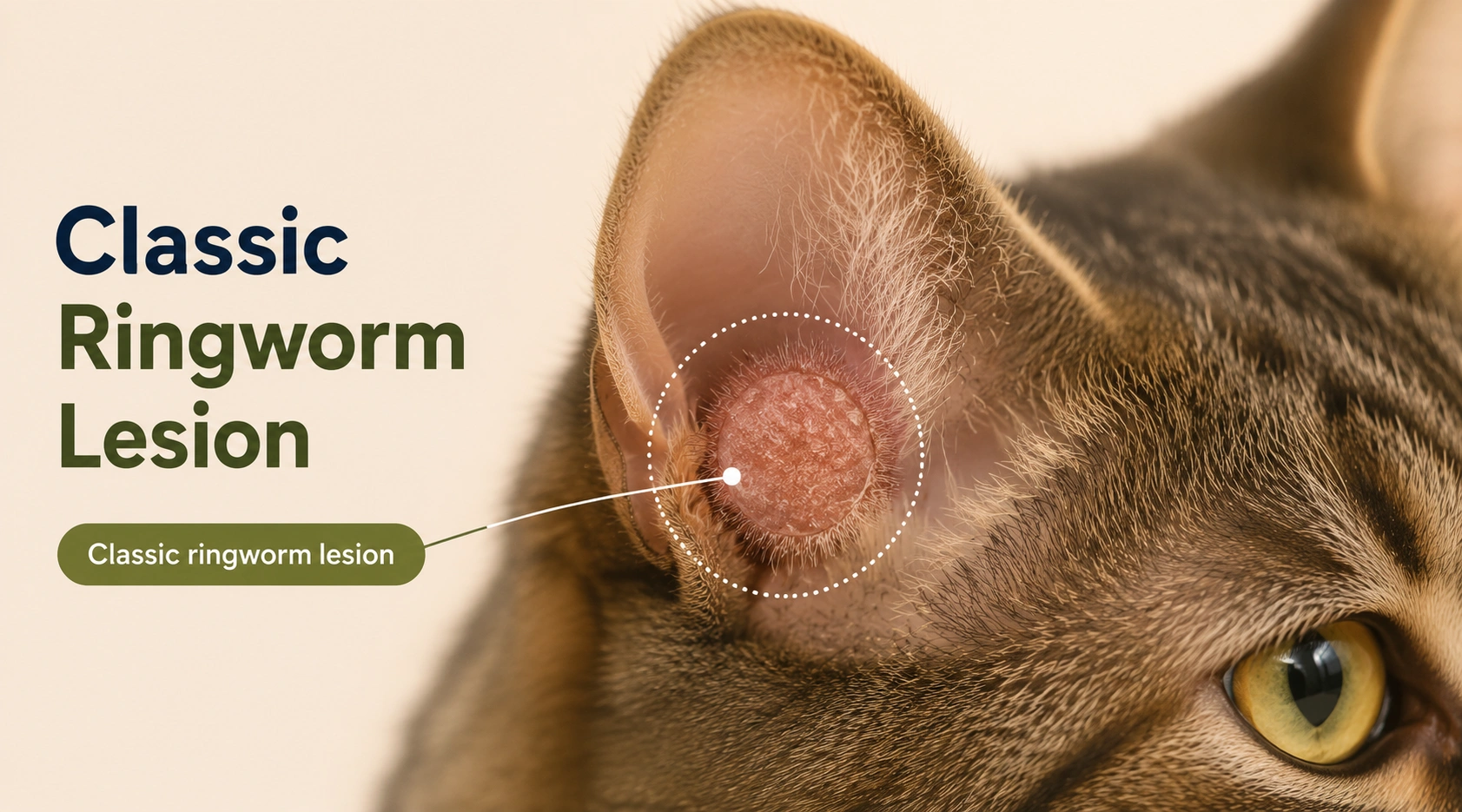
The classic textbook image of ringworm is: a circular bald patch with flaky edges. But it is not always the case with every cat. Some cats develop:
Tiny crusty areas near the ears
Patchy hair thinning
Excess dandruff
Broken whiskers
Rough coat texture
Another frustrating thing about ringworms is that not every cat that is infected develops dramatic symptoms. Some cats turn into “silent spreaders” that shed spores while appearing completely normal.
That is why owners frequently ignore the infection during the early stages. According to an article published in the Journal of Feline Medicine and Surgery, massive fungal load with minimal to no clinical discomfort, turning them into insidious, healthy carriers that can spread the infection
Common signs include:
Circular areas of hair loss
Scaly or crusty skin
Broken hairs around lesions
Mild redness or inflammation
Dandruff-like flakes
Brittle coat texture
Lesions commonly appear on the ears, face, paws and tail base. Popular cat breeds in India, like Persians, often develop widespread hidden infections beneath dense fur.
One particularly difficult aspect of ringworm is asymptomatic carriage. Healthy adult cats may carry fungal spores without visible symptoms. This is extremely common in:
Rescue shelters
Multi-cat homes
The cat appears completely normal, but is continuously contaminating the environment.
Ringworm vs. Other Skin Problems
Ringworm often resembles parasitic infections like Flea allergy dermatitis or Mange. Owners may also confuse it with stress-related overgrooming or food allergies.
Stress overgrooming looks very different from ringworms, as it usually creates smooth bald patches without crusting or flaky borders.
Flea allergy generally affects the lower back and tail region more symmetrically, and Mange causes much more intense itching and inflammation.
But visually? These conditions overlap constantly, making home diagnosis unreliable.
How Vets Diagnose Cat Ringworm
Veterinarians often diagnose ringworm using Wood’s lamp examination, microscopic hair analysis, and fungal culture testing. Fungal culture remains the most reliable diagnostic method.
One of the biggest mistakes owners make is automatically treating every bald patch as ringworm. Veterinarians confirm diagnosis through proper testing because treatment duration and household management depend heavily on accuracy.
Wood's lamp test
Under ultraviolet light, certain strains of Microsporum canis glow yellow-green. But there is an important limitation. Not every strain fluoresces. In addition, a negative result does not rule the disease out.
Fungal culture
A fungal culture is the most accurate test for detecting ringworm infection. Hair and skin samples from affected areas are placed onto special culture media. If fungal colonies grow, the exact dermatophyte species can be identified.
The frustrating part? Results often take 10–21 days
But still, fungal culture remains the gold standard because it confirms whether active infection is truly present.
Microscopic examination
Hairs are examined under a microscope for fungal spores. Faster than culture but less reliable.
Cat Ringworm Treatment: What Actually Works
For most cats, both topical therapy and antifungal medication are required for successful ringworm treatment. Environmental cleaning is highly important as fungal spores can survive for months on household surfaces.
Ringworm treatment in cats frustrates owners because improvement looks deceptively slow. Hair starts regrowing. The skin may look cleaner, and cat owners generally assume that it’s cured.
But fungal spores may remain active beneath the surface.
That is why ringworm treatment usually continues:
6–12 weeks
Sometimes longer in severe cases
The most commonly prescribed antifungal medication in cats is itraconazole.
According to the Journal of Feline Medicine and Surgery, itraconazole is one of the safest and most effective systemic antifungal medications for the treatment of ringworm in cats.
Other medications sometimes used include:
Terbinafine
Griseofulvin
Griseofulvin is an older and less commonly used medication preferred today due to its side effects, especially in:
Kittens
Pregnant cats
Immunocompromised animals
Topical treatment is specifically important in the case of ringworms as it reduces environmental contamination. Vets commonly recommend:
Miconazole-chlorhexidine shampoo
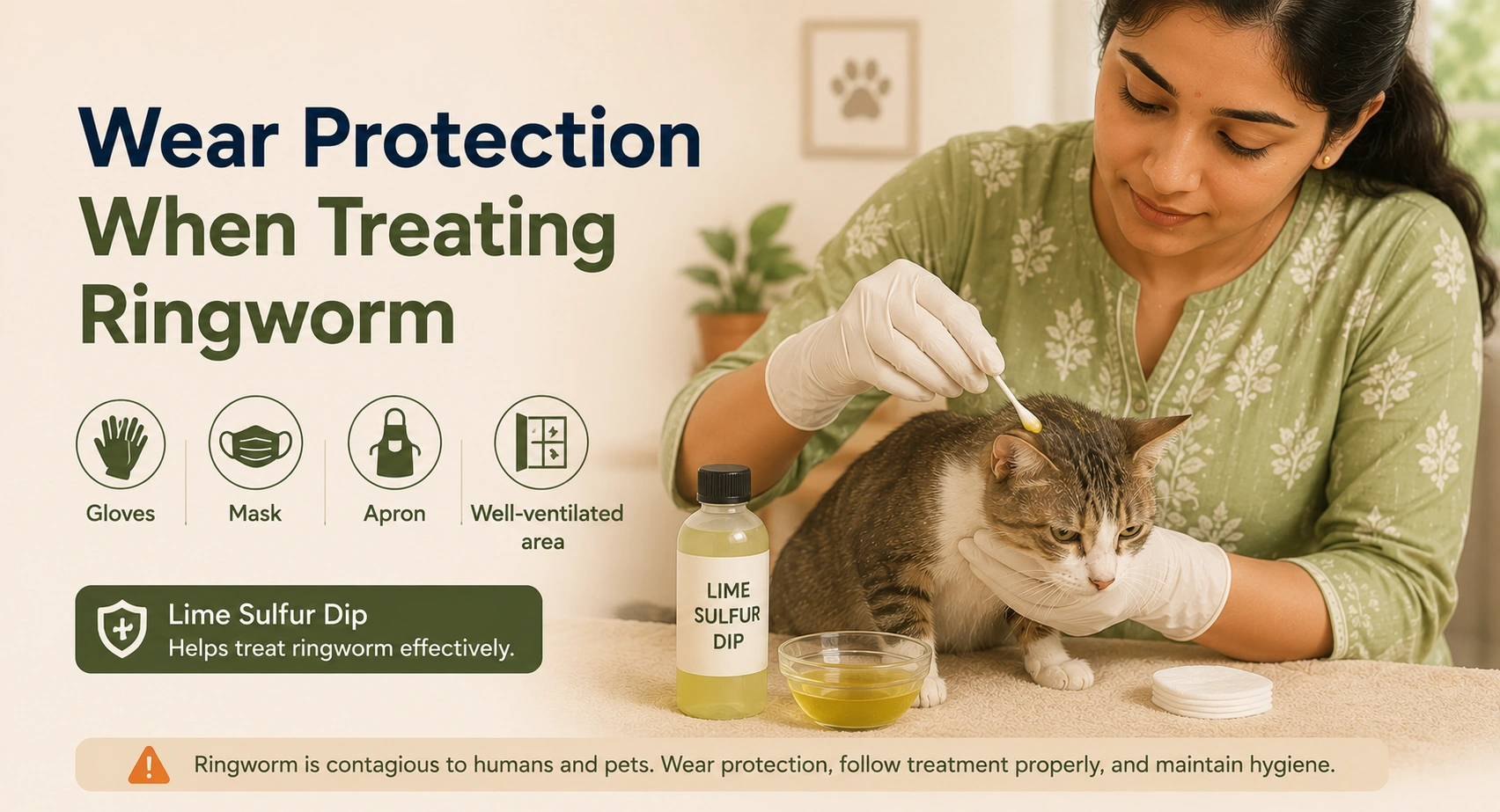
Lime sulfur dips
Antifungal creams for local lesions
Lime sulfur is extremely effective but famously unpleasant. It smells strongly, stains fabrics yellow, and makes owners question many life decisions temporarily.
Still, it works remarkably well if diluted correctly, and it matters greatly because concentrated solutions may irritate feline skin.
Apart from medication, nutrition also influences how cats recover from ringworms. Cat health and nutrition are interconnected. While a good diet cannot cure a ringworm infection on its own, it directly supports the cat's immune system and maintains a strong skin barrier, which prevents the fungus from taking hold or spreading.
When Does Home Treatment Not Work?
Home treatment is not always enough in all situations. Rush your pet to the vet in these cases:
Widespread lesions covering large areas of the body
Kittens or immunocompromised cats
Infection has spread to multiple pets or humans in the household
No improvement after 3–4 weeks of consistent treatment
Is Cat Ringworm Contagious? What You Need to Know
Yes, very contagious. As stated earlier, cat ringworm is a zoonotic infection. It spreads between animals and humans.
Children, elderly individuals, and people with weakened immune systems are especially vulnerable because their skin barrier and immune response are less effective against fungal spores.
In humans, ringworm usually appears as:
Red circular rashes
Itchy patches
Dry flaky skin
Unfortunately, many families only realise the cat has ringworm after someone in the home develops symptoms first.
Dogs can also catch ringworm from infected cats through:
Shared bedding
Grooming tools
Direct contact
One major misconception is that a cat stops being contagious once the bald patches improve visually.
That is not true. According to VCA Animal Hospitals, cats may continue shedding fungal spores long after visible healing begins.
This is why incomplete treatment creates recurring infections in Indian households.
How to Stop Ringworm from Spreading at Home
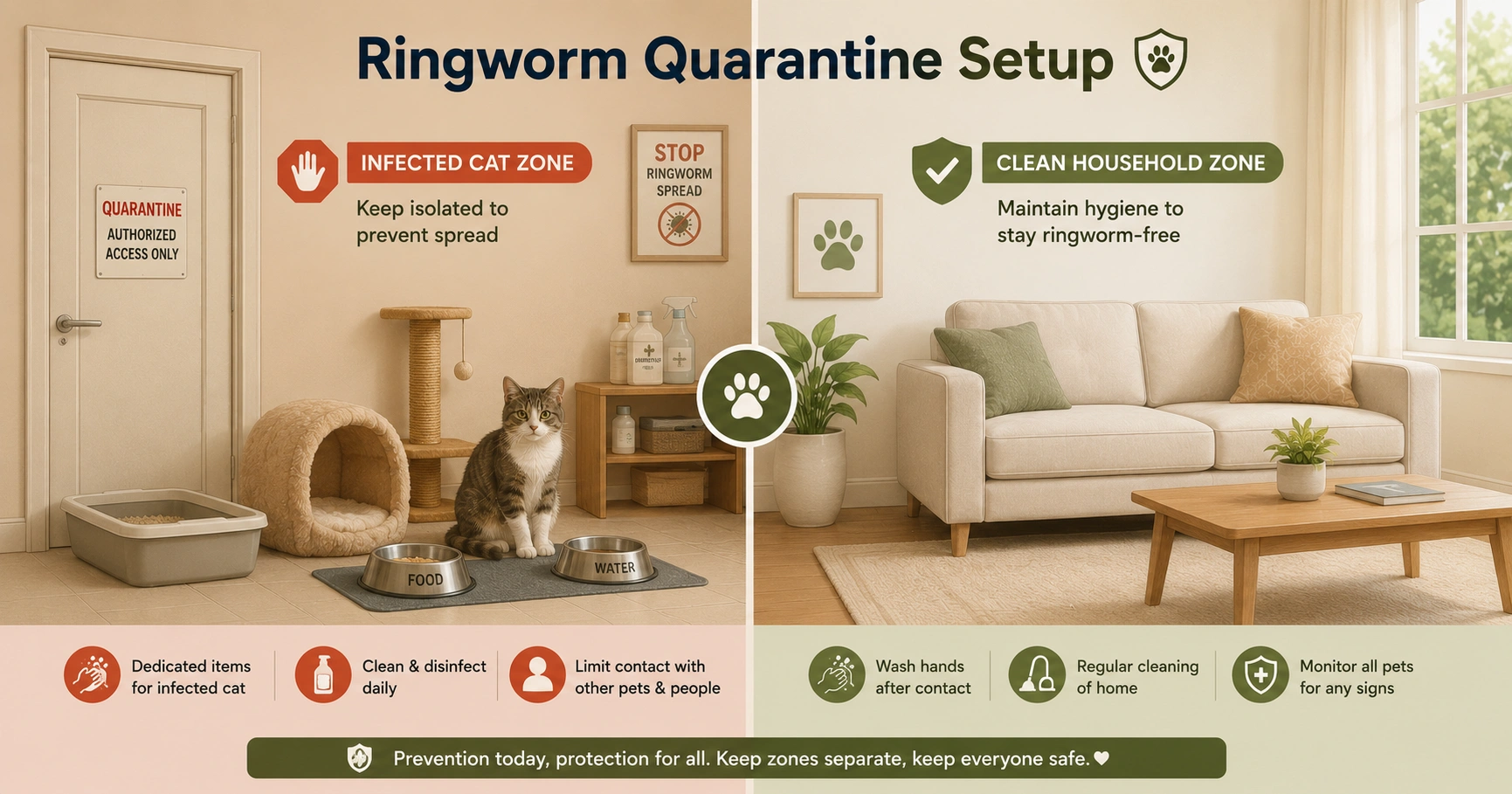
Ringworm control requires isolation, environmental cleaning, frequent vacuuming, hot-water washing, and strict hygiene habits. Treating the cat without cleaning the home usually leads to reinfection.
The most effective thing you can do initially is: isolate the infected cat. This sounds emotionally harsh, especially in affectionate multi-cat households, but quarantine dramatically reduces fungal spread.
Keep the cat:
In one easy-to-clean room
Away from children and other pets
Off beds and sofas temporarily
The second battle is environmental cleaning. And honestly? This is usually harder than medicating the cat itself.
Ringworm spores survive on surfaces for months. Carpets, curtains, scratching posts, and soft furniture become fungal storage zones if cleaning becomes inconsistent.
Veterinary hygiene recommendations strongly support:
Daily vacuuming
Hot-water washing above 60°C
Bleach disinfection for hard surfaces
A diluted bleach solution (1:10 ratio with water) remains one of the most effective household disinfectants against dermatophyte spores.
Soft items that cannot be cleaned properly may need temporary removal or sealing.
Hygiene habits matter too:
Wash your hands after handling the cat
Avoid sharing grooming tools
Wear gloves during topical treatment
Change clothes after intensive cleaning sessions
Owners often focus entirely on the visible lesions while forgetting that the environment is still contaminated, which is ringworms is the most frustrating cat disease.
Ringworm in Kittens: Special Concerns
Ringworm develops more aggressively in kittens than in healthy adult cats because their immune systems are not fully mature.
Veterinarians commonly diagnose severe infections in:
Rescue kittens
Shelter cats
Pet shop kittens
Crowded breeding environments
Lesions spread faster, fungal shedding increases, and secondary bacterial infections may appear more easily.
Long-haired kittens, like Persians, may develop widespread hidden infections beneath dense fur. By the time visible patches appear externally, fungal contamination may have already advanced.
Treatment principles remain similar:
Oral antifungal medication
Topical therapy
Environmental cleaning
Important vet insight: Medication doses must be adjusted carefully according to body weight and age.
Certain antifungals, especially griseofulvin, are not considered safe in very young kittens because of potential toxicity risks.
One question veterinarians constantly hear is: “Can ringworm go away on its own?” Technically, yes, some mild adult cases self-resolve over several months. But during that time:
The cat remains contagious
The environment becomes contaminated
Humans and pets remain exposed
Treatment is always the safer option.
How Long Does Cat Ringworm Recovery Take?
Most cats begin showing visible improvement within 4–6 weeks. But true recovery often takes:
2–4 months
Sometimes longer in severe household outbreaks
Several factors prolong recovery:
Delayed treatment
Poor environmental cleaning
Multiple infected pets
Incomplete medication courses
Immunocompromised cats
One common mistake that many cat owners make is that they stop treatment once the hair regrows. Visible improvement does not always mean fungal clearance.
Veterinarians frequently recommend continuing treatment until fungal cultures return negative. This prevents frustrating reinfection cycles later.
When to See a Vet vs. When an Online Consult Is Safe
Online veterinary appointments are reasonable for:
Mild single lesions
Early symptom assessment
Follow-up guidance
Questions about cleaning or medication use
You can now instantly connect with a vet in 30 seconds through the Conbun app. Talk to a vet online to get professional veterinary advice on how you can manage ringworms.
But in-person veterinary care is strongly recommended if:
Lesions spread rapidly
Multiple pets are affected
Humans develop symptoms
A kitten is infected
No improvement occurs after several weeks
Because several skin diseases mimic ringworm visually, proper diagnosis matters before long-term treatment begins.
As several pet skin diseases mimic ringworm visually, proper diagnosis matters before starting long-term treatment.
Conclusion
Cat ringworm is common, contagious, and frustratingly persistent, but it is absolutely manageable with early diagnosis and consistent treatment.
The biggest mistake owners make is underestimating how easily fungal spores spread through the home. Treating the cat alone is never enough. Successful recovery depends on:
Oral medication
Topical therapy
Environmental cleaning
Patience
Most importantly, do not ignore small bald patches or flaky skin changes simply because the cat “seems fine.” Ringworm often starts quietly long before it becomes obvious.
And when treated early, recovery becomes much easier for both your cat and your household. Get pet health advice online on Conbun to learn about prevention, management tips and treatment advice.
FAQs ( People Also Asked )
Q.1) Can I diagnose cat ringworm at home?
Answer: No. You can observe symptoms at home, but a proper clinical diagnosis is not possible. Overgrooming, skin allergies and mange look similar. A fungal culture would be a reliable way to diagnose ringworm. If in doubt, an online vet consultation is a good first step.
Q.2) What kills ringworm spores in the home?
Answer: Diluted bleach (1 part bleach to 10 parts water) is the most effective disinfectant against ringworm spores, especially on hard surfaces. Hot water washing and vacuuming are enough for soft surfaces. Steam cleaning is also good for pets.
Q3) Can ringworm go away on its own in cats?
In healthy adult cats, mild ringworm may resolve on its own in 2-4 months without treatment. However, the cat remains contagious during this time and can spread the infection to other pets and humans. Treating promptly is a safer choice.
References
Aneke, C. I., Otranto, D., & Cafarchia, C. (2018). Therapy and antifungal susceptibility profile of Microsporum canis. Journal of Fungi, 4(3), 107. https://www.mdpi.com/2309-608X/4/3/107
Fletcher, J. (2019). Ringworm: How long is it contagious? Medical News Today, https://www.medicalnewstoday.com/articles/326971
Frymus, T., Gruffydd-Jones, T., Pennisi, M. G., Addie, D., Belák, S., Boucraut-Baralon, C., ... & Horzinek, M. C. (2013). Dermatophytosis in cats: ABCD guidelines on prevention and management. Journal of feline medicine and surgery, 15(7), 598-604. https://journals.sagepub.com/doi/pdf/10.1177/1098612x13489222
Weir, M. (2025). Ringworm in Cats. VCA Animal Hospitals. https://vcahospitals.com/know-your-pet/ringworm-in-cats