.webp)
Written by: Anand Sen; Reviewed by: Dr. Vinod Kumar Jain
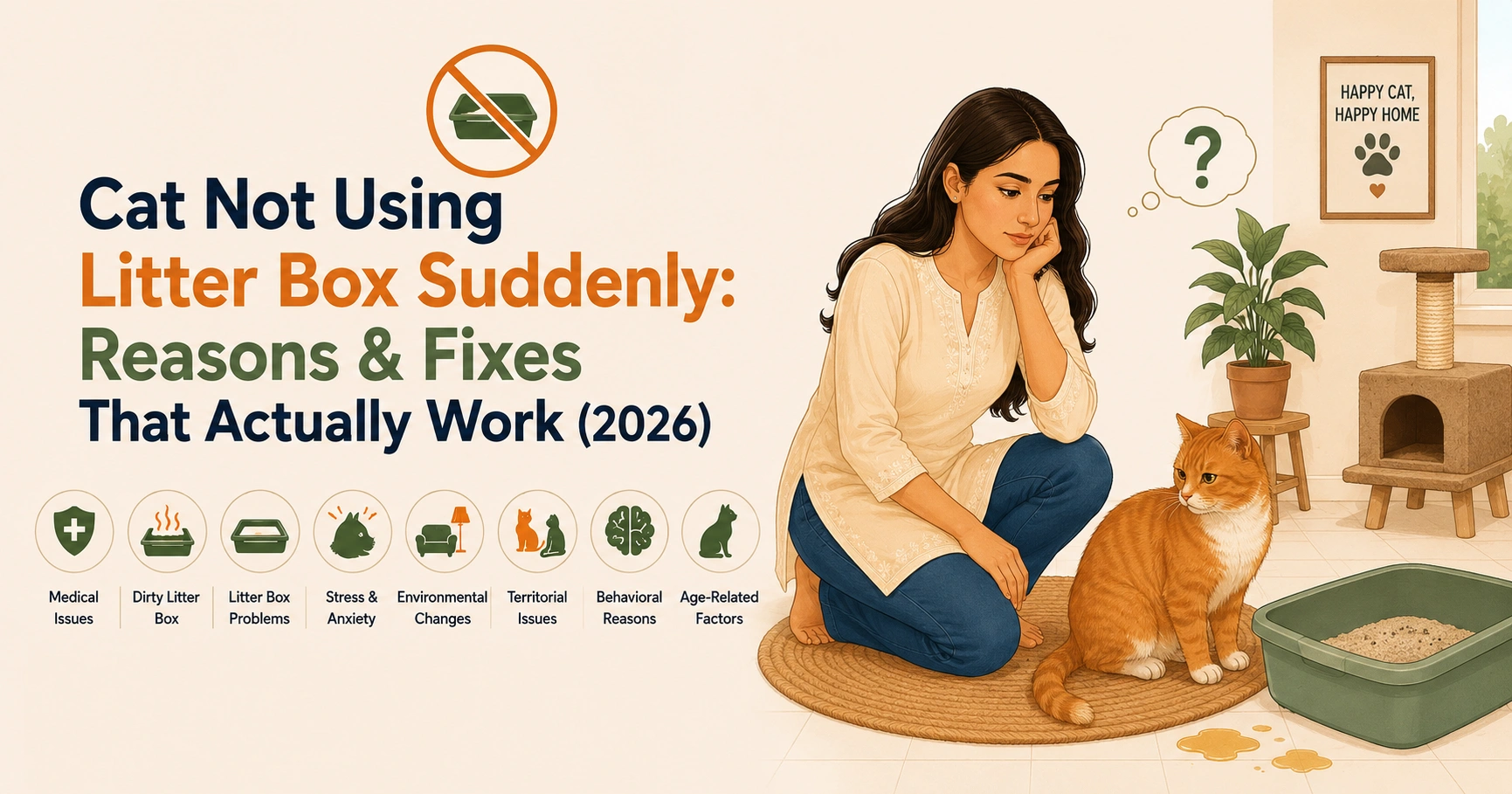
If your cat has suddenly stopped using the litter box, the cause is usually a medical problem, stress, territorial behaviour, a litter box issue, or an age-related condition. Cats rarely avoid the litter box out of spite. They are just responding to discomfort, anxiety, or an environmental change that makes the litter box unsafe or unpleasant to use.
Before assuming that your cat is being stubborn, dramatic or plotting revenge on you because you bought the wrong treats, here’s an important truth you need to know: cats don't usually stop using the litter box without a reason. In fact, sudden litter box avoidance is often one of the earliest signs that something is physically or emotionally wrong. The trick is figuring out what your cat is trying to tell you.
What Are The Reasons Your Cat is Avoiding the Litter Box?
1. Medical Problems: The First Thing Every Cat Owner Should Rule Out
If you’re wondering why your cat is suddenly not using the litter box?, rule out medical problems before assuming it to be a behaviour problem.
One of the most common causes of litter box problems in cats is feline lower urinary tract disease (FLUTD), a group of conditions that affects the bladder and urethra. According to the American Veterinary Medical Association, cats with FLUTD may strain to urinate, urinate more frequently, cry while using the litter tray, or even avoid it completely because they associate it with pain. Urinary tract infections, bladder stones, and chronic kidney disease in cats can create similar symptoms.
Constipation is another overlooked issue. If passing stool becomes painful, a cat may start avoiding the litter tray and seek softer surfaces instead. Cats with arthritis may also avoid using a litter box. Imagine trying to climb to the 5th floor using stairs to use the toilet, when every joint hurts.
Veterinarians take sudden litter box problems seriously due to these issues. The cat isn't being difficult. They are saying "something hurts, and I don't know how to explain it."
2. Your Cat Hates Something About the Litter Box
According to the Journal of the American Veterinary Medical Association, litter box issues in cats are also associated with breed and personality.
Cats judge you and everything you do. Some would probably leave a one-star review if they could.
Cats have borderline OCD. So, an unclean litter box is one of the fastest ways to trigger accidents. Many cats prefer a freshly scooped litter box and may protest if it becomes too soiled. Others object to scented litter, new litter textures or even the location of the box itself.
That washing machine beside the litter box? To your cat, it might sound like a jet engine starting unexpectedly. A box placed near food bowls can also become a problem because cats naturally prefer to keep eating and toileting areas separate.
The size of a litter box matters too. Turning around may feel too awkward if a litter box is too small. So, your cat may choose a different location entirely.
The good news? If you identify the trigger, environmental litter box issues are often easier to fix than medical ones.
3. Stress, Anxiety, and Territory Problems
Cats love routine. Alter their routine by five minutes, and you’ll see a Julius Caesar uttering "Et tu, Brute?" ("You too, Brutus?)
A new pet or a baby, guests, moving homes, renovation, or even a different work schedule can lead to enough stress to trigger litter box problems in cats. In fact, even seeing a stray cat from the balcony can create territorial anxiety, making your cat poop or pee outside the litter box.
When cats feel emotionally unsafe, their bathroom habits change, and multi-cat households add another layer of complexity. One cat may be quietly blocking access to another’s litter box, creating enough stress that the other cat starts urinating elsewhere.
It’s important to distinguish between litter box avoidance and urine marking. Cats spray small amounts of urine on vertical surfaces to mark their territory. True litter box avoidance involves full urination or defecation outside the box.
4. Age-Related Changes in Senior Cats
Senior cats play by a slightly different rulebook.
As cats age, they become more vulnerable to conditions that affect litter box use. If a cat is not using a litter box anymore, joint problems could be a reason. Arthritis can make climbing into the box painful. Vision decline makes it harder to locate the box, especially at night. According to the Journal of Feline Medicine and Surgery, cognitive dysfunction, often compared to age-related dementia in humans, can cause confusion and forgetfulness. They may forget the location of the litter box.
Kidney disease is another common issue, especially in older cats. These cats often urinate in larger volumes more frequently, making accidents more likely if they cannot reach the litter box in time.
Reduced mobility combined with chronic illness implies that some senior cats genuinely want to use the litter tray but face physical limitations in doing so.
What You Can Do at Home Right Now
First, resist the urge to punish your cat. Yelling, spraying water, or rubbing their nose in accidents will not solve the problem. It actually increases stress and makes the situation worse.
Instead, offer them an extra litter box, especially in multi-cat homes. Scoop boxes daily and clean accidents using enzymatic cleaners, which are specifically designed to remove urine odours completely. Monitor how often your cat is urinating and watch closely for straining, blood in the urine, or repeated trips to the litter tray.
If you have a kitten, reviewing resources on How to litter train a kitten may help reinforce good habits early. Similarly, understanding the basics of Training a cat can make environmental management much easier.
The goal is to identify the reason behind the behaviour, not simply clean up the evidence.
Your Cat Isn't Being Naughty - They're Sending an SOS
A litter box accident is often a symptom, not the problem itself.
One of the biggest advantages of an online vet consultation is that it helps determine how urgent the situation is before it becomes a crisis. If your cat is straining to urinate, visiting the litter box repeatedly, passing blood, becoming constipated, or suddenly changing bathroom habits, a veterinarian can help assess whether immediate treatment is needed.
This is especially important for male cats. A urinary blockage can become life-threatening within hours and should always be treated as an emergency.
For less urgent concerns, an online consultation can help identify whether the issue is more likely medical, behavioural, or environmental. Sometimes a few targeted questions reveal a trigger owners never considered.
Is your cat straining to urinate or peeing outside the box? Instead of spending hours scrolling through conflicting advice, book a veterinary doctor online and get professional guidance tailored to your cat's situation.
Conclusion
If your cat has suddenly stopped using the litter box, it's not acting out of spite or stubbornness. Medical conditions, stress, litter box preferences, territorial issues, and age-related changes are far more common explanations.
Early identification of the trigger makes it easier to prevent accidents from becoming a long-term behavioural problem. If the behaviour continues or if you’re noticing signs of illness or pain, waiting should not be an option. Your cat may be trying very hard to tell you something important.