
- Home
- About Us
- Petcare
- Become a Consultant
- Blog
- Terms and Conditions
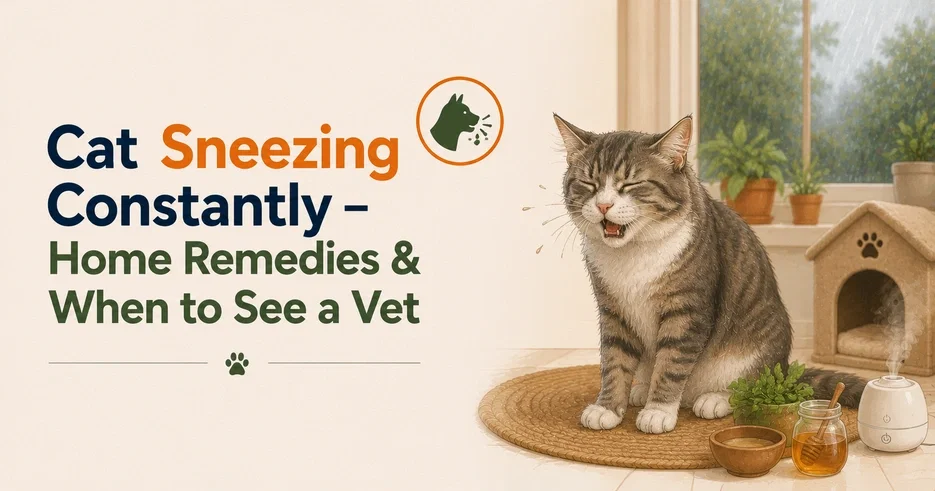
Cat Sneezing Constantly - Home Remedies & When to See a Vet
Written by: Anand Sen; Reviewed by: Dr. Iswar Anand Senapati
One sneeze? Cute. Two sneezes? Probably dust. But if your cat is sneezing throughout the day like a little malfunctioning sprinkler, it could be worrying. Is it a simple irritation, a cold, or something more serious? Can you manage it at home, or does it need veterinary attention?
Constant sneezing in cats is commonly triggered by environmental allergens (dust or smoke), upper respiratory infections, or dental disease. While mild cases can be managed with safe home remedies like humidifiers, persistent sneezing accompanied by lethargy, loss of appetite, or discharge requires veterinary intervention.
Why Is My Cat Sneezing Constantly?
Upper Respiratory Infections Are the Most Common Cause
If your cat is sneezing a lot, an upper respiratory infection is often the first suspect.
According to the American Association of Feline Practitioners (AAFP) and BMC Veterinary Research, feline herpesvirus (FHV-1) and feline calicivirus are among the most common causes of feline respiratory disease worldwide.
These infections spread rapidly between cats and are often referred to collectively as “cat flu.”
Symptoms typically include:
- Sneezing
- Watery eyes
- Nasal discharge
- Mild fever
- Congestion
- Reduced appetite
Because cats rely heavily on their sense of smell to eat, congestion can make food much less appealing.
Because cats rely heavily on their sense of smell to eat, congestion can make food less appealing, contributing to anorexia in cats.
One particularly terrifying fact is that many cats that get infected with feline herpesvirus carry the virus for life. Stressful events such as relocating homes, boarding, a new pet, or illness can trigger flare-ups resulting in recurring sneezing episodes.
When owners search for cat sneezing causes, respiratory infections consistently rank among the most common explanations.
Allergies, Dust, and Household Irritants
Sometimes the problem isn’t inside your cat; It’s floating around them.
Things that irritate a cat’s sensitive airways:
- Dust
- Incense sticks
- Room fresheners
- Cigarette smoke
- Perfumes
- Cleaning products
- Scented cat litter
In these cases, cats may experience sneezing without appearing particularly sick.
Unlike respiratory infections, irritation-related sneezing has a different pattern. It occurs after cleaning, during certain seasons, or when specific products are used around the home. Some owners notice their cat sneezing more frequently after household renovations, and some during outdoor activities and high dust exposure.
Environmental allergies are less common, but they do occur. If your cat is sneezing constantly but acting normally, environmental irritation becomes a possibility worth considering.
In such cases, the simplest solution can be just to improve ventilation or remove potential triggers from a cat’s environment.
Dental Disease and Nasal Problems Can Trigger Sneezing
Not every sneeze starts in the nose.
Dental disease, particularly infections affecting the upper tooth roots, extends into the nearby nasal passages and triggers chronic sneezing.
Other symptoms of dental problems include:
- Bad breath
- Difficulty eating
- Facial discomfort
- Excessive drooling
Other possible causes of chronic sneezing in cats include nasal polyps or foreign material trapped in the nasal cavity. A small piece of grass, plant debris or other material may cause persistent irritation.
One clue is one-sided symptoms. If your cat is consistently producing discharge from only one nostril or if it seems uncomfortable on one side of the face, it is most probably a localised oral problem.
Although uncommon, a cat sneezing blood is not a wait-and-watch situation. It indicates significant inflammation, trauma, foreign bodies, or more serious nasal disease requiring immediate veterinary evaluation.
Safe Home Remedies That May Help
Many owners search for a safe cat sneezing remedy to treat, but home care cannot cure infections. It makes your cat more comfortable.
You can use a humidifier or allow your cat to sit in a warm place or a steamy bathroom for a few minutes to help loosen nasal secretions. Encouraging hydration is equally important because well-hydrated cats tend to recover more comfortably from respiratory illnesses.
Gently wipe away discharge with a soft damp cloth to keep airways clear. If appetite decreases, offer warmed wet food with a strong aroma to encourage eating.
Avoid essential oils, human cold medications and over-the-counter nasal sprays. Many products that seem harmless can be toxic to cats.
Maintaining good health habits, like following a proper cat vaccination schedule can reduce the risk of deadly diseases.
Additionally, practising effective cat grooming basics can help support overall respiratory health and reduce disease risk.
Warning Signs You Should Never Ignore
|
Symptom |
Risk Level |
Required Action |
|
Occasional sneezing, but the cat is otherwise healthy |
Low Risk |
|
|
Clear nasal and ocular discharge |
Medium Risk |
Monitor for 24-48 hours. If it persists, talk to a vet. |
|
Green or yellow discharge from nose/eyes |
High Risk |
Indicates a bacterial infection. See a Vet Immediately. |
|
Loss of appetite |
Critical Risk |
Medical emergency! Schedule a vet appointment instantly |
|
Lethargy, fever, or difficulty breathing |
Critical Risk |
Serious risk of complications. Immediate veterinary attention required. |
Some sneezing is annoying. Some sneezing is an emergency.
Warning signs
Seek veterinary attention if you notice:
- Difficulty breathing
- Open-mouth breathing
- Severe lethargy
- Thick yellow or green nasal discharge
- Significant appetite loss
- Sneezing lasting more than 7 days
If your cat is not eating for more than a day, you should seek veterinary attention.
Ear mites in cats can also lead to constant sneezing, bacterial and yeast infections and severe complications like permanent ear damage or ear loss. Getting veterinary attention promptly can be valuable.
Is It Just a Sneeze or Something More Serious? Get Expert Advice From Home
One challenge with feline respiratory problems is that many conditions look remarkably similar during the early stages. A mild viral infection, environmental irritation, dental disease, or chronic inflammatory condition may all begin with the same simple symptom: sneezing.
An online vet consultation can help determine whether your cat's symptoms appear mild and manageable or whether further investigation is needed. By reviewing videos, photos, appetite changes, discharge characteristics, and breathing patterns, a veterinarian can provide respiratory health guidance and help identify warning signs early.
Online consultations are particularly useful when symptoms are new, mild, or confusing. However, emergencies require immediate in-person care. Difficulty breathing, refusal to eat for more than 24 hours, severe lethargy, persistent nasal discharge, or rapidly worsening symptoms should never be delayed.
If your cat continues sneezing despite home care, professional assessment can provide clarity and peace of mind. Consider talking to a veterinarian on Conbun before a minor issue becomes a bigger health problem.
Conclusion
Occasional sneezing is a normal part of being a cat. Constant sneezing is not. Upper respiratory infections, environmental irritants, dental disease, and nasal problems are among the most common causes.
While supportive home care may improve comfort, it cannot replace proper diagnosis and treatment. If your cat's sneezing persists, worsens, or is accompanied by breathing difficulty, discharge, fever, or appetite loss, veterinary advice should be sought promptly.

Recent Post
Popular Categories
Subscribe Us for Best Deals
Download App