.webp&w=384&q=75)
Choosing the Right Fish Species for Your Home and Lifestyle
Written by: Anand Sen; Medically Reviewed by: Dr. Vinod kumar Jain (BVMS)
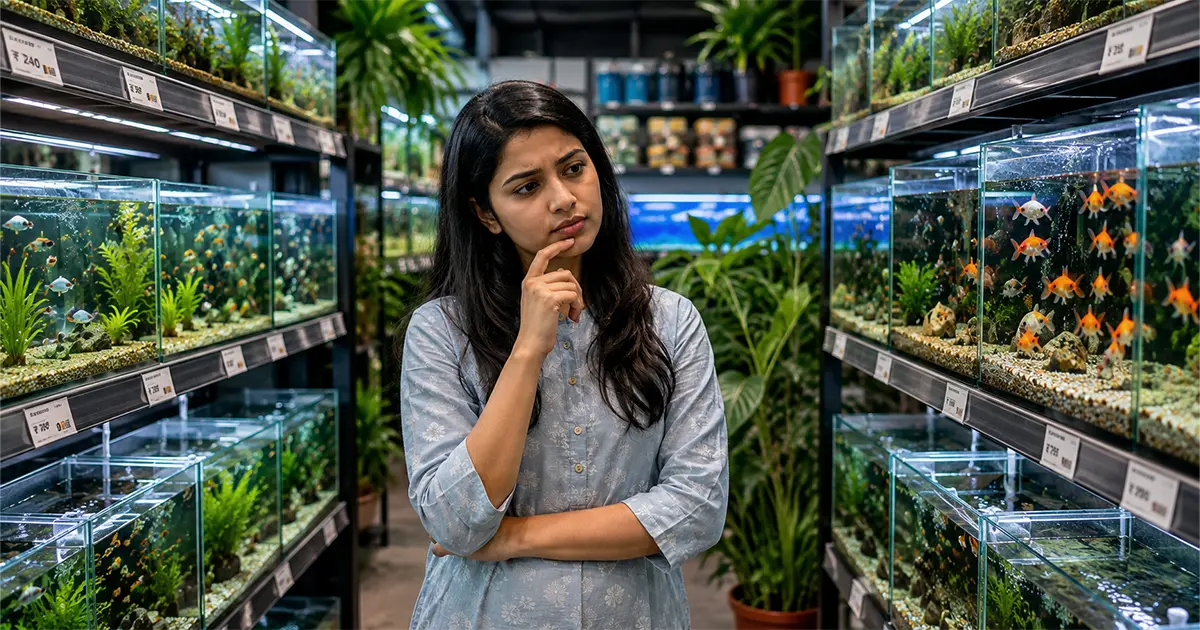
The best fish for beginners is not necessarily the most colourful or smallest species. Choosing a pet fish should start with your aquarium experience, budget, size, available time, water requirements, temperament, diet and compatibility. Some beginner-friendly fish are relatively adaptable, while others need a larger aquarium, specialised equipment, stable water parameters or advanced husbandry.
Select the aquarium first and then choose fish whose adult requirements fit it. This approach supports better welfare and makes aquarium maintenance easier. Before buying, consider the fish’s adult size, lifespan, social needs, feeding requirements, and expected fish ownership cost.
What Should You Consider Before Choosing a Fish?
Choosing the right fish means matching its needs to your home and routine. Start with fish tank size. When choosing a fish tank size, adult body size, swimming behaviour, group requirements and filtration capacity all matter. Beginner-friendly species may be easier to manage. Intermediate and advanced species demand precise water conditions with specialised care.
You should also consider the amount of time you can invest in regular maintenance, water quality testing and regular water changes. Your budget should cover filter, aquarium, heater, lighting, water conditioner, food, replacement equipment and veterinary care.
Choose a fish by matching its adult size, behaviour, water requirements, diet, and social needs with your aquarium and experience level. A species that requires more space, equipment, or maintenance than you can provide is not a suitable choice.
Best Fish Species for Beginners
Fish | Experience | Space | Key considerations |
Betta | Beginner | Small-to-moderate | Usually housed individually; needs suitable filtration and temperature |
Guppies | Beginner | Moderate | Social and can reproduce quickly |
Platies | Beginner | Moderate | Peaceful and relatively adaptable |
Zebra danios | Beginner | Moderate | Active schooling fish |
White cloud mountain minnows | Beginner | Moderate | Prefer groups and cooler conditions |
Corydoras | Beginner–Intermediate | Moderate | Social bottom-dwellers needing suitable companions |
Tetras | Beginner–Intermediate | Moderate | Many species need groups and stable water |
Goldfish | Beginner–Intermediate | Large | Produce substantial waste and need considerable space |
The above are some examples of aquarium fish for beginners. However, they are not maintenance-free pets. Even easy fish to care for need proper filtration, water quality, nutrition, appropriate stocking and routine observation. Goldfish deserve particular attention due to their eventual size and waste production.
Small Aquarium? Choose Carefully
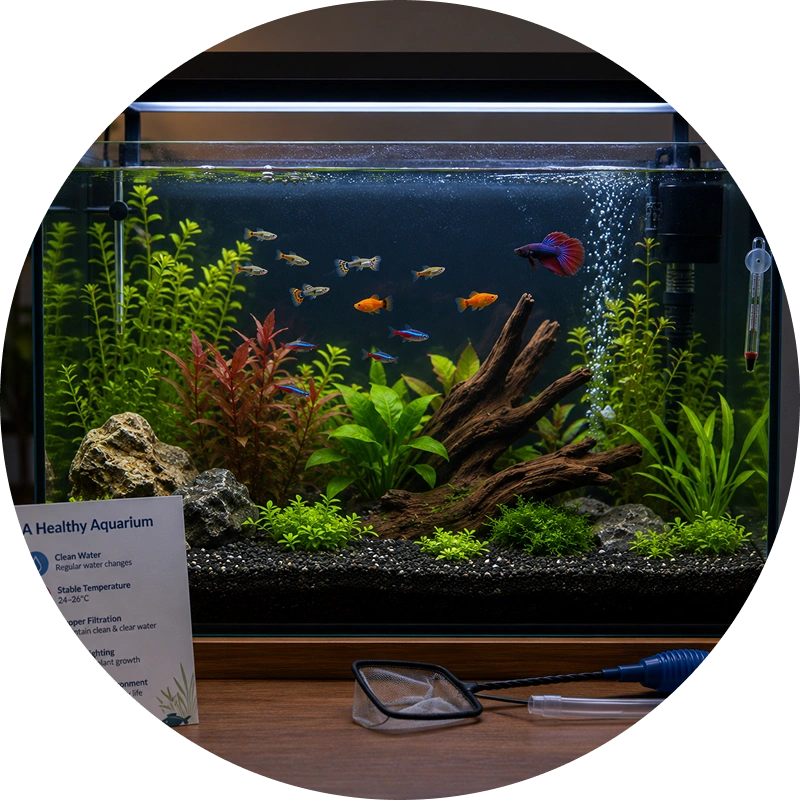
A small tank does not automatically mean that it is suitable for every small fish. Adult body size, territorial behaviour, swimming behaviour, filtration, water stability and stocking density all matter. Small aquariums experience rapid changes in temperature and water chemistry. This makes consistent maintenance essential.
Some smaller setups may accommodate a betta fish or certain small rasboras, provided the aquarium meets that species’ requirements. Some small schooling species may also be appropriate when kept with suitable groups and adequate space. Avoid treating fish bowls as permanent housing.
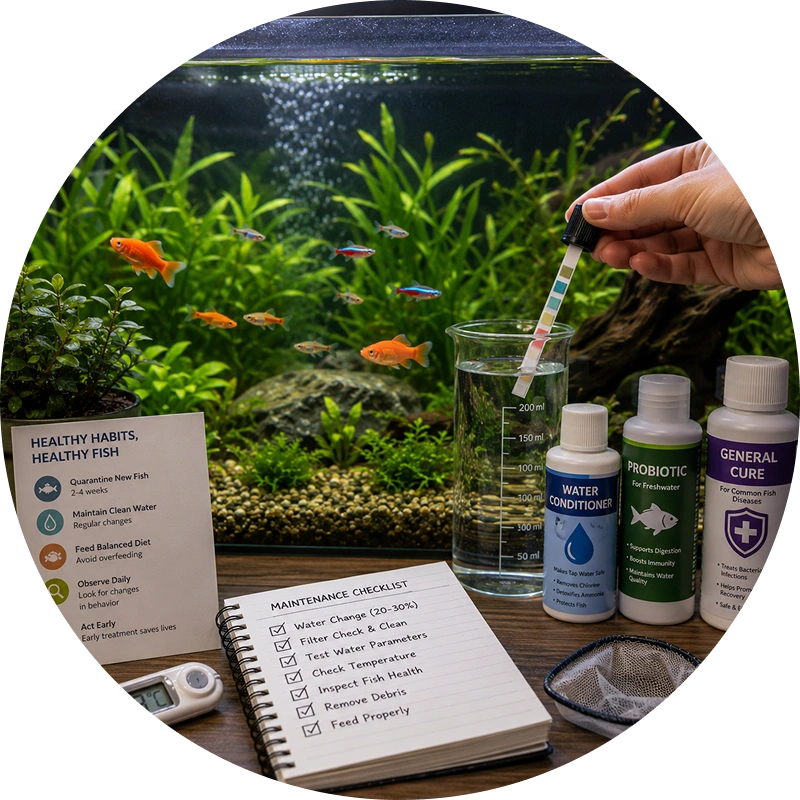
Tank cleaning and maintenance is an essential part of fish care. Unclean tank or poor water quality can lead to stress or anxiety and can even lead to a fish swimming upside down. Read our detailed guide to learn about fish grooming and tank care.
Veterinary Tip: Select the aquarium first, then choose a species whose adult requirements fit it. Never choose a fish based only on its juvenile size at the shop.
Freshwater vs Marine Fish: Which Is Better for Beginners?
Freshwater | Marine |
Generally simpler starting point | More complex water chemistry |
Often lower setup cost | Usually higher equipment costs |
Wide range of beginner species | More specialised livestock |
Generally easier maintenance | Requires greater experience |
Freshwater fish species like Guppies, Cherry Barbs and Betta fish are generally a more accessible starting point because many freshwater systems are simpler to establish and maintain than marine aquariums. However, individual freshwater fish still have specific requirements for water chemistry, temperature, space, diet and compatibility.
Freshwater fish are generally better for beginners because many freshwater systems are simpler to establish and maintain than marine aquariums. However, the right choice still depends on species, aquarium size, equipment, water parameters, and the owner’s ability to provide regular care.
Which Fish Can Live Together?
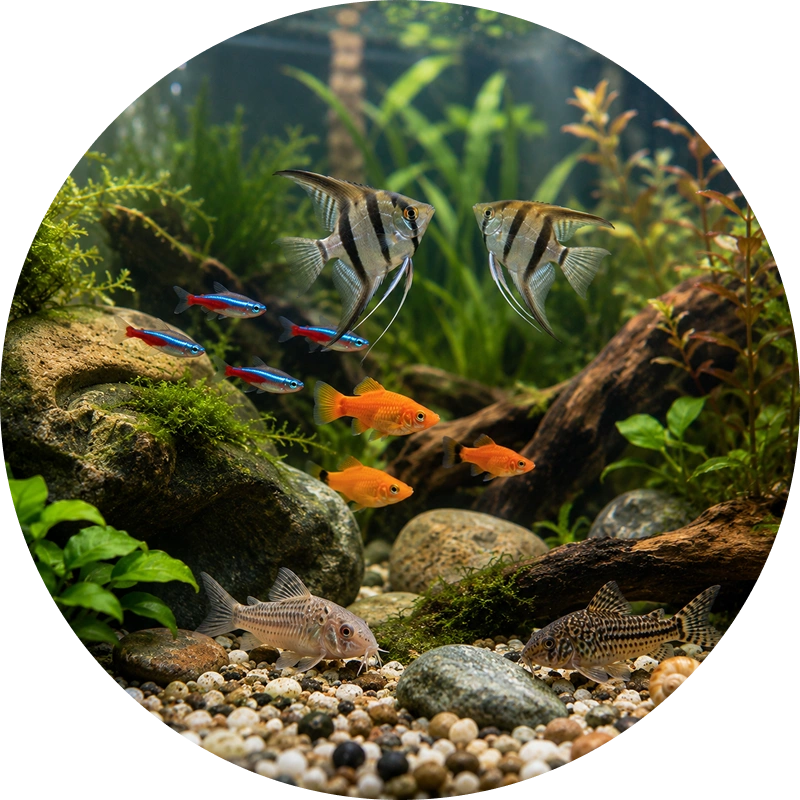
Fish compatibility depends on adult size, temperament, swimming level, temperature, pH preferences, dietary needs, schooling behaviour, and territoriality. Avoid mixing aggressive species with peaceful fish, combining incompatible temperature requirements, overstocking or keeping schooling fish individually when they require companions.
Similarly sized fish are not automatically compatible. A peaceful community aquarium must contain species with broadly compatible environmental and behavioural requirements.
Compatible aquarium fish should have similar environmental requirements and appropriate temperaments. Monitor temperature, pH, and salinity regularly as incorrect water parameters may lead to ammonia poisoning in fish.
Also check adult size, swimming size, schooling requirements, and feeding behaviour before purchasing fish rather than after conflicts begin.
How Much Time and Money Does Each Fish Require?
Easy fish does not mean “no maintenance”. Consider the initial aquarium setup, monthly food, water, electricity, and conditioners, filter media, water testing, replacement equipment and veterinary care.
Care level | Typical requirements |
Beginner | Basic equipment and routine maintenance |
Intermediate | More precise water or dietary requirements |
Advanced | Specialised equipment, larger systems, or complex husbandry |
Larger or specialised species can require significantly greater long-term investment. Research total care requirements rather than judging affordability from the purchase price alone.
Fish Species Beginners Should Research Carefully
Some commonly sold fish may be unsuitable for inexperienced owners or small aquariums. Large plecos, common goldfish in undersized tanks, large cichlids, marine species, fish with specialised diets, and aggressive or highly territorial species can require substantial knowledge, space, or equipment.
These fish are not inherently bad pets. The concern is whether their fish care requirements exceed what a first-time owner can reasonably provide.
Veterinary Tip: Research adult size and lifetime requirements, not the size of the fish when you see it at the shop.
Need Help Choosing the Right Fish? Conbun Can Help
Professional guidance can help with species selection, aquarium setup, water quality, feeding, compatibility, behaviour, and existing health concerns. An Aquatic Vet Online or Fish Health Consultation Online can provide guidance when a fish develops unusual symptoms.
You can also see a fish vet online through an online vet consultation. However, keep in mind that an online pet care app can complement, but never replace, appropriate aquarium husbandry and species research.
Conclusion
Choose based on adult requirements, tank size, experience, maintenance time, compatibility, and budget. Prioritise water quality and welfare over appearance. Choosing the right fish species from the beginning makes aquarium ownership more rewarding and reduces preventable health and husbandry problems.
Frequently Asked Questions
Q1. What is the best fish for beginners?
Ans. Betta, guppies, platies, Zebra danios and some tetras are good beginner choices when their specific housing, water, social and dietary requirements are met. No fish is completely maintenance-free. Thus, optimum aquarium care is essential.
Q2. Which fish is easiest to take care of?
Ans. Betta fish are often considered approachable for beginners, but they still need appropriate tank size, filtration, temperature, nutrition, and water quality. Ease of care depends on the setup and the owner's ability to meet species-specific requirements.
Q3. What fish are suitable for a small aquarium?
Ans. Some bettas and carefully selected small species may suit smaller aquariums, depending on their minimum requirements. Tank volume, filtration, swimming behaviour, social needs, and adult size should always be considered. Avoid using bowls as permanent housing.
Q4. How to choose fish for an aquarium?
Ans. Choose the aquarium first, then select species based on adult size, water parameters, temperament, swimming space, social behaviour, diet, and maintenance requirements. Research compatibility and stocking before purchasing fish to avoid overcrowding or unsuitable combinations.
Q5. Which fish can live together peacefully?
Ans. Peaceful community species with compatible temperature, water chemistry, adult size, diet, and social requirements can often live together. Always research individual species before combining them, because temperament and compatibility can vary even among fish commonly described as peaceful.
Table of Content
- What Should You Consider Before Choosing a Fish?
- Best Fish Species for Beginners
- Small Aquarium? Choose Carefully
- Freshwater vs Marine Fish: Which Is Better for Beginners?
- Which Fish Can Live Together?
- How Much Time and Money Does Each Fish Require?
- Fish Species Beginners Should Research Carefully
- Need Help Choosing the Right Fish? Conbun Can Help
- Conclusion
- Frequently Asked Questions

Rohit Jangid
Categories