Written by: Anand Sen; Reviewed by: Dr. Vinod Kumar Jain
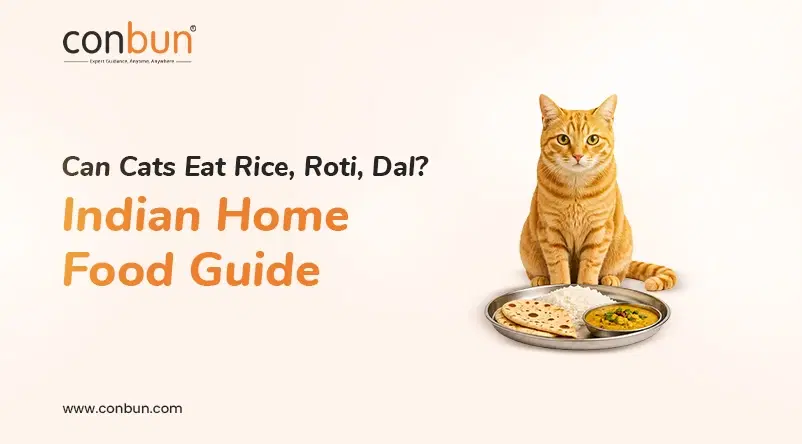
Every cat owner in India can relate to this. You sit down with a plate of rice, dal, roti, and sabzi, and suddenly your cat comes out of nowhere just as Dr Strange appears out of the “Sling ring”. One hopeful stare turns into a tiny bite. Then another. Before long, you're asking yourself: “Can I feed my cat the same food my family eats?” Can Cats Ear Rice Roti & Dal?
Yes. Cats can safely eat small amounts of plain rice, roti, and cooked dal occasionally, but these foods should never replace meat-based nutrition. Cats require nutrients such as taurine that are found primarily in animal tissues. Too much carbohydrate-heavy human food can lead to nutritional imbalances over time.
Can Cats Eat Rice, Roti, and Dal?
It’s a fair question. Rice, roti and dal are staple food items for us, but cats aren’t tiny humans. In fact, cats are obligate carnivores, which means their nutritional needs revolve around meat to a great extent. This changes the answer dramatically.
1. Can Cats Eat Rice? Yes, But It Shouldn't Be the Main Course
Rice can be regarded as the most cat-friendly member of the Indian dinner plate.
Plain cooked rice is generally safe for cats. In fact, it is even included in bland diets recommended by veterinarians for short-term digestive upset. It is easy to digest and unlikely to cause gastrointestinal distress if offered in small amounts.
The catch? Rice does provide calories, but very little of what cats actually need. Unlike humans, cats cannot rely on carbohydrates as a major source of nutrition. Their bodies are evolved to obtain nutrients from animal protein sources.
If a cat fills up on rice, it eats less of the foods that it requires, such as meat-based diets, rich in protein and taurine. This leads to nutritional imbalances, which in turn lead to a range of other problems.
Also, not all rice dishes are created equal. Biryani, pulao and spicy leftovers should always stay off the menu. The oils, spices, onions, and garlic commonly used in these dishes can be harmful.
Think of it as a side dish, not the star of the show.
2. What About Roti and Chapati?
Roti falls into the same "safe but unnecessary" category.
Small pieces of plain chapati are not toxic to cats, and many cats seem to be oddly fascinated by the texture. Don’t panic if your cat steals a tiny piece from your plate.
But nutritionally, roti is similar to rice. It doesn't bring much to the table for a cat. A cat's body is not designed to process carbohydrates as efficiently as humans'. According to an article published in Veterinary Sciences, evolutionary events adapted cat metabolism and physiology to a carnivore diet strictly composed of animal tissues and led to unique digestive and metabolic peculiarities of carbohydrate metabolism.
While wheat-based foods do provide energy, they don’t have the protein and amino-acid profile cats require to thrive.
Additionally, there are certain types of roti that deserve extra caution. Buttered rotis, garlic naan, stuffed parathas, and heavily seasoned flatbreads contain ingredients that can upset your cat's digestive system or even become toxic.
The bottom line? Treat roti as a snack, not a dietary requirement.
3. Can Cats Eat Dal?
Dal is where many well-meaning cat parents get confused.
Because lentils contain protein, it's easy to assume they're a healthy option. And technically, plain cooked dal is not toxic to cats. It also contains fibre, which can support digestion in small amounts.
However, plant protein is not the same as animal protein. According to the Journal of Animal Science and Biotechnology, cats require taurine, an essential amino acid found naturally in meat. This EAA is absent from lentils. A cat cannot meet its nutritional requirements through dal, no matter how much it enjoys the taste.
Additionally, too much dal can also lead to bloating, gas, or digestive upset.
Another major issue is how dal is prepared in Indian homes. Tadka often contains garlic, onions, spices, and excess salt, all of which are generally avoided in feline diets.
A spoonful of plain dal once in a while is fine. Building a diet around it is definitely not.
Indian Foods That Are Safe vs Foods That Are Dangerous
Quick Reference: Indian Foods Safe vs. Dangerous for Cats
|
Food Item |
Safety Status |
Critical Notes |
|
Plain Boiled Chicken |
Safe |
Boneless and unseasoned only. |
|
Boneless Cooked Fish |
Safe |
Must be boneless and cooked plain. |
|
Eggs |
Safe |
Must be fully cooked. |
|
Plain Rice |
Safe |
Safe in moderation; grain itself isn't a mistake. |
|
Plain Roti |
Safe |
Safe in small amounts, but low nutritional value. |
|
Plain Curd (Dahi) |
Safe |
Safe only in very small quantities. |
|
Garlic & Onions |
Dangerous |
Highly Toxic. Damages red blood cells; common in curries. |
|
Grapes & Raisins |
Dangerous |
Highly Toxic. Can cause acute kidney failure. |
|
Chocolate |
Dangerous |
Toxic to feline systems. |
|
Spicy Curries |
Dangerous |
Contains harmful oils, chilli, and aromatics. |
|
Fried Foods |
Dangerous |
High fat content causes severe digestive upset. |
|
Excessive Dairy |
Dangerous |
Most cats are lactose intolerant; causes stomach distress. |
Offering a roti or rice is not the biggest mistake. It is usually the seasoning. A plain piece of chicken is very different from chicken cooked in a rich curry filled with oil, chilli and onion.
If you’re in doubt, remember this rule: if it's heavily seasoned, it's probably not ideal for cats.
What Should Cats Actually Eat Every Day?
Cats thrive on diets built around animal protein. Good cat nutrition & health begin with understanding that cats require meat-based nutrition, not vegetarian nutrition.
Whether you choose commercial complete cat food or balanced homemade meals, the focus should always be on providing adequate protein, taurine, vitamins, and minerals. This is why conversations about Wet vs dry cat food are often more important than debates about rice or roti.
If you're interested in vet-approved home-made recipes, make sure they're formulated specifically for feline needs. Is Your Cat Secretly Running the Kitchen? Ask a Vet Before Changing Their Diet.
Cats are surprisingly persuasive. One dramatic meow and suddenly you’ve questioned years of nutritional science by handing over a piece of chapati.
The problem is that nutrition-related issues often develop slowly. Weight loss, poor coat quality, digestive problems, and nutrient deficiencies may not become obvious until months later.
Connecting to a vet online can help answer questions about homemade diets, picky eaters, weight management, food transitions, and digestive concerns. Whether you're trying to move your cat from home food to a complete diet or simply want reassurance about what's safe to share, personalised guidance can prevent mistakes before they become health problems.
For owners who prefer home-prepared meals, speaking with an online pet nutritionist or veterinarian can be especially valuable. Every cat is different, and a feeding plan that works for one may not work for another.
Sometimes the smartest thing you can feed your cat isn't another snack; it's professional advice.
Conclusion
Rice, roti and dal are generally safe for cats in small amounts, but they should not replace meat-based nutrition. Cats need taurine and other essential nutrients, which are primarily found in animal protein, not human staples.
The biggest risks, however, come from spices, onions, garlic and rich curries rather than the food itself. If you’re unsure whether your cat's diet is balanced, it's always worth seeking veterinary guidance before turning your feline into a full-time dinner guest.