Written by: Anand Sen; Reviewed by: Dr. Vinod Kumar Jain (B.V.Sc & A.H)
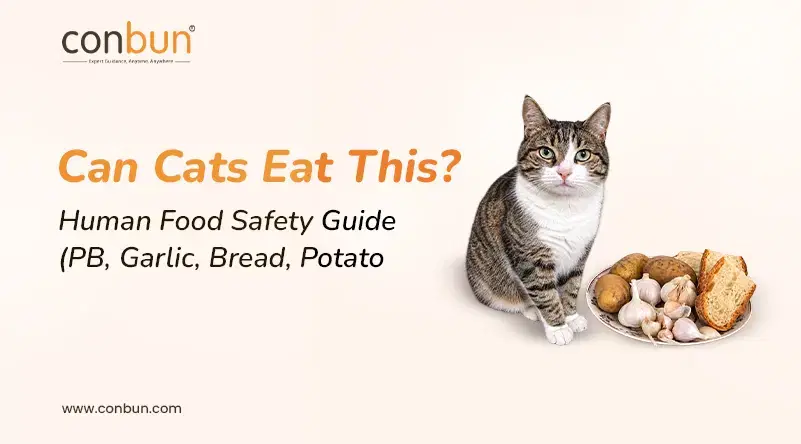
Some human foods are safe for cats in small amounts, while others can be harmful or toxic. Never give garlic to cats because it can damage red blood cells and cause potentially serious anaemia.
Plain, fully baked bread is generally safe in small amounts, while plain cooked potato may be tolerated occasionally. Peanut butter is generally safe but should not be given as a regular treat because it offers little nutritional benefit, and some products contain excess fat, salt, sugar, spicy or unsafe ingredients.
“Safe” is a tricky word. Safe is anything that a cat can eat in limited amounts and it will not have any adverse health effects. It does not necessarily mean nutritionally necessary. Cats are obligate carnivores and should primarily receive their nutrition from a complete and balanced feline diet.
If your cat has already eaten something questionable, an online vet consultation can help you determine whether you should monitor your cat or seek immediate veterinary care.
Can Cats Eat Peanut Butter?
A tiny amount of peanut butter is generally safe for cats, but it is best to avoid it.
Peanut butter is not necessary for cat nutrition. It can add unnecessary calories and fat to their diet. Some products also contain significant amounts of salt, sugar, or other additives.
The ingredients matter, particularly if your cat has eaten a flavoured or processed peanut butter product.
Some peanut butter products can contain xylitol, although this ingredient is less common in peanut butter than it is in some other sugar-free products. While xylitol is not as dangerous in cats compared to dogs, experts recommend keeping sugar-free products away from cats as a precaution.
VCA recommends checking peanut butter labels for potentially dangerous additives.
What if my cat ate peanut butter?
Check:
How much was eaten
The ingredient list of the product
Whether it contained chocolate (toxic to cats) or another potentially harmful ingredient
Whether your cat develops cat vomiting, diarrhoea, lethargy, or other unusual signs
A tiny amount of plain peanut butter is unlikely to cause poisoning, but it is not a recommended regular treat.
Can Cats Eat Garlic?
No. Cats should not eat garlic. Garlic is highly toxic to cats and can damage red blood cells, potentially causing hemolytic anaemia.
Garlic belongs to the Allium family, which also includes onions, chives, and leeks. According to the Merck Veterinary Manual, cats are particularly susceptible to Allium toxicity. Importantly, garlic does not become safe when it is cooked or dried.
Veterinary toxicology guidance reports poisoning after cats consume raw, cooked, dehydrated, or granulated garlic and onions. Concentrated forms such as garlic powder can be especially concerning.
What if my cat ate garlic?
If your cat has eaten garlic or food containing garlic:
Identify the food and ingredients.
Estimate how much your cat consumed.
Note when the ingestion occurred.
Contact a veterinarian for individualised advice.
Don't wait for symptoms if a significant exposure is suspected.
Possible signs include weakness, lethargy, poor appetite, pale or yellow gums, rapid breathing, dark urine, vomiting, and collapse. Signs can be delayed: Merck Veterinary Manual notes that clinical anaemia or Hemolysis may take several days to appear after Allium exposure.
If you suspect that your cat has eaten garlic, onion, chives, or another Allium-containing food, contact a veterinarian immediately. A cat can initially appear normal while red blood cell damage is developing.
Can Cats Eat Bread?
Most healthy cats can eat a small amount of plain, fully baked bread occasionally, but bread is not necessary in a cat's diet.
If you give your cat bread, keep it plain and fully baked. Avoid bread containing potentially harmful ingredients such as:
Garlic
Onion
Raisins
Chocolate
Excessive salt
Other potentially toxic ingredients
What about raw yeast dough?
Cats should never eat raw yeast-containing dough.
Raw dough can continue fermenting inside a cat’s stomach. Because of the presence of yeast, the dough can expand while producing ethanol. This may result in stomach distension, alcohol intoxication, and metabolic abnormalities.
Can cats eat raw bread dough? No.
If your cat has eaten raw yeast dough, contact a veterinarian promptly rather than waiting for symptoms.
Can Cats Eat Potatoes?
Plain, fully cooked potato is tolerated better by cats in small amounts, but raw, green, or sprouted potatoes should be avoided.
If potato is offered as an occasional food, it should be:
Fully cooked
Plain
Unseasoned
Given in a small amount
Free from butter, cream, sauces, garlic, and onion
Avoid processed potato foods such as fries, chips, and heavily seasoned mashed potatoes. These can contain excessive fat, salt, or potentially toxic ingredients.
Raw or green parts of potato plants can contain higher concentrations of glycoalkaloids such as solanine, so they should not be offered to cats. If your cat eats a substantial amount of raw or green potato, contact your veterinarian.
Can cats eat cooked potatoes? Small amounts of plain, fully cooked potato may be tolerated, but potatoes should never replace a nutritionally complete cat diet.
Human Foods Cats Should Never Eat
If you’re an Indian cat owner, you may wonder: can cats eat rice, roti, dal? “Human food” isn't one safety category. Some foods may be tolerated in tiny amounts, while others can cause serious poisoning.
Cats should not be given:
Garlic, onions, and chives
Chocolate
Alcohol
Caffeinated products
Grapes and raisins
Raw yeast dough
Foods containing potentially toxic ingredients
Veterinary guidance specifically identifies garlic and onions as hazards for cats and also recommends avoiding foods such as chocolate, grapes, raisins, alcohol, and xylitol.
If you're unsure about a particular food, check all the ingredients rather than judging its safety by the main ingredient alone.
Quick Reference Table: Quick Guide: Can Cats Eat These Human Foods?
Human food | Safe for cats? | Main concern | What to know |
Peanut butter | Best avoided | Fat, salt, sugar, additives | Check ingredients carefully |
Garlic | No - toxic | Red blood cell damage/anemia | Can damage red blood cells |
Plain bread | Small amounts | Unnecessary calories; ingredients | Plain, fully baked bread only |
Plain cooked potato | Small amounts | Preparation and glycoalkaloids | Plain cooked potato differs from raw or green potato. |
My Cat Ate Something Unsafe - What Should I Do?
If you suspect that your cat has eaten something harmful:
Identify the food item. Keep the packaging to study the ingredient list.
Estimate the amount. Even an approximate quantity can help in the assessment of the exposure.
Note when it happened. Timing can affect treatment decisions.
Contact a veterinarian. Don't wait for symptoms if the food may be toxic.
Do not attempt home remedies. Don't induce vomiting or give medication unless specifically instructed by a veterinarian.
Veterinary toxicology treatment depends on the substance, amount, timing, and condition of the animal.
When Should I Talk to a Vet Online?
An online veterinary consultation can be useful when your cat has eaten unfamiliar food, you're unsure whether an ingredient is dangerous, or you need help deciding how urgently your cat should be evaluated.
Not sure whether what your cat ate is dangerous? Talk to a vet online with Conbun for guidance on what to do next. Download the app and schedule an online vet appointment instantly.
For severe symptoms, suspected poisoning, seizures, collapse, breathing difficulty, or another obvious emergency, seek immediate in-person veterinary care rather than relying on an online consultation.
The Bottom Line
Garlic is toxic to cats and should be avoided completely. Small amounts of plain bread or cooked potato may be tolerated, while peanut butter is best avoided. If your cat has eaten a potentially harmful food, talk to a veterinarian promptly.
Worried about something your cat ate? Talk to a vet online with Conbun to get personalized guidance on the next step.
Frequently Asked Questions
Can cats eat human food?
While some human foods can be tolerated occasionally in small amounts, cats should primarily receive a complete and balanced feline diet.
Can cats eat peanut butter?
A tiny amount of plain peanut butter is unlikely to be toxic, but it is generally unnecessary and best avoided.
Can cats eat garlic?
No. Garlic is toxic to cats and can cause potentially serious red blood cell damage and anaemia.
Can cats eat bread?
Plain, fully baked bread can generally be eaten occasionally in small amounts, but raw yeast dough is unsafe.
Can cats eat potatoes?
Small amounts of plain, fully cooked potato may be tolerated. Avoid raw, green, or sprouted potatoes.
References
Hayes, C. (2024). Garlic and Onion (Allium spp) Toxicosis in Animals. Merck Veterinary Manual. https://www.merckvetmanual.com/toxicology/food-hazards/garlic-and-onion-allium-spp-toxicosis-in-animals?utm
Schmid. R. (2026). Bread Dough Poisoning in Cats. https://vcahospitals.com/know-your-pet/bread-dough-poisoning-in-cats