.webp)
Written by: Anand Sen; Reviewed by: Dr. Saroja Patil
Vets rely heavily on accurate symptom history to diagnose pets quickly and correctly.
Your dog is not eating. Your cat is hiding, or your pet rabbit is inactive. Nothing dramatic, but something feels off. You walk into a consultation (or open a chat), and within seconds, the vet starts asking questions.
Not random questions. Very specific ones. Because here’s something most pet parents don’t realise:
Diagnosis begins before the examination; it begins with what you say.
According to the book Common Clinical Presentations in Dogs and Cats by Ryane E. Englar, DVM, DABVP:
A structured clinical history is one of the most critical components of veterinary diagnosis, with many practitioners attributing 60-80% of the diagnostic process to this phase. It is one of the main components that directs clinical decision-making.
However, in a country like India, where consultations are often short and caseloads are high, clarity becomes even more important, especially in the case of veterinary telemedicine.
You don’t need to say everything. You just need to say what matters.
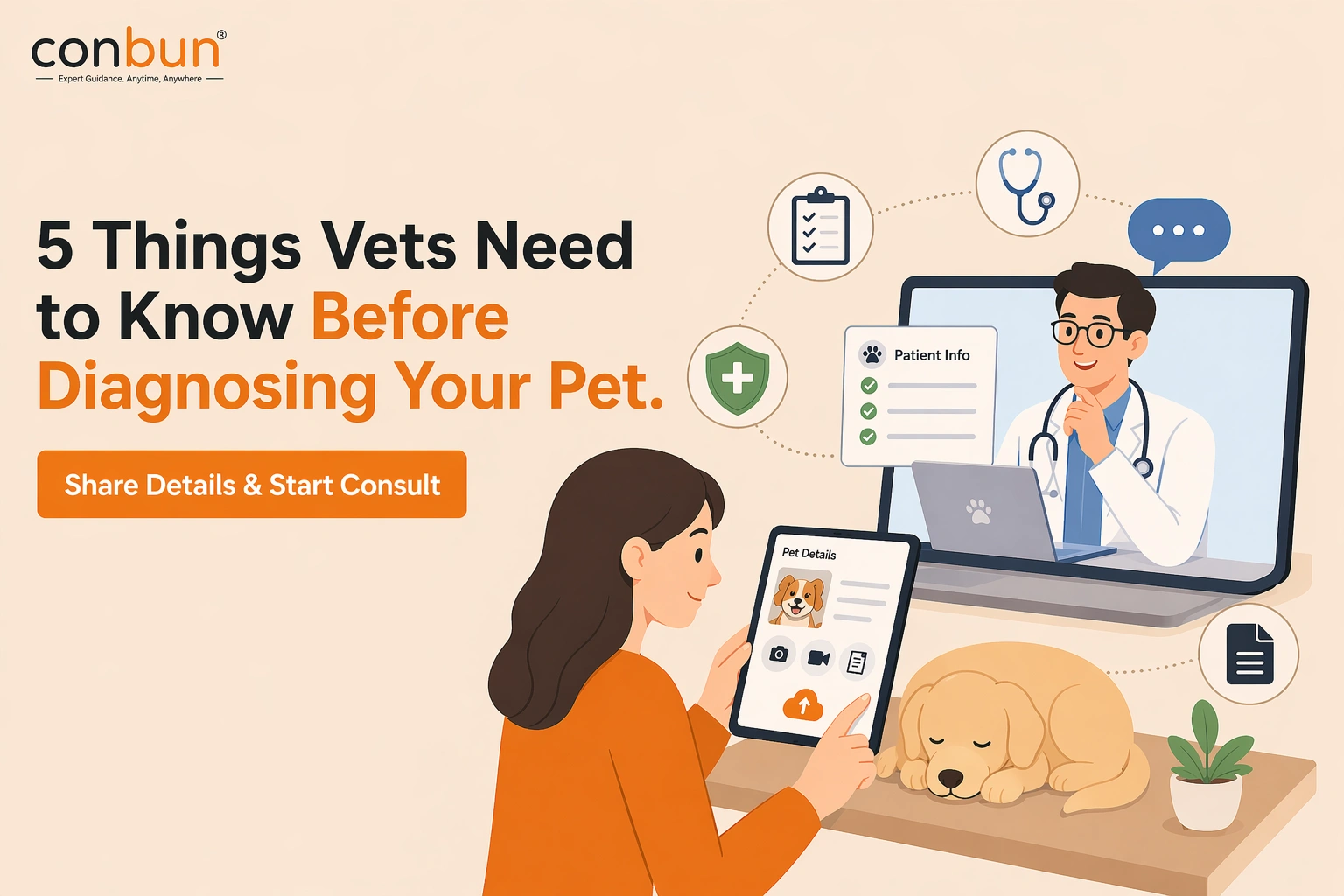
5 Things That Your Vet Actually Need to Know (The Essential Checklist)
Veterinarians online need information like timeline, symptoms, behaviour changes, diet and medical history.
Think of this as your pet’s “medical CV.” Clean. Relevant. Actionable.
1. When Did the Problem Start?
Note the timing of the symptoms.
Was it today? Yesterday or a week ago?
The timing of symptoms greatly influences the path of diagnosis.
- 2 hours of vomiting is manageable
- 2 days of repeated vomiting is serious
2. What Are the Main Symptoms?
Observe the symptoms and be specific.
Veterinarians practising online don’t need “Something is wrong.”
But need exact and specific details like:
- Vomiting with timing and frequency
- Not eating (how long?)
- Lethargy
- Itching or limping
3. Changes in Eating, Drinking, or Toilet Habits
Behavioural changes are aspects to which vets pay close attention.
Small behavioural changes often reveal bigger health issues:
- Infections
- Kidney issues
- Digestive problems
4. Recent Changes (Food, Environment, Exposure)
Vets also need to know about changes in the daily routine or environment. Did you:
- Change food?
- Travel?
- Introduce new treats?
Pets thrive on predictability. Changes in their immediate environment trigger more than you think.
5. Current Medication or Past Health Issues
Details about current medications and past health issues significantly impact clinical diagnosis. Incomplete information may lead to:
- Drug interactions
- Misdiagnosis
As highlighted in veterinary literature, past medical history significantly influences treatment decisions.
What You Can Skip (And Why It Slows Down Diagnosis)
During online vet consultations, avoid emotional storytelling, random guesses and unrelated past disease details.
Here’s where pet parents unintentionally complicate their pet’s diagnosis.
You start with:
“He’s usually playful… but last year also same thing like this happened… I think it’s the weather…”
Your intention is genuine. But medically? It adds noise, not clarity.
Common Things to Skip:
- Long descriptions of your pet’s personality
- Old, unrelated illnesses
- Guessing causes (“maybe cold”, “maybe nazar”)
- Vague statements with no specifics
Quick Contrast
“He hasn’t eaten for 24 hours and vomited twice,”
Is better than, “he’s not feeling well since yesterday.”
Same concern. Completely different usefulness.
How to Prepare Before a Vet Consultation (2-Minute Prep Guide)
Take note of the symptoms, timeline, and diet, and record a video before consulting a vet.
Whether it’s a clinic visit or a veterinary doctor online consultation, preparation changes outcomes.
Your 2-Minute Checklist:
- Note when symptoms started
- Record a short video (movement, breathing, behaviour)
- List the last 24-hour food intake
- Keep medical history ready (vaccination and medication records)
This is especially important in online veterinary consultation in India, where physical examination is limited.
The clearer your input, the clearer the diagnosis.
Online Vet Consultations Make This Even More Important
Clear symptom reporting is essential for accurate online vet consultations.
In a physical clinic, a vet can
- Observe movement
- Check temperature
- Palpate organs
Online?
Online veterinary consultations depend heavily on the information you provide. That’s why structured communication is critical in:
- Early assessment of symptoms
- Follow-ups
- Minor conditions
If used correctly, online consultations can:
- Saves time
- Reduce clinic visits
- Helps in catching issues early
How Conbun Helps You Get It Right Every Time
Conbun is an online veterinary app that helps pet parents share accurate medical details and connect with verified vets instantly.
This is exactly where Conbun makes a difference.
Instead of leaving you guessing what to say, it guides you.
What Makes It Work:
- Access to BVSc-verified vets
- Structured consultation flow (you don’t miss key details)
- Video and chat options for better clarity
- Available anytime with 24/7 online veterinary consultation
Whether you want to:
- Connect with an online veterinarian
- Or get quick guidance via a pet doctor app
You’re not just asking questions. You’re getting medically relevant answers.
Quick Summary - Think Like a Vet
For better diagnosis, share clear, structured symptoms, not long stories or irrelevant information.
When you talk to a vet, remember:
They don’t need your pet’s life story. They need your pet’s medical story
Focus on:
- Timeline of the issues
- Symptoms
- Behaviour changes
Skip:
- Guesswork
- Irrelevant details
Because in veterinary care, clarity isn’t just helpful.
It’s the difference between delay and diagnosis.