Written by: Anand Sen; Reviewed by: Dr. Harsh (B.V.Sc & A.H.)
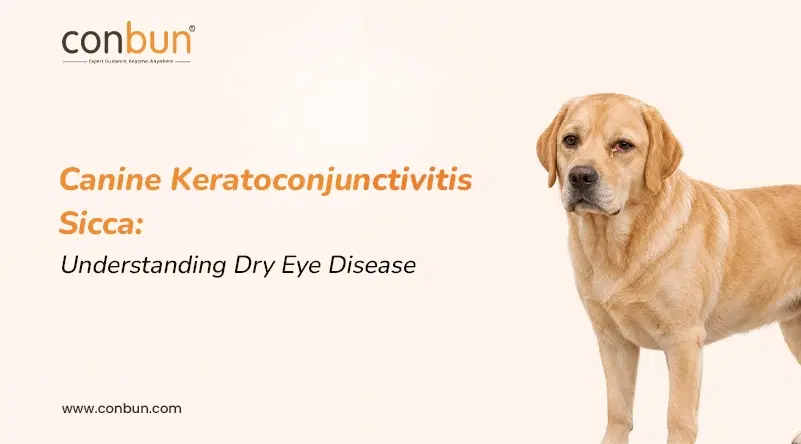
Canine Keratoconjunctivitis Sicca (KCS), popularly known as dry eye, is a condition that occurs when a dog does not produce enough of the watery component of tears, which leads to inflammation and dryness of the cornea and conjunctiva. It is caused by a deficiency in the aqueous (watery) layer of the tear film. With a lack of adequate moisture, the cornea and conjunctiva can become irritated, inflamed and cause damage to the eye’s surface if left untreated.
In this article, learn what causes KCS in dogs, what its signs are, and how it is diagnosed and treated.
What Is Keratoconjunctivitis Sicca in Dogs?
Keratoconjunctivitis Sicca (KCS) is a chronic eye condition in dogs caused by inadequate tear production or an unstable tear film, which leads to dryness and inflammation of the cornea and conjunctiva. It is an inflammatory condition of the conjunctiva and cornea, secondary to a deficiency of the precorneal tear film (PTF).
According to Lori J. Best, DVM, KCS is categorised into two types: Qualitative KCS, which is the decrease in the aqueous component of the tear film and quantitative KCS, which is the decrease in the lipid or mucin components of the tear film.
The cornea has no blood vessels of its own, which is essential for clear vision. Thus, it depends directly on tears for survival and comfort.
According to an article published in Acta Ophthalmologica, the tear film in dogs consists of three layers: an outer lipid layer, a middle aqueous layer and an inner mucin layer that keep the surface moist, supply essential nutrients to the cornea, defend against debris by flushing it from the surface, and also provide necessary protection against friction and infection.
Reduced tear quantity in dogs means the eyes do not produce enough watery (aqueous) fluid, whereas poor tear quality means the film lacks balance due to problems with its outer (oil) or inner (mucin) layers. Both can lead to dry eye or Keratoconjunctivitis sicca in dogs.
What Causes Dry Eye Disease in Dogs?
There are different known causes of KCS in dogs, including metabolic, infectious, congenital, drug-induced, idiopathic and immune-mediated.
Immune-mediated gland damage is the most common cause of dry eye in dogs, in which a dog’s own immune system mistakenly targets and attacks the lacrimal and third eyelid glands, reducing tear production over time. It typically affects both eyes.
According to an article published in Veterinary Ophthalmology, immune-mediated gland damage is also the main cause of Dacryoadenitis in dogs, a chronic inflammation of the tear-producing glands.
Medications like sulfa-amide antibiotics and some pain relievers can reduce tear production. However, this is temporary and disappears after the drug is stopped. Conditions like hypothyroidism in dogs, diabetes mellitus and Cushing’s disease can also impair tear production.
Viral infections like Canine distemper, severe eye inflammation or physical injuries to the tear glands may also disrupt normal tear production, causing KCS in dogs.
Congenital or breed predispositions
Some dog breeds are born with underdeveloped tear glands or congenital alacrimia. Several breeds like Pugs, bulldogs, Shih Tzus, and Yorkshire Terriers show higher rates of KCS than others.
A 2015 research article published in Veterinary Medicine: Research and Reports states that KCS can be divided into two types. One type shows reduced tear production, and the other shows symptoms of excessive tear evaporation typically found in brachycephalic breeds.
In breeds like Cavalier King Charles Spaniels, KCS is associated with Ichthyosiform Dermatosis, also known as dry eye curly coat syndrome.
Signs and Symptoms of Dry Eye in Dogs
Dry eye is a dog disease that causes red, irritated eyes, frequent squinting or blinking and a dull-looking eye surface. Common signs and symptoms include:
Thick ocular discharge: Thick yellow/green mucus often builds up on the eye or around the eyelids
Redness and inflammation: Bloodshot eyes, swollen tissues around the eyes
Excessive blinking and squinting: Holding an eye partly or completely closed, blinking too often
Rubbing or pawing: Scratching at the face or eyes or flinching when you touch near the head
Dull surface: Absence of normal shine on the eye, accompanied by cloudiness
Dry eye in dogs can also lead to vision changes, which in turn leads to bumping into objects in severe cases, causing injuries.
How Is KCS Diagnosed in Dogs?
Keratoconjunctivitis Sicca (KCS) in dogs is primarily diagnosed with a Schirmer tear test (STT) alongside a thorough eye exam.
Schirmer Tear Test
A veterinarian places a small, sterile strip of tear-absorbing paper inside the lower eyelid for 60 seconds to measure watery tear production. It measures tear production in millimetres per minute (mm/min).
It is typically done first during an eye exam before applying eye drops. The vet gently pulls down the lower eyelid and places the notched end into the conjunctival sac. The strip is left there for 1 minute. After 1 minute, the strip is removed, and the wet distance is read in millimetres.
STT is a quick and painless method used to diagnose STT in dogs. Fluorescein Stain Test is another diagnostic method where a safe orange dye is applied to the eye surface and checked under a blue light. The dye sticks to damaged areas to detect corneal ulcers that commonly co-occur with KCS.
A vet also checks for signs like yellow-green or stringy discharge, redness, squinting or chronic dark pigment on the eye.
Treatment Options for Canine Dry Eye
Treatment of Canine dry eye or KCS focuses on stimulating tear production, replacing lost tear film and treating secondary infection or inflammation.
Tear stimulants
Cyclosporine: An immunomodulating eye ointment or oil drop used to reduce glandular inflammation and restore tear production. Typically applied 1-2 times daily for 30-45 days.
Tacrolimus: Also an immunomodulator that is used for dogs that do not respond well to or tolerate cyclosporine.
Pilocarpine: Given topically or with food, it is a medication that is used when dry eye is caused by nerve damage in the tear glands, also known as neurogenic KCS.
Tear replacements & care
Artificial tears, lubricating drops and gels help keep the cornea moist and comfortable, especially early in treatment.
Topical antibiotics to treat secondary bacterial infections or corneal ulcers.
Anti-inflammatory drops to calm surface irritation
Cleaning thick mucus discharge with a warm, damp cloth and treating underlying triggers like hypothyroidism and diabetes, etc.
In severe cases where topical treatment doesn’t show results, a vet may recommend Parotid Duct Transposition (PDT) or other eyelid procedures to restore tear gland function and protect the cornea from permanent damage.
Can Dry Eye in Dogs Be Cured?
KCS is usually a chronic condition, and thus most cases cannot be cured. However, it can usually be managed with ongoing treatment and long-term care. Cases caused by a temporary or treatable medical condition may resolve, but immune-mediated cases, which are the most common type, require lifelong care to prevent pain, corneal damage and vision loss.
When the immune system attacks the tear glands, dry eye becomes chronic. Stopping treatment can allow glandular damage to return.
To get long-term care advice and guidance on supportive management, book an online veterinary appointment on Conbun.
Conclusion
KCS in dogs is a chronic condition in which tear glands stop producing enough water, leading to irritation, dry eyes and damage to the cornea. Most cases of dry eye cannot be cured permanently and require lifelong management. Understanding the disease is important to prevent pain and discomfort in dogs.
Consult a vet online to learn long-term management guidance on dry eye. Get online vet prescriptions, pain management and supportive care advice from certified online vets instantly to alleviate your dog’s suffering.
Frequently Asked Questions
What is the treatment for keratoconjunctivitis sicca in dogs?
Treatment of KCS in dogs includes tear-stimulating medications like cyclosporine or tacrolimus to reduce inflammation and help dogs produce tears. Artificial tears and lubricants are used to keep the cornea moist, and antibiotics are used for secondary infections and inflammation.
What causes keratoconjunctivitis sicca in dogs?
While KCS in dogs is caused by various causes like viral infections such as canine distemper, certain medications and nerve damage, it is most commonly caused by immune-mediated inflammation.
Is KCS in dogs painful?
Yes. Keratoconjunctivitis Sicca in dogs is painful and uncomfortable for dogs. It leaves the surface dry, causing irritation and corneal ulcers.
Is KCS in dogs a lifelong condition?
Yes. KCS in dogs is usually a lifelong condition that requires long-term supportive care and ongoing management.
Does keratoconjunctivitis sicca in dogs go away?
In most cases, KCS does not go away on its own. It does not have a permanent cure, rather requires long-term management.
References
Best, L., Hendrix, D., & Ward, D., Diagnosis & Treatment of Keratoconjunctivitis Sicca in Dogs. Today’s Veterinary Practice. https://todaysveterinarypractice.com/ophthalmology/diagnosis-treatment-of-keratoconjunctivitis-sicca-in-dogs/
Dodi, P. L. (2015). Immune-mediated keratoconjunctivitis sicca in dogs: current perspectives on management. Veterinary Medicine: Research and Reports, 341-347. https://www.tandfonline.com/doi/pdf/10.2147/VMRR.S66705
Dodi, P. L., Zanotti, C., Rossi, S., & Aloe, L. (2009). Tear level of nerve growth factor in normal dogs. Acta Ophthalmologica, 87. https://onlinelibrary.wiley.com/doi/abs/10.1111/j.1755-3768.2009.327.x
Gelatt, K. N., Ben-Shlomo, G., Gilger, B. C., Hendrix, D. V., Kern, T. J., & Plummer, C. E. (Eds.). (2021). Veterinary ophthalmology. John Wiley & Sons. https://books.google.com/books?hl=en&lr=&id=g80cEAAAQBAJ&oi=fnd&pg=PP1&dq=Veterinary+Ophthalmology&ots=yZ8r2s6htQ&sig=ZqI7NFdewGQkAMSePXzMmz7z4UM