
Written by: Anand Sen; Reviewed by: Dr. Pratyush Singh (B.V.Sc & A.H)
It starts innocently. You’re in the lift lobby, walking your gorgeous Labrador, with a shiny coat, soulful eyes, and a gentle temperament.
Suddenly, your building secretary, an auntie who usually only talks about her son’s package in Seattle, asks, “Beta, are you planning puppies? My brother-in-law wants a pure Lab, just like yours!”
In the Great Indian Neighbourhood, the pressure to "settle down" doesn't just apply to humans. People generally make it sound as simple as a Bollywood romance melody: Two dogs meet in a park, a song plays in the background, and boom, two months later, you have six very tiny, wagging bundles of joy.
Except, real-life dog breeding isn’t very similar to a three-minute song sequence. If for you managing one dog is a full-time job, wait until you’re playing literal midwife at 4:00 AM to a litter that’s decided your Persian rug is the perfect "urinal."
In India, especially, responsible dog reproduction is a high-stakes matchmaking business that involves:
The Background Check: Dog breeding is not just about looks. We’re talking about genetics and rigorous veterinary health testing.
The Prenatal Care: Dog reproduction revolves around managing a typical pregnancy that requires more than just extra pyaar and parathas.
The Neonatal Nursery: Caring for puppies that are essentially tiny, fragile, and look like screaming potatoes for the first few weeks.
The Legal Eagle: Navigating regulations and ethical standards related to dog breeding in India to ensure you aren't running a puppy mill by mistake.
Why "Ethical" is the New "Purebred"
The demand for branded puppies in India is booming; therefore, being an ethical breeder matters more than ever. In Dog reproduction, ethical breeding marks the difference between bringing healthy lives into this world and accidentally passing on genetic diseases that break hearts and bank accounts later.
Welcome to Dog Breeding 101. This dog breeding guide for beginners is your pre-marriage counselling for your pet.
Before you say "Yes" to a marriage proposal for your dog, let’s dive deeper into the science, the sweat, and the actual cost of those tiny paws.
Is Dog Breeding Right for You?
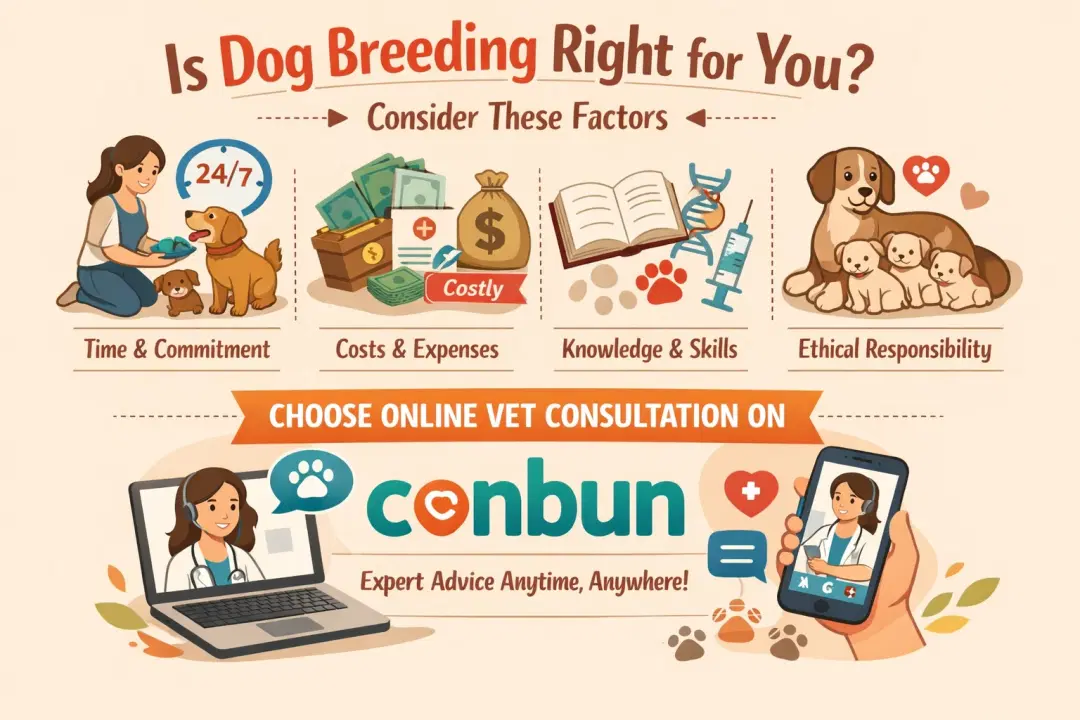
Be brutally honest with yourself and answer this question before starting the canine breeding process:
Why do I want to breed my dog?
Responsible dog breeders approach breeding as breeding programme for dogs, not as a one-time experiment.
They do not indulge in dog breeding business but help their loved ones to produce more loved ones.
Ask yourself:
Do I have enough space for a litter of 6 -10 puppies?
Can I afford emergency veterinary care if any complication occurs?
Am I ready for sleepless nights during whelping?
Do I have a backup plan if puppies don’t sell immediately?
Veterinary experts emphasise that ethical dog breeding requires significant emotional and financial commitment. Which is why dog breeding for beginners can be an overwhelming experience.
People who breed only for profit generally deliver poor dog welfare and health outcomes. Dog breeders who focus on improving the health, temperament and overall quality of life of dogs are responsible breeders.
Choosing the Right Breed to Work With
The puppy demand market in India is dominated by certain breeds. Popular choices include:
Labrador Retriever
German Shepherd
Golden Retriever
Beagle
In the canine reproduction process, every breed carries specific genetic health risks and is predisposed to certain genetic health conditions.
Examples from veterinary genetic research:
Breed | Common Genetic Issue |
Labrador | Hip dysplasia, obesity |
German Shepherd | Degenerative myelopathy |
Golden Retriever | Cancer predisposition |
Beagle | Epilepsy |
Understanding these canine genetic disorders allows breeders to prevent hereditary disease through responsible pairing.
Another consideration that breeders must focus on is purebred puppy production vs mixed breeding.
Purebred breeding aims at preserving specific characteristics of a breed, while mixed breeding may sometimes reduce risks of inherited diseases through genetic diversity.
Both these approaches demand responsible planning. So consider taking dog breeding expert advice before going forward with the breeding process.
Understanding the Dog Heat Cycle
Now let's answer the one of the most asked questions:
How to breed dogs at home?
Breeding success depends heavily on understanding the heat cycle in dogs. Female dogs typically come into heat every 6 - 8 months.
The canine estrus cycle has four stages:
Stage | Duration | Key Signs |
Proestrus | 7–10 days | Swelling, bloody discharge |
Estrus | 5–9 days | Fertile window, mating acceptance |
Diestrus | ~60 days | Pregnancy or hormonal reset |
Anestrus | 3–5 months | Reproductive rest |
The female dog fertile window occurs during the estrus stage.
Veterinarians generally use progesterone testing in dogs to determine ovulation timing in dogs accurately. This increases conception success rates dramatically.
Recognising signs of heat in dogs, like tail flagging, behavioural changes, and discharge, is essential for proper mating timing.
Health Checks Before Breeding - Non-Negotiable
Many dogs are predisposed to canine genetic disorders. If you are considering having puppies, you have to understand that responsible breeding starts long before mating.
Veterinary literature emphasises greatly on pre-breeding health screening as it is highly essential to prevent hereditary disease transmission.
Key tests include:
Hip Dysplasia Screening
Using OFA hip certification or equivalent radiographic evaluation.
Brucellosis Testing
According to the MSD Veterinary Manual, Brucellosis in breeding dogs is a contagious bacterial infection that primarily affects the reproductive systems in dogs and can cause infertility and miscarriage.
DNA Health Screening in Dogs
Breeding should also consider DNA health screening in dogs. Tools like the Embark dog DNA test or Wisdom Panel reveal the chances and risks of inherited disease.
Eye & Heart Certification
These are important for breeds like Cavalier King Charles Spaniel, Siberian Husky, and Labrador Retriever that are prone to cardiac or ocular disease.
These breed health clearances allow breeders to ensure that puppies are born with the best possible genetic start. Skipping these tests greatly increases the risk of hereditary disease in puppies, making them important for hereditary disease prevention
FAQ Answer:
What health testing do breeders perform on parent dogs?
Responsible breeders perform hip screening, genetic testing, brucellosis testing, and breed-specific medical certifications before breeding.
Selecting the Right Breeding Pair - The Dog Mating Guide
For breeders, choosing the right mating pair is a matter of both science and strategy.
Responsible breeders evaluate:
Temperament
Genetic health
Pedigree history
Physical conformation
One key metric that comes into play while selecting the right breeding pair is the inbreeding coefficient.
This metric allows breeders to calculate genetic similarity between the two parents. The higher the inbreeding coefficient, the higher the risk of inherited disease. An inbreeding coefficient calculator is a tool that helps breeders analyse pedigree relationships.
Breeders also practice line breeding sometimes, which carefully reinforces desirable traits without excessive genetic overlap.
This is very different from inbreeding, where breeding involves close relatives and significantly increases health risks.
FAQ Answer:
Can I see the puppy’s inbreeding coefficient?
Yes, responsible breeders are always transparent about genetic diversity and pedigree.
The Whelping Process - What to Expect
Once pregnancy is confirmed, preparation for whelping or dog birth begins.
The gestation period in dogs lasts approximately 63 days.
About a week before delivery, breeds prepare a whelping box, which is a safe enclosed space, where the mother can give birth.
Signs labour is near include:
Restlessness
Nesting behaviour
Drop in body temperature
Refusal to eat
Most dogs deliver naturally, but complications such as dystocia (difficult labour) can require emergency veterinary care.
Key warning signs of Dystocia include:
30-60 minutes of intense straining without producing a puppy
More than a two-hour gap between puppies
Puppy stuck in the birth canal
If you are a first-time dog owners, it is advised to take an online dog breeding consultation so that you can prepared for such warning signs.
It will reduce panic and offer mental clarity on what you can do next.
Whelping is a process that doesn't always happen during clinic hours, if your dog has been straining for 30 minutes without delivering a pup, you need an online vet consultation now, to determine if it's a normal pause or if she needs an emergency C-section.
Whelping kit essentials:
Sterile scissors
Towels
Puppy scale
Heating pads
Milk replacer for puppies
FAQ Answer:
What is the process for whelping and puppy care?
Whelping and puppy care involve preparing a safe whelping area, close monitoring of labour, assisting new born puppies, and ensuring they have immediate neonatal care.
Puppy Care from Birth to 8 Weeks
The first eight weeks of a puppy’s life determine the foundation of their long-term health.
Puppies must receive colostrum immediately after birth. It is the antibody-rich milk produced by the mother in the first 24 hours.
Studies in veterinary literature show that colostrum provides essential immunity to puppies to fight against infections.
In addition, proper puppy care greatly reduces the risks of behavioural problems in dogs in later life.
Key new born puppy care priorities include:
Maintaining warmth, as new born puppies cannot regulate body temperature
Puppy weight gain tracking daily with the help of a digital scale
Ensuring nursing for each puppy is properly
If you see that the mother is weak and is unable to feed, you, as a responsible breeder, must provide milk replacer for the puppies.
At 3 - 4 weeks, the puppy's weaning age begins with soft food introduction.
By 6 - 8 weeks, puppies should receive:
First vaccinations
Deworming
Microchipping puppies in India
FAQ Answer:
Will puppies be vaccinated, wormed, and microchipped before going home?
Yes. Dog breeding experts and responsible breeders complete basic health protocols before placement.
Dog Breeding Laws in India - Know Before You Breed
Dog cross breeding is also on the rise in India. The practice of dog breeding comes under animal welfare dog breeding regulations. The Prevention of Cruelty to Animals Act and associated rules are in place to regulate breeding practices to prevent exploitation.
Key legal considerations:
Registration with Kennel Club of India (KCI) for pedigree recognition
Litter registration KCI for pedigree documentation
Local dog breeding licence requirements in some municipalities in India
These regulations exist to ensure responsible breeding practices and protect dogs from unethical commercial breeding.
The Animal Welfare Board of India requires all dog breeders to register with their respective State Animal Welfare Board. The key rules include:
Strict breeding age of 18+ months
The female dog should be healthy as per veterinary certification of health
Breeding frequency should be 1 litter a year
5 litters in a lifetime
Permission to sell puppies only after 8 weeks of age
FAQ Answer:
Are there legal requirements or licenses for dog breeding?
Yes. Dog breeders in India must comply with local licensing requirements and animal welfare laws.
Responsible Breeder vs Backyard Breeder - Spot the Difference
Not all breeders are the same. Here’s a quick comparison:
Type | Key Traits |
Responsible Breeder | Health testing, proper puppy care, and ethical placement |
Backyard Breeder | Minimal testing, accidental litters |
Puppy Mill | Mass breeding, poor animal welfare |
Red flags related to backyard breeders include:
Refusing to disclose health records and medical history
Selling puppies too early
Multiple litters without proper care
It is very simple to spot the difference between a puppy mill vs ethical breeder: responsible breeders focus on health, temperament, and welfare over profit. From a pet parent’s perspective, if you don’t want to shatter hearts and your bank accounts with expensive vet care, buy puppies only from responsible dog breeders.
FAQ Answer:
How do I know if a breeder is reputable versus a backyard breeder?
If the breeder has transparency in practices, conducts health testing, and offers proper documentation, he/she is a responsible breeder.
Dog Breeding Contracts - Yes, You Need One
Responsible breeders use a puppy sale agreement, which is a proper contract that protects both breeder and buyer.
Key elements include:
Health guarantees
Vaccination documentation
Breeding rights contract clauses
Spay/neuter agreement
Return-to-breeder policy if owners cannot keep the dog
FAQ Answer:
What does a dog breeding contract include?
It must outline health guarantees, ownership rights, and responsibilities for both parties involved.
When to consult a Vet
Even experienced breeders sometimes have to rely on dog breeding expert advice during the canine breeding process.
Do not hesitate to seek professional help if you notice:
Your female dog is in heat, but mating attempts are failing
Signs of pregnancy appear abnormal, or appetite drops suddenly
Your dog is in labour for more than 2 hours without delivering a puppy
A new born puppy isn’t nursing or gaining weight
The mother shows fever, severe lethargy, or vaginal discharge after delivery
Quick online dog breeding consultation on platforms like Conbun can help you connect with veterinary doctors and dog breeding experts to get expert advice on dog breeding and assess problems early before they become emergencies.
Conclusion
Dog breeding can be a deeply rewarding experience, but it's never casual.
The canine breeding process starts with genetic testing and ends with whelping and puppy care. In this process, responsible dog breeders play a critical role in protecting the health of future generations.
If done properly, dog breeding contributes to healthier and stronger dogs. If you’re serious about breeding, consider joining the Kennel Club of India or a reputable breeder network.
And if you found this guide helpful, share it with a fellow dog lover.
FAQs (People Also Asked)
1. What is the best age to breed a dog for the first time
Answer. Veterinarians generally recommend breeding only after a dog has attained full physical maturity, which is usually around 18–24 months for most breeds.
2. How many times can a female dog be bred in her lifetime?
Answer. Responsible breeding guidelines suggest that a dog should not be bred for more than 3–4 litters in her lifetime to protect her health.
3. What health tests are mandatory before breeding dogs?
Answer. Genetic DNA testing, Hip screening, brucellosis testing and other breed-specific health clearances are required for breeding dogs.
4. How long is a dog pregnant?
Answer. The average dog gestation period is 63 days from ovulation.
5. What is a whelping box and why do I need one?
Answer. A whelping box is a safe enclosed space where a mother dog should deliver and nurse puppies during the neonatal stage.
6. Can I take a dog breeding consultation online
Answer: Yes. A dog breeding consultation online can be incredibly helpful especially for new pet parents. Consider a reputed pet health app and review client ratings of an online veterinary doctor before consulting.