.webp&w=384&q=75)
Written by: Anand Sen; Reviewed by: Dr. Jyothirmaye
One morning, you notice that your cat is looking a bit golu-molu. She suddenly seems rounder than usual, is sleeping more than an unemployed person, and eating like she wants to win a local food-eating competition.
Adding to all these, she’s following you everywhere like your shadow, even into the bathroom.
Naturally, your brain jumps to two conclusions: either she’s been secretly eating the ice cream you planned to eat, or you’re about to become a "Grand-cat-parent."
For cat parents, this situation raises a lot of questions. How can I tell if my cat is pregnant? What are the early signs? And when should I see a veterinarian?
Unlike human pregnancies that span over a period of nine long months filled with pyaar and achaar, cat gestation period is a total sprint. Cats finish this entire biological project in just 63–67 days, that’s just nine weeks!
And because this period moves so fast, the physical and behavioral changes show up quicker than plot twists in Kyunki saas bhi kabhi bahu thi.
Recognising these signs early becomes crucial because pregnant cats require special nutrition, a no-stress environment, and proper veterinary care to ensure a safe pregnancy and healthy kittens. This guide will walk you through the most reliable cat pregnancy signs, the week-by-week timeline and help you understand when veterinary confirmation becomes necessary.
How Long Are Cats Pregnant?
Before looking at pregnancy signs, you need to understand the timeline.
As stated above, the average cat gestation period may last for 63–67 days, which is about nine weeks. Research from feline veterinary medicine suggests that most queens (female cats) deliver within this window. Although slight variations may be seen depending on litter size, your cat’s breed, and their health.
While most fall within this range, there may be slight variations. For example, the most popular cat breeds in India, like Persians or Maine coons may have slightly longer pregnancies, others like Bengals or Siamese may have slightly shorter.
When compared with many mammals, feline pregnancy is rapid. Hormonal changes start just days after conception. However, signs usually appear between weeks 2 and 4.
As per veterinarians, feline pregnancy can be divided into three phases:
Early pregnancy (Weeks 1–3) – subtle hormonal and nipple changes
Mid pregnancy (Weeks 4–6) – visible abdominal growth and appetite increase
Late pregnancy (Weeks 7–9) – kitten movement, nesting behaviour, and preparation for birth
As the cat pregnancy timeline is short, early detection of pregnancy helps owners to prepare for proper nutrition strategies, veterinary monitoring, and a safe nesting environment.
12 Early Signs of Cat Pregnancy
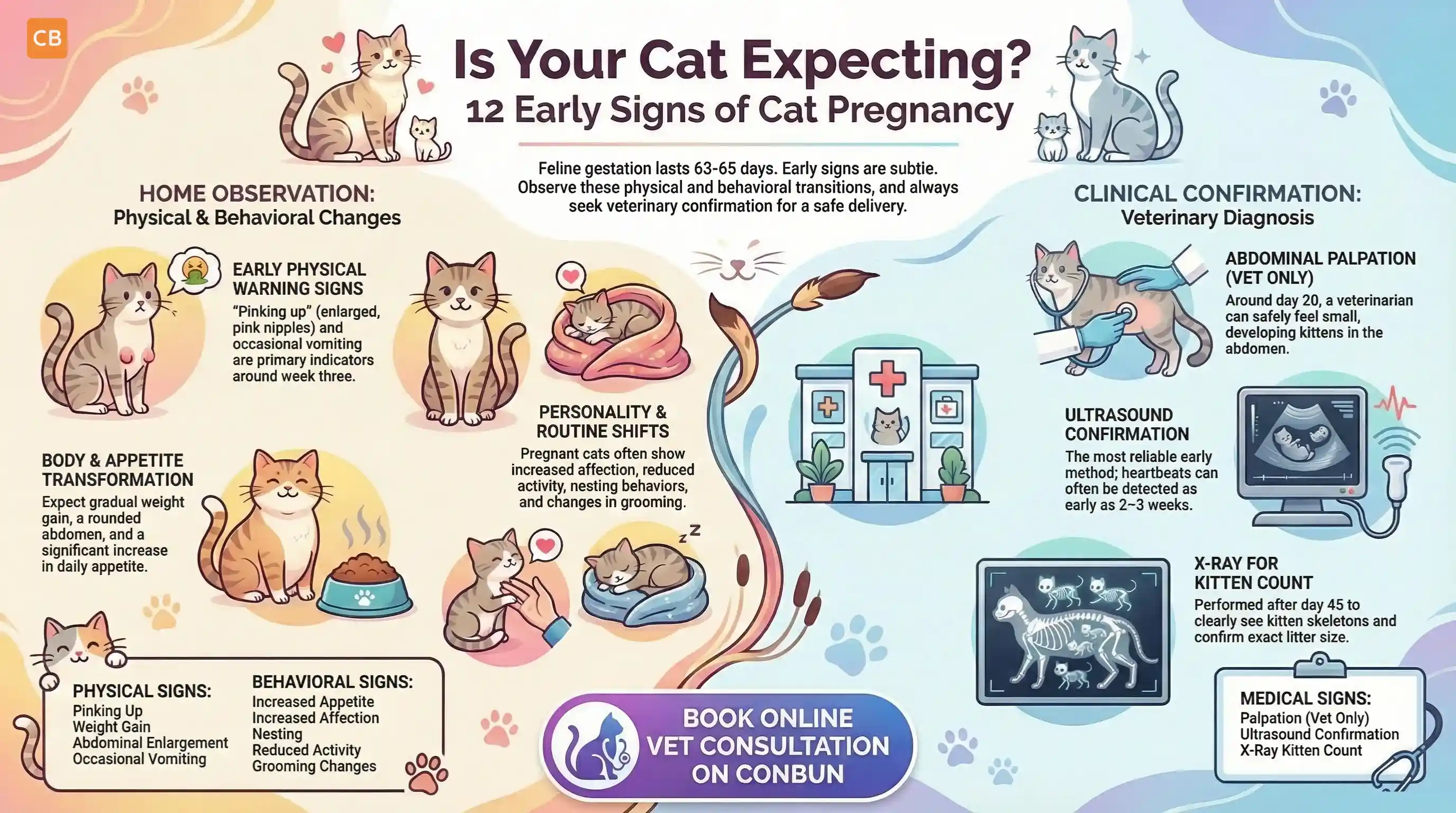
Signs of pregnancy in cats are generally divided into three categories: physical changes, behavioral changes, and veterinary-confirmed indicators.
Physical Signs
Physical signs are often the earliest clues that cat owners notice during the cat gestation period.
1. Pinking Up (Enlarged Pink Nipples)
One of the earliest indicators of pregnancy in cats is a phenomenon veterinarians call “pinking up.” Around 2–3 weeks after conception, a cat’s nipples become noticeably pink and large. They may also be slightly swollen due to an increased blood flow in the area.
2. Gradual Abdominal Enlargement
By weeks 4–5, you may notice that the abdomen begins to round out as kittens grow. The swelling is usually seen in the middle of the belly rather than evenly across the body, which makes it easier to differentiate from weight gain.
3. Weight Gain
During pregnancy, cats gain 1-2 kilograms of weight depending on the size of the litter. Most weight gain will occur during the second half of the cat gestation cycle.
4. Increased Appetite
Most pregnant cats usually develop a stronger appetite around the 4th week. It is because both the mother and litter require significantly more energy and nutrients.
5. Occasional Vomiting
Some queens even experience mild nausea or vomiting, especially during the early stages, similar to morning sickness in humans. Veterinary literature suggests that this generally occurs during weeks 2–4.
Behavioral Signs
Hormonal changes during pregnancy also influence a cat’s behavior.
6. Increased Affection
During pregnancy, a cat will become unusually affectionate. It will seek more attention and physical contact than before. Hormonal changes in cats associated with pregnancy tend to increase social behavior.
7. Nesting Behavior
As pregnancy progresses further, cats begin to search for quiet, secluded places to give birth, especially around weeks 6–7.
8. Reduced Activity
Fatigue is very common in pregnancy. A highly energetic cat may sleep more and will show less interest in play.
9. Changes in Grooming Habits
Pet parents also observe changes in grooming habits during the cat gestation period. Pregnant cats will groom their abdominal area frequently due to the enlargement of nipples and belly growth.
Vet-Confirmed Signs
While you can get clues from behavioral and physical changes, only a veterinarian can confirm pregnancy.
10. Abdominal Palpation (Vet Only)
A trained veterinarian can feel developing fetuses around weeks 3-4.
11. Ultrasound Confirmation
Alike in humans, ultrasound in cats can detect fetal heartbeats. This is generally recommended approximately after three weeks of pregnancy.
12. X-Ray for Kitten Count
By week 7, the skeletons of litter become visible on X-ray. Allowing veterinarians to estimate the size of the litter.
Week-by-Week Pregnancy Timeline
Understanding the cat gestation timeline of your cat’s pregnancy allows you to interpret changes correctly.
Weeks 1–2: Fertilisation occurs, but signs are not visible yet.
Weeks 2–3: Nipples begin “pinking up,” and you should start seeing mild behavioral changes.
Weeks 3–4: Some cats may experience mild nausea. During this period, veterinarians detect pregnancy through ultrasound or palpation.
Weeks 4–5: The abdomen starts swelling, and appetite increases can be observed.
Weeks 5–6: Weight gain is an obvious sign of the litter developing rapidly.
Weeks 6–7: Owners start to feel kittens moving by this point. Nesting behaviour also begins.
Weeks 8–9: Restlessness may start as your cat approaches labour. Milk production may also start.
As pregnancy progresses quickly in cats, monitoring them closely during this period is critical.
Cat Pregnancy vs. False Pregnancy
It is interesting to note that not every cat that show signs of pregnancy is actually pregnant.
Sometimes cats also develop pseudopregnancy, which is also known as false pregnancy. It is a situation where hormonal changes can mimic pregnancy symptoms even though the cat is not pregnant.
In these cases, cats may display:
- Swollen nipples
- Nesting behavior
- Increased affection
- Appetite changes
The only difference is that no fetuses are present.
Only a certified veterinarian can distinguish between true pregnancy and pseudopregnancy through examination, ultrasound, imaging or other veterinary tests. Consult an expert for cat breeding advice.
If you suspect that your cat may be pregnant, professional confirmation is always the safest next step. You can also discuss the symptoms with an online veterinarian and learn the next steps to take via an cat breeding consultation online on the Conbun app.
How to Care for a Pregnant Cat
After pregnancy is confirmed, your role as a cat parent transforms into a maternity nurse. The good news? Cats can usually handle pregnancy well on their own. Your job is simply to support her health and look after her comfort and nutrition.
Upgrading the diet is the first change that most veterinarians recommend. Pregnant queens require a significantly increased number of proteins and calories to support developing kittens.
Feline veterinary nutrition guidelines suggest transitioning to high-quality kitten food from around week four. Kitten diets are formulated with balanced nutrients and higher energy density needed for growth.
While malnutrition could be a problem during pregnancy, overfeeding a kitten could also lead to obesity and difficulties in labour. So, ensure that you are feeding carefully balanced diets.
The next step is scheduling a veterinary checkup during pregnancy, which should usually be around weeks 3–4. It confirms the pregnancy and allows you to assess the overall health of your cat.
Many vets also recommend an X-ray later in pregnancy to estimate the number of kittens, which also helps in determining when labour will be complete.
You should also focus on preparing a quiet nesting area before week seven. Take a simple cardboard box, and line it with soft blankets. Place it in a calm, warm location away from heavy foot traffic.
Finally, avoid unnecessary medications. Vaccines, flea treatments, or drugs should only be given if your veterinarian approves them during pregnancy.
When to Call the Vet Immediately
Most feline pregnancies progress normally. However, certain warning signs require immediate veterinary care.
Visit a veterinarian immediately if you notice:
- Abnormal discharge or vaginal bleeding
- Refusal to eat or extreme lethargy
- Prolonged vomiting or other signs of distress
- Labour lasts more than an hour without producing a kitten
- A kitten stuck in the birth canal
These symptoms are signals of complications during pregnancy and require immediate professional help. You can also access expert cat breeding advice on the Conbun till the time you reach the nearest pet clinic.
Conclusion
Recognising early signs of pregnancy in your cats allows you to prepare for an exciting and slightly chaotic arrival of kittens. From pinking up of nipples during the initial weeks to nesting behaviour during the final weeks, your cat’s body sends clear signs that something big is coming.
With a safe nesting space, proper nutrition and consistent veterinary care, most pregnant cats do well with gestation and pregnancy. And in no time, your quiet house fills with squeaky meows and tiny paws.
If you are still unsure about how to handle the arrival of your grandsons or granddaughters, schedule an cat breeding consultation online with a veterinarian on the Conbun app to learn effective cat breeding tips and pregnancy guidance to offer your cat with the best care they need.
FAQs (People Also Asked)
1. How early can you tell if a cat is pregnant?
Answer. The earliest visible sign of a cat being pregnant is their nipple pinking up, which appears around 2–3 weeks after conception. A vet can confirm pregnancy via palpation at 3–4 weeks or ultrasound imaging from 3 weeks onward.
2. What are the first signs of pregnancy in cats?
Answer. The first signs of pregnancy that owners see during the cat gestation period include pink and swollen nipples (also known as pinking up), mild morning sickness or vomiting, increased affection, and increased appetite, all appearing within weeks 2–4.
3. How long is a cat pregnant?
Answer. Cat gestation duration lasts approximately 63–67 days, which is roughly 9 weeks from the date of conception to birth.
4. Can a cat show pregnancy signs but not be pregnant?
Answer. Yes. Some cats demonstrate pseudopregnancy (false pregnancy), where they experience signs like nesting, swollen nipples, and also display behavioral changes without actually being pregnant. Only a proper vet examination is the way to confirm.
5. How many kittens can a cat have in its first litter?
Answer. A queen typically delivers a smaller litter of 2-4 kittens in her first litter. However, litter sizes can range from 1 to 9. An X-ray after week 7 shows the most accurate kitten count.
6. Should I take my pregnant cat to the vet?
Answer. Yes. A vet visit at 3-4 weeks is recommended to confirm the pregnancy, get dietary care and cat breeding expert advice and check for complications. A follow-up in the final weeks ensures a safer delivery.
7. What should I NOT do if my cat is pregnant?
Answer. Avoid vaccines, medications, flea or cat ear mite treatment without a vet’s approval. Ensure a stress-free environment, prevent rough handling and keep your cat away from aggressive animals. Do not change diet drastically.
8. Do cats bleed during pregnancy?
Answer. While light spotting is normal, any visible bleeding is a warning sign. Heavy discharge or blood during pregnancy is not normal and requires immediate veterinary attention.