
Choosing the Right Rat Type for Your Home and Lifestyle
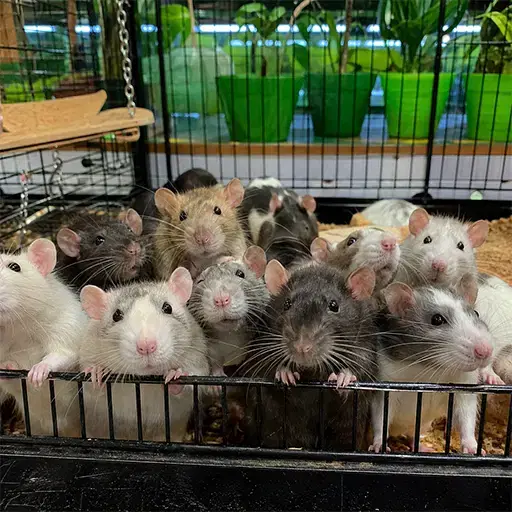
The best rat type for beginners isn't necessarily a particular breed, colour or sex. A healthy, well-socialised rat with a suitable temperament is generally a better choice for a first-time owner. Before selecting a rat, consider whether you can provide enough space, daily interaction, compatible companionship, enrichment, proper nutrition and veterinary care.
Rats are active, intelligent and social pets. Their small size shouldn't be mistaken for low-maintenance care. Individual personality can also vary considerably. For beginners, the best choice is therefore the rat whose care requirements and temperament fit their lifestyle.
Understanding Different Types of Pet Rats
When people search for types of pet rats or pet rat breeds, they are generally referring to differences in colour, coat, body characteristics or appearance. Domestic or fancy rats are commonly kept as companion animals, with rat varieties that include dumbo, rex, hairless and standard-coated rats.
Veterinary literature recognises that animal behaviour results from an interaction between genetics, environment and experience. You cannot predict a rat’s personality based on appearance. Two rats of the same variety can have completely different temperaments depending on early experiences, genetics, socialisation and environment.
Thus, don't choose a rat solely because you like how it looks. Health and temperament should be an important priority.
Temperament: The Most Important Factor for Beginners
For a new owner, pet rat temperament may matter more than coat colour or physical appearance. Look for an individual that is curious, alert and reasonably comfortable around people rather than persistently fearful.
Positive signs can include:
Curiosity about people and surroundings
Comfortable, gentle handling
Normal movement and activity
Willingness to investigate new surroundings
Appropriate interaction with other rats
A history of calm human socialisation
Early handling and socialisation can influence rat health greatly. The RSPCA recommends allowing rats to become comfortable with their owner's presence and building interaction gradually using calm handling and positive reinforcement.
For a first-time owner, a well-socialised and confident individual may be a better choice than a particular rat variety.
Choosing a Rat Based on Your Available Space
Your home matters, but having limited floor space doesn't mean you should look for a “small” rat. Pet rats need housing with enough room for movement, climbing, resting, exploration and social interaction.
Choose a suitable enclosure that is secure, well-ventilated and easy to clean. Make sure that the enclosure has a solid floor and enough space for enrichment. If several rats are housed together, ensure that there is additional space.
If you have a small living space, vertical cage designs may come in handy as they can make better use of available space, provided they remain safe and practical. You should also have a secure area where your rats can explore outside their cage under supervision.
A small home doesn't mean you should choose a small rat to compensate. Every rat deserves appropriate housing and enrichment.
How Much Time Do Pet Rats Need?
When it comes to daily routine, rats are highly interactive. Therefore, consider your daily routine before selecting a pet rat. Basic responsibilities you need to fulfil promptly as a rat owner include:
Feeding and water checks
Cage maintenance
Social interaction
Handling
Enrichment
Exercise
Health monitoring
Rats are mainly nocturnal, so they are particularly active at night. This means cage placement matters if you live in a small home or have people who are sensitive to nighttime activity.
A rat should not be chosen because it appears to be a “low-maintenance” pet. The best rat for a beginner is one whose care requirements fit the owner's daily routine.
Male vs Female Rats: Which Is Better for Beginners?
Factor | Male Rats | Female Rats |
Typical size | Often larger | Often smaller |
Activity | Individual variation | Individual variation |
Temperament | Individual variation | Individual variation |
Social needs | High | High |
Beginner suitability | Can be suitable | Can be suitable |
Both male and female rats can be excellent pets. While males may become larger in size on average, females may be smaller. However, these physical differences shouldn't be treated as personality rules.
Social needs are important for both sexes. Rats are social animals and thus may benefit from compatible same-species companionship. When keeping multiple rats, sex and compatibility need to be considered carefully to avoid unwanted breeding and conflict.
There is no universally “best” gender for a beginner; temperament, health and socialisation should carry greater weight.
Does Your Budget Affect Which Rat You Should Choose?
The purchase price is only one part of pet rat costs. Your budget should account for:
Cage and initial setup
Bedding
Quality food
Enrichment
Cleaning supplies
Carrier
Veterinary care
Unexpected medical expenses
One point to remember is that a cheaper rat isn't necessarily a cheaper pet. The largest responsibility owners have is to provide suitable housing, nutrition, enrichment and healthcare consistently.
The cost of a pet is not just the purchase price but also its care.
How Many Rats Should a Beginner Get?
Rats are social animals and generally benefit from living with compatible rats. Human interaction is valuable, but it doesn't completely replace interaction with another rat.
For a beginner, this means planning for appropriate companionship rather than automatically choosing a single animal. Same-sex groups or compatible neutered arrangements can help prevent unwanted breeding, while introductions should be handled carefully.
You also need enough space and resources for every rat. If serious aggression occurs, owners should have a safe separation plan. Veterinary guidance recommends monitoring unfamiliar groups carefully because fighting can result in injury.
Choosing a rat also means choosing whether you can responsibly provide for compatible companionship.
How to Choose a Healthy, Well-Socialised Rat
While choosing a rat to bring home, look for an animal that is alert and active, has clean eyes and nose, a healthy-looking coat, normal movement and no obvious signs of wounds or swelling.
Ask a breeder, rescue or responsible source about:
Age and sex
Health history
Current diet
Socialisation
Background or parentage where available
Existing cage companions
The environment a rat currently lives in can also tell you a lot. Rats should be kept in clean, appropriate conditions with suitable food, water, bedding and enrichment.
Best Rat Type for Beginners: Quick Decision Guide
If You... | Prioritise... |
Are a first-time owner | Friendly, well-socialised temperament |
Have limited floor space | Appropriate vertical housing |
Want an interactive pet | Confident, human-socialised rats |
Have a busy schedule | Consistent daily care |
Have a limited budget | Full ownership costs before choosing |
Want to keep rats together | Compatible same-species companionship |
The best rat is the one whose welfare needs you can consistently meet.
How Can Conbun Help New Rat Owners?
Rats are social animals that require a considerable amount of care. Choosing a rat is only the beginning. New owners may later have questions about nutrition, housing, socialisation, behaviour, appetite, weight or changes in activity.
An online vet consultation can help owners discuss these concerns with a veterinary professional and understand whether a change can be monitored or requires further assessment.
With Conbun, pet parents can book vet appointment online when they need guidance without immediately travelling to a clinic.
An online exotic vet consultation can be particularly useful when an owner is unsure about the next step. However, serious illness, injuries or emergencies require prompt in-person veterinary assessment.
Frequently Asked Questions About Choosing a Pet Rat
Q1. What is the best rat type for beginners?
Ans. A healthy, well-socialised rat with a suitable temperament is generally a strong choice for a first-time owner. Variety, colour and sex are less important than health, personality and compatibility with your lifestyle.
Q2. Are male or female rats better for beginners?
Ans. Neither of them is better than the other. Both can make excellent pets, and individual temperament and socialisation are more important than sex alone.
Q3. What should I consider before getting a pet rat?
Ans. Consider available living space, amount of time you can commit, budget, companionship, enrichment, veterinary access and the long-term commitment involved. Rats commonly live around two to three years, so ownership requires planning beyond the initial purchase.
Q4. What is the friendliest rodent pet?
Ans. Domesticated fancy rats are widely considered the friendliest and most affectionate pet rodents due to their high intelligence, strong social bonding and a playful nature.
References
Montgomery, R. M. Genetic and Environmental Influences on Animal Behaviour: An Evolutionary Perspective. https://www.researchgate.net/profile/Richard-Montgomery-10/publication/389030249_Genetic_and_Environmental_Influences
_on_Animal_Behaviour_An_Evolutionary_Perspective
/links/67b0dee996e7fb48b9c44f0e/Genetic-and-Environmental
-Influences-on-Animal-Behaviour-An-Evolutionary-Perspective.pdf
Table of Content
- Understanding Different Types of Pet Rats
- Choosing a Rat Based on Your Available Space
- How Much Time Do Pet Rats Need?
- Male vs Female Rats: Which Is Better for Beginners?
- Does Your Budget Affect Which Rat You Should Choose?
- How Many Rats Should a Beginner Get?
- How to Choose a Healthy, Well-Socialised Rat
- Best Rat Type for Beginners: Quick Decision Guide
- How Can Conbun Help New Rat Owners?
- Frequently Asked Questions

Anand Sen
Get Conbun in your Google results
Add Conbun as a preferred source and Google will show our vet-written guides more often in your Search results and AI answers.
Categories


