.webp&w=384&q=75)
Complete Rabbit Care Guide: Everything New Rabbit Owners Need to Know
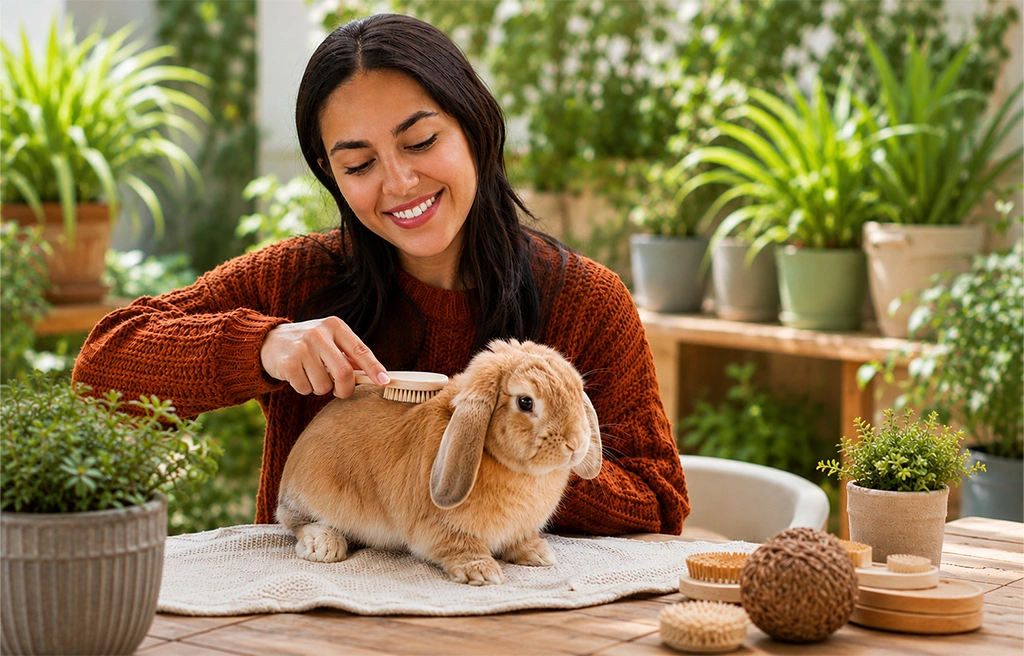
Bringing home a rabbit is exciting, but offering them optimum care can be demanding. Rabbits need unlimited hay, spacious housing, balanced nutrition, daily exercise, regular grooming, preventive veterinary care and plenty of mental stimulation.
Whether you’ve adopted a curious young bunny or an adult rabbit, establishing healthy routines from day one supports long-term wellbeing and prevents common rabbit health problems.
This complete rabbit care guide covers everything a rabbit owner should know, including feeding, housing, behaviour, grooming, vaccinations, preventive healthcare and creating a practical daily care routine. It also highlights warning signs that should never be ignored and explains when to seek a remote vet appointment through our veterinary consultation app.
Veterinary Insight: According to the House Rabbit Society and the British Small Animal Veterinary Association (BSAVA), rabbits instinctively hide signs of illness because they are prey animals. Daily observation and preventive healthcare are important for detecting problems early, often before they become life-threatening.
What Does Every New Rabbit Owner Need?
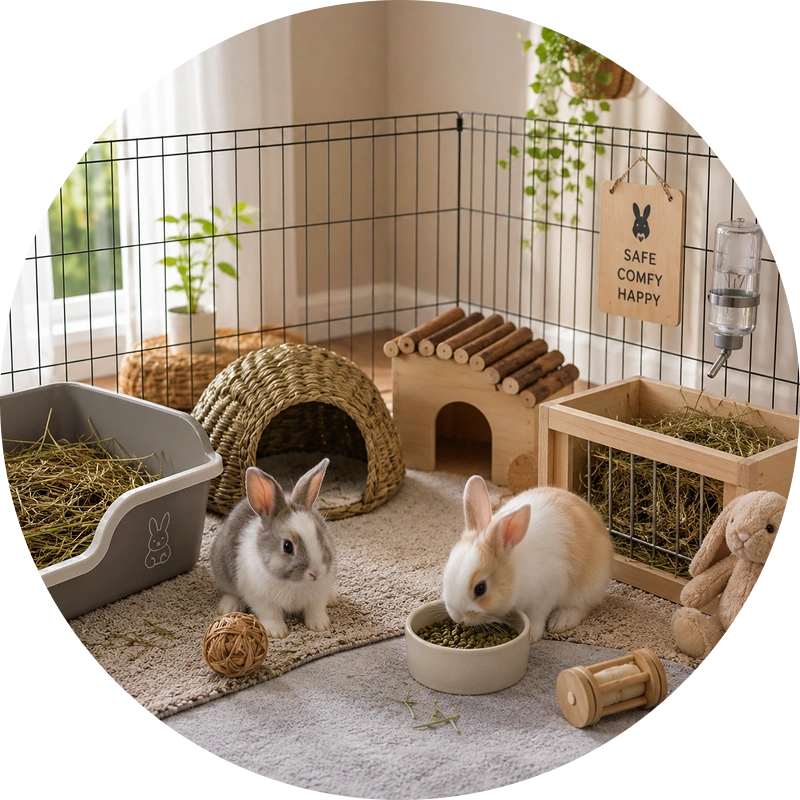
Preparing your home before your new rabbit arrives can reduce stress and make the transition smoother. Unlike small rodents, rabbits need space to hop, explore, chew and express natural behaviours. Investing in the right supplies prevents various health and behavioural issues.
First-Time Rabbit Owner Checklist
Unlimited grass hay (Timothy, Orchard, or Meadow hay)
High-fibre rabbit pellets
Fresh leafy vegetables
Heavy ceramic food bowl
Fresh water bowl or bottle
Spacious enclosure or exercise pen
Rabbit-safe litter tray and litter
Hide box or tunnel
Safe chew toys
Grooming brush
Nail clippers
Pet carrier for transport and veterinary visits
The enclosure must be large enough for your rabbit to stand upright, stretch fully and hop comfortably. Regular supervised exercise outside the enclosure is equally important.
Rabbits are active and intelligent animals and should not spend their lives confined to a small cage.
Veterinary Insight: A rabbit's enclosure should be its bedroom, not its entire world. Several hours of supervised exercise every day support healthy joints, muscles, digestion, and offer mental enrichment.
Feeding Your Rabbit the Right Way
Proper nutrition is the foundation of good rabbit health. A poor diet is one of the leading causes of obesity, dental disease, and gastrointestinal stasis. Feeding the right foods in the correct proportions keeps the digestive system functioning normally and helps wear down continuously growing teeth.
Optimum nutrition is the foundation of good rabbit health. A poor diet is a prominent cause of obesity, dental disease and gastrointestinal stasis. Feeding the right food in the correct proportions keeps their digestive system active and helps prevent dental overgrowth in rabbits.
Unlimited Hay Comes First
Hay is the single most important part of an adult rabbit’s diet, making up approximately 80-90% of daily food intake. High-quality grass hays such as Timothy, Orchard, or Meadow hay provide the fibre needed to keep food moving through the digestive tract while naturally wearing down continuously growing teeth.
Hay should always be fresh, dry, dust-free, and available at all times. Rabbits should never run out of hay, even overnight. Constant chewing also provides mental enrichment and reduces boredom.
Pellets and Fresh Vegetables
High-fibre rabbit pellets provide concentrated nutrients but should be offered in measured quantities. Avoid free feeding and choose pellets with high fibre. Avoid mixes containing colourful treats, seeds or dried fruit.
Fresh leafy greens like lettuce, romaine, basil, coriander, mint, parsley, bok choy and spring greens add variety, vitamins and hydration. Introduce new vegetables gradually over several days to avoid digestive upset. Ensure constant access to clean drinking water.
Foods Rabbits Should Never Eat
Safe Foods | Foods to Avoid |
Timothy hay | Chocolate |
Romaine lettuce | Onions |
Coriander | Garlic |
Basil | Iceberg lettuce |
Rabbit pellets | Sugary snacks |
Fresh water | Processed human foods |
High-fat, sugar or fat negatively influences the gut microbiota in a rabbit’s digestive system. Chocolate, onions, processed snacks, garlic and sugary treats should not be fed.
Veterinary Insight: Inadequate fibre intake can lead to gastrointestinal stasis in rabbits, a potentially life-threatening emergency where the digestive system completely stops, leading to rapid dehydration and organ failure. Ensuring constant access to quality hay significantly reduces this risk.
Creating a Safe and Comfortable Home
A rabbit’s living environment directly affects its physical and emotional well-being. Safe housing, regular exercise and mental enrichment are important to prevent boredom and destructive chewing.
Indoor vs Outdoor Housing
Most veterinarians recommend indoor rabbit care because it provides better protection from predators, parasites, extreme temperatures, and infectious diseases. Indoor rabbits also benefit from closer interaction with their owners, making it easier to monitor appetite, droppings, and behaviour.
Outdoor housing may expose rabbits to cold weather, flies, predators, stress and sudden environmental changes. If rabbits are housed outdoors, they require secure, weatherproof accommodation, constant supervision and protection from temperature extremes.
Rabbit-Proofing Your Home
Rabbits need to chew constantly to keep their teeth healthy. This makes home safety essential. Before allowing free-roaming, secure:
Electrical cords
Toxic houseplants
Household chemicals
Plastic objects
Small gaps behind furniture
Loose fabrics or carpets that may be chewed
A rabbit-safe environment greatly reduces the risk of accidental injuries or poisoning.
Exercise and Enrichment
Exercise is just as important as nutrition for maintaining a rabbit’s physical and mental health. Healthy rabbits should spend several hours every day outside their enclosure in a rabbit-proofed area where they can run, hop, stretch and explore naturally. Regular movement helps prevent obesity, strengthens muscles and joints and supports healthy digestion.
Mental stimulation is equally essential because rabbits are intelligent, curious animals that can become bored easily. Enrichment encourages natural behaviours and reduces destructive chewing or repetitive habits.
Provide activities such as:
Digging boxes filled with shredded paper
Cardboard tunnels
Safe wooden chew toys
Willow balls
Hideouts and platforms
Replacing toys every few days keeps the environment interesting, minimising the need for expensive equipment.
Veterinary Insight: Rabbits that receive exercise and enrichment daily are generally healthier, more confident and less likely to develop stress-related behaviours.
Understanding Rabbit Behaviour
Learning the normal rabbit behaviours allows owners to build trust and recognise early signs of illnesses. Rabbits communicate through their body language rather than vocalisation, so observing daily behaviour is an important part of rabbit health care.
Normal Rabbit Behaviours
Many behaviours that seem unusual to first-time owners are completely normal.
Some common examples include:
Binkies: Happy jumps with twists in the air, showing excitement.
Zoomies: Fast bursts of running around the room.
Tooth purring: Gentle tooth grinding that indicates relaxation when being stroked.
Digging: An instinct used for burrowing.
Chewing: Necessary to maintain healthy teeth.
Grooming: Cleaning themselves or bonded companions.
Thumping: Striking the hind legs on the ground to warn of perceived danger.
These behaviours show that your rabbit is expressing instincts in a healthy environment.
When Behaviour May Signal a Problem
Because rabbits instinctively hide illness, even subtle behavioural changes deserve attention.
Contact a veterinarian if your rabbit develops:
Loud tooth grinding
Constant hiding
Reduced or absent droppings
Unusual aggression or destructive behaviours
Lethargy or reluctance to move
These signs may indicate gastrointestinal stasis, dental disease, pain, infection, or other medical conditions requiring prompt treatment.
Veterinary Insight: One of the earliest signs of illness in rabbits is not eating and being inactive. A rabbit that stops eating should always be considered a medical emergency and examined by a veterinarian as soon as possible.
Grooming and Preventive Healthcare
Routine grooming and preventive healthcare are essential for rabbits to stay healthy while allowing owners to identify problems before they escalate. Even short-haired rabbits benefit from regular health checks.
Grooming Basics
Regular brushing removes loose fur, especially during seasonal shedding. It reduces the amount swallowed during self-grooming. Excess hair inside the digestive tract contributes to gastrointestinal problems.
Regular grooming should include:
Brushing the coat
Checking for skin irritation or parasites
Trimming nails when required
Examining teeth for overgrowth
Inspecting eyes and ears for discharge
Long-haired rabbit breeds require frequent brushing to prevent painful matting.
Vaccinations
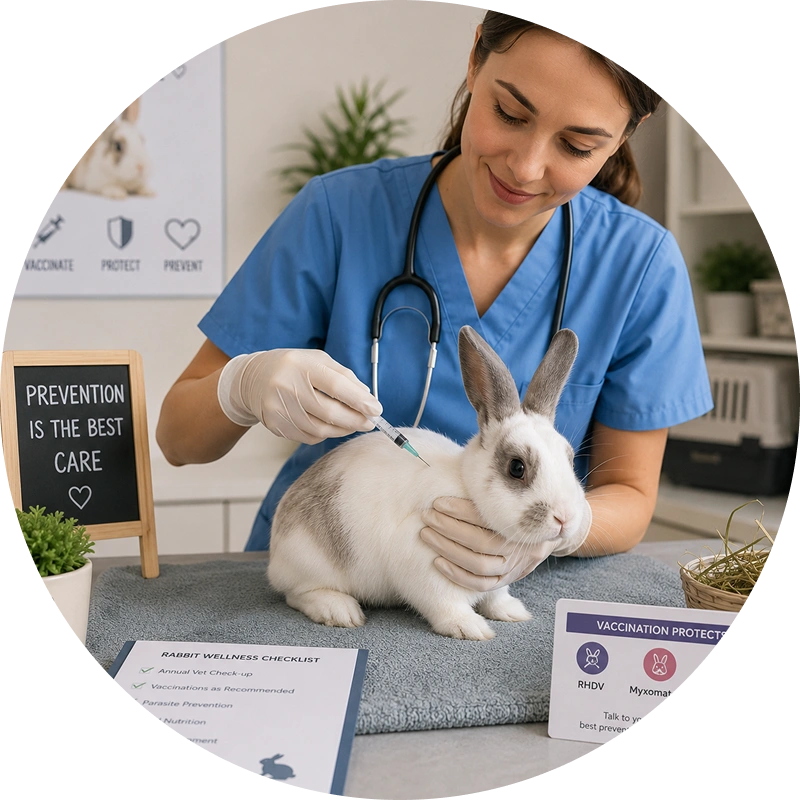
Vaccination recommendations vary depending on your country and local disease risks. Where available, veterinarians commonly recommend vaccination against:
Rabbit Haemorrhagic Disease Virus (RHDV)
Myxomatosis
Your veterinarian will advise the most appropriate vaccination schedule based on local disease prevalence and also your rabbit’s lifestyle. Even indoor rabbits benefit from vaccination because insects and contaminated materials can sometimes transmit disease.
Routine Veterinary Care
Regular veterinary visits are important even when rabbits appear healthy. Preventive healthcare allows problems to be identified before obvious symptoms develop.
Routine examinations may include:
Annual wellness examination
Dental assessment
Weight monitoring
Parasite control
Faecal examination when indicated
Nutritional review
Rabbit Healthcare Checklist
Vaccinations (where recommended)
Annual wellness examination
Dental health assessment
Weight monitoring
Parasite prevention
Nail trimming
For more detailed information, read our Rabbit Vaccination Guide and Rabbit Grooming Guide.
Veterinary Insight: Rabbits’ teeth grow continuously throughout life. Timely dental examinations help identify dental overgrowth before it causes pain, weight loss or difficulty eating.
Daily Rabbit Care Routine
Follow a daily care routine for your rabbit to make them feel secure. It also makes it easier to detect changes in droppings, appetite, behaviour or activity.
Every Day | Every Week |
Unlimited hay | Brush coat |
Fresh vegetables | Check nails |
Fresh water | Deep-clean enclosure |
Remove soiled litter | Inspect teeth and coat |
Exercise | Rotate enrichment toys |
Observe appetite and droppings | Wash bowls and toys thoroughly |
Daily observation is one of the simplest yet most effective ways to recognise illness early. Changes in eating habits, droppings, or behaviour often appear before more obvious clinical signs develop.
Need Expert Rabbit Care Advice? Conbun Can Help
Even with careful preparation, rabbit owners often have questions about diet, behaviour, grooming, or sudden health concerns. Early veterinary guidance can make a significant difference because rabbits frequently hide signs of illness until conditions become advanced.
With an online vet consultation on Conbun, you can talk to experienced veterinarians online for expert advice on rabbit nutrition, gastrointestinal stasis concerns, dental health, behaviour issues, housing recommendations, preventive healthcare, and new bunny care. Whether you need a remote vet appointment for non-emergency concerns or want quick guidance through our veterinary consultation app, veterinary help is available without unnecessary delays.
Conbun's online pet care app enables responsible rabbit owners to receive trusted veterinary advice, helping them make informed decisions about their pet's health from the comfort of home.
Conclusion
Rabbits are social animals and intelligent creatures that thrive when their physical and behavioural needs are consistently met. Balanced nutrition, unlimited hay, spacious housing, daily exercise, enrichment, routine grooming, and preventive veterinary care are all essential to support a long, healthy life. Careful daily observation also allows owners to recognise subtle changes that may indicate illness before they become serious.
This guide provides a strong foundation for responsible rabbit ownership, but learning should continue throughout your rabbit's life. Explore our detailed guides on rabbit feeding, behaviour, grooming, vaccinations, housing, and common health concerns to build your knowledge further. Combined with regular veterinary advice, these resources can help your rabbit enjoy the healthiest and happiest life possible.
Frequently Answer Questions
Q1. How do you take care of a rabbit for beginners?
Ans. First-time rabbit owners must focus on providing unlimited grass hay, measured high-fibre pellets, fresh leafy vegetables, clean water, spacious housing, daily exercise, grooming, and regular veterinary checkups. Daily observation is highly important as rabbits instinctively hide signs of illness until conditions become advanced.
Q2. What does every new rabbit owner need?
Ans. New rabbit owners should prepare unlimited hay, rabbit pellets, fresh vegetables, food and water bowls, a spacious enclosure, litter tray, hide box, chew toys, grooming supplies, and a secure carrier. A rabbit-proofed exercise area is also essential for daily physical activity and mental stimulation.
Q3. What should rabbits eat every day?
Ans. Adult rabbits should eat unlimited grass hay every day, along with measured high-fibre pellets, fresh leafy vegetables, and constant access to clean drinking water. Hay should form approximately 80–90% of the daily diet because it supports healthy digestion and proper dental wear.
Q4. Do rabbits need vaccinations?
Ans. Vaccination recommendations vary by country and local disease risks. Where available, veterinarians commonly recommend protection against Rabbit Haemorrhagic Disease Virus (RHDV) and Myxomatosis. Your veterinarian can recommend the most appropriate vaccination schedule based on your rabbit's environment and health status.
Q5. How often should rabbits visit a veterinarian?
Ans. Healthy rabbits must receive preventive veterinary examination at least once a year, while young, senior or medically compromised rabbits may require frequent visits. Prompt veterinary attention is necessary if a rabbit stops eating, becomes lethargic or produces fewer droppings.
Table of Content
- What Does Every New Rabbit Owner Need?
- Feeding Your Rabbit the Right Way
- Rabbit-Proofing Your Home
- Exercise and Enrichment
- Understanding Rabbit Behaviour
- Grooming and Preventive Healthcare
- Daily Rabbit Care Routine
- Need Expert Rabbit Care Advice? Conbun Can Help
- Conclusion
- Frequently Answer Questions

Anand Sen
Categories
Conbun – Your Trusted Pet Consult App for Dogs & Cats
Being a pet parent comes with daily questions and concerns. From sudden vomiting and itching to food confusion or unusual behaviour, every pet deserves quick and trusted care. With busy schedules and limited access to vets, finding reliable pet guidance at the right time can feel stressful. At Conbun, we make pet parenting easier with instant online vet consultations, expert advice, and trusted support for dogs and cats, all from your phone.