
Rabbit Teeth Grinding: Pain Signal You Shouldn't Ignore
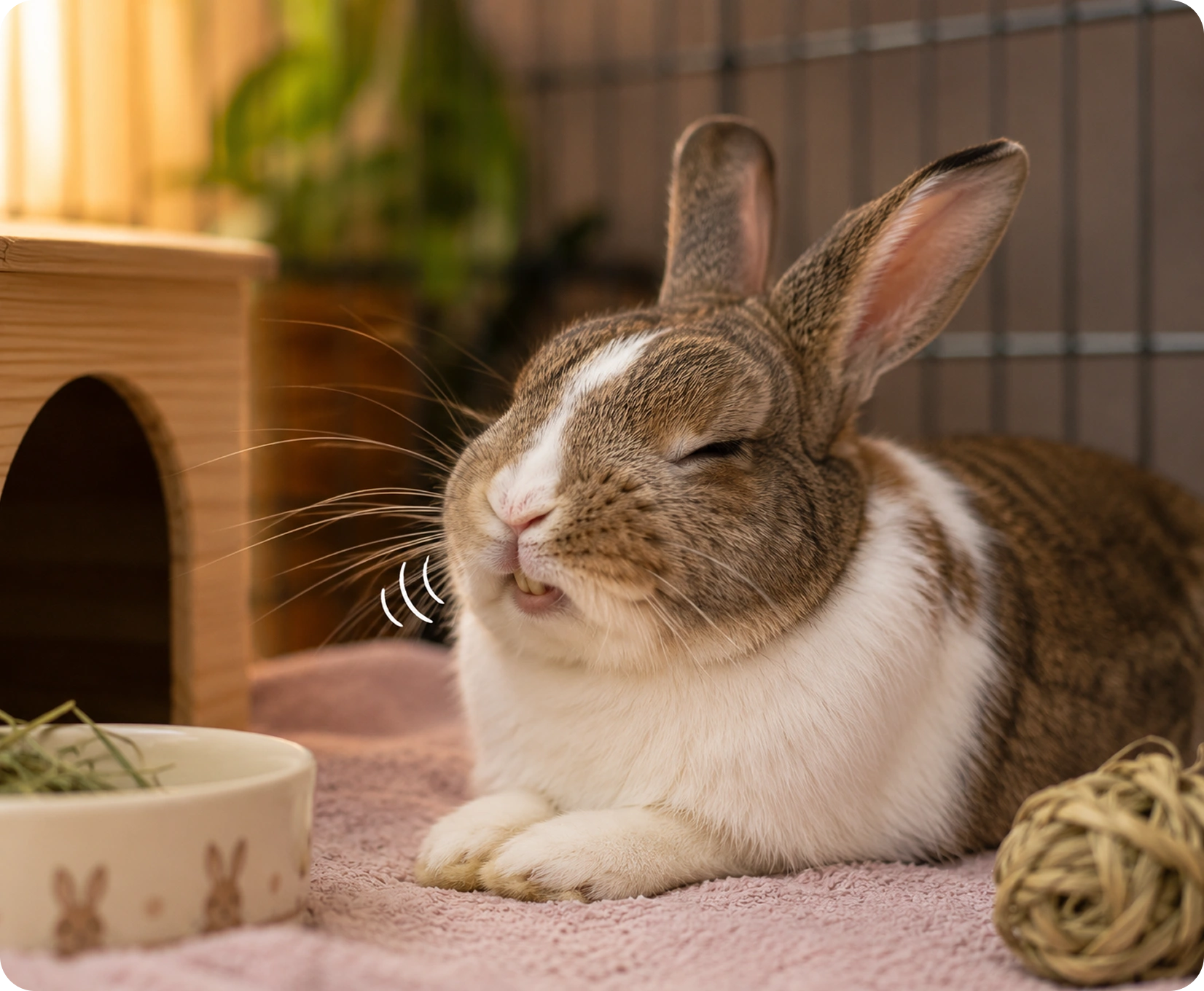
Rabbit teeth grinding can be completely normal when it is soft, quiet, and occasional, often indicating relaxation or contentment. However, if you notice loud and persistent teeth grinding in rabbits, especially when combined with other critical symptoms, such as reduced appetite, hiding, or lethargy, it could be a serious sign of an underlying concern.
Rabbits are prey animals that hide illness instinctively, making subtle behavioural changes one of the earliest warning signs. In this guide, I’ll explain the difference between normal tooth purring and painful grinding, the common causes, emergency signs and when to go for a rabbit health consultation online.
Is Teeth Grinding Normal in Rabbits?
Not all rabbit grinding teeth behaviour is a cause for concern. The intensity, sound and a rabbit’s overall body language is crucial for determining whether it is a normal sign or a sign of pain.
Gentle Tooth Purring (Normal)
A rhythmic, soft and gentle sound often called as tooth purring is a sign that your rabbit is relaxed and comfortable. It commonly arises when a rabbit is:
Being gently stroked
Resting comfortably
Lying in a favourite spot
Quietly chewing hay
During tooth purring, a rabbit’s body remains relaxed, eyes half closed and behaviour completely normal. This behaviour is similar to cat purring is not a cause for concern.
Loud Teeth Grinding (Abnormal)
Loud, repetitive grinding on the other hand is a completely different behaviour. It is usually accompanied by a tense posture, reluctance to move, hiding and reduced appetite. Unlike gentle tooth purring, loud griding is painful and often sounds harsh enough to be heard clearly withing being close to the rabbit.
Unlike dogs or cats, rabbits, rarely vocalize when they are uncomfortable. Sometimes the online clue that something is wrong is the sound of their teeth.
In most cases, this indicates discomfort that requires veterinary attention.
Why Is My Rabbit Grinding Its Teeth?
Several medical conditions can cause bruxism in rabbits, with dental disease being the most common.
Dental Disease
Rabbit teeth grow continuously throughout their lives. Serious dental problems in rabbits can develop if their teeth do not wear down naturally through chewing hay and fibrous foods.
Common oral health problems in rabbits include:
Overgrown teeth
Molar spurs
Malocclusion (misaligned teeth)
Tooth root abscesses
These conditions make chewing painful and lead to reduced appetite, excessive salivation and loud teeth grinding. Dental disease is among the leading reasons rabbits require veterinary treatment.
Gastrointestinal (GI) Stasis
GI stasis is a life-threatening condition in which the digestive tract slows down or stops completely
A rabbit not eating and grinding teeth is a classic warning sign of GI stasis. Abdominal pain caused by GI stasis often leads to a hunched posture, loud grinding, reduced droppings and lethargy. Early veterinary treatment is critical as delayed care can quickly turn into an emergency.
Injury or Trauma
Fails, fractures, limb injuries, or soft tissue injuries can also cause pain-related teeth grinding. Even if there are no visible wounds, a rabbit may remain quiet and grind their teeth as a mechanism to cope with discomfort.
Arthritis or Chronic Pain
Older rabbits commonly develop arthritis. Joint pain can make movement uncomfortable, causing them to grind their teeth while resting.
Rabbits with joint pain may also move less frequently, avoid jumping and climbing and may also show signs of reduced activity.
Urinary Problems
Conditions like urinary stones, bladder sludge or urinary tract inflammation can be extremely painful. Rabbits experiencing pain while urinating may show loud teeth grinding alongside reduced appetite, straining or changes in urination habits
According to the Rabbit Foundation persistent teeth grinding is a recognized indicator of pain in rabbits and should always be investigated, particularly when accompanied by reduced food intake or changes in droppings.
Signs Your Rabbit May Be in Pain
Rabbits often hide discomfort until they are seriously unwell. If your rabbit is grinding its teeth and shows any of the following rabbit pain signs, seek veterinary advice immediately.
Common signs of pain include:
Loud or persistent teeth grinding
Reduced appetite or refusing hay
Smaller, fewer, or no droppings
Hunched posture
Hiding more than usual
Lethargy or reduced activity
Squinting or partially closed eyes
Weight loss
Reluctance to move or jump
Drooling or a wet chin
Swollen jaw or face
Poor grooming or an unkempt coat
Important: Rabbits are prey animals and instinctively mask illness. By the time pain becomes significant, the underlying disease may have already advanced. Early veterinary assessment ensures the best chances of successful treatment.
What Should You Do If Your Rabbit Is Grinding Its Teeth?
If you see your pet rabbit grinding their teeth abnormally, seek veterinary guidance immediately instead of waiting for symptoms to worsen.
Determine whether the grinding is soft (contentment) or loud (pain).
Check whether your rabbit is eating pellets, hay, and leafy greens normally.
Monitor droppings for changes in size, number or consistency.
Ensure instant access to unlimited fresh hay and drinking water.
Ensure that the environment is warm, quiet and comfortable.
Do not offer human painkillers or other home remedies without vet guidance.
Contact an exotic animal veterinarian as soon as possible, particularly if your rabbit develops complete anorexia.
Quick Reference Guide
Situation
What You Should Do
Gentle grinding during petting
Normal behaviour; continue observing.
Loud grinding with appetite loss
Schedule a veterinary examination promptly.
Not eating for 6–8 hours
Treat as an emergency.
Swollen jaw or facial swelling
Seek immediate veterinary care.
Small or absent droppings
Urgent veterinary assessment is needed.
When to Book an Online Rabbit Vet Consultation
A rabbit health consultation online can help you understand whether your rabbit’s symptoms are manageable or require an in-person examination. Early guidance is especially valuable because rabbits deteriorate quickly once they stop eating.
Consider an online rabbit vet consultation if your rabbit has reduced appetite, mild behavioural changes, suspected dental disease, early signs of GI stasis, or requires follow-up after dental treatment. Through an online vet consultation, you can discuss symptoms, receive professional advice, and schedule a veterinary appointment online if further care is needed.
If you're unsure whether your rabbit's teeth grinding is normal, don't wait. Book an instant online vet consultation with Conbun and receive timely advice from an experienced veterinarian.
Frequently Asked Questions
Why is my rabbit making crunching noises?
Soft crunching while relaxing usually indicates contentment. Loud, repetitive crunching is more likely to be pain-related and should be evaluated by a veterinarian.
Why is my rabbit grinding his teeth?
Rabbits commonly grind their teeth because of dental disease, gastrointestinal pain, injury, arthritis, or urinary problems. The loudness of the grinding and accompanying symptoms help determine its significance.
Is it normal for rabbits to grind their teeth?
Yes, gentle tooth purring is normal. However, loud, persistent grinding accompanied by reduced appetite or lethargy is not normal and requires veterinary attention.
Can dental disease cause GI stasis?
Yes. Pain from dental disease may reduce food intake, slowing gut movement and increasing the risk of gastrointestinal stasis.
How do vets treat rabbit dental disease?
Treatment depends on the cause and may include dental trimming, removal of tooth spurs, treatment of abscesses, pain relief, nutritional support, and ongoing dietary management.
Conclusion
Learning the difference between happy tooth purring and painful rabbit teeth grinding can help you recognise illness before it becomes an emergency. Never ignore loud grinding, particularly if your rabbit is eating less, producing fewer droppings, or behaving unusually. Early diagnosis and treatment significantly improve recovery.
If your rabbit is grinding its teeth, showing signs of pain, or refusing food, don't delay. Book an online rabbit vet consultation with Conbun today and get expert advice before a minor problem becomes a medical emergency.
References
British Small Animal Veterinary Association (BSAVA). Manual of Rabbit Medicine – Guidance on rabbit dentistry, pain assessment, and emergency care.
2. Nedbal, A. (2020). Bladder Sludge. House of Rabbit. https://houserabbit.org/updates/bladder-sludge
3. Parsons, P. 2020. All About Teeth: Preventative Care & Dental Problems in Rabbits. Rabbit.org. https://rabbit.org/health/teeth-dental-problems-in-rabbits/
Table of Content
- Is Teeth Grinding Normal in Rabbits?
- Why Is My Rabbit Grinding Its Teeth?
- Signs Your Rabbit May Be in Pain
- What Should You Do If Your Rabbit Is Grinding Its Teeth?
- When to Book an Online Rabbit Vet Consultation
- Frequently Asked Questions
- Conclusion
- References

Anand Sen
Related Articles

Why do dogs roll in the grass? Is this Normal?
Dogs roll in grass to enjoy scents, scratch irritation, cool down, or express happiness. Usually normal unless excessive or uncomfortable.
Read More ↗Why do dogs roll in the grass? Is this Normal?
Dogs roll in grass to enjoy scents, scratch irritation, cool down, or express happiness. Usually normal unless excessive or uncomfortable.
Read More ↗Why do dogs roll in the grass? Is this Normal?
Dogs roll in grass to enjoy scents, scratch irritation, cool down, or express happiness. Usually normal unless excessive or uncomfortable.
Read More ↗Why do dogs roll in the grass? Is this Normal?
Dogs roll in grass to enjoy scents, scratch irritation, cool down, or express happiness. Usually normal unless excessive or uncomfortable.
Read More ↗Why do dogs roll in the grass? Is this Normal?
Dogs roll in grass to enjoy scents, scratch irritation, cool down, or express happiness. Usually normal unless excessive or uncomfortable.
Read More ↗