.webp)
Is My Dog's Limping an Emergency? When to Book a Vet Call
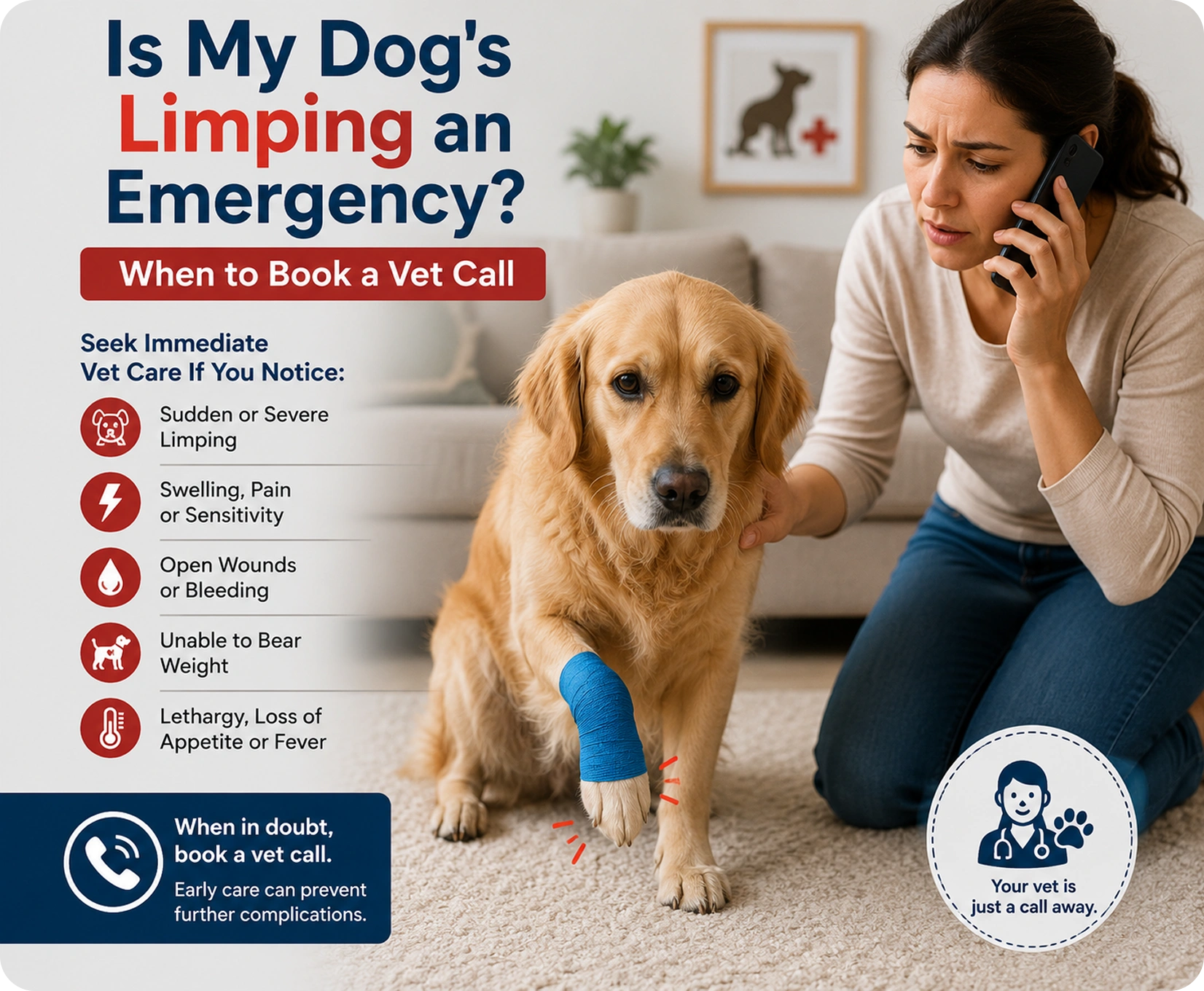
You notice your dog limping suddenly after a walk, and the first thought that pops up in your head is, “Should I rush to a vet or will it get better on its own?” The answer is: not every limp is a veterinary emergency, but every limp deserves attention. While sometimes it's just a minor strain or a small thorn in the paw, other times it could bring a fracture, a torn ligament or serious trauma.
This guide will cover common dog limping causes, emergency warning signs, first-aid steps and help you understand when it's time to book a veterinary appointment online.
Why Is My Dog Limping?
Limping in dogs is not a disease but a clear sign of pain or an underlying issue. It is a symptom that shows up due to pain or discomfort. It can be caused by a minor issue like a thorn in the paw or a major one like a torn ligament.
While sometimes the cause is obvious, other times it takes a veterinary examination to pinpoint the problem.
Common causes of a dog limping include:
Muscle strain or sprain after intense physical activity
Torn or broken nail
Cuts or injuries to the paw pad
Thorns, glass, or other foreign objects lodged in the paw
Cruciate (ACL) ligament injury
Fractures or joint dislocations
Arthritis, especially in senior dogs
Insect bites, infections, or abscesses
Limping in dogs is their way of saying, “something doesn’t feel right”. Even if they’re still wagging their tail, they could be hiding pain, a natural survival instinct in dogs.
When Is Dog Limping an Emergency?
Not every sudden dog limping case is an emergency, but some situations leave no room for waiting. If you notice any of the following symptoms, seek veterinary care immediately:
Dog shifting weight away from the affected leg
Limb looks broken, bent, or visibly deformed
Heavy bleeding that doesn't stop
Severe swelling around a joint or limb
Dog crying, whining constantly, or appears to be in extreme pain
Deep cut or an open wound
Dog hit by a vehicle or experienced a major fall or trauma
Dragging the affected leg
Limping accompanied by fever, collapse, lethargy, or other signs of illness
Dogs are remarkably good at masking pain. A calm or quiet dog isn't always a comfortable one. Dog owners need to notice and understand the behavioural cues. For example, as per the American Animal Hospital Association, dogs may show postural abnormalities and awkward limb positions even at rest. When they are in pain, they tend to shift weight away from a painful limb.
What Should You Do if Your Dog Starts Limping?
If your dog is limping but doesn't appear to be in immediate danger, stay calm. Your reaction can make a big difference.
Here's what you should do:
Keep your dog calm and limit running, jumping, or playing.
Gently inspect the paw for cuts, thorns, glass, or a torn nail.
Don't force your dog to walk to "test" the injury.
Do not give human painkillers such as ibuprofen or paracetamol, as they are toxic to dogs.
If your dog has only mild limping and is otherwise bright and comfortable, monitor them for up to 24 hours.
If the limp worsens, swelling appears, or your dog doesn't improve, contact a veterinarian promptly.
A little rest can help a minor sprain, but guessing isn't always the safest strategy. When in doubt, let a professional assess the situation.
When to Book an Online Vet Consultation
An online veterinary doctor consultation is a great option when you’re unsure whether your dog’s limping requires an emergency visit. Through a vet consultation online, a licensed veterinarian can assess your dog’s symptoms, help you understand the injury and advise whether home care is appropriate or if an in-person examination is necessary.
Choose an instant online vet consultation if your dog's limp is mild but persistent, you've noticed your dog limping suddenly, or you simply want expert guidance before heading to a clinic. When you're worried, talking to a vet online is always reassuring.
Don't Ignore the Limp
Limping in dogs is never normal, even if they seem cheerful. With early veterinary guidance, you can prevent a minor injury from turning into a serious problem. If you’re unsure whether it’s an emergency or not, don’t leave it to chance. Book a virtual vet appointment on Conbun today and get expert guidance for your furry friend.
Frequently Asked Questions
Can a dog's limp heal on its own?
Yes, a dog’s limp caused by a minor muscle strain, small paw injury or mild sprain may improve with 24-48 hours of rest. However, if the limp persists, worsens or impairs their weight-bearing capacity, they should be examined by a veterinarian.
When should I take my dog to the vet for limping?
Take your dog to a veterinarian immediately if they cannot put weight on the leg, have intense pain, swelling or a visible wound. For mild limping that lasts more than 24 hours, schedule a veterinary consultation.
Should I still walk my dog if he is limping?
No. Avoid walking your dog until you know what’s causing the limp. Continued physical activity may worsen injuries like ligament tears, fractures, and sprains. Keep your dog rested and resume exercise only after seeking veterinary advice.
How long will a dog limp with a sprained leg?
A mild sprain usually starts improving within a few days and often heals within 1-3 weeks with adequate rest. Severe sprains or ligament injuries may take much longer.
Table of Content
- Why Is My Dog Limping?
- When Is Dog Limping an Emergency?
- What Should You Do if Your Dog Starts Limping?
- Frequently Asked Questions

Anand Sen
Related Articles

Why do dogs roll in the grass? Is this Normal?
Dogs roll in grass to enjoy scents, scratch irritation, cool down, or express happiness. Usually normal unless excessive or uncomfortable.
Read More ↗Why do dogs roll in the grass? Is this Normal?
Dogs roll in grass to enjoy scents, scratch irritation, cool down, or express happiness. Usually normal unless excessive or uncomfortable.
Read More ↗Why do dogs roll in the grass? Is this Normal?
Dogs roll in grass to enjoy scents, scratch irritation, cool down, or express happiness. Usually normal unless excessive or uncomfortable.
Read More ↗Why do dogs roll in the grass? Is this Normal?
Dogs roll in grass to enjoy scents, scratch irritation, cool down, or express happiness. Usually normal unless excessive or uncomfortable.
Read More ↗Why do dogs roll in the grass? Is this Normal?
Dogs roll in grass to enjoy scents, scratch irritation, cool down, or express happiness. Usually normal unless excessive or uncomfortable.
Read More ↗