.webp)
Hamster Not Eating and Weak: Causes, Emergency Signs & When to Book a Vet Consultation
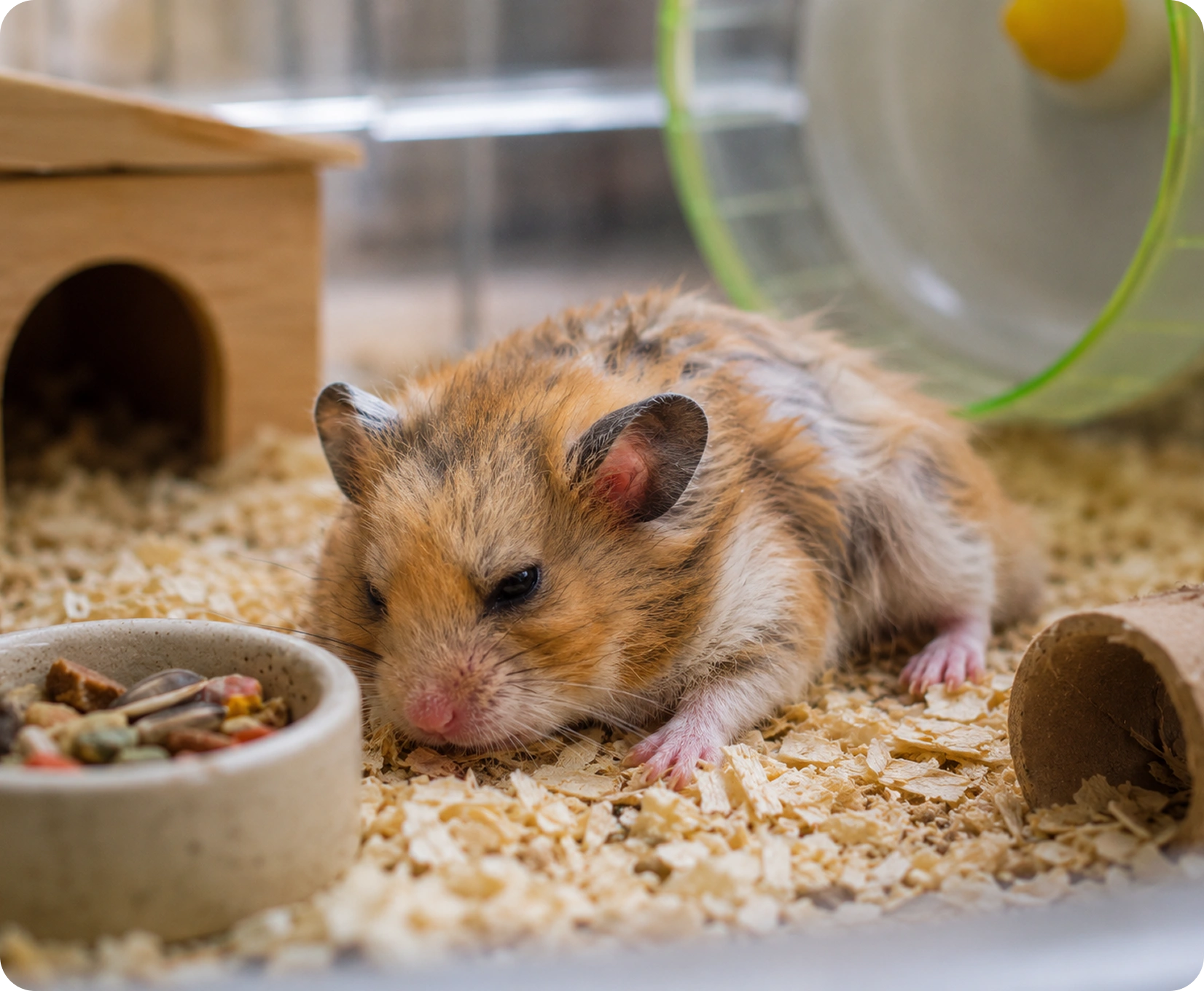
If your hamster is not eating and appears weak, it should never be ignored. Stress, a new environment, or temporary changes in routine are some factors that can leading to appetite loss in hamsters for a short time. But prolonged refusal to eat combined with weakness or lethargy indicates a serious medical condition that require veterinary attention.
Due to their fast metabolism hamsters can deteriorate quickly if they stop eating. In this guide I’ll explain why your hamster may not be eating, the most common causes of weakness, emergency warning signs, immediate care you can provide and when to seek a hamster health consultation online.
Is It Normal for a Hamster to Eat Less Sometimes?
A temporary decrease in appetite is not always a sign of illness. Hamsters are naturally nocturnal. So, they often eat most of their food during the evening and night. Many new pet owners may mistakenly think their hamster is not eating simply because they do not see it feeding during the day.
Other reasons that may temporarily reduce appetite in hamsters are:
Adjusting to a new home or cage
Mild stress from transport or handling
Changes in the surrounding environment
Hoarding food in nesting areas instead of eating immediately
In these cases, your hamsters may naturally remain alert, active and continues drinking water and moving around normally.
However, persistent weakness, complete refusal to eat, or noticeable lethargy are not normal. If your hamsters lose weight, appears quiet, or stops eating for several hours, it should be examined by a veterinary professional.
Why Is My Hamster Not Eating and Weak?
Several underlying health conditions may cause hamster to stop eating and show weak behaviour. Identifying the cause early significantly improves recovery.
Unlike larger pets, hamster illnesses are hidden until they become very sick. Sometimes, a reduced appetite is one of the earliest clues that something is wrong.
Stress or Environmental Changes
Hamsters are sensitive to stress and sudden changes in their surroundings.
Common stressors include:
Moving to a new cage
Travelling
Loud noises
Extreme temperatures
Introduction of new pets
Stress-related appetite loss in hamsters is temporary and should improve once the hamsters feel safe again.
Dental Problems
A hamster’s incisors grow continuously throughout their life. This leads to overgrown, broken or misaligned teeth that make chewing painful which in turn reduce eating.
Common dental issues that can induce anorexia in hamsters include:
Overgrown incisors
Broken teeth
Mouth injuries
Hamsters with dental problems may approach food but may struggle to chew or drop food while eating. To treat dental conditions in hamsters veterinary treatment is often needed.
Wet Tail (Most Important)
Wet tail is one of the most serious illnesses that affects pet hamsters. It is particularly prevalent in young hamsters.
It is characterised by:
Severe diarrhoea
Dehydration
Lethargy
Loss of appetite
Wet, soiled fur around the tail
Without immediate treatment, wet tail can become life-threatening within a short period. A hamster that is weak, not eating and has diarrhoea must be treated as a veterinary emergency.
Respiratory Infections
Respiratory infections may also lead to anorexia in hamsters because as breathing becomes difficult, eating requires extra effort.
Common symptoms include:
Laboured breathing
Sneezing
Nasal discharge
Weakness
Reduced activity
Hamsters with breathing difficulties should receive veterinary attention promptly.
Ageing or Chronic Disease
Older hamsters may gradually lose their appetite because of chronic health conditions such as kidney disease, tumours, or metabolic disorders.
Although ageing itself is normal, persistent appetite loss and weakness are not. Even senior hamsters benefit from a veterinary examination to identify treatable conditions and improve their quality of life.
Veterinary Insight: According to the Merck Veterinary Manual and the BSAVA Manual of Rodents and Ferrets, appetite loss in hamsters should always be considered a significant clinical sign, particularly when accompanied by lethargy, diarrhoea, or rapid weight loss.
Emergency Signs You Should Never Ignore
Hamsters can become seriously ill within a matter of hours because of their small size and fast metabolism. If your hamster is weak and refuses food, watch closely for additional symptoms that require immediate veterinary care.
Seek veterinary attention promptly if your hamster has:
Not eaten for several hours
Severe lethargy or unusual weakness
Rapid weight loss
Diarrhoea or signs of wet tail
Difficulty breathing
A cold body or low activity
Signs of dehydration
Bleeding or obvious injuries
Seizures or collapse
Difficulty standing or walking
Persistent hiding and no interest in food
Stopped drinking water
Important: Never wait to see if a weak hamster "gets better tomorrow." Their condition can deteriorate rapidly, and early treatment greatly improves the chances of recovery.
What Should You Do If Your Hamster Is Not Eating?
If your hamster is not eating, providing supportive care while arranging veterinary advice can make a huge difference.
Move your hamster to a warm, quiet, and stress-free environment.
Offer favourite fresh foods such as small pieces of cucumber, carrot, or leafy greens alongside its regular diet.
Ensure clean, fresh drinking water is always available.
Check for droppings, as reduced or absent droppings may indicate digestive problems.
Do not force-feed unless specifically instructed by a veterinarian.
Minimise unnecessary handling to reduce stress.
Contact a veterinarian promptly if your hamster remains weak or refuses food.
Quick Reference Guide
Situation
What You Should Do
New hamster eating less
Monitor closely for up to 24 hours.
Not eating but still active
Offer favourite foods and observe.
Weak and not eating
Arrange a veterinary consultation promptly.
Diarrhoea or wet tail
Treat as a medical emergency.
Unable to stand or walk
Seek immediate veterinary care.
When to Book an Online Hamster Vet Consultation
With a hamster health consultation online you can decide whether your pet needs emergency treatment or supportive care at home. Early advice becomes particularly value as hamsters generally hide illnesses until they become advanced.
Consider an online hamster vet consultation if your hamster has reduced mild weakness, suspected dental disease, behavioural changes or early signs of wet tail. Through an online vet consultation you can discuss symptoms, receive guidance and schedule a veterinary appointment online if an in-person examination is needed.
If you're worried that your hamster isn't acting normally, don't delay. Book an instant online vet consultation with Conbun to get timely advice from a qualified veterinarian.
Frequently Asked Questions
Why is my hamster suddenly not eating?
Anorexia in hamsters may develop because of stress, dental disease, wet tail, respiratory infections or other illnesses. If appetite loss lasts for several hours or is accompanied by weakness seek veterinary advice promptly.
How long can a hamster go without eating?
Hamsters have an incredibly fast metabolism and should not go without food for long. If your hamster is refusion food for several hours and shows signs of weakness, appetite loss it must be treated as a medical concern.
What should I feed a weak hamster?
Offer fresh water and easily accessible favourite foods keeping your hamster warm and comfortable. Avoid force feeding unless instructed by a veterinarian.
Can stress make a hamster stop eating?
Yes. Moving to a new home, loud noises, transport, or environmental changes can temporarily reduce appetite. However, prolonged refusal to eat is not normal and requires veterinary assessment.
Is a weak hamster always dying?
No. Weakness can result from treatable conditions such as dehydration, dental disease, or infection. Prompt veterinary care significantly improves the chances of recovery.
Conclusion
Loss of appetite and weakness should never be ignored in hamsters. Because these small pets hide illness and can deteriorate quickly, recognising early warning signs and seeking prompt veterinary advice is essential. Providing a calm environment and supportive care while arranging professional assessment can improve your hamster's chances of recovery.
If your hamster is not eating, appears weak, or shows other signs of illness, book an online hamster vet consultation with Conbun today. Early expert advice can make a life-saving difference for your tiny companion.
Table of Content
- Beginner Puppy Guide
- Beginner Puppy Guide
- Beginner Puppy Guide
- Beginner Puppy Guide
- Beginner Puppy Guide
- Beginner Puppy Guide

Anand Sen
Related Articles

Why do dogs roll in the grass? Is this Normal?
Dogs roll in grass to enjoy scents, scratch irritation, cool down, or express happiness. Usually normal unless excessive or uncomfortable.
Read More ↗Why do dogs roll in the grass? Is this Normal?
Dogs roll in grass to enjoy scents, scratch irritation, cool down, or express happiness. Usually normal unless excessive or uncomfortable.
Read More ↗Why do dogs roll in the grass? Is this Normal?
Dogs roll in grass to enjoy scents, scratch irritation, cool down, or express happiness. Usually normal unless excessive or uncomfortable.
Read More ↗Why do dogs roll in the grass? Is this Normal?
Dogs roll in grass to enjoy scents, scratch irritation, cool down, or express happiness. Usually normal unless excessive or uncomfortable.
Read More ↗Why do dogs roll in the grass? Is this Normal?
Dogs roll in grass to enjoy scents, scratch irritation, cool down, or express happiness. Usually normal unless excessive or uncomfortable.
Read More ↗