.webp)
Guinea Pig Dental Overgrowth: Signs, Causes & When to See a Vet
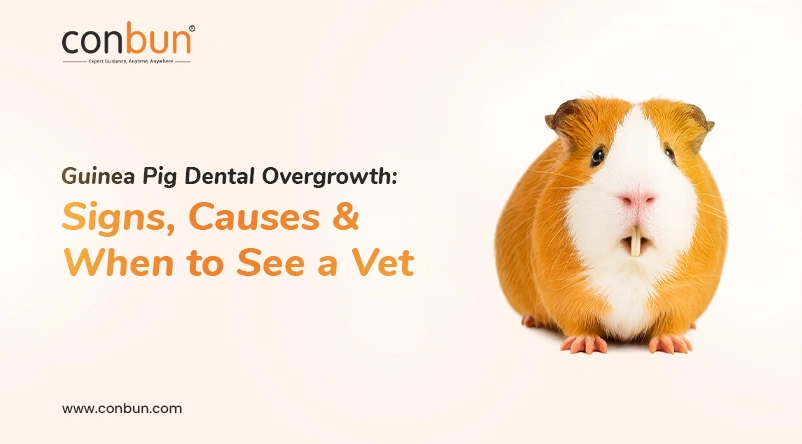
Dental overgrowth in guinea pigs leads to anorexia, constant drooling and weight loss. Because their teeth grow continuously throughout life, untreated dental disease in guinea pigs can quickly become painful and interfere with eating, digestion and overall health.
Understand the early warning signs and seek veterinary care promptly to prevent serious complications. In this guide, I’ll explain why guinea pig teeth become overgrown, how to recognise dental disease and when it’s time to consult a veterinarian.
Understanding Guinea Pig Dental Overgrowth
1. Why Do Guinea Pig Teeth Become Overgrown?
Unlike human teeth, guinea pig incisors and molars are elodont, meaning they grow continuously throughout life. In the wild, they constantly chew on tough grasses, which naturally wears the teeth down. Pet guinea pigs rely on a similar process, which is why providing unlimited grass hay is the foundation of good dental health.
When normal tooth wear doesn't match tooth growth, guinea pigs' overgrown teeth can develop. Common causes include:
Diets low in fibre or hay
Genetic predisposition
Trauma to the jaw or teeth
Jaw alignment abnormalities (malocclusion)
Metabolic bone disease affecting tooth alignment
Although long front teeth are easy to notice, molar overgrowth in guinea pigs is more serious because back teeth develop sharp spurs that injure the tongue and cheeks. According to the BSAVA Manual of Rodents and Ferrets, molar disease is the most common dental disorder seen in guinea pigs and requires veterinary treatment.
2. Signs of Dental Overgrowth
Dental disease often develops gradually, which makes it easy to miss, especially during the early stages. Guinea pigs are prey animals and tend to hide pain instinctively, so subtle behavioural changes are the early indicators signifying that there’s something wrong.
Watch for these common signs:
Reduced appetite or refusing food
Difficulty chewing
Guinea pig drooling ("slobbers")
A persistently wet chin
Weight loss
Choosing soft foods instead of hay
Food falling from the mouth while eating
Reduced droppings
Facial swelling in advanced cases
A guinea pig that stops eating because of dental pain can rapidly develop gastrointestinal stasis, a potentially life-threatening condition. Regularly monitoring your pet’s body weight and eating habits helps detect problems before they become severe.
3. How Is Guinea Pig Dental Disease Diagnosed and Treated?
An exotic animal veterinarian will begin with a thorough physical examination, but because the molars sit far back in the mouth, a complete oral assessment is often required through gentle sedation or anaesthesia.
Diagnosis of dental overgrowth in guinea pigs includes:
Oral examination using specialised equipment
Sedated examination of the molars
Skull radiographs or CT imaging when tooth-root disease is suspected
Body weight and nutritional assessment
Treatment depends on the severity of the condition but commonly includes careful dental burring or trimming under anaesthesia, pain relief, assisted feeding, fluid therapy, and correction of any underlying disease contributing to abnormal tooth growth.
Never attempt to trim your guinea pig's teeth at home. Using nail clippers or household tools can crack the teeth, damage the roots, or cause painful fractures requiring emergency treatment.
Such complications are especially life-threatening for small animals because they not only lead to blood loss but also impact eating, leading to extreme weight loss and lethargy.
Can Dental Overgrowth Be Prevented?
The good news is that many cases of guinea pig dental overgrowth can be reduced through proper husbandry and regular health checks. Since guinea pig teeth grow continuously, they need constant natural wear to remain the correct length.
Here are some simple ways to support good dental health:
Provide unlimited grass hay as the main part of the diet.
Feed a balanced, high-fibre diet with guinea pig-safe leafy vegetables.
Avoid excessive sugary treats and seed mixes.
Monitor your guinea pig's weight weekly to detect early appetite loss.
Schedule routine veterinary dental examinations, especially for older guinea pigs or those with a history of dental disease.
Prevention is always easier than treatment. Catching dental problems early can help avoid pain, repeated procedures, and serious complications.
Healthy Teeth Begin with Expert Care
Dental disease doesn't always start with obviously long front teeth. Sometimes the first clue is that your guinea pig suddenly eats less, develops a wet chin, or begins losing weight. These subtle changes deserve prompt attention because guinea pigs can deteriorate quickly when they stop eating.
With exotic animal vet consultations on Conbun, you can connect with experienced veterinarians without leaving home. Whether you suspect guinea pig dental disease, need advice about feeding after a dental procedure, or want help deciding whether your pet needs an in-clinic examination, professional guidance is just a few taps away.
Conbun is especially useful if your guinea pig:
Is eating less than usual
Has drooling or a persistently wet chin
Has a suspected guinea pig with overgrown teeth
Is losing weight
Needs dietary advice after dental treatment
Requires follow-up support during recovery
Through an Online Vet Consultation, you can discuss symptoms, receive personalised feeding recommendations, and understand the next steps in your guinea pig's care. Early intervention can prevent a manageable dental problem from becoming a medical emergency.
Book a Guinea Pig Health Consultation Online with Conbun before mild dental disease becomes a painful emergency.
Small Animals, Big Responsibility
Guinea pig teeth never stop growing, which is why regular dental care is so important. Early signs such as reduced appetite, drooling, or weight loss should never be ignored. A hay-rich diet, routine health checks, and prompt veterinary treatment are the best ways to protect your guinea pig's oral health.
If your guinea pig is eating less, drooling, or losing weight, book an online appointment with an exotic animal vet on Conbun today. Early diagnosis and treatment can prevent dental disease from becoming a life-threatening problem.
Frequently Asked Questions
Q1. Why do guinea pig teeth keep growing?
Answer: Guinea pig teeth grow continuously throughout life to compensate for constant wear from chewing fibrous plants. Inadequate hay or improper alignment may lead to dental overgrowth and painful dental conditions.
Q2. How do I know if my guinea pig's teeth are overgrown?
Answer: Common signs of dental overgrowth in guinea pigs include drooling, a wet chin, difficulty chewing, weight loss, food dropping from the mouth, and reduced appetite. A veterinary examination is needed to confirm the diagnosis.
Q3. Can overgrown guinea pig teeth grow back after trimming?
Answer: Yes. Guinea pig teeth grow continuously throughout their life, so regular monitoring and a proper diet are important even after a successful treatment.
Q4. What foods help wear down guinea pig teeth?
Answer: Providing unlimited grass hay is the best way to wear down guinea pig teeth. Fresh leafy greens and a high-fibre diet also support healthy chewing.
Q5. How often should guinea pig teeth be checked?
Answer: Check your guinea pig’s mouth and eating habits regularly at home, and have its teeth examined with routine veterinary visits.
Q6. Can I trim my guinea pig's teeth at home?
Answer: No. Guinea pig teeth should only be trimmed or burred by a veterinarian using specialised equipment. Home trimming can cause severe tooth fractures, pain, and permanent dental damage.
References
Keeble, E., & Meredith, A. (2009). BSAVA manual of rodents and ferrets (pp. viii+-359). https://www.researchgate.net/publication/264333764_BSAVA_manual_of_rodents_and_ferrets
Emily, P. P., & Eisner, E. R. (Eds.). (2021). Zoo and wild animal dentistry. John Wiley & Sons. https://books.google.com/books?hl=en&lr=&id=to0kEAAAQBAJ&oi=fnd&pg=PR11&dq=Zoo+and
+Wild+Animal+Dentistry&ots=Xv3nsD-3qy&sig=1ZHecH6s-zJSuVzTscw6yZvSPbY
Table of Content
- Understanding Guinea Pig Dental Overgrowth
- Can Dental Overgrowth Be Prevented?
- Healthy Teeth Begin with Expert Care
- Frequently Asked Questions
- References

Anand Sen
Related Articles

Why do dogs roll in the grass? Is this Normal?
Dogs roll in grass to enjoy scents, scratch irritation, cool down, or express happiness. Usually normal unless excessive or uncomfortable.
Read More ↗Why do dogs roll in the grass? Is this Normal?
Dogs roll in grass to enjoy scents, scratch irritation, cool down, or express happiness. Usually normal unless excessive or uncomfortable.
Read More ↗Why do dogs roll in the grass? Is this Normal?
Dogs roll in grass to enjoy scents, scratch irritation, cool down, or express happiness. Usually normal unless excessive or uncomfortable.
Read More ↗Why do dogs roll in the grass? Is this Normal?
Dogs roll in grass to enjoy scents, scratch irritation, cool down, or express happiness. Usually normal unless excessive or uncomfortable.
Read More ↗Why do dogs roll in the grass? Is this Normal?
Dogs roll in grass to enjoy scents, scratch irritation, cool down, or express happiness. Usually normal unless excessive or uncomfortable.
Read More ↗