.webp)
Fish Swimming Upside Down or Sideways - What It Means and When to Worry
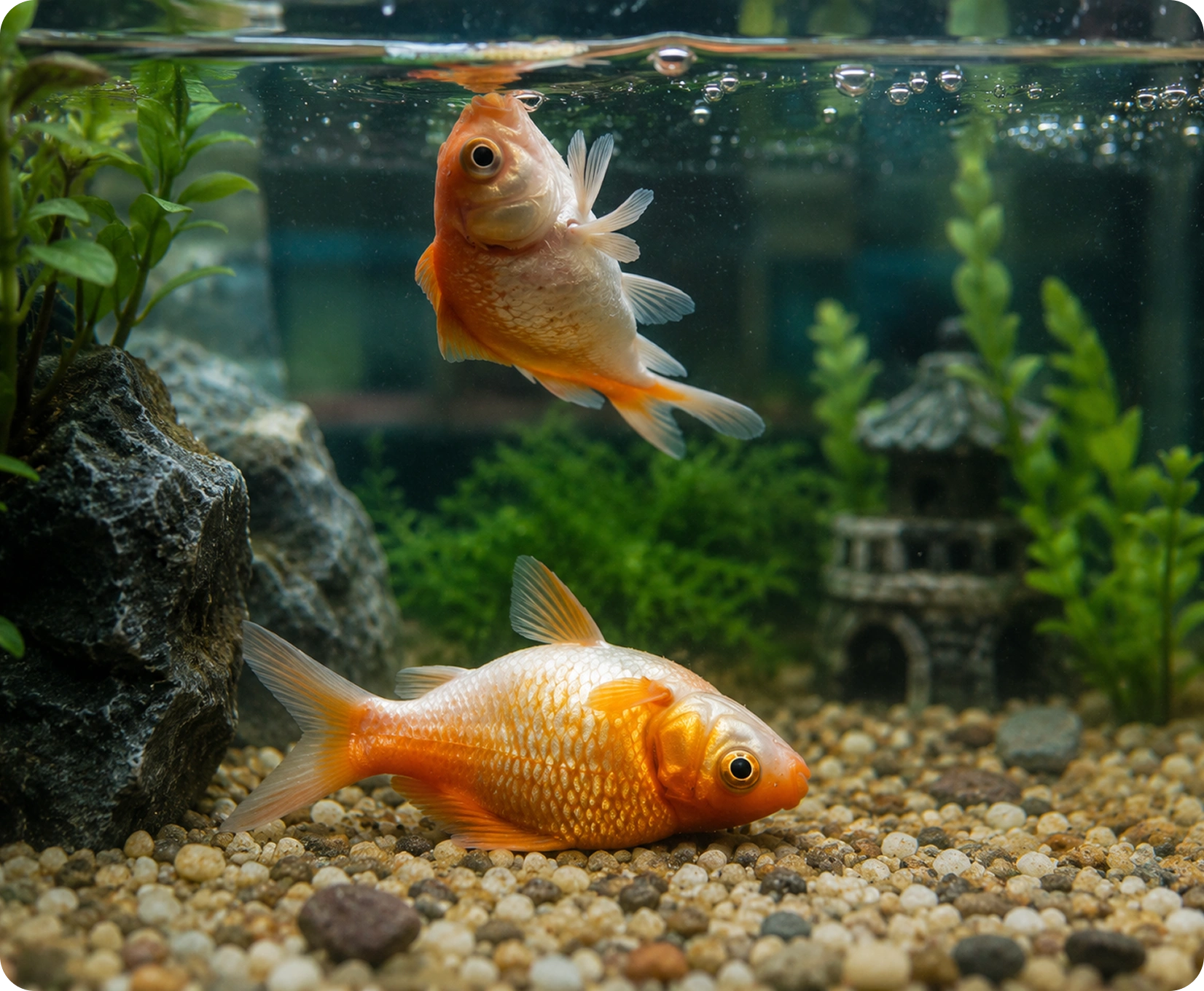
Fish swimming upside down or sideways is usually a sign of a problem with buoyancy, injury, illness or poor water quality. Some fish may briefly lose balance during feeding or rest in an unusual position. But if a fish is persistently swimming sideways or upside down, it is not normal and should never be ignored.
Conditions like swim bladder disease, constipation, infections or unsafe water parameters are among the most common causes behind a fish swimming upside down or sideways. In this guide, I’ll explain why fish lose their balance, the emergency signs to watch for, immediate care you can provide and when to see an aquarium fish health consultation.
Is It Normal for Fish to Swim Upside Down?
Fish naturally maintain their buoyancy in the water using a specialised internal organ called the swim bladder. Healthy aquarium fish under normal conditions should swim upright and move smoothly through the aquarium.
However, there are a few situations where temporary imbalance is considered normal. For example, some fish may briefly roll while competing for food, or certain species may adopt unusual sleeping positions, and a few even display temporary postural changes during courtship. These behaviours are generally short-lived, and the fish quickly returns to normal swimming.
Persistent fish swimming upside down or aquarium fish swimming sideways, however, is not a normal behaviour. If your fish remains unable to maintain its balance for several hours or repeatedly floats, sinks, or rolls over, it is likely experiencing an underlying health problem that requires attention.
Unlike dogs or cats, fish cannot show pain and discomfort through sounds or facial expressions. Instead, swimming is their way of communicating that something is wrong.
The sooner the cause is identified, the better the chances of recovery.
Why Is My Fish Swimming Upside Down or Sideways?
There are various health conditions that can affect a fish’s ability to swim and maintain balance. Identifying the underlying cause is important to provide the correct treatment.
Swim Bladder Disease
Swim bladder disorder is the most common cause behind a fish floating upside down.
The swim bladder is an internal gas-filled organ that controls buoyancy. When it is inflamed, damaged or compressed fish struggle to remain upright.
Common causes include:
Constipation caused by overfeeding
Bacterial infections
Physical injury
Congenital deformities
Pressure from enlarged internal organs
Fish with swim bladder disease may sink to the bottom, float uncontrollably, swim sideways or even struggle to maintain their normal position in the water.
Poor Water Quality
Poor water quality is one of the leading causes of illness in aquarium fish.
Unusually high levels of nitrite, ammonia or nitrate can stress fish and impair their normal body functions. Sudden temperature changes, low dissolved oxygen, or an improperly cycled aquarium may also cause abnormal swimming behaviour in aquarium fish.
Whenever a fish develops balance problems, testing the aquarium water should be one of the first steps.
Overfeeding or Constipation
Overfeeding a fish, particularly with dry floating pellets, can lead to constipation.
This can swell the digestive tract of a fish, placing pressure on the swim bladder, making it hard for the fish to control its buoyancy. This is highly common in bettas and fancy goldfish.
Offering a balanced diet and feeding appropriate portions helps in reducing the risk of digestive problems in fish.
Injury or Trauma
Physical injuries can also affect a fish's balance.
Common causes include:
Fin nipping by aggressive tank mates
Rough handling during transfer
Collisions with aquarium decorations
Damage to internal organs, spine, muscles or swim bladder may result in an abnormal swimming behaviour and should be assessed promptly.
Infection or Systemic Disease
Bacterial infections or parasitic diseases may also affect internal organs leading to a loss of balance in fish.
If abnormal swimming is accompanied by swelling, skin lesions, lethargy, reduced appetite or abnormal breathing, the problem is likely to be more serious than a simple buoyancy-related issue and requires prompt veterinary attention.
Veterinary Insight: Buoyancy disorders are often secondary to poor water quality, nutritional problems, infections, or underlying systemic disease. Treating the root cause is essential for successful recovery.
Emergency Signs You Should Never Ignore
While some buoyancy problems are mild, others may indicate a serious illness that requires prompt veterinary attention. If your fish is swimming abnormally and shows any of the following signs, seek professional advice as soon as possible.
Watch for these emergency signs:
Persistent upside-down or sideways swimming
Inability to swim or stay upright
Floating uncontrollably at the surface
Lying on the bottom of the tank
Refusing food for more than a day
Rapid or laboured gill movement
Bloated abdomen
Visible wounds or injuries
White spots or cotton-like patches
Fin rot or damaged fins
Severe lethargy
Complete loss of balance
Multiple fish in the aquarium showing similar symptoms
Important Vet Insight: If several fish in your aquarium have developed abnormal swimming at the same time, water quality should be inspected first. High ammonia or nitrite levels may quickly affect every fish in the aquarium and require immediate corrective action.
What Should You Do If Your Fish Is Swimming Sideways?
If your fish has developed balance and buoyancy-related problems, act quickly to improve its chances of recovery.
Test the aquarium water immediately for nitrite, ammonia, nitrate, pH, and temperature.
Perform a water change if water quality is poor.
Stop feeding for 24-48 hours if constipation or swim bladder disease is suspected.
Resume feeding with appropriate foods in small portions after the fasting period.
Isolate the affected fish in a hospital tank if aggression or infectious disease is suspected.
Observe breathing, appetite, and swimming behaviour closely.
Consult a veterinarian if symptoms continue or additional signs of illness develop.
Quick Reference Guide
Situation
What You Should Do
Brief imbalance during feeding
Observe; this may be normal.
Upside-down swimming for several hours
Test water quality and seek veterinary advice.
Multiple fish affected
Check water parameters immediately.
Bloated fish with buoyancy problems
Schedule a veterinary consultation.
Fish refusing food
Prompt veterinary assessment is recommended.
When to Book an Online Fish Vet Consultation
Not every fish with buoyancy problems requires emergency treatment. However, a fish swimming upside down persistently should always be evaluated. An aquarium fish health consultation can help you identify whether the problem is related to nutrition, water quality, infection or swim bladder disorder.
If your fish continues to swim upside down or sideways despite water changes, develops poor appetite or symptoms like lethargy, schedule a veterinary appointment on Conbun. Through an instant online vet consultation, examine your fish’s condition and get a treatment plan immediately.
If you're unsure about the cause, don't wait for symptoms to worsen. Early advice can often prevent more serious complications.
Frequently Asked Questions
Why is my pet fish upside down but still alive?
A fish swimming upside down but still alive is suffering from a buoyancy problem, which is most commonly a result of swim bladder disease, poor water quality, injury and constipation. Test your aquarium immediately and monitor for other symptoms like loss of appetite or rapid breathing.
Can a swim bladder fix itself?
Yes. A mild swim bladder problem is generally caused by constipation or temporary digestive issues and may resolve with proper care. However, cases caused by infection, injury or structural abnormalities require veterinary intervention.
How do I fix my fish swimming upside down?
Start by testing the water quality, performing a partial water change if needed and withholding food for 24-48 hours if constipation is suspected. If your fish doesn’t improve or develops other symptoms, consult a vet immediately.
Does aquarium salt cure swim bladder disease?
No. Aquarium salt does not cure swim bladder disease. While it is known to help manage stress or certain types of external infections in some freshwater species, it won't treat the underlying cause of buoyancy disorders.
What is the fastest way to cure a swim bladder?
The fastest approach is to identify and treat the underlying cause. Check water quality, correct any environmental problems, fast the fish if constipation is suspected, and seek veterinary advice for persistent symptoms or suspected infections. Early treatment offers the best chance of recovery.
Conclusion
Persistent upside-down swimming in fish should never be dismissed as normal behaviour. While swim bladder disorders are common, infections, injuries, poor water quality and digestive disorders can lead to similar symptoms. Testing the water quality of the aquarium and seeking veterinary guidance early are the most important steps.
If your fish is swimming sideways, upside down or showing other signs of illness, book an online fish vet consultation with Conbun. Early expert guidance protects your fish and the health of your entire aquarium.
Table of Content
- Is It Normal for Fish to Swim Upside Down?
- Why Is My Fish Swimming Upside Down or Sideways?
- Emergency Signs You Should Never Ignore
- What Should You Do If Your Fish Is Swimming Sideways?
- When to Book an Online Fish Vet Consultation
- Frequently Asked Questions
- Conclusion

Anand Sen
Related Articles

Why do dogs roll in the grass? Is this Normal?
Dogs roll in grass to enjoy scents, scratch irritation, cool down, or express happiness. Usually normal unless excessive or uncomfortable.
Read More ↗Why do dogs roll in the grass? Is this Normal?
Dogs roll in grass to enjoy scents, scratch irritation, cool down, or express happiness. Usually normal unless excessive or uncomfortable.
Read More ↗Why do dogs roll in the grass? Is this Normal?
Dogs roll in grass to enjoy scents, scratch irritation, cool down, or express happiness. Usually normal unless excessive or uncomfortable.
Read More ↗Why do dogs roll in the grass? Is this Normal?
Dogs roll in grass to enjoy scents, scratch irritation, cool down, or express happiness. Usually normal unless excessive or uncomfortable.
Read More ↗Why do dogs roll in the grass? Is this Normal?
Dogs roll in grass to enjoy scents, scratch irritation, cool down, or express happiness. Usually normal unless excessive or uncomfortable.
Read More ↗