.webp&w=384&q=75)
Complete Hamster Care Guide: Everything New Hamster Owners Need to Know

Caring for a pet hamster involves much more than just food and a cage. Good hamster care for beginners includes species-appropriate nutrition, safe, spacious housing, exercise, enrichment, regular cleaning, suitable bedding, and regular health monitoring.
This is a complete hamster care guide that will cover feeding, housing, grooming, behaviour, preventive care and veterinary support to help new owners establish healthy routines.
What Does Every New Hamster Owner Need?
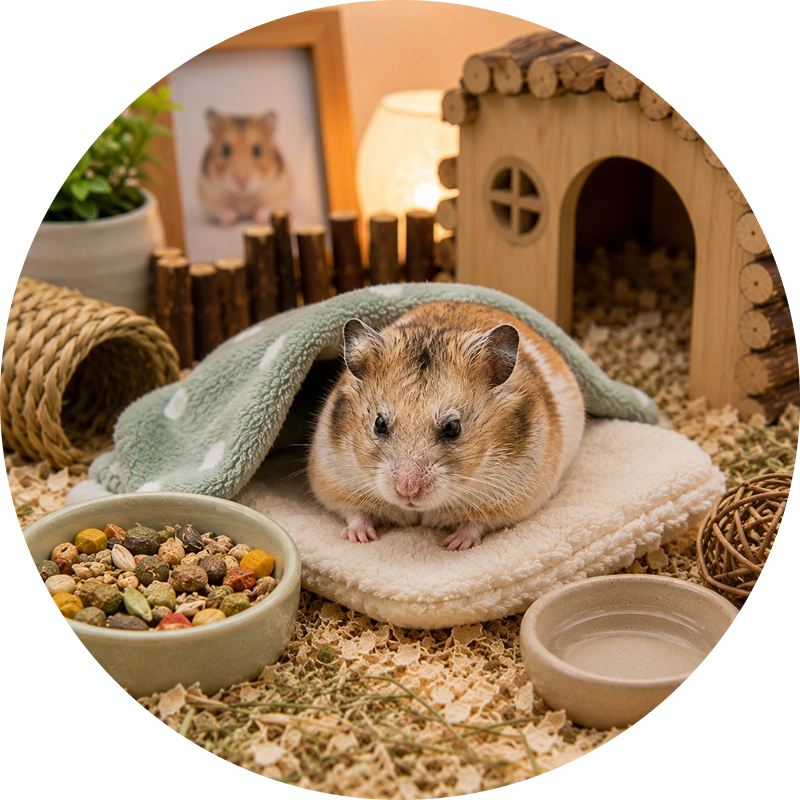
Hamster care at home works best when the environment supports natural behaviours like chewing, burrowing, foraging and exploring.
Because hamsters can deteriorate quickly when ill, changes in appetite, activity, breathing, droppings, or behaviour should never be ignored.
Before bringing a hamster home, prepare:
Appropriately sized enclosure
Safe, absorbent bedding
Species-appropriate hamster food
Fresh drinking water
Food bowl
Solid exercise wheel
Hiding house
Tunnels and enrichment
Safe chew items
Sand bath where appropriate
Secure carrier
Basic grooming supplies
Veterinary Insight: Because hamsters are prey animals, they tend to hide signs of illness. Recognise health changes on time before their condition becomes serious.
Hamster Cage Setup
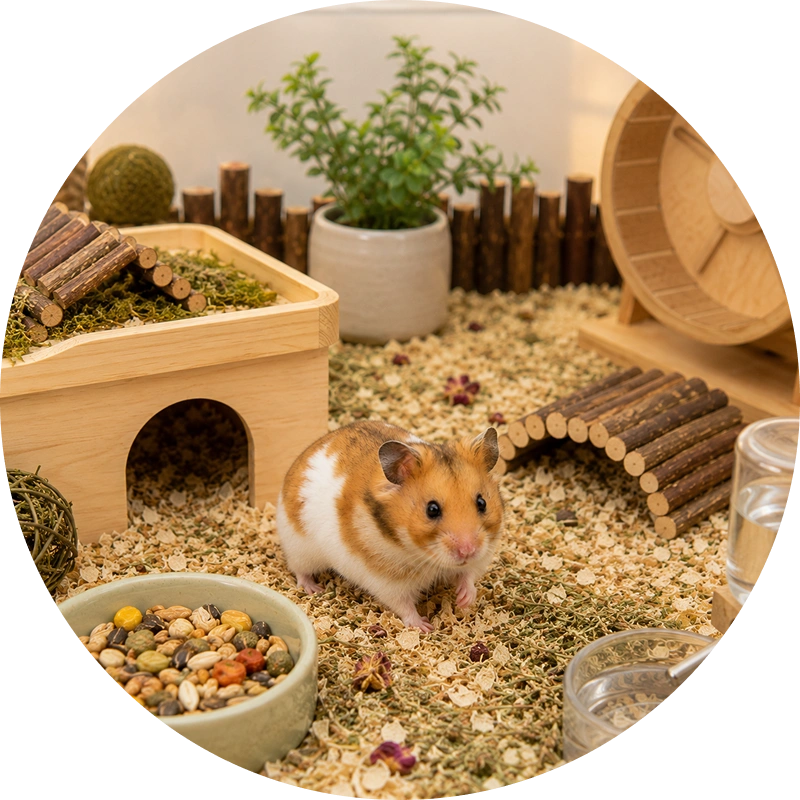
A suitable hamster cage setup should provide sufficient floor space for movement, digging and exploration rather than relying only on height. The enclosure must have good ventilation, secure doors, safe flooring, and deep bedding. It should have a comfortable temperature.
Place the enclosure somewhere quiet, away from extreme heat, cold drafts and excessive household noise. Preparing everything before arrival gives your hamster a safe place to settle immediately.
Ensure that the living space of your rabbit has a stable environment. Too much cold exposure can lead to a dangerous involuntary stage called Torpor in hamsters.
Feeding Your Hamster the Right Way
Build a Balanced Hamster Diet
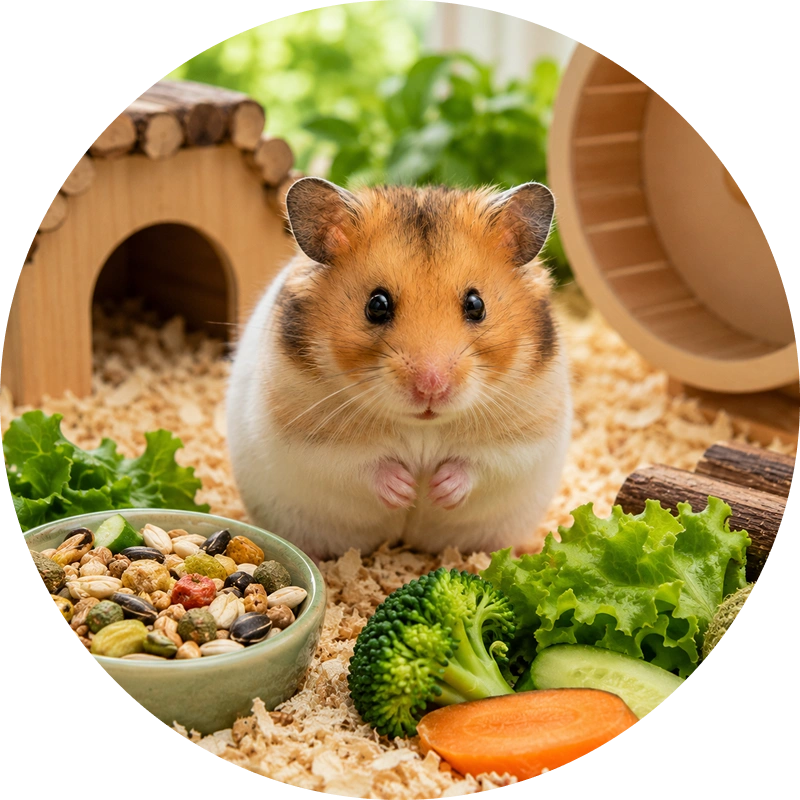
A hamster diet chart should be based on species, age and individual requirements. A good hamster food guide must include a species-appropriate commercial diet or uniform pellets (making up 70–80% of daily food), controlled portions, suitable fresh vegetables, appropriate protein sources and fresh drinking water.
Nutritional requirements can vary between species and life stages, so avoid assuming that one diet works for every hamster.
Safe Foods and Foods to Avoid
Safe/Appropriate Options | Foods to Avoid |
Species-appropriate hamster food | Chocolate |
Suitable vegetables in small amounts | Onion and garlic |
Appropriate seeds in moderation | Alcohol |
Suitable protein sources | Highly processed foods |
Fresh water | Excessively sugary foods |
Dietary changes should be introduced gradually, and treats should remain limited. Excessive feeding may lead to obesity and nutritional imbalance. Poor nutrition can also lead to skin and hair issues in hamsters.
Food hoarding is a normal hamster activity that is ingrained in a hamster’s behaviour due to evolution, but spoiled food should be removed.
Veterinary Insight: A balanced diet and appropriate food texture support overall health, while excessive treats can contribute to obesity and nutritional problems.
Creating a Safe and Enriching Hamster Home
Hamster housing directly affects physical and behavioural wellbeing. Provide deep, safe bedding that allows burrowing and avoid unsuitable or heavily scented materials.
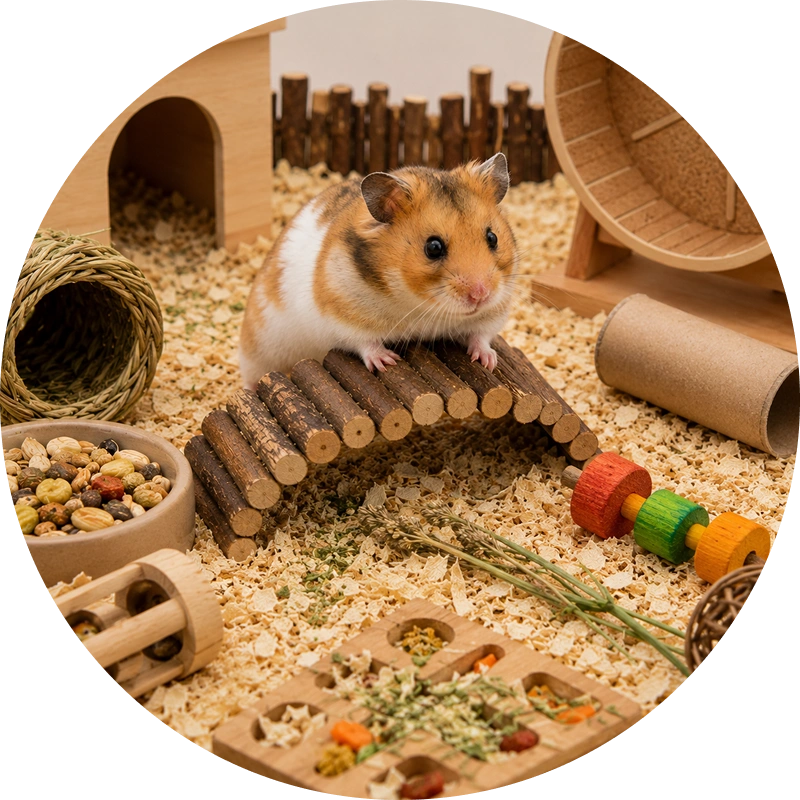
A solid-surface exercise wheel of an appropriate size provides safe running opportunities. Tunnels, hideouts and supervised exploration add further opportunities for movement.
Hamster Enrichment Ideas
Useful hamster enrichment ideas include:
Foraging activities
Tunnels
Digging opportunities
Cardboard enrichment
Hiding places
Safe nesting materials
Enrichment must focus on encouraging natural behaviours rather than simply filling the enclosure with toys.
Keep the enclosure away from extreme temperatures, drafts and excessive household noise. A stable environment can help reduce stress and support normal behaviour.
Small cages, loud noises, bright lights, or unclean enclosures can lead to behavioural problems in hamsters. In addition, poor enclosure hygiene can lead to eye infections in hamsters.
Understanding Hamster Behaviour
Hamsters commonly spend their active period burrowing, chewing, foraging, grooming, hoarding food, running on their wheel, exploring and scent marking. Many hamsters are most active at night, although activity patterns vary between species and individuals.
Hamster Behaviour Problems and Warning Signs
Normal hamster behaviour includes burrowing, foraging, grooming, chewing and activity during the animal's usual active period. Sudden changes in appetite, activity, breathing or behaviour may indicate stress or illness and should be monitored closely.
These signs indicate stress or illness in hamsters:
Sudden lethargy
Persistent hiding
Repetitive abnormal behaviour
Newly developed aggression
Reduced activity
Changes in grooming behaviour
While not every unusual behaviour indicates disease, sudden changes from your hamster's normal routine deserve attention.
Grooming and Hamster Health Care
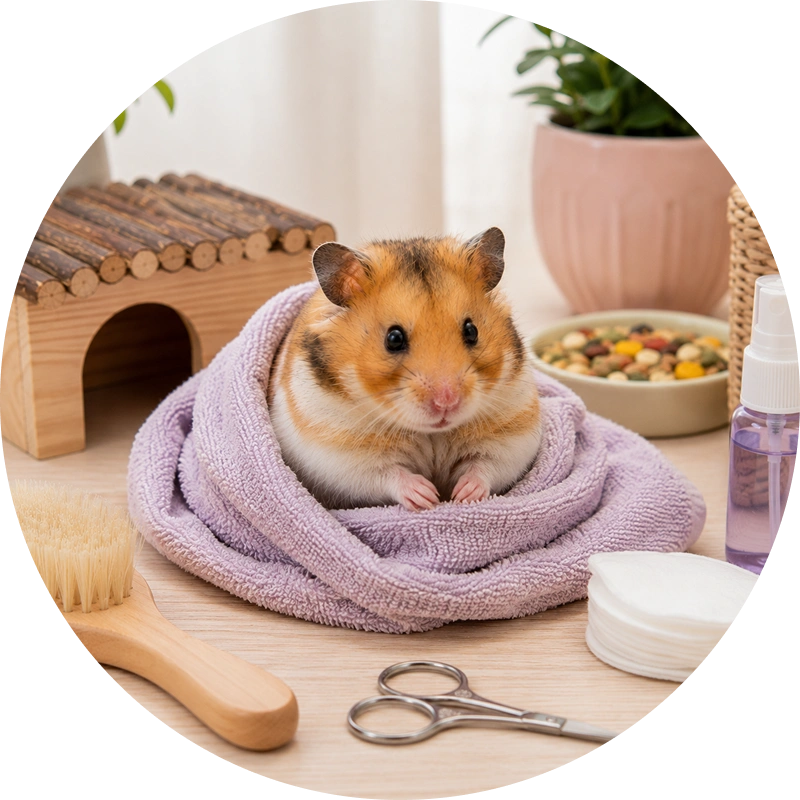
Basic hamster grooming involves observing the coat, checking the skin, assessing nails and maintaining a clean environment. Grooming needs vary with species and coat type. Long-haired hamsters may require additional coat care.
Hamster teeth grow continuously. So, they require consistent chewing opportunities. Difficulty eating, constant drooling, weight loss or abnormal tooth appearance indicate dental problems in hamsters.
Hamster Health Problems and Warning Signs
Important hamster health problems can include:
Appetite loss
Weight changes
Abnormal droppings
Breathing difficulty
Eye discharge
Hair loss
Skin irritation
Swelling
Lethargy
These symptoms can have different causes, so avoid diagnosing a condition from one sign alone.
Veterinary Insight: Persistent appetite loss, breathing difficulty, severe diarrhoea or marked lethargy warrants prompt veterinary assessment.
Do Hamsters Need Vaccinations?
Routine vaccinations are not generally a standard requirement for pet hamsters. Instead, hamster preventive care mainly focuses on hygiene, nutrition, safe housing, routine observation and veterinary examinations when health concerns arise.
Preventive care for hamsters focuses primarily on providing suitable nutrition, housing, hygiene, environmental management and routine veterinary assessment to detect health issues.
Daily Hamster Care Checklist
Every Day | Every Week / As Needed |
Fresh water | Spot-clean enclosure |
Check food intake | Refresh appropriate bedding |
Observe behaviour | Clean food and water equipment |
Check breathing | Inspect wheel and enrichment |
Remove spoiled fresh food | Deeper enclosure maintenance |
Provide appropriate exercise | Check enclosure safety |
Avoid excessive full-cage cleaning because it can be stressful. Maintain hygiene while preserving some familiar, uncontaminated nesting material where appropriate.
Veterinary Insight: Daily observation is one of the simplest hamster health care tips because it helps owners identify subtle changes early.
When Should You Take Your Hamster to a Vet?
Seek veterinary attention for:
Persistent appetite loss
Difficulty breathing
Severe diarrhoea
Significant injury
Abnormal swelling
Eye problems
Sudden severe lethargy
Persistent skin problems
Unexplained weight loss
Neurological abnormalities
An instant pet consultation can provide initial guidance, while a Vet Clinic Online service may offer remote veterinary support. A Pet Care app can also make professional advice more accessible.
Important: Emergency symptoms, severe injuries, breathing difficulties, or conditions requiring a physical examination, diagnostic testing, or surgery require an in-person veterinary clinic visit.
Need Expert Hamster Care Advice? Conbun Can Help
Conbun helps pet parents seek professional guidance about hamster nutrition, housing, behaviour, appetite changes, skin concerns, digestive problems and preventive healthcare.
Book an online veterinary consultation on Conbun can provide initial veterinary guidance, while a Hamster Health Consultation Online can help owners understand potential next steps. Conbun is an online pet care app that allows pet owners to access professional guidance conveniently. Get expert pet health advice online instantly by scheduling a remote vet appointment.
Conclusion
Good hamster care means providing species-appropriate nutrition, safe, spacious housing, suitable bedding, exercise, and enrichment. Monitor appetite and behaviour daily, maintain hygiene and respond promptly to warning signs.
Use this guide as a starting point, then explore dedicated resources covering hamster diet, housing, grooming, behaviour and common health conditions.
Frequently Asked Questions
Q1. How do you take care of a hamster for beginners?
Ans. Ensure you provide a spacious enclosure, deep safe bedding, a species-appropriate diet, fresh water, a suitable wheel, hiding places and enrichment. Monitor appetite, breathing, droppings, and behaviour daily, and contact a veterinarian if significant changes appear.
Q2. What should a new hamster owner buy?
Ans. A new owner should prepare an appropriately sized enclosure, safe bedding, hamster food, water equipment, a solid wheel, a hideout, tunnels, chew items, enrichment, a carrier and basic grooming supplies before bringing the hamster home.
Q3. What should hamsters eat every day?
Ans. Provide your hamsters a species-appropriate commercial diet in controlled portions. Offer fresh water, fresh fruits & vegetables consistently. Limit treats and introduce new foods gradually to reduce digestive upset and avoid nutritional imbalance.
Q4. How do I know if my hamster is sick?
Ans. Warning signs include reduced appetite, lethargy, breathing difficulty, diarrhoea, abnormal droppings, swelling, eye discharge, hair loss, skin irritation, weight loss or sudden behaviour changes. Prompt veterinary assessment is important when symptoms are severe or persistent.
Q5. Do hamsters need vaccinations?
Ans. Most commonly kept pet hamsters do not routinely require vaccinations. Preventive care focuses on suitable nutrition, safe housing, hygiene, observation and veterinary assessment when needed. A veterinarian can advise if a specific health circumstance changes this recommendation.
Q6. When should I take my hamster to a vet?
Ans. Consider visiting a veterinarian for persistent appetite loss, severe diarrhoea, injury, abnormal swelling, eye problems, marked lethargy, unexplained weight loss or neurological changes.
Table of Content
- What Does Every New Hamster Owner Need?
- Hamster Cage Setup
- Feeding Your Hamster the Right Way
- Creating a Safe and Enriching Hamster Home
- Understanding Hamster Behaviour
- Hamster Health Problems and Warning Signs
- When Should You Take Your Hamster to a Vet?
- Need Expert Hamster Care Advice? Conbun Can Help
- Conclusion
- Frequently Asked Questions

Anand Sen
Categories