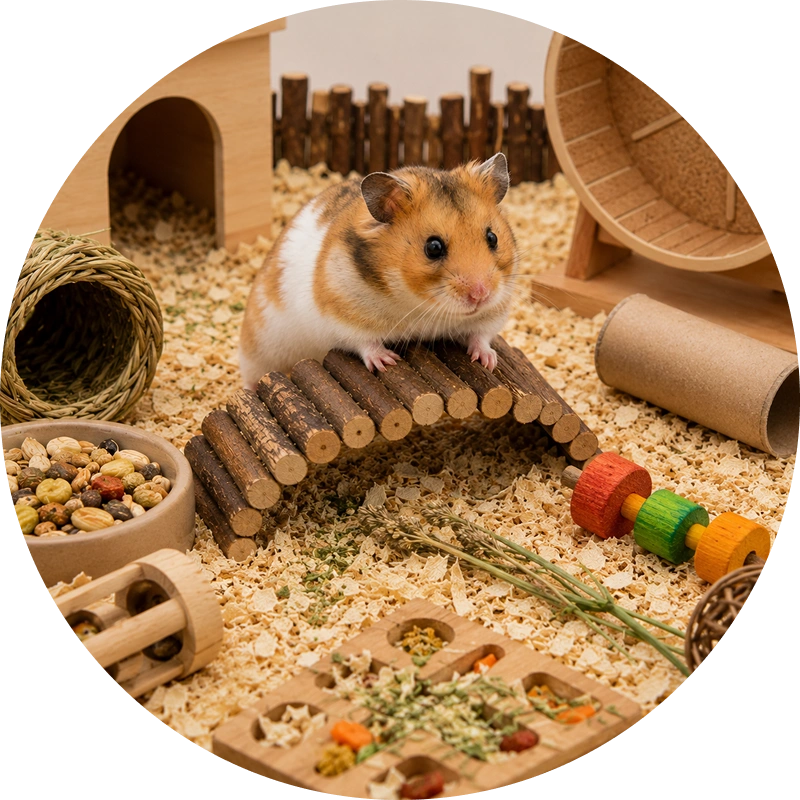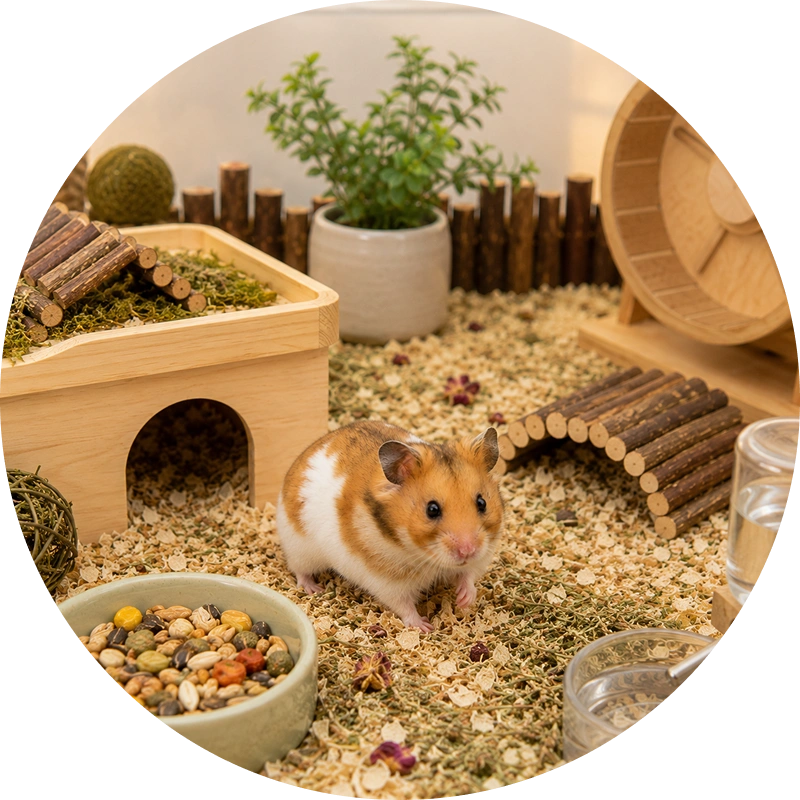
Choosing the Right Hamster Type for Your Home and Lifestyle

Choosing the best hamster for your home goes beyond appearance or size. While choosing a hamster, consider its adult size, handling preferences, temperament, housing requirements, activity level, social behaviour, budget and your experience with small pets.
Syrian hamsters are larger and solitary, while dwarf hamsters are smaller but can be quicker and hence more challenging to handle. Roborovski hamsters are highly active and may suit high-energy households or owners who enjoy observing rather than frequently handling their pet.
Choosing the right hamster type means matching its needs with your household, available space and ability to provide consistent care.
What Should You Consider Before Choosing a Hamster?
Space
Evaluate the floor space of the enclosure, the bedding depth, exercise wheel, enrichment and room for natural burrowing. A hamster should not be selected simply because it is small.
Handling and Temperament
There are behavioural differences between hamsters. While some are comfortable with gentle handling, others become nervous or try to escape. Consider how much interaction you want.
Time
All hamsters require daily observation, interaction, feeding, fresh water, cleaning, enrichment and health monitoring, and all of this takes a considerable portion of your time.
Budget
Plan for an enclosure, bedding, food, wheel, enrichment, replacement supplies and veterinary care.
Before choosing a hamster for your home, match its housing, activity, temperament and care requirements with your available space, time, budget and experience. The smallest hamster is not necessarily the easiest or cheapest to care for.
Veterinary Insight: Species and individual personality traits influence hamster care to a significant extent. A suitable match makes responsible housing, enrichment, health monitoring and preventive care easier.
Syrian vs Dwarf vs Other Hamster Types
Hamster Type | Typical Size | Temperament & Behaviour | Beginner Consideration |
Syrian Hamster | Larger | Often easier to observe and handle | Good option for many first-time owners; housed alone |
Campbell's Dwarf | Small | Active and quick | Requires careful handling and suitable housing |
Winter White Dwarf | Small | Active and alert | Individual temperament varies |
Roborovski | Very small | Extremely active and fast | Better for observation than frequent handling |
Chinese Hamster | Small | Generally active and agile | Requires species-appropriate housing and handling |
The term "hamster breed" is commonly used by most pet owners, but these animals are more accurately discussed as different hamster species or types.
Size isn't the only factor that determines difficulties in care. Smaller hamsters still need substantial floor space, deep bedding, enrichment and appropriate equipment.
Syrian Hamster: Is It the Best Choice for Beginners?
First-time owners generally consider Syrian hamsters because their larger bodies make them easier to observe and handle. They are generally solitary and should be housed alone, so owners do not need to manage companion introductions or potential territorial conflicts.
A Syrian hamster may suit owners who want a larger hamster, prefer individual housing, want regular interaction and can provide spacious accommodation.
Veterinary Insight: A Syrian hamster still requires substantial enclosure space, deep bedding, exercise and enrichment. "Beginner-friendly" does not mean low-maintenance.
Are Dwarf Hamsters Good for First-Time Owners?
Campbell's dwarf, Winter White and Roborovski hamsters are smaller than Syrian hamsters, but their size does not automatically make them easier to care for. Their fast movements can make handling more challenging, particularly for inexperienced owners.
Roborovski hamsters are highly energetic, active and may be better suited to people who enjoy watching natural behaviours rather than frequently handling their pet.
Dwarf hamsters, while small in size, still need species-appropriate housing, deep bedding, exercise, enrichment and a stable environment. Owners should research the specific type before purchase because care requirements and individual temperaments may differ.
Dwarf hamsters suit first-time owners who understand their needs. However, their small size and quick movements make them harder to handle. In addition, they require spacious housing, deep bedding, exercise and enrichment.
Which Hamster Is Best for a Small Home?
A small home does not automatically mean a small enclosure is appropriate. Before choosing a hamster, measure the space available for its enclosure and consider floor area, bedding depth, wheel size, enrichment and safe placement. Also consider household noise and room temperature.
The best hamster for a small home is the type whose full housing and care requirements you can accommodate safely. Avoid choosing a hamster solely because it is small; all hamsters need appropriate enclosure space, bedding, exercise and enrichment.
Veterinary Insight: Measure your available enclosure space before choosing the hamster, not after bringing one home.
Which Hamster Is Easiest to Handle?
Handling depends on both hamster type and individual temperament. Syrian hamsters are larger and may be easier to hold securely. Dwarf hamsters can be quicker and harder to handle, while Roborovski hamsters are particularly fast and active. Young hamsters also need gradual socialisation.
Safe Handling
Let the hamster approach voluntarily.
Avoid waking it suddenly.
Use both hands when lifting.
Keep handling close to a safe surface.
Stop if the hamster shows fear or stress.
Trust develops through calm, predictable and positive experiences rather than forced interaction.
How Much Time and Money Does Each Hamster Require?
Hamster ownership cost depends more on quality care than on the animal's purchase price. Main expenses include an enclosure, bedding, food, exercise wheel, toys, enrichment, replacement supplies and veterinary care.
Care Factor | Smaller/Dwarf Types | Syrian Hamster |
Food | Moderate | Moderate |
Bedding | Significant | Significant |
Enrichment | Essential | Essential |
Housing | Spacious | Spacious |
Veterinary care | Species and health dependent | Species and health dependent |
No hamster type is entirely low-cost or maintenance-free. The largest expenses usually stem from housing, bedding, food, enrichment, toys and veterinary care rather than the initial purchase price.
One Hamster or Two? Understand Social Needs
Syrian hamsters are generally solitary and should be housed alone. Some dwarf hamsters have historically been kept in pairs or groups, but compatibility is not guaranteed, and fighting can cause serious injury. Owners should never assume two hamsters can safely share an enclosure.
Never introduce hamsters simply to prevent loneliness without researching the specific species and seeking appropriate veterinary or welfare guidance.
Which Hamster Is Right for Your Experience Level?
First-Time Owner
Choose a hamster type whose temperament and housing requirements you can confidently manage. Prioritise safe handling and a suitable enclosure over appearance.
Experienced Small-Pet Owner
You may feel comfortable caring for faster, more active dwarf or Roborovski hamsters, provided you understand their specific requirements.
Owners Wanting Frequent Handling
Consider individual temperament and handling ability rather than choosing solely by species.
Veterinary Insight: Research the adult animal and its lifetime care requirements before purchasing. Never choose based only on how cute or small the hamster looks at the pet shop.
Need Help Choosing the Right Hamster? Conbun Can Help
Conclusion
Match your hamster to your space, handling preferences, experience and budget. Understand species-specific behaviour and provide appropriate housing, bedding, exercise and enrichment. Never assume that a smaller hamster needs less care. Choosing the right hamster type before bringing one home can support better welfare and create a healthier, more rewarding relationship.
With an instant pet consultation on Conbun, pet parents can seek professional guidance about hamster type selection, housing, nutrition, behaviour, enrichment, existing health concerns and preventive care.
Frequently Asked Questions
Q1. What is the best hamster for beginners?
Ans. Syrian hamsters are generally considered a practical choice for beginners because they are larger and easier to handle. However, individual temperament and your ability to offer spacious, enriching housing should determine the final choice.
Q2. Should I get a Syrian or dwarf hamster?
Ans. Go for a Syrian hamster if you prefer a larger, solitary hamster that may be easier to handle. Choose a dwarf type if you are comfortable with a smaller and high-energy breed.
Q3. Which hamster is easiest to handle?
Ans. Syrian hamsters may be easier to handle physically because of their larger size. However, temperament varies between individuals. Calm socialisation, gentle handling and allowing the hamster to approach voluntarily are more important than relying on species alone.
Q4. Which hamster is best for a small home?
Ans. The Winter White Dwarf Hamster or Roborovski Hamster can be the best choices for a small home. They are small in size, quiet, and need less physical room for housing. However, all hamsters still require a large enclosure with a running wheel for exercise
Q5. Are dwarf hamsters easier to care for?
Ans. Not necessarily. Dwarf hamsters are smaller but can be fast and harder to handle. They still need spacious housing, deep bedding, exercise, enrichment, appropriate nutrition and daily health observation, so smaller size does not mean simpler care.
Q6. Can two hamsters live together?
Ans. Syrian hamsters are generally solitary in nature, so they should be housed alone. While some dwarf hamsters tolerate companions, compatibility is not guaranteed, and aggression may lead to injury. Do not house two hamsters together without species-specific welfare guidance.
Table of Content
- What Should You Consider Before Choosing a Hamster?
- Syrian vs Dwarf vs Other Hamster Types
- Syrian Hamster: Is It the Best Choice for Beginners?
- Which Hamster Is Easiest to Handle?
- How Much Time and Money Does Each Hamster Require?
- One Hamster or Two? Understand Social Needs
- Which Hamster Is Right for Your Experience Level?
- Need Help Choosing the Right Hamster? Conbun Can Help
- Conclusion
- Frequently Asked Questions

Anand Sen
Get Conbun in your Google results
Add Conbun as a preferred source and Google will show our vet-written guides more often in your Search results and AI answers.
Categories