Choosing the Right Cat Breed for Your Home and Lifestyle

Written by: Anand Sen; Reviewed by: Dr. Manisha
The best cat breed for your home is not the most popular or expensive one. It’s the one that matches your lifestyle, living conditions, budget, experience and the amount of time you can dedicate to its care. Choosing the right breed prevents behavioural challenges, makes daily care easy and creates a happier life for both you and your cat.
If you’re wondering which cat breed is right for you, this guide will help you make an informed decision. You’ll learn how you can compare breeds based on activity levels, temperament, grooming needs, health considerations, and long-term costs, so you can make the best choice for your home.
Before Choosing a Breed, Understand Your Lifestyle
Before comparing different cat breeds, take a moment to think about your own lifestyle and daily routine. The right cat for one family may be the wrong one for another.
Ask yourself these questions before adopting a cat.
Question | Why It Matters |
Do I live in an apartment or a house? | Determines enrichment opportunities and the space available for a cat. |
How much time can I spend with my cat? | Some breeds enjoy frequent interaction and play, while some prefer to be alone most of the day. |
Can I manage regular grooming? | Long-haired cats require more coat maintenance, while short-haired ones require minimal grooming efforts. |
What's my monthly pet care budget? | Food, grooming, and veterinary costs vary between cats. |
Do I have children or other pets? | Temperament and sociability become especially important. |
Is this my first cat? | Beginner-friendly breeds are generally easier to manage. |
Do not choose a breed that simply looks beautiful. Instead, focus on finding a cat whose care requirements fit your routine, budget and lifestyle. This approach results in a stronger bond and fewer behavioural and management challenges.
Veterinary Insight: According to veterinary literature, every cat has a unique personality, but breed characteristics to a great extent influence energy levels, sociability, grooming requirements and certain inherited health conditions. Understanding these characteristics can help you select a cat for your home that best fits your lifestyle.
Key Factors That Help You Choose the Right Cat Breed
Before searching for the most popular cat breeds in India, take a moment to understand that no breed is perfect for everyone. The best choice is the one that fits comfortably into your everyday life.
Temperament
According to an article published in Animals, temperament is a phenotypic trait which is influenced by genetics, the environment and their interactions. So, cats have different personalities, even within the same breed.
Different cat breeds have different temperaments:
Affectionate and people-oriented; example: Ragdoll.
Independent and happy spending time alone; example: British Shorthair, Russian Blue.
Playful and energetic; example: Bengal, Cornish Rex
Quiet and relaxed; example: Persian Cat, Birman
Vocal and highly interactive; example: Sphynx, Maine coon
If you want a companion that enjoys family interaction and cuddles, look for breeds with social, friendly temperaments. If you work long hours, you may need an independent breed that can adapt better to your schedule.
Activity Level
Not all cats have the same energy levels.
Active breeds like Abyssinian, Bengal Cat, Egyptian Mau, Savannah and Balinese need:
Daily physical activity
Climbing opportunities
Regular mental stimulation
More relaxed breeds are generally content with shorter play sessions and quieter indoor environments. Regardless of breed, all cats benefit from enrichment that encourages natural behaviours like scratching, climbing or hunting through play.
Grooming Needs
Coat type has a significant impact on daily care.
Short-haired cats like the British Shorthair or the Bengal Cat usually need occasional brushing.
Medium-haired cats like Ragdoll and Birman benefit from brushing several times each week.
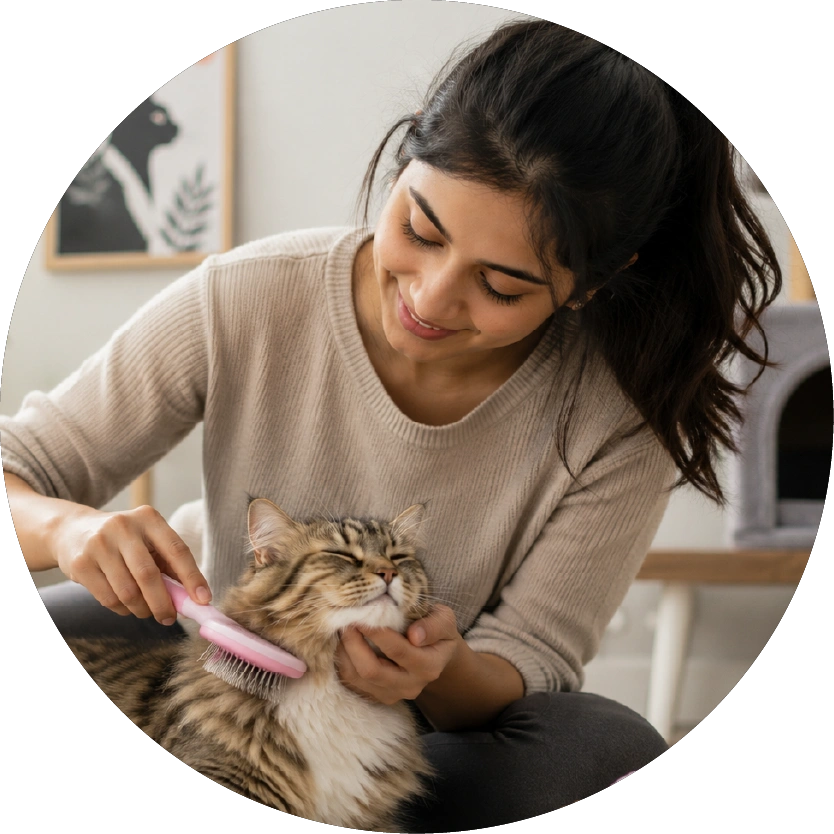
Long-haired cats like Maine Coon and Persian cats often require regular at-home grooming to prevent tangles and reduce hairballs.
If you have a busy schedule, a short-haired breed may be a practical choice.
Health Considerations
Some cat breeds are predisposed to certain inherited health conditions. For example, according to the Journal of Feline Medicine and Surgery, Persian Cats are genetically predisposed to conditions like Polycystic Kidney Disease (PKD).
While this doesn’t mean every cat will develop these problems, understanding potential risks allows you to better plan for preventive care.
Regular wellness examinations, vaccinations, parasite prevention, and good nutrition remain essential for every breed.
Budget
Owning a cat involves ongoing costs beyond the initial adoption fee. Your monthly budget should include:
High-quality food
Routine veterinary care
Parasite prevention
Grooming (if needed)
Toys and environmental enrichment
Veterinary Insight: Choose a cat whose long-term care fits both your lifestyle and budget, not just one that's inexpensive to adopt.
Which Type of Cat Is Best for Your Lifestyle?
Instead of choosing a breed based on popularity, think about how well it fits your daily routine, home, and experience level. While every cat has its own personality, certain breeds are known for traits that make them better suited to different lifestyles.
Best Cat Breeds for Apartments
Apartment living doesn't prevent you from owning a cat. Still, breeds with moderate energy levels often adapt more comfortably to smaller spaces than breeds with high energy levels and exercise requirements.
Cat breeds suitable for apartments include:
British Shorthair: Calm, independent, and adaptable to indoor living.
Ragdoll: Gentle, affectionate, and generally relaxed around the home.
Russian Blue: Quiet, intelligent, and comfortable in peaceful indoor environments.
These cats still need climbing spaces, scratching posts, toys, and regular playtime to stay physically and mentally healthy.
Best Cat Breeds for Families
Families should go for breeds known for their friendly, calm and sociable temperament.
Popular options include:
Maine Coon: Social, playful, and typically gets along well with children.
Ragdoll: Calm temperament and enjoys spending time with people.
Burmese: Affectionate, energetic, and thrives on family interaction.
Children should always be taught how to handle cats gently and respectfully.
Best Cat Breeds for Busy Owners
If you’re away for work during the day or have a busy schedule that are generally more independent.
Examples include:
British Shorthair
American Shorthair
These cats often tolerate alone time better than social breeds. However, it should be noted that every cat, regardless of the breed, still requires daily interaction, mental enrichment, and routine care.
Best Low-Maintenance Cat Breeds
For first-time owners who are looking for low-maintenance breeds with simpler grooming routines, these breeds are recommended.
Domestic Shorthair
Bombay
American Shorthair
Their shorter coats usually require less grooming than long-haired breeds, which makes them easier to maintain.
You have to understand that every cat has a different personality. Meeting an individual cat before adoption is just as important as learning about its breed.
Kitten vs. Adult Cat – Which One is Better for You
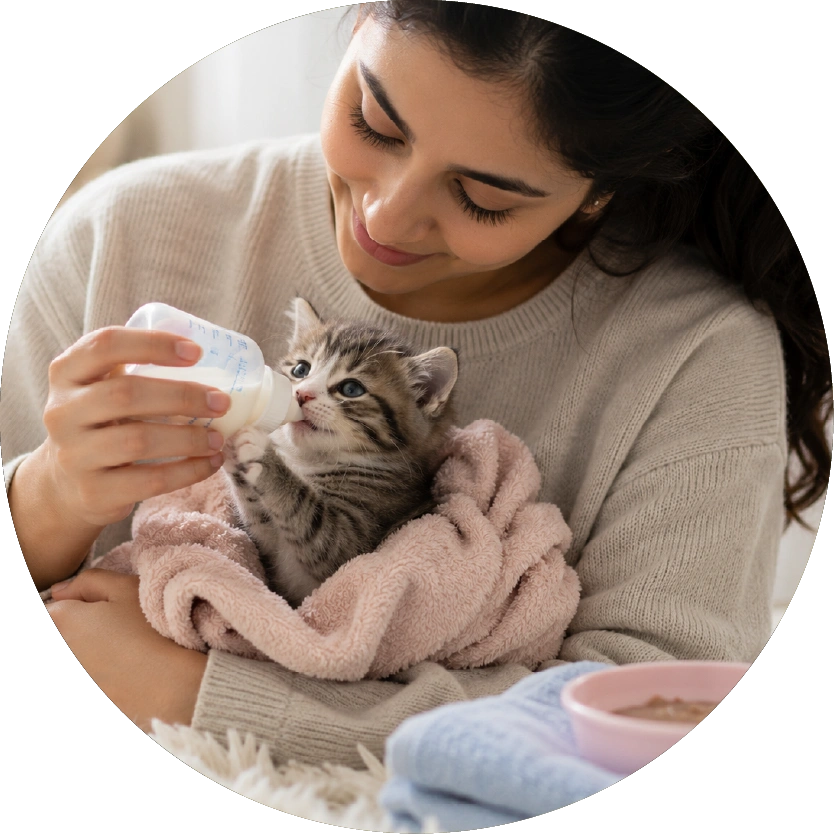
While there is no definitive better option between a kitten and an adult cat, both kittens and adult cats can be wonderful companions.
The right choice for your home entirely depends on your preferences, lifestyle, experience and budget.
Kitten | Adult Cat |
Highly energetic and active | Usually, Calmer |
Require consistent training | Personality is already developed |
Highly adaptable to new environments | May be reluctant in the new environment |
Need intense supervision | Need more time and patience to fully trust and settle |
Require constant stimulation and enrichment | Much more independent |
Playful and curious | Personality depends on the source from were adopted |
Kittens are ideal for owners who enjoy training and watching their pet grow, while adult cats may be a better fit for people seeking a calmer companion with an established personality. There is no universally better option, only the one that best matches your lifestyle.
Common Mistakes First-Time Cat Owners Make
Most first-time owners focus greatly on the appearance of a breed instead of considering long-term care requirements.
Avoid these common mistakes:
Choosing a breed based only on looks
Ignoring grooming requirements
Underestimating veterinary expenses
Not researching breed temperament
Assuming all cats behave the same way
Delaying preventive healthcare and vaccinations
Skipping routine vet visits
Not cat-proofing the home
Using harsh punishment
Poor litter box placements
Taking time to research before adoption helps you choose a cat you’ll enjoy caring for throughout its life. If you're having difficulties in deciding which cat breed to adopt, take an online pet doctor consultation on Conbun to understand breed-specific traits, temperament, behaviour, physical activity levels, etc from certified online vet doctors.
Need Help Choosing the Right Cat? Conbun Can Help
Choosing a breed is only the beginning of your journey as a cat owner. If you have questions about breed suitability, nutrition, behaviour, preventive healthcare, grooming, or caring for a new kitten, professional guidance can make the transition easier.
With online veterinary apps like Conbun, you can access experienced veterinarians from home using Online Vet Consultation services. Whether you need advice before adoption or support after bringing your cat home, you can talk to a vet online for personalised recommendations based on your pet's needs.
Conclusion
The perfect cat isn't necessarily the rarest or most expensive breed; it's the one whose temperament, activity level, grooming needs, and long-term care requirements match your home and lifestyle.
Take time to research and understand a cat breed before adopting, prepare for the lifelong commitment of pet ownership, and prioritise preventive healthcare from the start. Choosing thoughtfully helps create a rewarding relationship for both you and your feline companion.
With an online vet booking, you can understand basic characteristic traits of every breed and determine which cat breed will be perfect for your budget and lifestyle.
Frequently Asked Questions
Q1. Which cat breed is best for first-time owners?
Ans. Breeds such as the British Shorthair, Ragdoll, American Shorthair, and Domestic Shorthair are often recommended for first-time owners because they generally have adaptable temperaments and manageable care requirements. Individual personality and early socialisation also play important roles.
Q2. Should I adopt a kitten or an adult cat?
Ans. Choose a kitten if you have time for training, supervision, and socialisation. Adult cats are often calmer, have established personalities, and may adapt more easily to owners looking for a predictable companion. The right choice depends on your lifestyle and experience.
Q3. Are long-haired cats harder to care for?
Ans. Yes, long-haired cats generally require more frequent brushing to prevent tangles, mats, and hairballs. They may also need additional grooming around shedding seasons. Short-haired breeds typically require less coat maintenance but still benefit from regular brushing.
Q4. How do I choose the right cat breed?
Ans. Consider your living space, available time, grooming commitment, budget, family situation, and experience level. Matching a breed's temperament and care needs to your lifestyle is more important than choosing a cat based solely on appearance.
Q5. Which breed of cat is best for home?
Ans. There isn't one best breed for every home. British Shorthairs, Ragdolls, American Shorthairs, and Domestic Shorthairs are popular choices because they generally adapt well to indoor living, but the ideal breed depends on your household, activity level, and expectations.
References
Malik, R. (2001). Genetic diseases of cats. Journal of feline medicine and surgery, 3(2), 109-113. https://scholar.google.com/scholar?output=instlink&q=info:ix5SAfeZuYAJ:scholar.
google.com/&hl=en&as_sdt=0,5&scillfp=14913662124827805367&oi=lle
Salonen, M., Vapalahti, K., Tiira, K., Mäki-Tanila, A., & Lohi, H. (2019). Breed differences of heritable behaviour traits in cats. Scientific reports, 9(1), 7949. https://www.nature.com/articles/s41598-019-44324-x.pdf
Travnik, I. D. C., Machado, D. D. S., Gonçalves, L. D. S., Ceballos, M. C., & Sant’Anna, A. C. (2020). Temperament in domestic cats: a review of proximate mechanisms, methods of assessment, its effects on human—cat relationships, and one welfare. Animals, 10(9), 1516. https://www.mdpi.com/2076-2615/10/9/1516.
Table of Content
- Before Choosing a Breed, Understand Your Lifestyle
- Key Factors That Help You Choose the Right Cat Breed
- Which Type of Cat Is Best for Your Lifestyle?
- Kitten vs. Adult Cat – Which One is Better for You
- Common Mistakes First-Time Cat Owners Make
- Need Help Choosing the Right Cat? Conbun Can Help
- Conclusion
- Frequently Asked Questions
- References

Anand Sen
Categories